1. What happens when a GPU reads memory (blog.doubleword.ai)

Following an LDG.E SASS instruction through the hardware units in an RTX 4090.

Gain insight into the inner workings of an RTX 4090 as it processes an LDG.E SASS instruction. This technical breakdown reveals how the GPU interacts with memory, shedding light on its architecture and performance.

3. What Happens When the Cost of Intelligence Drops 100x (catalystneuro.com)

A given level of LLM intelligence costs about a thirtieth of what it did a year ago, and the rate of decline is accelerating. Using Artificial Analysis

The rapid decrease in the cost of large language model intelligence is transforming the landscape of AI technology, making it more accessible than ever. This trend raises important questions about the implications for industries and innovation as prices continue to plummet.

4. Micron announces $10B research hub in Boise (investors.micron.com)

Backed by a $10 billion planned investment over the next decade, Micron Research Labs will unite academia, government, startups and industry to advance the memory and compute breakthroughs that will define the AI era BOISE, Idaho, Aug. 20, 2026 (GLOBE NEWSWIRE) - Micron Technology, Inc. (Nasdaq: MU) today unveiled Micron Research Labs, a U.S.-based long-horizon premier research institution headquartered in Boise and backed by a planned $10 billion investment over the next decade. Building on Micron’s technology and manufacturing leadership, the new hub will bring together customers, academia, government and the broader semiconductor ecosystem to pursue breakthroughs beyond today's technology roadmaps and help define what's possible in the decades ahead. Key research areas include critical memory technologies, advanced memory and compute architectures, packaging and future semiconductor manufacturing. As the first dedicated memory research hub of its kind in the U.S., Micron Research

Micron Technology is establishing a major research hub in Boise, fueled by a $10 billion investment aimed at fostering innovation in memory and computing technologies for AI. The initiative seeks to collaborate with various sectors, including academia and government, to drive significant advancements in the field.

5. Radiation damage to Hubble has been 4.3 years out of phase with the Solar cycle (arxiv.org)

As well as obtaining beautiful images of the Universe, the Hubble Space Telescope's CCD detectors are sensitive radiation dosimeters that have been monitored in Low Earth Orbit for more than 24 years. The rate of radiation damage they received has varied over each Solar cycle, but several years out of phase with the appearance of sunspots or coronal mass ejections. We investigate functional forms that successfully fit the time series of damage to telescopes elsewhere in the Solar system. We obtain remarkably accurate fits to Hubble data but with physically absurd parameter values. During image post-processing, such fits can be used empirically, to correct more than 99.5% of the radiation damage's effect on image quality. However, fits to the time series with physically reasonable parameters produce worse performance. Our results highlight the diversity of radiation environments in different parts of our Solar system, and the complexity of Low Earth Orbit in particular. Our results also motivate continued monitoring of radiation damage to currently operational spacecraft, to more reliably predict the rate of degradation in (and useful lifespan of) future missions.

Hubble’s CCD detectors have recorded radiation damage patterns that don’t align with the expected Solar cycle, showing a delay of 4.3 years. Researchers are analyzing these discrepancies to better understand radiation effects on telescopes across the Solar system.

6. c100 (caligra.com)

Explore the c100 hardware platform purpose-built for expert workflows.

The c100 hardware platform is designed specifically for professional workflows, focusing on enhancing efficiency and performance. Discover how its features cater to the needs of experts in various fields.

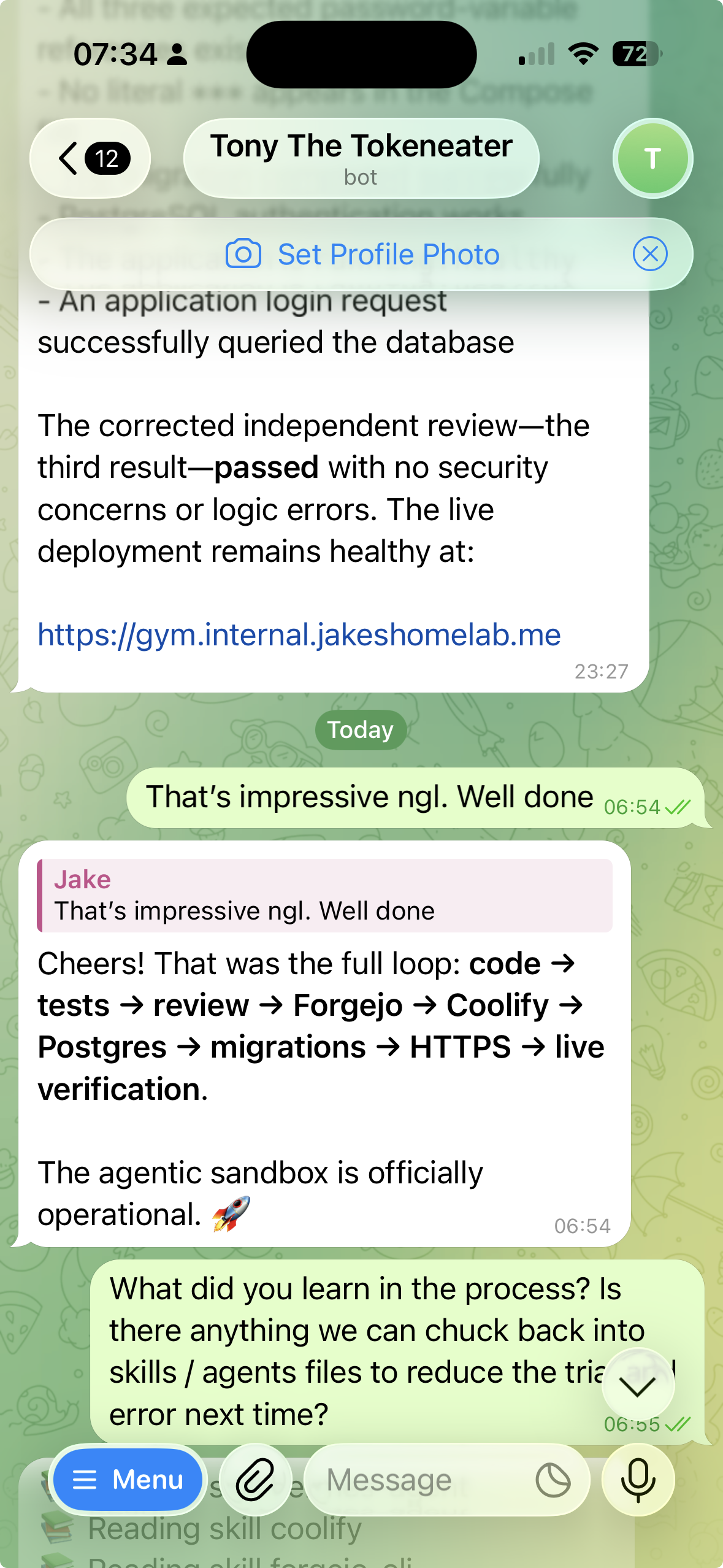
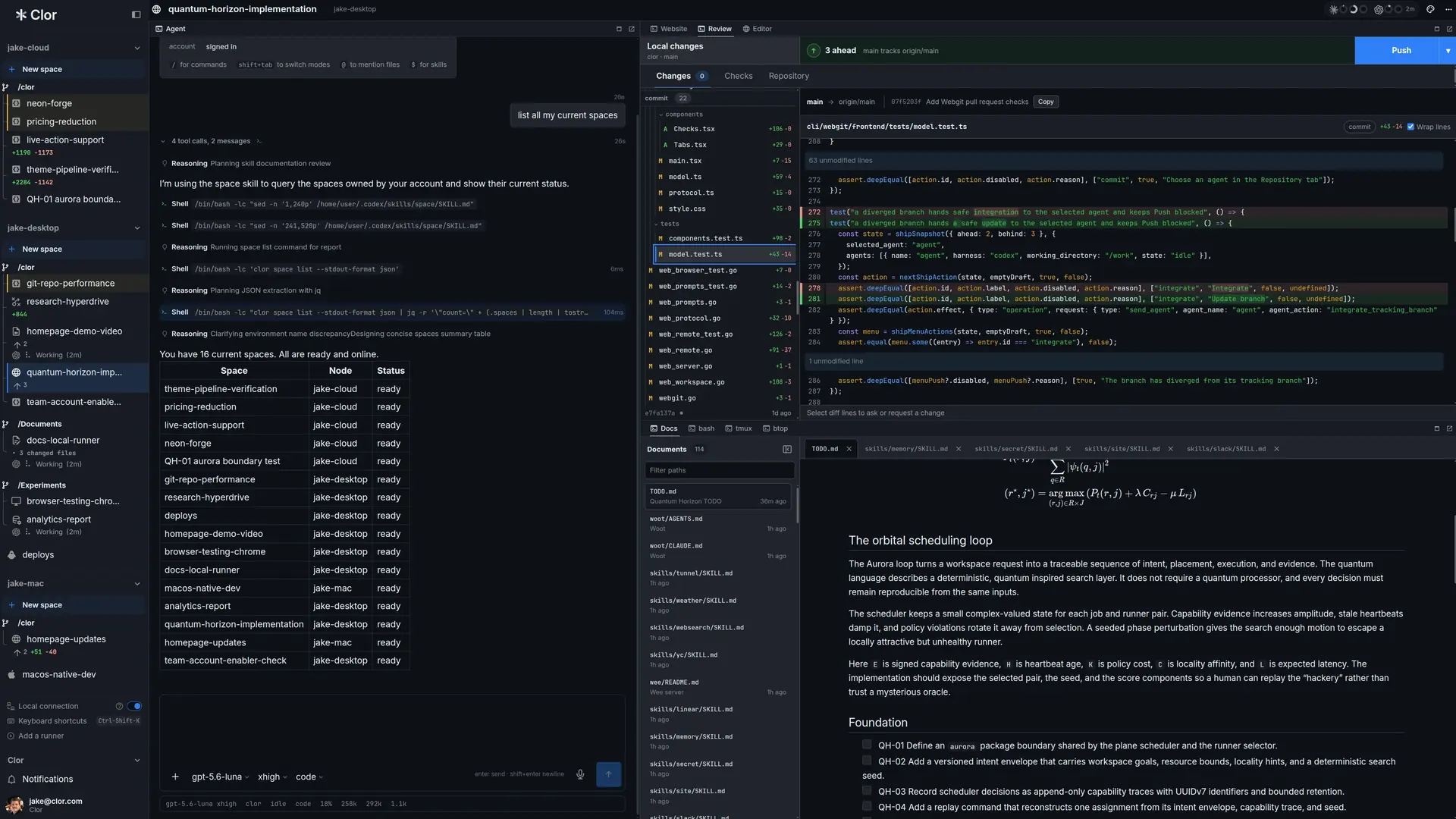
9. A self hosted AI software factory (blog.jakesaunders.dev)

I built an (almost) fully self-hosted, sandboxed, agentic software factory.

A developer shares their journey of creating a nearly self-hosted, sandboxed software factory powered by AI. Discover the challenges faced and the innovative solutions implemented in this unique project.

11. What We Lost When Search Stopped Making Us Think (blog.8ball.space)

I want to talk about something that's been on my mind for a while: search has quietly gotten worse over the past several years, and I think it's worth being ...

The article discusses how the quality of search engines has declined over time, leading to a less thoughtful and engaging user experience. It raises important questions about the implications of this trend for our ability to think critically and seek information effectively.

12. There's no such thing as a small software team anymore (jacob.gold)

Uber infamously runs thousands of microservices. They ended up with so many services because hundreds of engineers wanted to deploy on their own schedule, with clear ownership of their code, instead of waiting in one giant merge queue.
For decades a small team with 5 or 10 people writing code at the same time didn’t even need to consider doing this. On a busy day a small team might generate 50 commits/20 pushes/10 PRs. A small team today, running 20-100 agents in parallel, might generate 500 commits/200 pushes/100 PRs.

The shift in software development has transformed how small teams operate, with companies like Uber adopting microservices to allow for independent deployments. This piece examines the growing complexity and scale of software teams, highlighting the significant increase in code contributions and the challenges that come with it.

16. Kino: A high-performance Ractor web server for Ruby 4.0 (github.com)

A high-performance Ractor web server for Ruby 4.0+: Rack 3-based, with a Rust Tokio/Hyper front-end and Ractor-parallel Ruby workers and threaded fallback mode. - yaroslav/kino

Kino is a new web server designed for Ruby 4.0 that combines Rack 3 with a Rust-based front-end for improved performance. It features Ractor-parallel workers and a threaded fallback mode, making it a compelling option for developers looking to enhance their Ruby applications.

20. Nvidia AVO scores 100% on the ARC-AGI-3 interactive reasoning benchmark (twitter.com)

Our general-purpose coding agent just scored 100% on the ARC-AGI-3 interactive reasoning benchmark.

NVIDIA AVO completed all 183 levels across all 25 public environments, figuring out what to do with no instructions, explicit rules, or stated goals.

Nvidia’s AVO has achieved a perfect score on the ARC-AGI-3 benchmark by successfully navigating 183 levels without any prior instructions or rules. This demonstrates the agent’s advanced reasoning capabilities in diverse environments.

22. DuckDB V2 PEG-based SQL parser (duckdb.org)

DuckDB v2.0 replaces its PostgreSQL-derived SQL parser with a PEG-based parser that is easier to evolve and can be extended at runtime.

DuckDB v2.0 introduces a new PEG-based SQL parser that simplifies updates and allows for runtime extensions, moving away from its previous PostgreSQL-derived version. This shift promises greater flexibility and easier evolution of SQL functionalities.

23. Seed: Minimal, self-modifying agent harness (github.com)

A seed agent: the smallest starting point from which an agent can grow - vivekhaldar/seed

The seed agent represents a foundational concept in agent-based design, focusing on minimalism and self-modification. This framework could influence how we develop adaptable systems in various tech applications.

26. Show HN: Proliferate- open-source, self-hostable Codex for any coding agent (github.com)

The open-source AI IDE for Claude Code, Codex, OpenCode, and more. Run agents in parallel, locally or in the cloud, and build reusable workflows. - proliferate-ai/proliferate

Proliferate is an open-source AI integrated development environment that allows users to automate tasks with various coding agents like Codex and Claude Code. The project aims to streamline coding workflows by providing a centralized platform for these tools, and a quick demo is available to showcase its functionality.

27. Decayfmt – a file format that corrupts itself a little every time you open it (github.com)

decayfmt: a Rust file format where every open permanently corrupts the file. Decay is a first-class property with no recovery without a backup. - aravpanwar/decayfmt

A new Rust file format, decayfmt, intentionally introduces corruption each time it’s accessed, making data recovery impossible without a backup. This unique approach raises intriguing questions about data permanence and the implications of self-destructive technology.

28. Better Batteries (matklad.github.io)

One of the eternal schisms in programming is over the question of whether the standard library should be minimal or encompassing. This is the wrong question to ask. The right one is:

29. The Mystery of Dark Oxygen (www.newyorker.com)

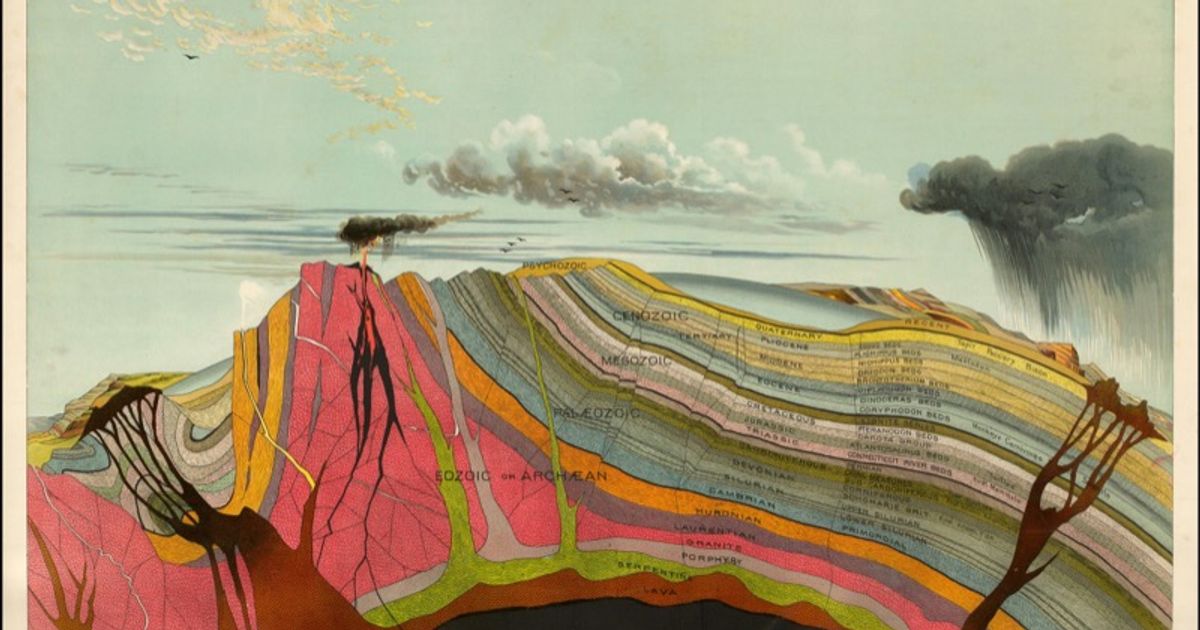
Scientists once thought that life-sustaining oxygen existed only near Earth’s surface. Then they detected it deep underground.

Scientists have discovered life-sustaining oxygen in unexpected places deep underground, challenging previous assumptions about its distribution. This finding could reshape our understanding of how oxygen supports life in various environments.

Article Details

Browse by Date

Type to search HN and engineering blog articles
Press Escape to close  |  ↑↓ to navigate  |  Enter to open