
2. Version Control for Everything (tyoverby.com)
AI assisted agentic coding has reached escape velocity, but non-programming use cases haven't seen the same degree of adoption. I believe that the main reason for this is the lack of version control.
Imagine using claude-code outside of a git repository. Even for small things like refactors, using AI would be very stressful and error prone:
It would be near-impossible to track the changes that the LLM made. Auditing the LLM generated code is useful in the moment to ensure that changes are reasonable before moving on to another task, and in the future when you want to understand why some code was written The LLM could put the codebase in a bad state and you'd have no way of reverting This is true even if the LLM is incredibly smart and didn't make any "mistakes" - the human prompter forgetting to tell it about a design constraint could be bad enough There's no split between the "development branch" and "prod" You can't parallelize development by having multiple LLMs work on different branches Even when I pay Claude to work on a small script, I always create a new git repo just to make my life easier.
AI-assisted coding is advancing rapidly, but its application beyond programming is hindered by a lack of effective version control. Without a system to track AI-generated changes, users face challenges in managing edits and ensuring code quality, making broader adoption difficult.
3. Emacs 31.1 will release on 8/24 (github.com)
Mirror of GNU Emacs. Contribute to emacs-mirror/emacs development by creating an account on GitHub.
4. Rebuilding our Electron meeting-recording engine in Swift (circleback.ai)
How we moved our Electron app's recording engine from the render process to native Swift, bridging ScreenCaptureKit and libobs to React with a Combine-to-Jotai tool.
Learn how the transition from an Electron-based recording engine to a native Swift solution improved performance and integration by utilizing ScreenCaptureKit and libobs, along with a new tool for bridging technologies. This technical breakdown offers insights into modern app development challenges and solutions.
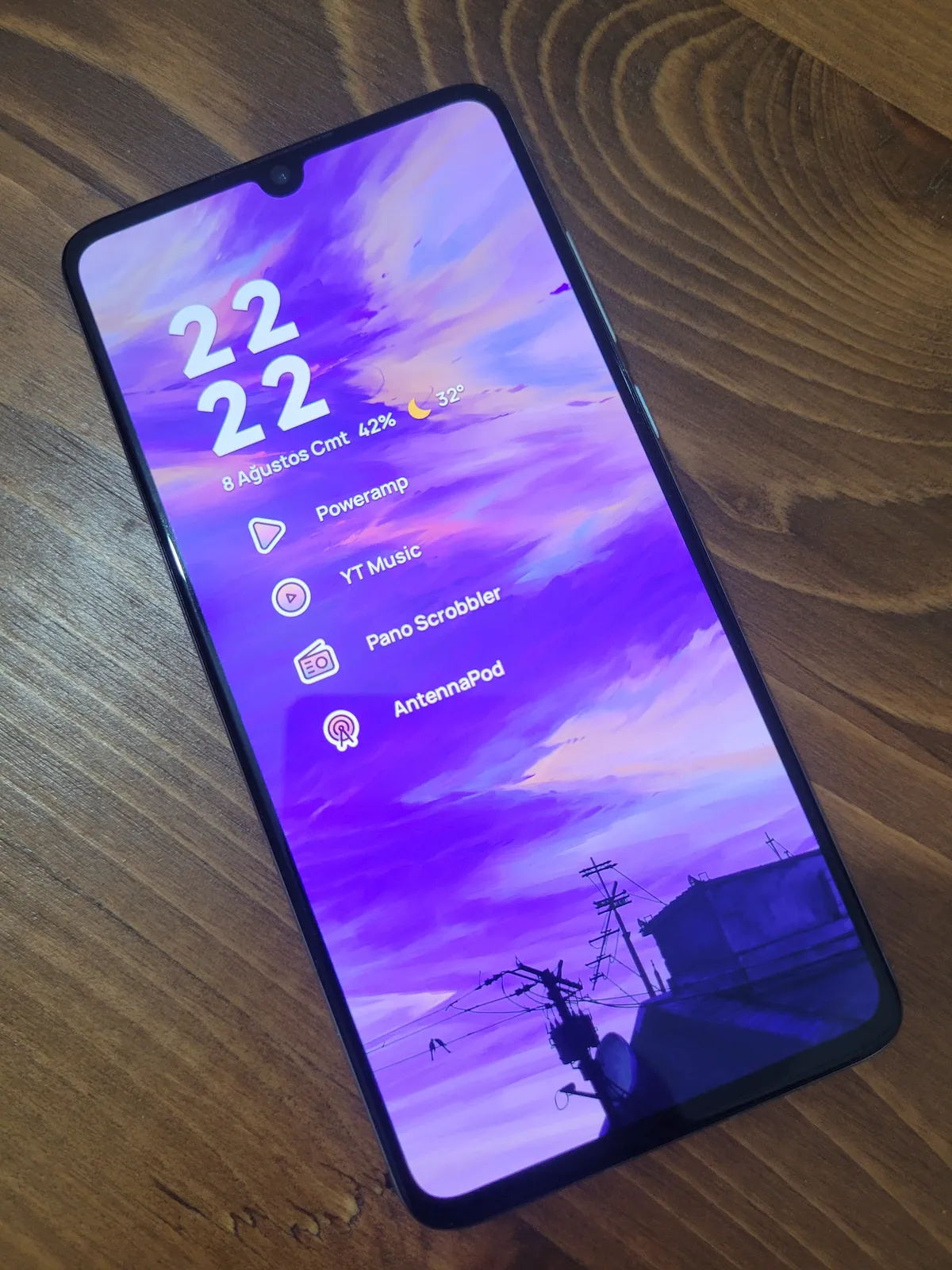
5. Using an old Android phone as a music player (monocyte.blog)
it's been a while since i last talked about my music setup and things have changed a bit.
the music player
main benefits of owning a device specifically ...
the music player
main benefits of owning a device specifically ...
Transforming an old Android phone into a dedicated music player can enhance your listening experience while keeping your main device uncluttered. Discover the advantages of using a separate device for music and how it can simplify your setup.
6. LLMs are proof that Unix won (bastian.rieck.me)
7. US debt has hit $40tn - Will that be a wake-up call? (www.bbc.com)
The US hit a debt milestone this week, but just how worried should we be about the world's largest economy?
8. Berkeley Law prohibits AI use in classes (by default) (www.law.berkeley.edu)
Effective Summer 2026 Purpose Future lawyers may need to use artificial intelligence (“AI”) fluently. But the current state of the technology requires that AI use be coupled with the cognitive […]
Berkeley Law has decided to ban the use of AI in classrooms by default until Summer 2026, emphasizing the need for students to develop critical thinking skills alongside any technological tools. This move raises questions about how future legal education will balance technology and traditional learning methods.
9. When the Shortage Is the Strategy (nooneshappy.com)
Companies discovered during the pandemic that they could raise prices far beyond costs and never lower them. Now the formula is being applied deliberately.
Businesses are now intentionally using scarcity as a pricing strategy, a tactic they learned during the pandemic when they raised prices significantly without ever reducing them. This shift raises questions about the long-term impacts on consumer behavior and market dynamics.
10. I came to write THAT paper with Leslie Lamport (lawrencecpaulson.github.io)

11. Detecting scraper bots through scroll behaviour (niki.cat)
A blog about my unusual programming adventures

13. Does whispering to agents in docs help? (passo.uno)
I’m seeing more instances of docs and README files addressing agents directly, as in “Hey, if you’re an agent, follow these instructions”. In some cases, those instructions are visible to human readers as well, which makes for a deeply awkward experience, the reading equivalent of getting a robotic kick in the butt. Is this whistling to machines helpful? I ran some experiments to find out.
The article investigates the trend of addressing AI agents directly in documentation, highlighting the potential confusion it creates for human readers. The author shares experimental findings on whether this practice is beneficial for the agents or merely awkward for users.
14. Show HN: ParqDB – Vector search in the browser from Parquet over HTTP" (search.parqdb.io)
No query server: embed, route, prune, rank, and look up Wikipedia results inside the browser.
ParqDB allows users to perform vector searches directly in their browser without needing a query server, enabling functionalities like embedding and ranking Wikipedia results on the fly. This could streamline how we access and interact with information online.

15. Remotely Unlocking Electric Scooters (henriemategui.com)
How subdomain recon, WordPress user enumeration, and a brute force led to admin access and remotely unlocking scooters.
A security flaw allowed hackers to gain admin access to electric scooters through techniques like subdomain reconnaissance and brute force attacks. This incident highlights vulnerabilities in IoT devices and the importance of robust cybersecurity measures.
16. Code Obfuscation via Local Mixing (vitalik.eth.limo)
17. Quantifying the honey bee dance floor (journals.plos.org)
Honey bee (Apis mellifera) foragers perform waggle dances inside the hive to communicate the location of profitable foraging sites to nestmates. These recruitment dances occur within a specific region of the comb, known as the dance floor, but its location and structure have historically been described only qualitatively. Here we introduce a data-driven geometric method to define and quantify the dance floor from waggle-dance coordinates. The approach combines convex hulls and confidence ellipses to produce a closed region representing the area of highest dance density and yields interpretable spatial metrics including centroid location, area, perimeter, major and minor axes, and orientation. To demonstrate the method's performance, we applied it to 155 observations of eight colonies in observation hives differing in size and date. Using complementary univariate and multivariate analyses, the framework consistently captured approximately 91% of dances, matching historical estimates based on entrance distance, and detected systematic differences among observations associated with hive size, day, and time (e.g., size-dependent shifts in centroid position and width, and time-of-day effects on orientation), illustrating its sensitivity to experimental and temporal context. This work provides an explicit quantitative definition of the honey bee dance floor and a reproducible analytical framework for comparing spatial recruitment patterns across colonies, environments, and future experimental designs.
Researchers have developed a new geometric method to precisely define the “dance floor” in honey bee hives, where foragers communicate the location of food sources through their waggle dances. This quantitative analysis could enhance our understanding of bee communication and behavior.
18. Show HN: SteppeWM – a stacking IceWM-like Wayland compositor (github.com)
minimal stacking wayland window manager. Contribute to uncognic/steppewm development by creating an account on GitHub.

19. Galactic Compass 2: now with new augmented reality mode (interconnected.org)
Posted on Friday 21 Aug 2026. 623 words, 4 links. By Matt Webb.
Galactic Compass 2 introduces an augmented reality mode that enhances how users can navigate towards the galactic center. This update promises a more immersive stargazing experience for astronomy enthusiasts.
20. Another Better Lower Bound for N=17 Square Packing (gus-massa.blogspot.com)
21. New York’s office market is home to the most tech workers: CBRE report (www.cnbc.com)
AI-related roles now account for nearly one-third of all tech-talent job listings in the U.S., per the new CBRE report.

22. Nothing Doing (www.futilitycloset.com)
Recess, County Galway, Ireland: Aspelt, Luxembourg: Bechyne, Czech Republic: (“In this house, no important person was born, lived, and most importantly did not die, and that is why we live well here.”) Záblatí-Hlásná Lhota, Czech Republic: (“Hlásná Lhota – a stone in whose surroundings nothing significant has demonstrably happened for several hundred years”) Míšov, Czech Republic: (“On 8 May 1915 in Míšov, the great Czech genius Jára Cimrman just barely missed being involved in something historically important.”) O’Hungry’s Café, Old Town San Diego State Historic Park: York, Western Australia: Villa de Leyva, Boyacá Department, Colombia: (“On October 13, 1825, nothing...
Explore the charm of unremarkable places in Europe, where historical significance is absent yet life flourishes. This piece highlights locations that embrace their lack of noteworthy events, revealing a unique perspective on contentment and simplicity.

23. Show HN: A puzzle I couldn't solve for a year – cubers cracked it in an hour (skimmiq.com)
Switch layouts, slide the color bands, and test the SkimmIQ cube mechanic in your browser.
A developer created a novel puzzle inspired by the Rubik’s cube, where bands of stickers slide instead of turning faces. Despite doubts about its solvability, skilled cubers cracked it in just an hour, highlighting the puzzle’s intriguing design and challenge.
24. Three ways to smuggle SQLite into Nix (fzakaria.com)
The core of nixpkgs-multiverse, when you strip away the Nix API and the CLI, is an index. It is a map from (attribute, version) to the revision that shipped it as a JSON file.1 There are actually a few other files that drive other features such as the statistics or “fast mode”, but they are all JSON as well. ↩
25. The B-right/V R2 Operating System (tronweb.super-nova.co.jp)

26. Church of the TigerBeetle: A Look at Tech Evangelism (www.wespiser.com)
My experiences at Systems Distributed
27. Show HN: AgentSight – eBPF observability for AI agents, no code changes (github.com)
ANOLISA (Agentic Nexus Operating Layer & Interface System Architecture) | Agentic OS with runtime, security, observability, and Tokenless response compression for lower token usage and cost. - ...
AgentSight offers a no-code solution for enhanced observability of AI agents using eBPF technology. It promises improvements in runtime efficiency, security, and cost management through innovative data handling strategies.

28. Olympian Jenny Simpson Says Her Running Career Is Over After Cardiac Arrest (www.runnersworld.com)
Simpson revealed she was diagnosed with a rare heart condition after her heart stopped during a community mile race. She says recovery is going well.
Olympian Jenny Simpson announced the end of her running career following a cardiac arrest caused by a rare heart condition. Despite the setback, she reports that her recovery is progressing positively.
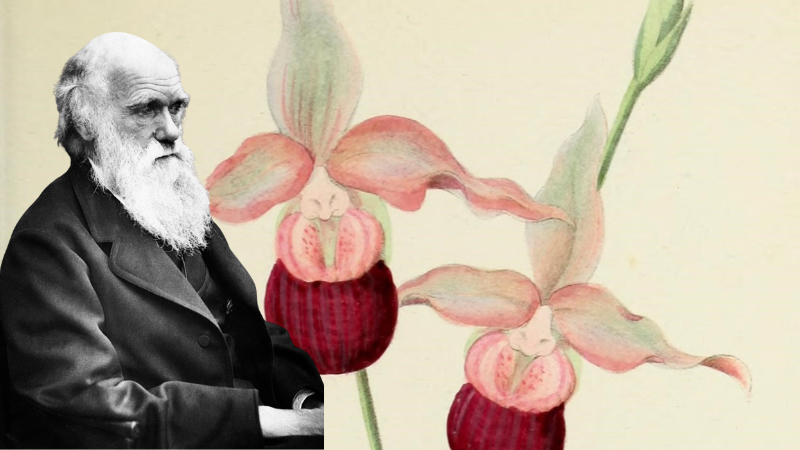
29. How orchids inspired the work of Charles Darwin (lithub.com)
Nestled within the tarmac lasso around London formed by the M25 motorway but feeling very far in time and space from the city, Charles Darwin’s home, Down House, has a spooky quality: it feels like…
30. Show HN: A desktop fly drawn to the scent of vibecode (github.com)
A 3D fruit fly living on your macOS desktop, driven by a live spiking simulation of the real FlyWire connectome - kulikov0/desktop-vibe-fly
A new update to the desktop fly project allows it to detect specific markers in codebases, directing it to the source code of B2B AI SaaS startups. This innovative feature enhances its ability to navigate complex environments, making it a useful tool for developers.