1. Breaking Up with Google Play: Why Conversations Is Now Free (gultsch.de)

Conversations, my federated instant messaging client for Android, started out as many traditional open-source projects do: as an attempt to scratch my own itch. Development started in January 2014 in my student dormitory, and within weeks I started dogfooding and using the client as the primary means of communicating with my friends. However, when it came to releasing the app to the public on March 24, 2014—exactly twelve and a half years ago today—it was immediately clear to me that I would at least try to turn my open-source project into a business. While I didn’t invent the business model of making the source code publicly available but charging for the convenience of a compiled binary, it was certainly unusual in 2014.

The developer of the open-source instant messaging app Conversations reflects on its journey from a personal project to a publicly available tool. After 12 years, the app is now free, marking a significant milestone in its evolution and accessibility for users.

3. PipePipe: NewPipe hard fork implementing SponsorBlock (github.com)

An open-source Android app to let you browse YouTube and other services freely. - InfinityLoop1308/PipePipe

PipePipe is an open-source Android app that enhances your YouTube experience by integrating SponsorBlock, allowing users to skip sponsored segments in videos. It’s a useful tool for those looking to enjoy content without interruptions.

4. Fifteen years later, the Apple Cards origin story (lexontech.org)

100% cotton paper. 100% crazy.

Discover the unusual materials and creative decisions behind Apple’s iconic business cards, celebrating 15 years of design evolution. The blend of 100% cotton paper and a unique approach highlights Apple’s commitment to craftsmanship.

5. Jury finds Facebook liable for deceiving users in Cambridge Analytica case (www.cbsnews.com)

The two-week trial in New Mexico centered on accusations Facebook deceived users about a data breach.

A jury has ruled that Facebook misled users regarding a data breach during the Cambridge Analytica scandal. The trial, which took place in New Mexico, focused on the platform’s deceptive practices surrounding user data privacy.

6. Show HN: Reladraw – A diagram language where you decide where to place things (github.com)

Contribute to reladraw/reladraw development by creating an account on GitHub.

Reladraw offers a new diagram language that strikes a balance between automated layouts and manual design, allowing users to create diagrams with both structure and personal control. It aims to make diagram creation more efficient while still enabling customization, addressing the limitations of existing tools.

8. How to keep enjoying programming in a world of LLMs (discourse.haskell.org)

Are you steering towards AI burnout? Afraid of loosing your job to someone with little programming skills, no aspirations to quality, and a huge Claude account? Disappointed about the code quality in your projects, or worse in “your” own code? This is for you. There are significant and legitimate ethical concerns about frontier LLMs run by big tech companies, these have been discussed at length, I’m aware and agree, this post is not about them. Please don’t mistake me for a pro-LLM techbro. Al...

If you’re feeling overwhelmed by the rise of AI and its impact on programming, this piece addresses the fears of job security and code quality that many developers face today. It offers insights on maintaining your passion for coding amidst the challenges posed by large language models.

9. DeepSeek Elastic Compute (DSec) (arxiv.org)

Large-scale agentic training and evaluation with large language models (LLMs) rely on isolated, stateful execution environments in which models inspect repositories, invoke tools, execute commands, and interact with task-specific services. These workloads create sandboxes in large bursts, span heterogeneous functionality and isolation requirements, retain state across long interactions, and draw from large image corpora with limited reuse. Supporting them therefore requires an elastic execution platform rather than a single sandbox runtime.
This report presents DeepSeek Elastic Compute (DSec), a production sandbox platform that exposes FnCall, container, microVM, and full-VM sandbox backends through a unified SDK. DSec coordinates placement and lifecycle management across the cluster, composes environments from independently versioned layers, combines memory sharing, reclamation, and CPU scheduling for high-density execution, and loads image data on demand from Fire-Flyer File System (3FS), a cluster-wide distributed filesystem. DSec is co-designed with the reinforcement learning (RL) framework, decouples stateful rollout execution from preemptible GPU training, coordinates sandbox lifecycle with training to preserve rollout state while reclaiming idle resources, and mitigates agent misbehavior such as reward hacking.
A single production-scale unit of DSec spans around 160 nodes, serving about 3 million sandboxes per day; in production, it supports over 380,000 concurrent sandboxes and sustains over 5,000 sandbox creations per second. Our evaluation and deployment experience show that these mechanisms reduce environment setup and image-distribution overhead, improve memory efficiency, and preserve latency-sensitive performance under high-density overcommit.

DeepSeek Elastic Compute (DSec) addresses the complexities of training and evaluating large language models by providing isolated execution environments. It focuses on handling diverse functionality and state retention across extensive interactions, making it crucial for efficient model performance.

11. One Piece of Flock Camera Data Put This Innocent Woman in Jail for 13 Days (www.jezebel.com)

Police didn't care that Linsey Isaacs' car was the wrong color, and wasn't damaged. They still arrested her because of Flock data.

Flock camera data led to the wrongful arrest of Linsey Isaacs, who spent 13 days in jail despite her car not matching the description and showing no signs of damage. This case highlights the potential pitfalls of relying on automated surveillance technology in law enforcement.

12. Floci: Locally emulating any cloud service (floci.io)

Floci runs AWS, Azure, GCP, and OCI locally in milliseconds: a fast, free, credential-free feedback loop for developers and AI coding agents. MIT licensed. No account, no auth token.

Floci allows developers to emulate major cloud services like AWS and Azure on their local machines instantly and without the need for accounts or authentication tokens. This tool provides a quick and cost-free way to test and iterate on cloud functionalities.

15. A searchable library of forgotten public-domain film clips from 1915 onward (www.movingimagearchive.com)

Search, watch, and download public-domain archival footage by the shot.

A new online library offers access to public-domain film clips dating back to 1915, allowing users to search, watch, and download archival footage easily. This resource is a treasure trove for filmmakers, educators, and history enthusiasts looking for unique visual content.

16. One Month Without AI (blog.bustikiller.com)

Several months ago, I decided that AI contributions were no longer welcome in a FOSS project I am building and maintaining - LibreWeddingPlanner. It’s not that it got a lot of contributions with AI — actually all contributions I’ve had are translations and feature requests — but I wanted to...

A developer shares their experience of excluding AI contributions from their open-source project, LibreWeddingPlanner. The decision stems from a desire to maintain a certain quality and authenticity in the project’s development.

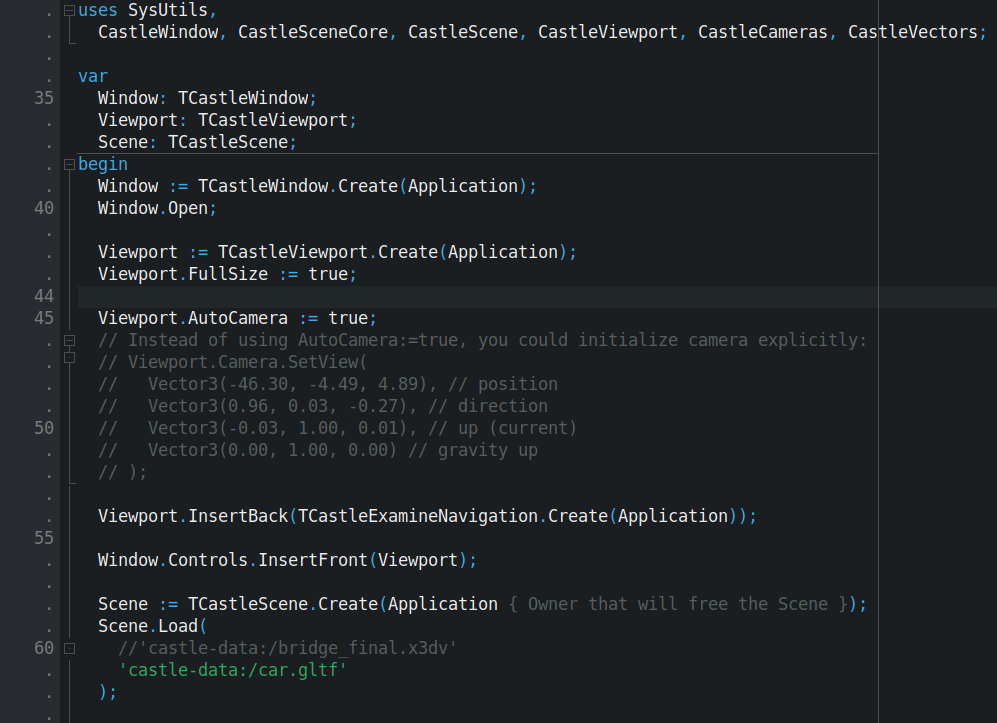
17. Modern Object Pascal Introduction for Programmers – Castle Game Engine (castle-engine.io)

Modern Object Pascal Introduction: units, classes, generics, memory management, exceptions and more.

Learn about the key features of Modern Object Pascal, including units, classes, generics, and memory management, as they relate to programming with the Castle Game Engine. This guide provides a solid foundation for both new and experienced developers.

20. Automattic has a new board after failed attempt to put CEO on leave (techcrunch.com)

After days of upheaval at Automattic, following a failed attempt to remove CEO Matt Mullenweg, the company has a new board.

After a tumultuous period marked by an unsuccessful effort to oust CEO Matt Mullenweg, Automattic has appointed a new board. The changes reflect significant internal shifts within the company.

23. Is your Postgres migration safe or not safe? (safenotsafe.dev)

Paste SQL, parse it locally, and catch Postgres migration lock and rewrite risks before deploy.

Learn how to identify and mitigate risks associated with Postgres migrations by parsing SQL locally and catching potential issues before deployment. This guide offers practical steps to ensure a safer migration process.

24. ASML currently sells no chipmaking machines in Europe, executive says (nltimes.nl)

ASML is currently not selling any of its chipmaking machines in Europe, according to Frank Heemskerk, the company’s executive responsible for global public affairs.Heemskerk warned that Europe risks falling behind as the United States, China and India invest heavily in developing their domestic semiconductor industries. “We are not selling anything in Europe at all. That is because Europe is not investing, and no chip factories are being built here,” Heemskerk said.

ASML’s executive highlights a concerning trend: the company isn’t selling any chipmaking machines in Europe due to a lack of investment in local semiconductor manufacturing. Heemskerk’s comments raise alarms about Europe’s competitiveness compared to the U.S., China, and India, which are ramping up their domestic production capabilities.

26. LA Metro has some of the slowest escalators on Earth (basin.la)

LA Metro’s design specifications state that its escalators go 90 feet per minute, slower than nearly everything we found.

LA Metro’s escalators operate at just 90 feet per minute, making them some of the slowest in the world. This article examines how this speed compares to other transit systems and what it means for commuters.

27. OpenAI bots meddled with multiple US Government agency sites (www.bbc.com)

OpenAI said its bots accessed public data from a range of institutions during test exercises.

OpenAI’s bots interacted with various US government agency websites to gather public data as part of their testing procedures. This raises questions about the implications of AI accessing sensitive institutional information.

28. Banks and Credit Unions to Team Up Against Apple Pay Fees (www.macrumors.com)

An antitrust lawsuit accusing Apple of blocking tap-to-pay competition is moving forward and will see banks and credit unions able to band together to sue Apple. U.S. District Judge Jeffrey White this week certified a class in the lawsuit. It will include any U.S. entities that issued any payment card enabled for Apple Pay and paid Apple a fee for Apple Pay transactions on that payment card.

Banks and credit unions are joining forces to challenge Apple over fees associated with Apple Pay, following a judge’s decision to allow a class action lawsuit to proceed. This legal battle could redefine the landscape of payment processing and competition in the mobile payment sector.

30. The Copilot+ PC brand is dead (www.windowscentral.com)

In a new interview, Microsoft Surface CVP confirms that its new Surface PCs are no longer called Copilot+ PCs, but will still support all Copilot+ features.

Microsoft has officially dropped the Copilot+ branding for its Surface PCs, although users can still expect full support for the features associated with that name. This shift reflects a new direction for the Surface lineup amidst evolving market trends.

Article Details

Browse by Date

Type to search HN and engineering blog articles
Press Escape to close  |  ↑↓ to navigate  |  Enter to open