
2. Resident Evil 4 (GameCube) – complete byte-identical decompilation to C/C++ (github.com)
Resident Evil 4 (GameCube, G4BE08 debug build) — complete byte-identical decompilation to C/C++ - adonis-singh/re4
A complete byte-identical decompilation of Resident Evil 4 for GameCube has been achieved, allowing enthusiasts to explore the game’s inner workings in C/C++. This project could provide valuable insights for developers and fans interested in game design and programming.
3. Step 5 Preview: Advancing the Pareto Frontier (www.stepfun.com)
阶跃星辰于2023年4月成立,以“智能阶跃,十倍每个人的可能”为使命。阶跃星辰坚定自研超级模型,积极布局算力、数据等关键资源,发挥算法和人才优势,已完成 Step-1 千亿参数语言大模型和 Step-1V 千亿多模态大模型的研发,在图像理解、多轮指令跟随、数学能力、逻辑推理、文本创作等方面性能达到业界领先水平。
阶跃星辰 is advancing its mission to enhance individual potential through AI, having developed leading-edge language and multimodal models with billions of parameters. Their focus on self-research and critical resource allocation positions them at the forefront of capabilities in areas like image understanding and logical reasoning.
5. Show HN: A competition for small neural networks that play strategy games (tinybrains.dev)
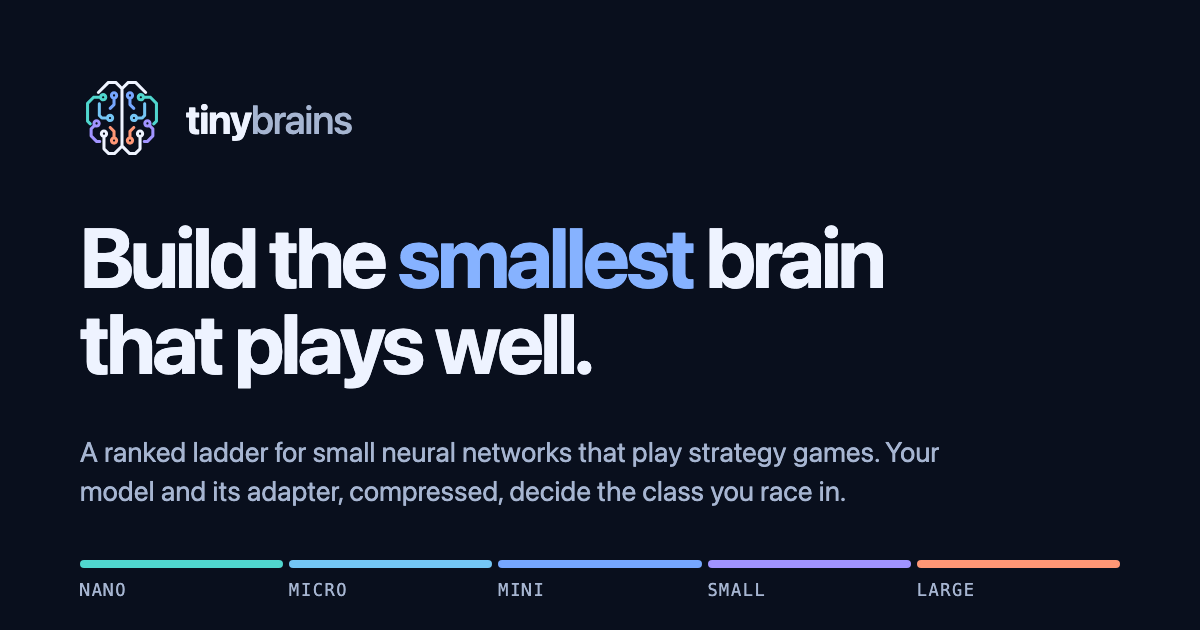
A ranked ladder for small neural networks that play strategy games. Train a model, write an adapter, upload two files, and get measured into a weight class from 8 KiB up.
A new competition invites developers to create small neural networks that compete in strategy games. Participants can train their models and upload them for ranking based on their performance and size, with a focus on lightweight designs.
7. Ogre Battle 64 Recompiled Project at 99.05% (github.com)
Decompilation project for the game "Ogre Battle 64: Person of Lordly Caliber" - lfarroco/ogre-battle-64-recomp
A decompilation project for “Ogre Battle 64: Person of Lordly Caliber” is nearing completion, reaching 99.05%. This effort aims to revive the classic game by translating its original code, potentially allowing for easier modding and preservation.
8. Software Sandboxing: The Basics (blog.emilua.org)
9. People hate Flock so much its employees are now demoralized and quitting (www.neowin.net)
10. A custom virtual machine for the Stars 4X game (nullprogram.com)
11. One-Electron Universe (en.wikipedia.org)
12. Show HN: Sigabrt.dev – cronjob monitor with an SSH TUI (sigabrt.dev)
A dead man
Sigabrt.dev is a tool designed to monitor your cron jobs by sending notifications if they fail to ping a designated endpoint. It also features an experimental SSH TUI for monitoring, making it a practical solution for self-hosted project oversight.
14. Telling a Computer to Do Things (will-keleher.com)
If you don't know the shell, it's more difficult to tell a computer to do things.
Understanding the shell is essential for effectively communicating with your computer. This piece highlights the challenges faced by those unfamiliar with shell commands and the benefits of mastering this skill.

15. Can you tell which images are AI-generated? (slop-sense.labtoagi.com)
Trust your eyes, build a streak, and beat your score in 60 seconds.
Test your ability to identify AI-generated images in a fast-paced game that challenges your perception. Compete against the clock and see how many you can get right!

16. Trying the Software Factory Pattern (lethain.com)
One of the interesting challenges of the AI ecosystem in 2026 is that new,
effective patterns emerge faster than I can adopt them. I'll find a handful,
get back to work, and realize a month later that I'd missed four or five more.
The adoption cycle for Imprint this year has been something like:
January: get every engineer onto Claude Code every single day
March: ok, let's also get everyone else onto Claude Code or Claude Cowork every single day
April: local development is bottlenecked on checkout and worktree model,
instead create ~10 local workspaces which each have an independent checkout of every repository,
and operate at the workspace level, not at the repository level, so it can generate cross-repository
pull requests across frontend, backend, infrastructure and data monorepos
June: oh boy, agent-driven development is heavily constrained by lack of a common task management
system with higher visibility and less permission complexity than Jira,
so let's migrate the entire company over to Linear and hard stop on Jira
July: yikes, now we have visibility into all these tickets, many of them are trivial
but managing them through local development isn't scaling, let's roll out an orchestrated harness
which internally we call "Agent Fleet",
along the lines of Stripe's Minions
The most recent question for me has been figuring out how to adopt the software factory pattern.
(After some light research, the specific AI-context origin of this term is slightly messy to
attribute, but I think it might be Justin McCarthy in February 2026's
Software Factories And The Agentic Moment.)
The article discusses the rapid evolution of software development patterns in the AI landscape, highlighting the challenges of keeping up with new tools and practices. It outlines a timeline of adopting these innovations, emphasizing the struggle to integrate them effectively within a team.
17. Seeing Circles, Sines, and Signals (jackschaedler.github.io)

18. Custom home server built from spare parts (asmat.ca)
Google nagged me into this, along with every other enshittified cloud ~~provider~~ dealer. For about a year, my phone warned me that the account was nearly…
A frustrated user shares their journey of building a custom home server using spare parts as a response to the limitations of cloud services. Discover the motivations behind this DIY project and the challenges faced along the way.
19. An open source roguelike adventure through dungeons (crawl.develz.org)

20. Do birds have accents? the regional differences in birdsong (theconversation.com)
Birds have dialects too.
Birds can exhibit regional dialects in their songs, similar to how humans speak differently based on location. Discover how these variations in birdsong can reveal insights about their behavior and communication.
21. Largest wildlife overpass in North America reduced wildlife collision by 91% (www.reddit.com)
23. Show HN: Jevals – replacing LLM judges with typed Jev decisions (github.com)
Agent evals and guardrails in one request. Built on Jev, Kev and Laya. - openlayer-ai/jevals
24. FreeBSD on Aoostar WTR Pro NAS (www.tumfatig.net)
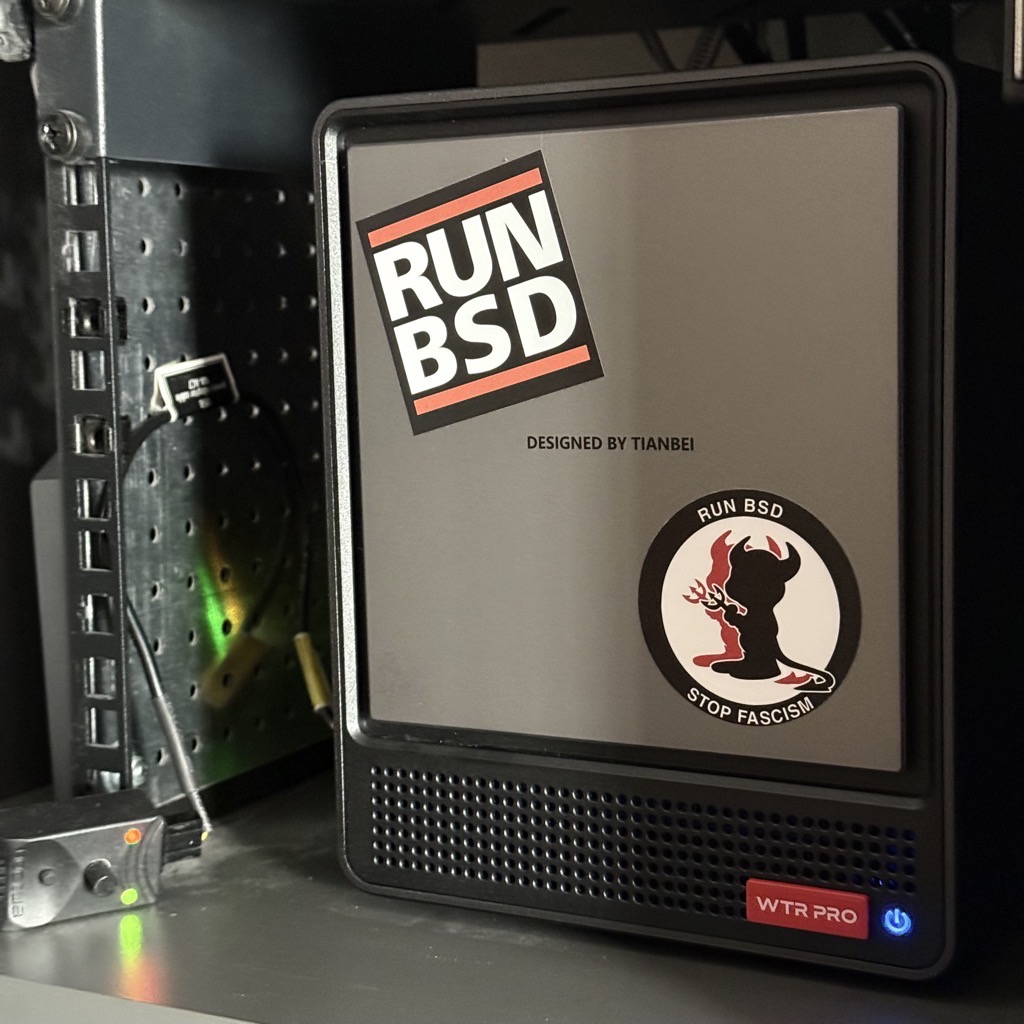
Finding a NAS that provides NVMe and SATA storage while being tiny enough to sit in my 10
A compact NAS option that supports both NVMe and SATA storage is detailed, highlighting its suitability for limited spaces. Learn how the Aoostar WTR Pro balances performance with a small footprint.
25. A Model for Winning Survivor (victoriaritvo.com)
26. Faster NumPy in the Browser (notebook.link)
27. Dropbox's Jan 1st 2027 terms of service (www.dropbox.com)
28. So I have a weatherman, which also tells me the news (dexteroot.net)
Yogiraj's place to post thoughts and experiences
29. Chess Atlas (chess-timeline.vercel.app)
All chess set designs at a glance. A visual grid of 30+ chess sets spanning 1,300 years of design history.
Discover a comprehensive visual grid showcasing over 30 unique chess set designs that highlight 1,300 years of artistic evolution in the game. It’s a fascinating look at how chess sets have changed through the ages.

30. KDE turns 30 and someone's brought an AI-native desktop proposal (www.theregister.com)
Akademy talk imagines Plasma assembling itself around a personal model of each user
KDE’s 30th anniversary features a proposal for an AI-native desktop that could tailor the Plasma environment to individual users’ preferences. This concept aims to create a more personalized computing experience by having the desktop adapt based on how each user interacts with it.