

2. Microsoft exec called AI scraping 'the largest theft of labor in human history' (techcrunch.com)
Newly unsealed court filings show Microsoft privately called OpenAI's data practices "theft" while both companies scraped paywalled Times content, built datasets from it, and warned internally it would gut publishers.
Microsoft’s internal documents reveal its concerns about OpenAI’s data practices, labeling them as “theft” for scraping paywalled content. The filings highlight a significant tension between tech companies and publishers over the use of proprietary information.
3. Cloudflare Quick Tunnels (try.cloudflare.com)
Expose your local server to the Internet with a single command. No account, no DNS, no configuration required.
Quickly make your local server accessible online with just one command, eliminating the need for an account or complex setup. This tool simplifies the process for developers looking to share projects without the hassle of traditional configurations.
4. I don't like passkeys (hawksley.dev)
5. Claude Code now reads AGENTS.md if there is no Claude.md (code.claude.com)
Release notes for Claude Code, including new features, improvements, and bug fixes by version.
The release notes for Claude Code detail the latest features, improvements, and bug fixes organized by version. It’s a useful resource for users looking to stay updated on the software’s development.
6. OpenJev (openjev.com)
Run typed option logits and autoregressive JSON locally with open models and WebGPU.
OpenJev allows users to run typed option logits and autoregressive JSON on local machines using open models and WebGPU technology. This setup could enhance performance for developers working with machine learning and JSON data processing.

7. US Military had close call after using AI for hallucinated intelligence report (www.cnn.com)
The episode shows the risks of using this new, relatively poorly understood technology in the middle of the Iran war
An incident involving the US military highlights the dangers of relying on AI-generated intelligence, particularly in high-stakes situations like the Iran war. The event raises important questions about the reliability and understanding of AI technology in critical defense operations.
8. Hacking OpenAI (www.hacktron.ai)
A heap overflow and SSO misconfiguration to compromise OpenAI internal repositories
A recent security breach involving a heap overflow and single sign-on misconfiguration has led to the compromise of OpenAI’s internal repositories. This incident highlights significant vulnerabilities in the company’s security protocols.

9. Saving another 100TB of RAM with math (and Rust) (blog.cloudflare.com)
Cloudflare's global network is immense but not limitless. As we look for small ways to trim our resource usage, we sometimes get lucky and we can cut significantly more. Here’s how we reduced one of our Pingora-based service's RAM usage with statistics.
Cloudflare has found a way to significantly reduce RAM usage in one of its services by applying statistical methods. This achievement highlights the ongoing efforts to optimize resource consumption in large-scale cloud environments.
10. The first new cat species discovered in 100 years (www.nationalgeographic.com)

11. Alibaba releases Qwen 3.8 Omni Flash (qwen.ai)
Qwen Studio offers comprehensive functionality spanning chatbot, image and video understanding, image generation, document processing, web search integration, tool utilization, and artifacts.
Alibaba’s Qwen Studio now features an upgraded version that enhances its chatbot capabilities and supports image and video understanding, generation, and document processing. With new web search integration and tool utilization, this release expands the potential for various applications in AI-driven tasks.

12. Korea raises data breach fines to 10% of revenue (www.koreajoongangdaily.com)
Companies behind major negligent data leaks can now face fines of up to 10 percent of annual revenue under revised privacy rules.
South Korea has implemented stricter privacy regulations, allowing fines for significant data breaches to reach up to 10% of a company’s annual revenue. This change aims to hold businesses more accountable for protecting consumer data.
13. Jemalloc 5.4.0 (github.com)
This release contains over 160 commits, focusing on the technical debts
cleaning including refactorings, bug fixes, test coverage improvement, and
option cleanups. The release also includes portab...
cleaning including refactorings, bug fixes, test coverage improvement, and
option cleanups. The release also includes portab...
Jemalloc 5.4.0 features significant improvements through over 160 commits, addressing technical debts with refactorings, bug fixes, and enhanced test coverage. This update aims to streamline the memory allocator’s performance and portability.
14. Inside ZCode: Silently uploading your Git history to the cloud (blog.ferstar.org)
ZCode silently packages your entire workspace along with full Git history and uploads it to cloud object storage with server-exclusive decryption keys; this post reconstructs the complete upload pipeline and encryption scheme via local forensics and reverse engineering, and provides a filesystem immutability lock to terminate the behavior permanently.
ZCode automatically uploads your Git history to the cloud, raising concerns about privacy and security. This piece details the upload process, encryption methods used, and how to disable this feature.
15. Bend 2 and the Vibe-Coding Trap (blog.liampwll.com)
16. Warren Buffett Steps Down as Berkshire Chairman, Names Son to Replace Him (www.nytimes.com)
17. Minimal Phone 2 (minimalcompany.com)
18. The Scourge of x86 Emulation (fex-emu.com)
19. I Vibed a Proof of Conway's Conjecture (overreacted.io)
You can just prove things, apparently.
20. ZCode, the GLM coding agent, silently uploads your Git history (tokenstead.ai)
ZCode, the GLM coding agent from Z.ai, uploads full workspaces with .git history, LFS cache and reflogs to Aliyun OSS. UI toggles do not stop it.
ZCode from Z.ai automatically uploads complete Git workspaces, including history and cache, to Aliyun OSS, regardless of user interface settings. This raises concerns about data privacy and control for developers.
21. Show HN: Cactus Needle 3: 8-29MB automation models can match DeepSeek V4 Flash (cactuscompute.com)
A foundation model for mobile, wearables, robots, smart home, automotive and microcontrollers. One 8-29 MB binary that beats models 10x its size on mobile tool calls and matches 2-3x bigger models on extraction.
Cactus Needle 3 introduces enhanced automation features, allowing for efficient tool calls and structured JSON output in models ranging from 8 to 29MB. Following valuable community feedback, this release aims to match the performance of DeepSeek V4 Flash while maintaining a focused design.
22. How SpaceX streamlined the Raptor engine (www.construction-physics.com)
23. Border agents can search cellphones without a warrant or reasonable suspicion (lawandcrime.com)
24. North Korean nuclear test sets off years of earthquakes – Science – AAAS (www.science.org)

25. An Empirical Study of Harness Design for Coding Agents (arxiv.org)
Coding harnesses shape how autonomous coding agents translate model capabilities into long-horizon software-engineering performance, yet existing work typically evaluates harnesses as monolithic systems, leaving the effectiveness of individual components unclear. To enable component-level comparisons, we study this question with a lightweight coding harness whose execution loop is fixed while three components are varied: planning, action space, and context management. Across four models evaluated on SWE-Bench Verified and Terminal-Bench 2.1, we evaluate 176 matched settings spanning five context-management strategies, four context-window budgets, and targeted ablations of planning and action space. We find that: (1) Context management becomes increasingly valuable as the context-window budget tightens, with most of its benefit coming from preventing context-overflow failures. (2) Staging rule-based elision before LLM-based summarization provides the strongest overall efficiency among the context-management strategies, whereas making elided content recoverable adds machinery that models rarely use and yields no accuracy gain. (3) Planning shifts from an accuracy scaffold for weaker models to a cost saver for stronger models, with little change in accuracy. (4) Predefined tools improve performance for models with weaker bash proficiency, whereas bash-capable models can operate effectively with a bash-only interface and achieve substantially lower cost, especially on command-line-centric tasks. Trajectory-level analysis explains these effects: context management extends execution trajectories without substantially altering agent behavior, planning changes where trajectories stop, and the action space changes the granularity at which code is written. These findings inform model- and budget-aware harness design and provide a modular framework for evaluating future harness components.
This study examines how different components of coding harnesses affect the performance of autonomous coding agents in software engineering. By varying planning, action space, and context management, it aims to clarify the impact of these individual elements on long-term performance.

26. Photon-Emission-Guided Laser Fault Injection Enables RP2350 Secure Debug (donjon.ledger.com)
Differential photon-emission microscopy localized debug enable register activity and narrowed the laser search before SWD-guided injection set the two bits required to restore Secure debug on an RP2350 A4.
A new method using differential photon-emission microscopy has improved the precision of laser fault injection in restoring secure debug functionality on the RP2350 A4. This technique enhances the debugging process by localizing register activity and reducing the search area for effective interventions.

27. Warez: The Infrastructure and Aesthetics of Piracy (2021) (archive.org)
When most people think of piracy, they think of Bittorrent and The Pirate Bay. These public manifestations of piracy, though, conceal an elite worldwide,...
The article examines the hidden networks and sophisticated culture behind piracy, revealing that there is much more to the phenomenon than just popular sites like Bittorrent and The Pirate Bay. It sheds light on the elite infrastructures that support this underground world.
28. There's no point at which turning your brain off will work (danluu.com)
29. US troop deaths during Iran war exceed Pentagon count by at least four (www.reuters.com)
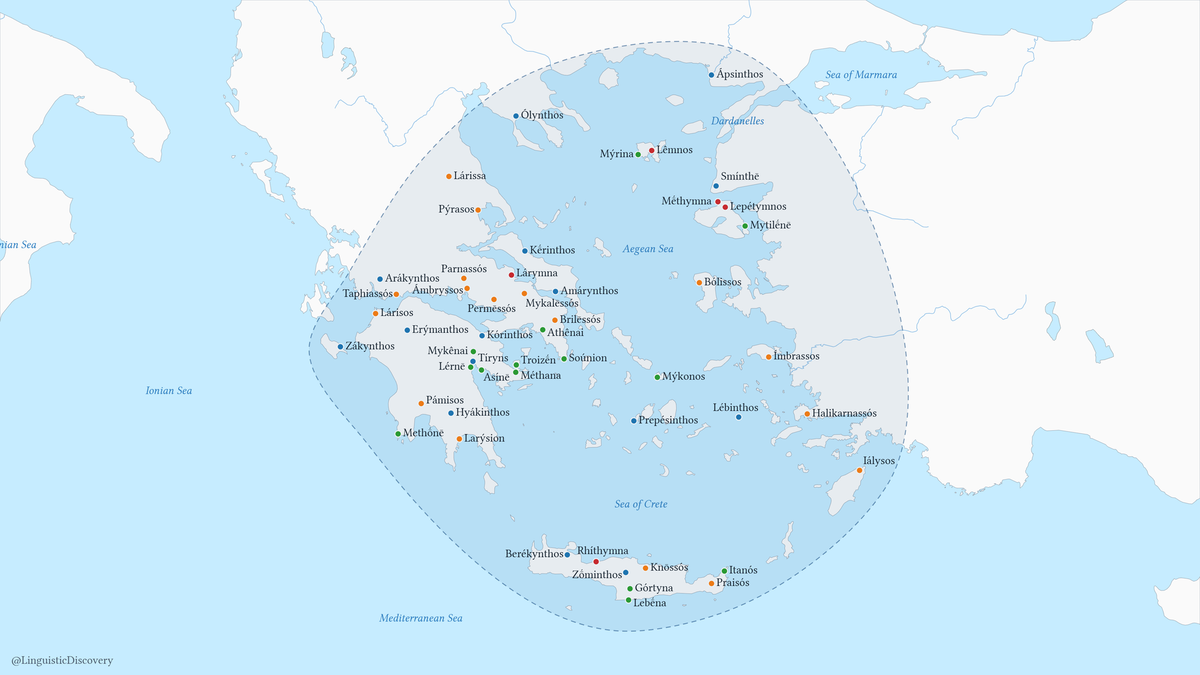
30. Pre-Greek: The lost language hidden within Ancient Greek (linguisticdiscovery.com)
Around 1,000 Greek words can’t be traced to any Indo-European language. Where do they come from?
Ancient Greek contains approximately 1,000 words that have no known connections to Indo-European roots. This article investigates the origins of these mysterious terms and what they reveal about the language’s development.