1. C++26: Trivial infinite loops are no longer undefined behaviour (www.sandordargo.com)

Let’s start with a question! Is this program well-defined? 1 2 3 4 int main() { while (true) ; } If you said yes, you’d be wrong — at least before C++26. A while (true); loop with no side effects used to be undefined behaviour. Compilers were free to assume it terminates, and some — Clang in particular — would optimize it away entirely, with spectacular consequences: 1 2 3 4 5 6 7 8 9 10 11 // https://godbolt.org/z/WYMxxeW1T #include <iostream> int main() { while (true) ; } void unreachable() { std::cout << "Hello world!" << std::endl; } In…

C++26 changes the status of infinite loops without side effects, which were previously considered undefined behavior. This update allows developers to write such loops confidently, knowing that compilers will treat them correctly instead of optimizing them away.


2. More than 100k people in Japan are now aged 100 or older (www.bbc.com)

Figures show 88% of the centenarians are women as the population continues to age and shrink.

Japan’s centenarian population has surpassed 100,000, with a striking 88% being women, highlighting the country’s ongoing demographic shifts as it faces an aging and declining population.

3. Apple releases iPhone Duo simulator and Xcode 27.1 beta (developer.apple.com)

Update your apps to use new features, and test your apps against API changes.

Apple’s latest beta release of Xcode 27.1 includes a simulator for the iPhone Duo, allowing developers to adapt their applications to new features and API updates. This is a crucial step for app creators looking to stay current with Apple’s evolving platform.

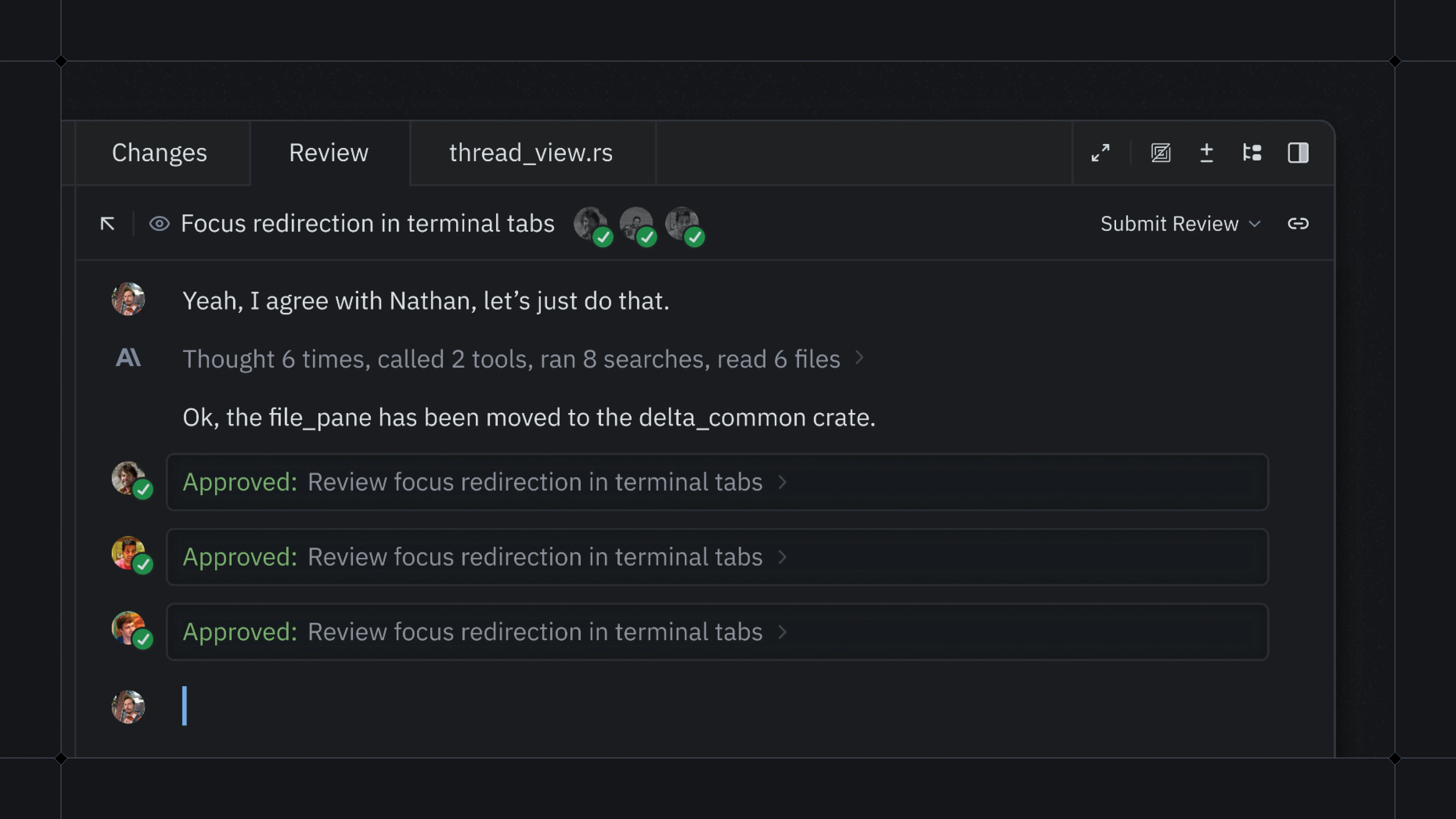
4. Replacing Pull Requests with Delta (zed.dev)

From the Zed Blog: Delta is now in public beta. Replacing pull requests is our first step toward replacing GitHub.

Delta, currently in public beta, aims to replace pull requests as part of a broader initiative to challenge GitHub’s dominance in version control. Discover how this new tool could change the way developers collaborate on code.

7. Waymo in Singapore (waymo.com)

Waymo is bringing its autonomous rides for Singaporeans. Learn about Waymo

Waymo is launching its self-driving ride services in Singapore, expanding its footprint in the autonomous vehicle market. Discover what this means for local transportation options.

8. Cache-to-Cache: Direct Semantic Communication Between Large Language Models (arxiv.org)

Multi-LLM systems harness the complementary strengths of diverse Large Language Models, achieving performance and efficiency gains that are not attainable by a single model. In existing designs, LLMs communicate through text, forcing internal representations to be transformed into output token sequences. This process both loses rich semantic information and incurs token-by-token generation latency. Motivated by these limitations, we ask: Can LLMs communicate beyond text? Oracle experiments show that enriching the KV-Cache semantics can improve response quality without increasing cache size, supporting KV-Cache as an effective medium for inter-model communication. Thus, we propose Cache-to-Cache (C2C), a new paradigm for direct semantic communication between LLMs. C2C uses a neural network to project and fuse the source model's KV-cache with that of the target model to enable direct semantic transfer. A learnable gating mechanism selects the target layers that benefit from cache communication. Compared with text communication, C2C utilizes the deep, specialized semantics from both models, while avoiding explicit intermediate text generation. Experiments show that C2C achieves 6.4-14.2% higher average accuracy than individual models. It further outperforms the text communication paradigm by approximately 3.1-5.4%, while delivering an average 2.5x speedup in latency. Our code is available at https://github.com/thu-nics/C2C.

Research into multi-LLM systems reveals that allowing direct semantic communication between models can enhance performance and reduce latency. The findings suggest that bypassing traditional text-based communication could retain more nuanced information and improve efficiency.

9. When the fractional part of a float fixes your shader (crocidb.com)

A write-up of a full shader debugging session to find out why my Voronoi Diagram shader was stuttering in one specific machine.

A detailed account of troubleshooting a stuttering issue in a Voronoi Diagram shader reveals how a simple oversight with the fractional part of a float caused the problem. This session highlights the intricacies of shader debugging and offers insights for developers facing similar challenges.

13. Telstra outage: The night a network decided the year was 2006 (www.netnod.se)

A single GPS receiver in a Melbourne chassis came back from maintenance believing it was 2006 — and a national mobile network believed it. What went wrong, and why.

A malfunctioning GPS receiver in Melbourne caused a major national mobile network to mistakenly revert to 2006, leading to widespread outages. The article investigates the technical mishap and its implications for network reliability.

14. Mathematicians Build Long-Awaited Graph Sandwich (www.quantamagazine.org)

The proof of a decades-old conjecture has given researchers a new way to understand complex networks.

Researchers have developed a proof for a long-standing conjecture that enhances our understanding of complex networks. This breakthrough could significantly impact various fields that rely on network analysis.

15. Cyclomatic Complexity in C# (blog.ndepend.com)

A lot of programmers bandy about the term Cyclomatic Complexity. See what this means, in depth: definition, examples, and implications for your code.

Understand the concept of Cyclomatic Complexity, including its definition and practical examples, to improve your coding practices and maintainability in C#.

16. The Implications of Linguistic Illegibility for LLM Security (arxiv.org)

LLMs are trained to generate natural language. However, various strands of evidence indicate that an LLM's externalized linguistic outputs and mechanistically-extracted linguistic features can be an unreliable lens for understanding internal model computation. We introduce the term ``linguistic illegibility'' to broadly refer to scenarios in which an LLM's externalized or mechanistically-probed language artifacts fail to represent how the model actually thinks. We argue that the specter of linguistic illegibility is unavoidable for LLMs whose internal computations are not directly expressed via language, but rather math over activation spaces (with lossy translations between activation spaces and natural language happening at the bookends). If linguistic illegibility is always possible, then security mechanisms that rely on a model's linguistic self-reporting (e.g., chain-of-thought monitoring, constitutional self-critique, activation probing for linguistically-defined feature vectors) can never be completely sound; the model sandbox will always need isolation techniques whose guarantees do not depend on reading a model's linguistic state at all. We argue that observing a model's outputs using taint tracking is a promising approach for an effective sandbox: regardless of how a model linguistically self-reports, a taint tracking policy can define, a priori, various pieces of system state that should never be influenced by model-produced data. We also discuss several additional sandboxing mechanisms (e.g., robust virtualization, third-party auditing of sandboxing configurations) which collectively provide a critical floor beneath linguistic monitoring, and would have mitigated recent sandbox exploits by frontier models.

The concept of “linguistic illegibility” highlights how the outputs of large language models may not accurately reflect their internal processes, raising concerns about their reliability and security. Understanding these discrepancies is crucial for improving LLMs and mitigating potential risks in their applications.

17. Show HN: 500 TB internet index in ClickHouse, with congestion pricing (scry.io)

Give your agent the internet hypercube. Run programs over billions of documents, for fun and profit.

Scry is a massive 500 TB internet index that allows users to run SQL queries and Datalog, addressing resource contention through a unique congestion-based pricing model. With free access for non-commercial use when capacity allows, it presents an innovative solution for efficient internet searching.

21. A search-and-inference database from scratch in pure Zig (antfly.io)

Why we rewrote Antfly's Go engine in Zig while the startup was still early: first principles, caring about the model instead of the embeddings, TigerBeetle-style simulation testing, and what the rewrite made possible.

The team behind Antfly shares their decision to transition from Go to Zig for their search-and-inference database, emphasizing a focus on fundamental principles and model integrity. The article highlights the benefits of this approach, including enhanced simulation testing and new possibilities it unlocked for their project.

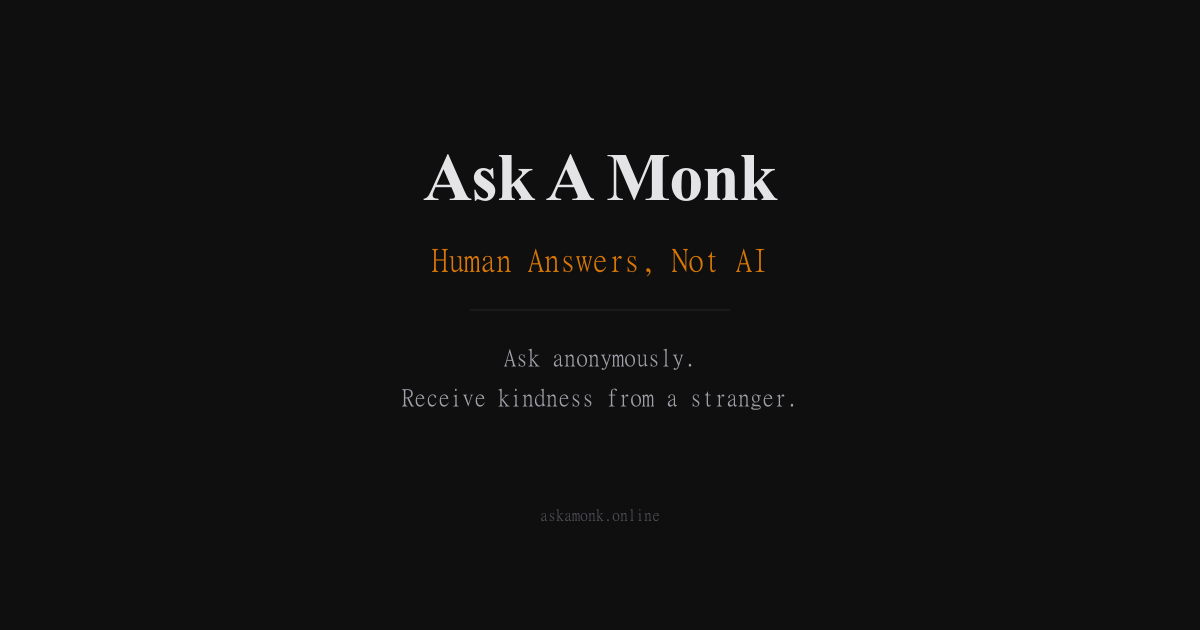
22. Ask A Monk – A digital wilderness for thoughts with no immediate answer (askamonk.online)

Ask anonymously. A stranger—not AI—will answer, because some things are easier to tell someone who doesn't know you.

A new platform allows users to ask questions anonymously and receive thoughtful responses from real people, fostering a space for honest dialogue without the pressure of familiarity. It’s an intriguing option for those seeking candid advice or insights on personal matters.

27. New wild cat species discovered – with only one known living member (www.bbc.com)

A spotted wildcat long mistaken for relatives has been identified as a new species in Bolivia.

Researchers have identified a new wild cat species in Bolivia, previously misclassified among its relatives, with only one known living member. This discovery adds to the biodiversity of the region and raises questions about conservation efforts for such rare animals.

29. Landing the Space Shuttle – A Flying Machine and the Thrill of a Lifetime (inspire.eaa.org)

This was my first landing at the controls of Atlantis, and it was the culmination of a 10-day mission to the Russian Mir to deliver supplies and a fresh crew for the space station. In just about th…

Experience the adrenaline of landing the Space Shuttle Atlantis after a 10-day mission to the Russian Mir, where the author reflects on the challenges and triumphs of space travel. This personal account highlights the unique moments faced by astronauts in orbit.

Article Details

Browse by Date

Type to search HN and engineering blog articles
Press Escape to close  |  ↑↓ to navigate  |  Enter to open