1. Tracing np.add, all the way down (blog.veitheller.de)

The notes for this blog post have been sitting in my drafts folder for half a year now. I’ve done a little work on NumPy itself in the past year. Nothing…
2. Disappointed Optimists (cwodtke.com)

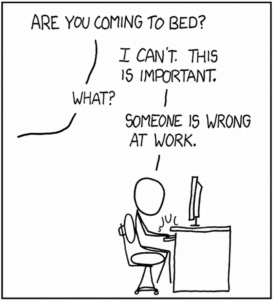
Every time I give a talk on design, someone finds me afterward. They wait out the handshakes and the business cards, and then they ask a version of the same question. How do I make THEM do things the RIGHT WAY?Not as funny as the original, but you get my point. I hope. Maybe. Oh yeah, chatGPT

Design professionals often grapple with the challenge of motivating others to adopt best practices. This piece reflects on the common frustrations faced during talks, highlighting a recurring question from attendees about influencing others effectively.

4. Extinct Tasmanian tiger's 'snap' unlike any living mammal's bite (www.cnn.com)

The Tasmanian tiger, which went extinct almost a century ago, had a rare combination for a carnivorous mammal: a huge skull and a lethal snap.

Research reveals that the extinct Tasmanian tiger possessed a unique bite mechanism, combining a large skull with an exceptionally powerful snap, setting it apart from all living carnivorous mammals. This finding sheds light on the animal’s predatory capabilities and evolutionary adaptations.
7. OUI-1: world's first model for Generative UI (www.openui.com)

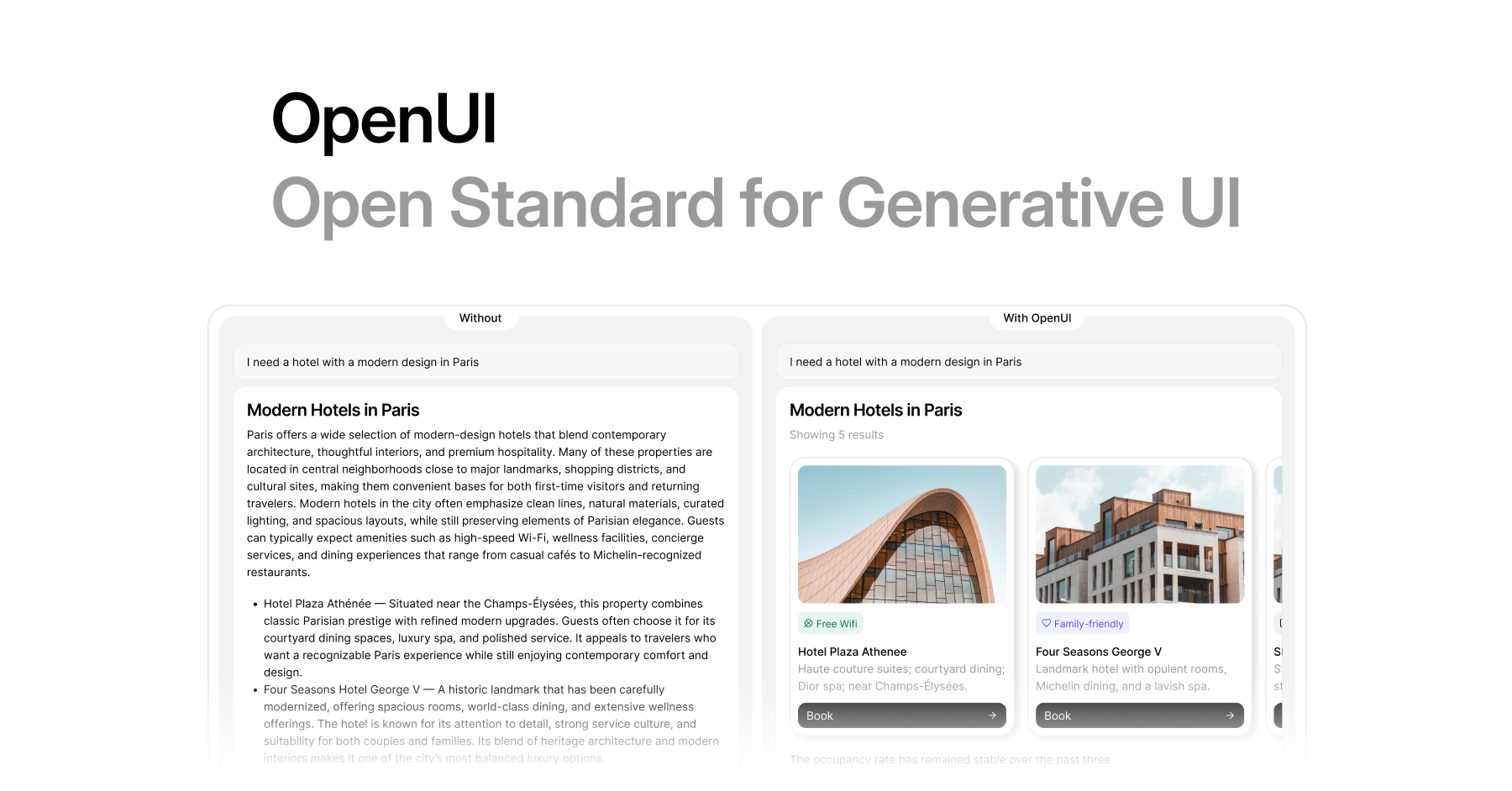
Full-stack, renderer-agnostic Generative UI with a streaming-first language, official React support, community integrations, and up to 67% fewer tokens than JSON.

OUI-1 introduces a new model for Generative UI that supports React and offers significant efficiency with up to 67% fewer tokens than JSON. It aims to streamline development with a full-stack, renderer-agnostic approach and a focus on streaming capabilities.

8. My business partner sent a 5K vibe-coded PR that he didn't even test (ycj.bearblog.dev)

The whole payments backend module, which I specifically told him to work together with me (I do frontend), was vibe-coded by him in one single day.

How ni...

A business partner’s rushed decision to code a payments backend without proper testing leads to unexpected complications. The author shares their frustration and highlights the importance of collaboration in software development.
13. Making Teenagers Read Newspapers. A Nationwide Experiment in French High Schools (cepr.org)

Despite unprecedented access to information in the digital age, young citizens face growing challenges related to news consumption and misinformation. This large-scale randomized controlled trial examines the impact of two complementary interventions designed to foster media literacy and the consumption of high-quality news among high-school students, implemented in France over the 2024-25 academic year. The study involves 243 high schools (for a total number of 9,628 students), randomly assigned to a control group or to receive one or both of the following interventions: (i) a one-year free digital subscription to the leading national newspaper, and (ii) media education modules implemented by teachers. Exploiting unique data on students' actual online news consumption, we document a very large uptake of the free subscription, which translates into persistent and large increases in news consumption (+0.49 to 0.60 sd) and demand for future news, including an 8pp increase in paid subscriptions nearly a year after the intervention. We also observe a 0.20 to 0.31 sd increase in news knowledge for students enrolled in deprived schools, reducing baseline information inequality by 45-70%. Finally, we show that both free news access and media education improve media literacy skills (+0.08 to 0.26 sd), with larger effects among students taught by teachers with prior experience in media education.

A recent experiment in French high schools aims to improve media literacy and promote quality news consumption among teenagers. By engaging nearly 10,000 students through targeted interventions, this study seeks to address the challenges of misinformation in today’s digital landscape.

15. Tyranny of Optionality (hvpandya.com)

Being high potential in tech careers comes with a real stress of not really enjoying your present.

Tech professionals often feel the pressure of endless choices and high expectations, which can overshadow their current job satisfaction. This piece examines the impact of these stresses on their mental well-being and career fulfillment.
17. Why I'm Not Excited About the Graphene OS and Motorola Partnership (podcast.switchedtolinux.com)

β€œGrapheneOS has entered into a partnership with Motorola to create phones for the custom Android version, but I have a lot of questions and concerns. This is why I am not excited about this partnership.”

The partnership between GrapheneOS and Motorola aims to produce phones featuring a custom version of Android, but the author raises significant doubts and concerns regarding its potential outcomes. The piece outlines specific issues that could impact user experience and privacy.
18. An overview of how our family is prepared (michaelharley.net)

Richmond keeps throwing water problems at us, so we've built our preps around that instead of the zombie apocalypse stuff. What does your local threat model look like?

The article discusses how a family’s preparedness plans have shifted focus from typical disaster scenarios to addressing specific local challenges, like water issues in Richmond. It encourages readers to consider their own local threats when planning for emergencies.

19. Show HN: DriveSync – fast Git-styled Google Drive sync CLI (github.com)

Superfast Google Drive CLI to sync files & folders - scaleninja/drivesync

DriveSync offers a command-line interface for quickly syncing files and folders with Google Drive, making it an efficient tool for developers and tech enthusiasts who prefer Git-style operations. If you’re looking for a faster way to manage your Google Drive, this tool might be worth checking out.

21. A Screensaver for LG's Spying Smart TVs (weowntheglass.com)

Five centuries of revolt, rendered continuously into your television

An artistic screensaver for LG smart TVs transforms them into a canvas displaying five centuries of rebellion. This unique installation offers viewers a thought-provoking visual experience that challenges the conventional use of televisions.

23. Prompting Is Dead in 6 Months. Andrew Ng, Stanford [video] (www.youtube.com)

During the lecture at Stanford, Andrew Ng gave a direct warning: Prompting will be dead in 6 months. Graphs are what's replacing it.He breaks down why prompt...

Andrew Ng argues that traditional prompting methods will soon become obsolete, with graphs taking their place. He outlines the reasons behind this shift during his Stanford lecture, making it a must-watch for those interested in the future of AI interaction.

25. Robot writes in languages it has never seen before (www.wired.com)

After training to hand-write Japanese characters, the robot could then copy words in Hindi, Greek, and English just by looking at examples.

A robot trained to hand-write Japanese characters has demonstrated the ability to replicate words in Hindi, Greek, and English simply by observing examples. This breakthrough highlights the potential for machines to learn new languages without prior exposure.

26. Reverse engineering the 2008 LogiCola, a logic drill program (logicola.org)

Building LogiCola's new design language from what I found reverse-engineering the 2008 original.

The article details the process of reverse-engineering the 2008 logic drill program LogiCola, focusing on the development of its new design language. It offers insights into the challenges and discoveries made while updating this classic software.
Article Details

Browse by Date

Type to search HN and engineering blog articles
Press Escape to close  |  ↑↓ to navigate  |  Enter to open