2. Show HN: LLM Attention Visualization (ishamf.dev)
Visualize how attention works in large language models with this new tool, which provides insights into the inner workings of AI language processing. It’s a valuable resource for anyone looking to understand or teach LLM functionality.
3. My Feed, My Way (www.pm.gov.au)
The Albanese Government is advancing its social media age restrictions with new draft legislation aimed at enhancing online safety and user control. The proposed “My Feed, My Way” initiative will empower Australians by allowing them to tailor their online experiences according to set minimum standards for digital service providers.
4. Emacs Bedrock 2.0 (lambdaland.org)
5. How well do agents use test/verification techniques? (danluu.com)
6. The 92-Year-Old Mathematician and the Teenage Apprentice (www.nytimes.com)
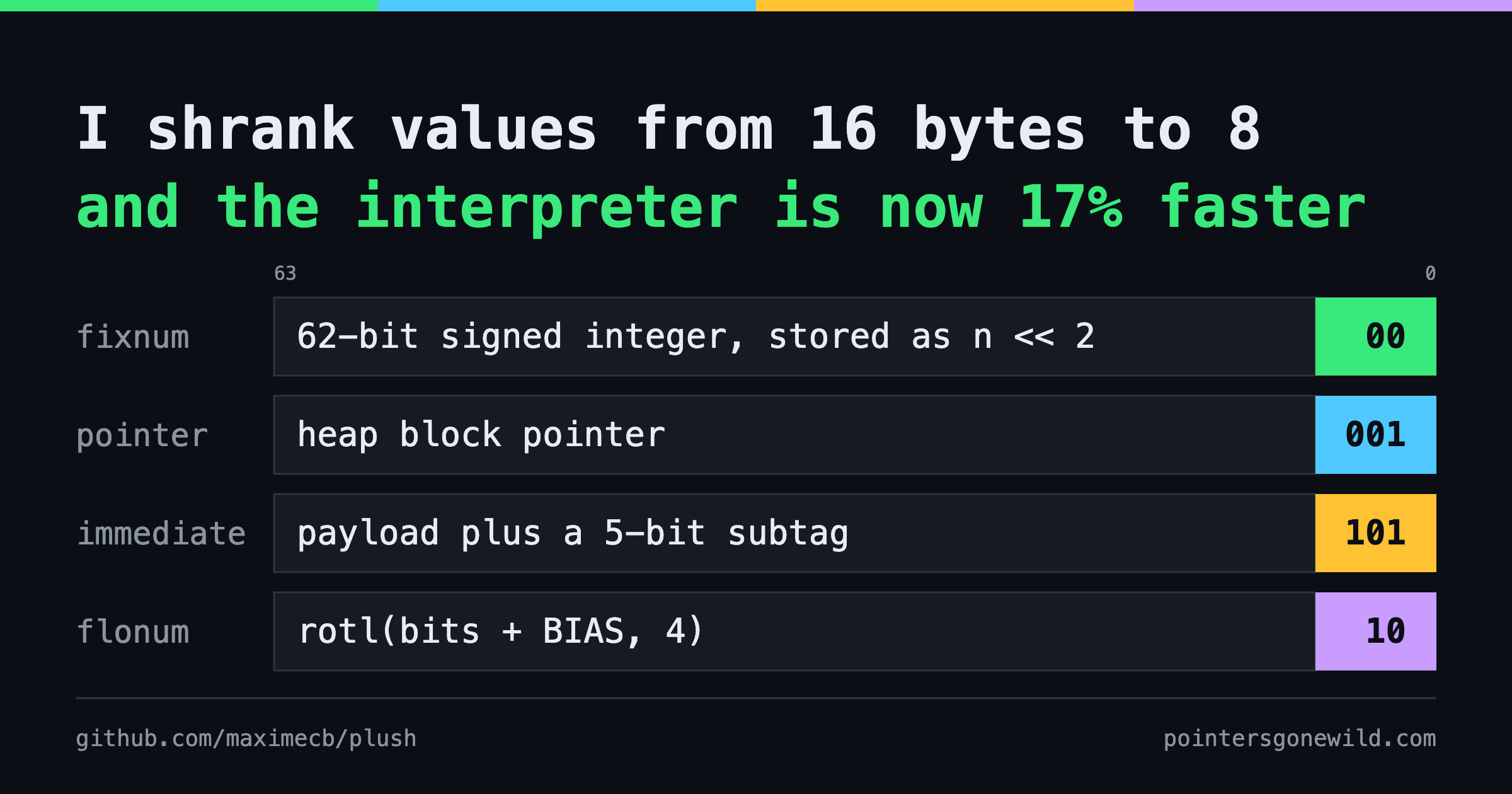
7. Replacing a Rust Enum with a 64-Bit Word Made My Interpreter 17% Faster (pointersgonewild.com)
A performance improvement in a Rust interpreter was achieved by switching from an enum to a 64-bit word, resulting in a significant 17% speed boost. The article details the implications of this change and its impact on efficiency.
8. OpenAI fought dirty on career-making math problem (techcrunch.com)
9. Trey Parker and Matt Stone Are Changing the Name of South Park to South America (twitter.com)
“Inspired by the bravery and patriotism of Apple and Google, we are changing the name of South Park to SOUTH AMERICA. We especially want to thank our parent co…
10. FreeBSD 14.5-Release (www.freebsd.org)
11. 100s of flights cancelled at UK airports due to ATC issue (www.bbc.com)
12. John Margolies' Photographs of Roadside America (publicdomainreview.org)
13. Multi-Agents LLM Financial Trading Framework (github.com)
14. I tested 10 model/harness combinations on the same Three.js task (alvins82.github.io)
16. ZX Spectrum: Experimenting with 1-Bit Sound (bumbershootsoft.wordpress.com)
The article details the author’s efforts to create sound routines for the ZX Spectrum’s 1-bit beeper, drawing inspiration from their previous experience with the Apple II. It’s a fascinating look at how retro computing can revive simple audio techniques.
17. GamersNexus and LG: Or why rooting your TV is a bad idea (leaflet.pub)
GamersNexus highlights the pitfalls of rooting your TV, particularly focusing on security vulnerabilities and questionable practices from companies like LG. If you’re considering modifying your smart TV, this piece offers crucial insights into the potential risks involved.
18. AlphaGenome Atlas predictive map of every DNA letter change in the human genome (deepmind.google)
19. Disconnect your LG television from the internet, now (appleinsider.com)
LG televisions may compromise your privacy even if you use an Apple TV for streaming. Taking steps to disconnect your TV from the internet is crucial for safeguarding your personal data.
20. Connecting the Machines (herdr.dev)
Herdr 0.9 merges local and remote machines into a single terminal user interface, with insights into the delays in its development and future plans for Herdr Cloud. Discover the challenges faced and the potential of this innovative tool.
21. Arm Mali G2-Ultra NX GPU: desktop-class mobile gameplay with AI-native graphics (newsroom.arm.com)
Arm’s new Mali G2-Ultra NX GPU promises to elevate mobile gaming by integrating AI-native graphics and enhanced neural acceleration, aiming to deliver a desktop-like experience on portable devices. This advancement could significantly change how games look and perform on smartphones and tablets.
22. Y Combinator Early Access Network (events.ycombinator.com)
23. C*: Unifying Programming and Verification in C (arxiv.org)
We introduce C*, a proof-integrated language design for C programming. C* extends C with verification capabilities, powered by a symbolic execution engine and an LCF-style proof kernel. It enables real-time verification by allowing programmers to embed proof-code blocks alongside implementation code, facilitating interactive updates to the current proof state. Its expressive and extensible proof support allows users to build reusable libraries of logical definitions, theorems, and programmable proof automation. Crucially, C* unifies implementation and proof code development by using C as the common language.
We implemented a prototype of C* and evaluated it on a representative benchmark of small C programs and a challenging real-world case study: the attach function of pKVM's buddy allocator. Our results demonstrate that C* supports the verification of a broad subset of C programming idioms and effectively handles complex reasoning tasks in real-world scenarios.
C* aims to bridge the gap between programming and formal verification, addressing the challenges that prevent programmers from engaging in the verification of their own systems software. By integrating these processes, it seeks to reduce development costs and improve the reliability of safety-critical applications.
24. Implementation of GCC's Nested Functions (vs. C++ Lambdas) (uecker.codeberg.page)
25. Animation in Bevy: The Big Picture (glocq.com)
26. End-to-end infrastructure for training and inferencing open weight models (docs.appliedcompute.com)
27. Understanding Computer Memory Architecture and SSD Internals (codingpirate.com)
28. US police fear Meta smart glasses could be used to secretly record them (www.theguardian.com)
Law enforcement officials across the U.S. are expressing concerns that Meta’s smart glasses could be misused for covertly recording police activities or facilitating terrorist acts. This growing apprehension highlights the potential implications of wearable technology on public safety and privacy.
29. The VMs Powering Mobile Agents (Instinct, Claude Code) (rohanadwankar.github.io)
30. Extracting Steering Vectors from J space (darshanmakwana412.github.io)
The article discusses using jacobian space to interpret the intermediate activations of large language models and proposes a method for generating steering vectors based on specific tokens. It offers insights into how this approach could enhance our understanding of model behavior and improve interaction with AI systems.