1. Launch HN: Risklytics (YC S26) – Insurance brokerage for frontier tech companies (www.risklytics.ai)

Build and review a commercial insurance application for companies putting AI to work.

Sam and Alex, Harvard founders of Risklytics, are addressing the unique insurance needs of companies developing cutting-edge technologies like robots and drones. They specialize in matching these businesses with insurers and ensuring that clients fully understand their policies before committing.


2. X sends in the lawyers to shut down open source project (www.theregister.com)

Cease and desist letters from firm headed by free speech absolutist

A legal battle is brewing as X targets an open source project with cease and desist letters from a law firm known for its stance on free speech. The implications for the open source community could be significant.

4. WebMCP: Teaching Your Website to Talk to AI Agents (sreenathmenon.com)

Right now, when an AI agent uses a website, it squints at the screen like a person would: reads the pixels, guesses which button is checkout, clicks, and hopes. It’s slow, brittle, and it breaks the moment you move a div. WebMCP flips that around. Instead of the agent guessing what your site can do, your site just tells it, in plain, structured tools the agent can call directly. It’s an early web standard, it’s in Chrome right now behind a trial, and once you see it you’ll want to add a tool to your own site in about ten minutes. Here’s how it works and why it matters.

WebMCP allows websites to communicate directly with AI agents, streamlining interactions by providing structured tools instead of relying on guesswork. Currently in trial in Chrome, this emerging standard could significantly enhance the efficiency of AI interactions on the web.

5. Designation of Autistici/Inventati as a Specially Designated Global Terrorist (www.state.gov)

Today, the Department of State, in partnership with the Department of the Treasury, is announcing the designation of Autistici/Inventati as a Specially Designated Global Terrorist. Autistici/Inventati (A/I Collective) is an Italy-based extremist group that builds and operates the digital infrastructure for violent Antifa cells and other far-left militants across the world. A/I’s cadre of radical […]

The U.S. government has classified the Autistici/Inventati group as a global terrorist organization, citing its role in supporting violent far-left movements and providing digital tools for extremist activities. This designation reflects growing concerns about the group’s influence and operations on a global scale.

6. Letter from Dolly Parton to Eminem (twitter.com)

I'm sorry we never got a chance to meet, but getting this note from Dolly really had a an impact on me. She definitely didn't have to take the time to do it. Even for a kid who mostly listened to rap music, she was an icon. A superstar in every sense. Rest easy Dolly. And thank

Dolly Parton’s heartfelt note to Eminem left a lasting impression on the rapper, highlighting her significance even in genres outside her own. The unexpected connection between these two music legends shows the universal respect for her influence.

7. A Citation to Asimov (www.bookandsword.com)

A few times in the past few years, I have felt the need to cite the passage in his memoirs where Isaac Asimov explained...

The piece reflects on instances where Isaac Asimov’s memoirs provide valuable insights, particularly highlighting a specific passage that resonates with the author’s experiences. Readers interested in Asimov’s perspective will find thought-provoking connections to modern challenges.

8. The End of Programming (pauldix.com)

Creating software by writing code by hand and having humans review it is coming to an end. Why the Bun 1.4 release marks the end of programming as we've known it.

The Bun 1.4 release signals a shift away from traditional coding practices, suggesting that software creation may become more automated and less reliant on human intervention. This change could reshape how developers approach programming in the future.

9. Students prefer Gemini over ChatGPT and Claude for AI essays in blind tests (studyarena.com)

StudyArena analyzed 6,851 blind student votes across ChatGPT, Claude, Gemini, and other models. Gemini is our current pick for college essay help.

A recent analysis of over 6,800 student votes reveals a clear preference for Gemini over ChatGPT and Claude for AI-assisted essay writing. The findings suggest that Gemini may be the most effective tool for college students seeking help with their essays.

10. Infrastructure as Raclette (lois.postu.la)

LoΓ―s Postula writes about platform engineering, self-hosted infrastructure, build systems, CI/CD, observability, security, and reliable software delivery.

LoΓ―s Postula discusses the intricacies of platform engineering, focusing on self-hosted infrastructure and the essential components like CI/CD and security that ensure reliable software delivery. This piece offers insights into how these elements can enhance observability and streamline build processes.

12. Debian polls its developers on AI: permit or ban? (www.theregister.com)

Eight-way ballot on AI code puts the distro

Debian is seeking input from its developers on whether to allow or prohibit AI-generated code in its projects, presenting an eight-option ballot for consideration. The outcome could significantly impact the future direction of the popular Linux distribution.

13. Just say something people want (www.gkogan.co)

You've worked your heart out building your startup. You’ve convinced the smartest investors to pour millions into your vision. You’ve recruited a dedicated, world-class team. Your conviction is immutable, and the timing couldn't be better to make your long-sought lasting dent in the world.

Successful startups are built on more than just passion and investment; they need to resonate with what people truly want. This piece discusses the crucial importance of aligning your vision with market demand to achieve lasting impact.

14. Social media use on the rise among Australian under-16s after ban: data (www.france24.com)

Australian under-16s are increasing their use of social media apps such as Instagram and Tiktok despite a world-leading ban, data provided by a parental control software company showed Wednesday.

Despite a ban on social media use for those under 16 in Australia, new data reveals that usage among this age group is on the rise, particularly for popular platforms like Instagram and TikTok. This trend raises questions about the effectiveness of the ban and the evolving relationship between youth and social media.

15. How HN: Qisutu – an open-source, self-hosted ticketing and service desk (github.com)

Qisutu – Open Source Ticket System. Contribute to qisutu/qisutu development by creating an account on GitHub.

Qisutu is an open-source ticketing and service desk system that can be self-hosted, allowing users to customize and manage their support processes. The project is available for collaboration on GitHub, making it an appealing option for those looking to contribute to or utilize a flexible ticketing solution.

17. AurionMail: E2EE suite (CryptPad/Stalwart) with single-password UX (github.com)

It is ProtonMail UX, but really open-source and self-hostable - AurionMail/docs

AurionMail offers an open-source, self-hostable email solution that combines end-to-end encryption with a user experience similar to ProtonMail. It’s designed for those seeking secure communication without compromising on usability.

19. Memory Ordering in CPUs (fgiesen.wordpress.com)

I frequently see statements about differences between strongly ordered architectures (like x86 or SPARC) and weakly ordered architectures (like ARM or RISC-V), with the confident assertion that wea…

The article discusses the distinctions between strongly and weakly ordered CPU architectures, focusing on how these differences impact performance and programming. Understanding these concepts is crucial for developers working with various hardware platforms.

24. Show HN: Every push-up becomes an attack in a camera-counted RPG game (pushup.quest)

Turn real pushups and squats into an epic RPG. The camera counts every rep on-device β€” your reps are the only weapon.

Transform your workout into an engaging RPG where each push-up and squat becomes an attack against enemies. With a camera tracking your movements, your fitness routine directly influences your in-game progress.

25. Product Development is being Rewritten (revyl.com)

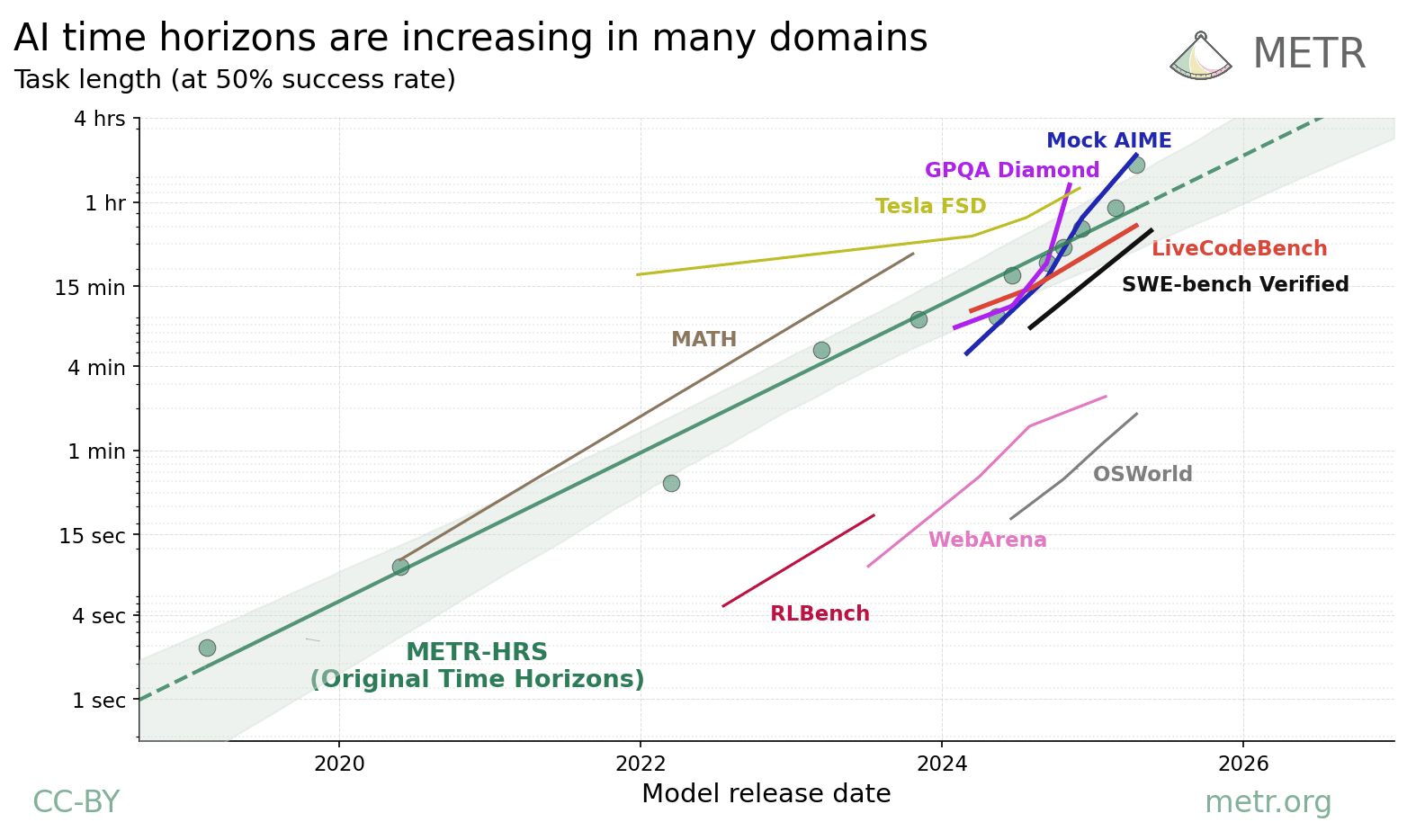
Coding agents are getting better at an exponential rate, this can be seen evidently, with benchmarks getting saturated, models being able to complete longer and longer tasks asynchronously.

Coding agents are rapidly improving, demonstrating their ability to handle increasingly complex tasks more efficiently. This shift could significantly change how products are developed in the tech industry.

26. Show HN: TexLite – A lightweight self-hosted LaTeX workspace (github.com)

TexLite: A lite web-based latex editor. Contribute to SWUFE-DB-Group/TexLite development by creating an account on GitHub.

TexLite is a lightweight, web-based LaTeX editor designed for self-hosting. It’s open for contributions on GitHub, making it a potential tool for those looking to customize their LaTeX workspace.

27. Show HN: Prompt Builder – Free Templates (www.promptbuilder.space)

Browse 7180+ free AI prompt templates across marketing, software development, customer support, operations, education, healthcare, and more. Copy ready-to-use prompts and explore the wider Prompt Builder workflow for blocks, variables, testing, translation, and sharing.

29. I miss the old Claude Code (alexkras.com)

Like many others, Anthropic won me slowly, over time. I started with generative AI through a web interface I hosted myself, using my own API keys through Open Router and my own local models.

Anthropic’s Claude AI has evolved significantly, and the author reflects on their journey from using self-hosted generative AI to exploring Claude’s capabilities. The piece offers a personal perspective on how user experiences with AI can change over time.

30. A Thread-Register Decoupled GPU Execution Model for Efficient Tensor Computation (arxiv.org)

Modern GPUs increasingly integrate Tensor Cores into the execution pipeline. Although aggregate tensor throughput continues to grow, aided by an operand supply that has evolved from register-based in Ampere to redundancy-free, memory-based in Hopper and Blackwell, efficiently orchestrating the complete tensor compute pipeline for the modern AI workloads remains challenging. We identify the fundamental bottlenecks as fixed parallelism and coarse-grained scheduling, both of which are exposed by modern AI workloads that interleave diverse non-GEMM operations with GEMM. To orchestrate tensor computation efficiently, we propose FIBER, a new architecture that extends the GPU SIMT (single instruction, multiple thread) model. Its basic execution instance, the \emph{fiber}, is decoupled from private register ownership, carrying only minimal control state while accessing an SM's registers through a shared view. This enables dynamic parallelism scaling, fine-grained register-level dataflow scheduling, and offers a redundancy-free alternative for matrix operand supply. We extend the ISA, microarchitecture, and compiler to realize shared-register addressing, conflict-free operand delivery, and fiber-based program mapping. Under a typical mixed-precision LLM serving scenario, FIBER achieves a 2.25x end-to-end speedup on Ampere (1.15x for the original FP16 computation), with 1.8x and 2.09x on Hopper and Blackwell respectively, and kernel-level gains up to 2.49x.

A new execution model for GPUs aims to enhance tensor computation efficiency by addressing bottlenecks in parallelism and scheduling. This approach leverages the latest architectural advancements in GPUs to better meet the demands of AI workloads.

Article Details

Browse by Date

Type to search HN and engineering blog articles
Press Escape to close  |  ↑↓ to navigate  |  Enter to open