1. Canada will match US tariffs 'dollar for dollar' as trade talks break down (www.bbc.com)

A new 50% levy on $20bn of Canadian imports comes into force after a last-minute breakdown in trade talks.

Canada plans to impose a matching 50% tariff on $20 billion worth of U.S. imports following the collapse of recent trade negotiations. This move signals escalating tensions between the two countries and could have significant implications for cross-border trade.

2. Canada suspends trade negotiations with USA and match tariffs dollar for dollar (www.pm.gc.ca)

We have recognised from the beginning that America has changed, and that we will not return to our old relationship. Our government understood, before many, that America is altering all its trade relationships. Putting tariffs on its closest allies and charging for access to its vast market.

Canada has decided to halt trade negotiations with the U.S. and will implement matching tariffs in response to America’s shifting trade policies. This move reflects a significant change in the bilateral relationship as Canada adapts to new economic realities.

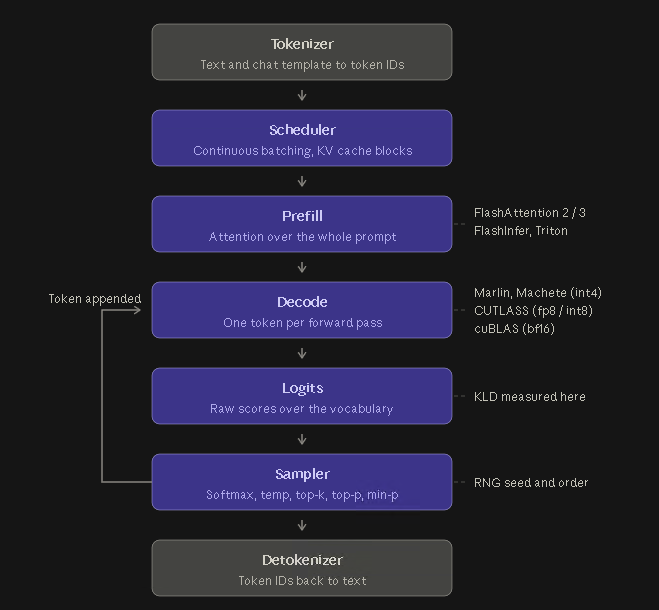
4. Why your local LLM feels dumber than it is (forum.level1techs.com)

Quick Introduction We have all been on forums, chats, reddit, discord, youtube, or somewhere and heard “Oh! Model XYZ is AMAZEBALLZ!zomgwtfbbq” then downloaded it (or more likely, some quantized form of it) and said “eww… This sucks!” This post is going to be a rather technical series of experiments to demonstrate the impact of implementation-specific hazards with inference. I will be using the term “reference implementation” to describe the lab that published and offers first-party hosting of ...

Local implementations of language models often fall short of expectations due to specific technical issues. This article details experiments that reveal how these implementation flaws can affect performance, providing insight into what makes some models feel less capable than their advertised counterparts.

6. Hister – A private, full content search index that you control (hister.org)

Hister is a private, self hosted search engine for the pages you visit and the files you keep. Search from the web, terminal, command line, or MCP.

Hister allows you to create a personalized search engine that indexes your own web activity and files, giving you control over your search experience. Access your indexed content through various platforms, including the web and command line.

7. Scrap (twitter.com)

I found some old journal entries. This one is probably circa ~2006, just titled "Scrap:"

I moved to Pittsburgh at the right time in my life, but at the wrong time of year. Coming from the west coast, I was actually naive enough to be excited about the prospect of winter. I

A reflective journal entry from 2006 recounts the author’s transition to Pittsburgh, capturing the bittersweet contrast between anticipation and reality as they navigate their first winter in a new city. It’s a personal glimpse into the challenges and surprises that come with change.

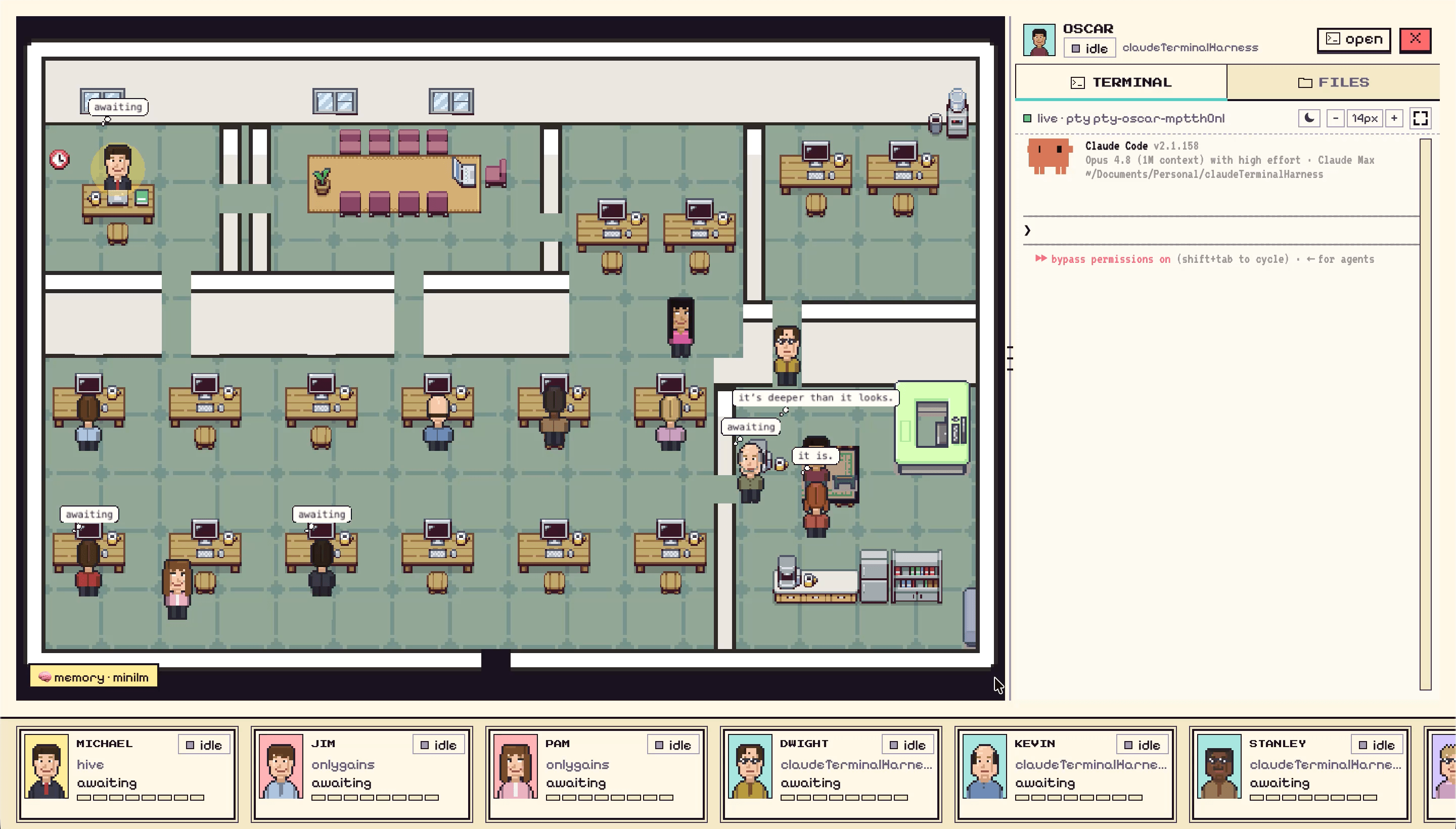
10. Munder Difflin – Agent harness to run an office of your clones (munderdiffl.in)

Free, open source and performant multi-agent harness, works with your existing subscriptions (uses hourly limits). It wraps the CLI agents you already use — Claude Code, Codex, Copilot and 9 more — and runs an office of your clones on your own machine.

A new open-source tool allows users to manage multiple AI agents, like Claude Code and Codex, directly from their own machines. It integrates with existing subscriptions and helps streamline workflows by organizing your AI “clones” efficiently.

12. The New MCP Roadmap (blog.modelcontextprotocol.io)

An update on the Model Context Protocol roadmap and focus areas for upcoming specification releases.

The article outlines the latest developments in the Model Context Protocol roadmap, detailing key focus areas for future specification updates. It provides insight into how these changes could impact the implementation of the protocol.

13. A Friendly Introduction to Racket (geometridae.bearblog.dev)

<p style="text-align: center;"><img src="https://bear-images.sfo2.cdn.digitaloceanspaces.com/mothcodes/steal-your-face-plt.svg" alt="steal-your-face-plt" wid...

16. OTel isn't going well (and I made a spreadsheet about it) (matduggan.com)

For years now one of the most reliable complaints I hear when I try to drag a team off their vendor specific SDK and onto OpenTelemetry is some variation of: "why does it seem like this isn't done yet?"

Vendor SDKs for observability are, to put it charitably, idiot-

Many teams are hesitant to switch from vendor-specific SDKs to OpenTelemetry due to the perception that the framework is incomplete. A detailed spreadsheet highlights these frustrations and raises questions about the ongoing challenges in adopting OpenTelemetry for observability.

18. Hook, hold, harvest and hide: Meta's alleged strategy laid out in first week (www.theguardian.com)

In trial that opened on Tuesday, California and 28 other states accused the company of designing addictive sites and violating laws protecting children’s privacy

California and 28 other states are accusing Meta of creating addictive platforms that compromise children’s privacy, as highlighted in a recent trial. The case aims to hold the tech giant accountable for its alleged harmful practices.

19. Anthropic appears to be A/B testing reduced effort levels in Claude Code (twitter.com)

update: it's server-side, not the app

anthropic enrols fable 5 sessions on claude code 2.1.236+ into an experiment that shrinks the effort scale, older versions and opus 5 are left alone

probably an a/b test, so not everyone will see it

if "high" feels like "low" for you,

Anthropic is conducting an A/B test on its Claude Code system, adjusting effort levels for some users while leaving others on older versions. This change could impact how developers interact with the tool, making it essential for users to be aware of potential differences in experience.

22. ATProto spaces: A new extension to ATProto that enables non-public data (atproto.com)

Atproto Spaces, formerly known as “the permissioned data protocol,” is a new extension to atproto that enables non-public data. The alpha is now officially open. Here’s how to develop with it and what to expect as we work towards the full release.

Atproto Spaces introduces a new way to handle non-public data, expanding the capabilities of the ATProto framework. The alpha version is now available, offering developers insights into its functionality and future developments.

23. Zig's Io.Threaded Is Neat (matklad.github.io)

std.Io.Threaded is one of the implementations of Zig's new Io interface that enables concurrency. This is a boring just use threads impl. I personally find it neat though --- it does this weird thing that I wanted to do for ages, that to my knowledge no one else is doing properly, and implements it better than I thought to be possible.

Zig’s std.Io.Threaded offers a straightforward threading solution within its new Io interface, but it stands out by effectively addressing a unique challenge in concurrency that few others have tackled well. Discover how this implementation achieves something innovative and efficient that the author finds impressive.

28. Early-life stress leaves a 'scar' inside brain cells in mice (medicine.washu.edu)

A mouse study finds changes to DNA packaging form a molecular memory of trauma, making the brain vulnerable to future stress.

Research on mice reveals that early-life stress alters DNA packaging in brain cells, creating a lasting molecular memory that increases susceptibility to future stressors. This study sheds light on the biological impacts of trauma and its potential long-term effects on mental health.

29. Autolith: A programming agent with a live runtime (www.lambda-symbolics.com)

A terminal programming agent that works in your repository, keeps project context, and can inspect and extend its running Lisp image.

Autolith is a terminal-based programming agent designed to enhance your coding workflow by maintaining project context and allowing real-time inspection and modification of its running Lisp environment. Discover how this tool can streamline your development process.

30. How Thailand Resisted Colonization (worksinprogress.co)

Its royal family used a charm offensive where military power failed.

Thailand’s royal family employed diplomatic strategies to maintain sovereignty and resist colonization when military might was insufficient. This approach highlights the unique historical context of Thailand’s independence compared to its neighbors.

Article Details

Browse by Date

Type to search HN and engineering blog articles
Press Escape to close  |  ↑↓ to navigate  |  Enter to open