1. Show HN: Anonymous age verification with passkey-powered encryption (loginwithone.com)

Private, passkey-first identity with user-held encryption and anonymous age verification.

A developer shares their innovative project that combines passkey authentication with client-held encryption to enable anonymous age verification. The approach ensures that sensitive user data remains secure and private, accessible only to the user.

2. Tiny satellite will use the dark side of the Moon as a shield (www.cam.ac.uk)

A tiny UK-developed satellite, roughly the size of a small carry-on suitcase, could help answer one of the biggest questions in cosmology: what happened in the roughly 150 million years of cosmic dark ages, before the universe’s first stars appeared?

A small UK satellite, about the size of a carry-on suitcase, aims to investigate the cosmic dark ages that occurred before the first stars formed. By using the Moon as a shield, it could provide crucial insights into this mysterious period of the universe’s history.

4. IDE Nostalgia: Programming NLS in 1972: Keyset, Mouse, and Viewspecs (davidsmaynard.com)

Engelbart's NLS was a more efficient code editor than can be found today

Engelbart’s NLS introduced innovative features like keysets and mouse interaction, making it a remarkably efficient code editor for its time. Discover how these early advancements laid the groundwork for modern programming environments.

5. How a giant battery is transforming a town centre in Cannington, Ontario (betakit.com)

The Toronto startup Civic Grid is trying to put a new face on public power sources.

Civic Grid, a Toronto startup, is reimagining public power in Cannington, Ontario, with an innovative battery project that aims to revitalize the town center. Discover how this initiative could reshape energy consumption and community engagement.

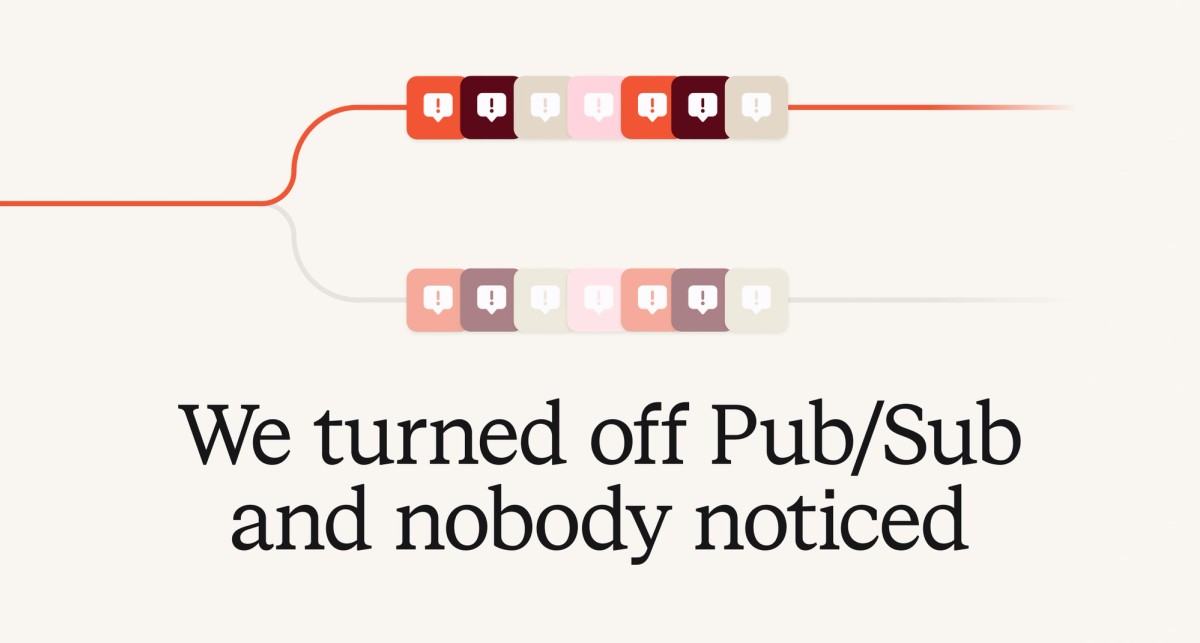
6. We turned off Pub/Sub and nobody noticed (incident.io)

Our entire event-driven platform ran through a single message broker, which made it a single point of failure. So we added a second one. This is the story of building an event load balancer, the queueing theory behind it, and the chaos test where we turned off Pub/Sub in production and nobody noticed.

Learn how a company improved its event-driven architecture by implementing a second message broker, conducting a chaos test, and successfully turning off their main Pub/Sub service without any disruption. The insights gained from this experience highlight the importance of redundancy and load balancing in system design.

7. Introducing MicroLighter (daverupert.com)

I made a smol client-side syntax highlighter that uses the CSS Custom Highlights API called MicroLighter. I’ll talk about why I made it in a bit but first I wanted to… ahem… highlight… some of the features.

MicroLighter is a compact client-side syntax highlighter that leverages the CSS Custom Highlights API. The creator shares its key features and the motivation behind its development, providing insights into its practical applications.

8. Show HN: Frugal Tokens – explore costs and usage across coding agents (demo.frugaltokens.com)

Frugal Tokens tracks and analyzes the costs and usage patterns of coding sessions, helping users understand their spending and the impact of cache misses. The tool provides insights into overall usage, estimated working time, and session overlaps, making it a valuable resource for developers looking to optimize their productivity and expenses.

10. That Disgraceful, Disreputable, (Wonderful) Form of Punctuation: The Parenthesis (lithub.com)

Shakespeare and friends would call punctuation β€œdistinctions,” according to the Latin tradition, or β€œpointing,” because of the medieval practice of placing dots or points at different levels of the…

Parentheses have a rich history that connects to medieval practices and the Latin tradition. Discover how this often-overlooked punctuation mark has evolved and its significance in writing.

12. Digital Immortality (dogdogfish.com)

Even now, as you’re reading these words, hundreds of robots are poring over them, and carrying them away.

Robots are currently analyzing text in real-time, raising questions about how our digital footprints could shape future interactions and possibly contribute to a form of digital immortality. Discover the implications of this technology on our legacy and communication.

13. Turning molecules into reliable electronic devices (news.mit.edu)

MIT researchers developed a scalable fabrication platform for damage-free integration of molecular materials into nanoscale functional electronic devices, which could enable applications in emerging computing, sensing, and quantum technologies.

MIT’s new fabrication platform allows for the damage-free integration of molecular materials into small electronic devices, paving the way for advancements in computing, sensing, and quantum technologies. This breakthrough could significantly enhance how we develop future electronic applications.

17. From Quantum Relative Entropy to the Semiclassical Einstein Equations (arxiv.org)

We provide arguments indicating that the semiclassical Einstein equations follow from quantum relative entropy and its proportionality to an area variation. Using modular theory, we establish that the relative entropy between the vacuum state and coherent excitations of a scalar quantum field on a bifurcate Killing horizon is given by the energy flux across the horizon. Under the assumption of the Bekenstein-Hawking entropy-area formula, this energy flux is proportional to a variation in the surface area of the horizon cross section. The semiclassical Einstein equations follow automatically from this identification. Our approach provides a quantum field theoretic generalization of Jacobson's thermodynamic derivation of the Einstein equations, replacing classical thermodynamic entropy with the well-defined quantum relative (Araki-Uhlmann) entropy. This suggests that quantum information plays a central role in what is often seen as a zeroth order approximation of a theory of quantum gravity, namely quantum field theory in curved spacetimes.

The article discusses how semiclassical Einstein equations can be derived from quantum relative entropy, linking quantum mechanics and general relativity. It presents a novel perspective by using modular theory to relate vacuum states and energy flux across a bifurcate Killing horizon, emphasizing the connection to the Bekenstein-Hawking entropy-area formula.

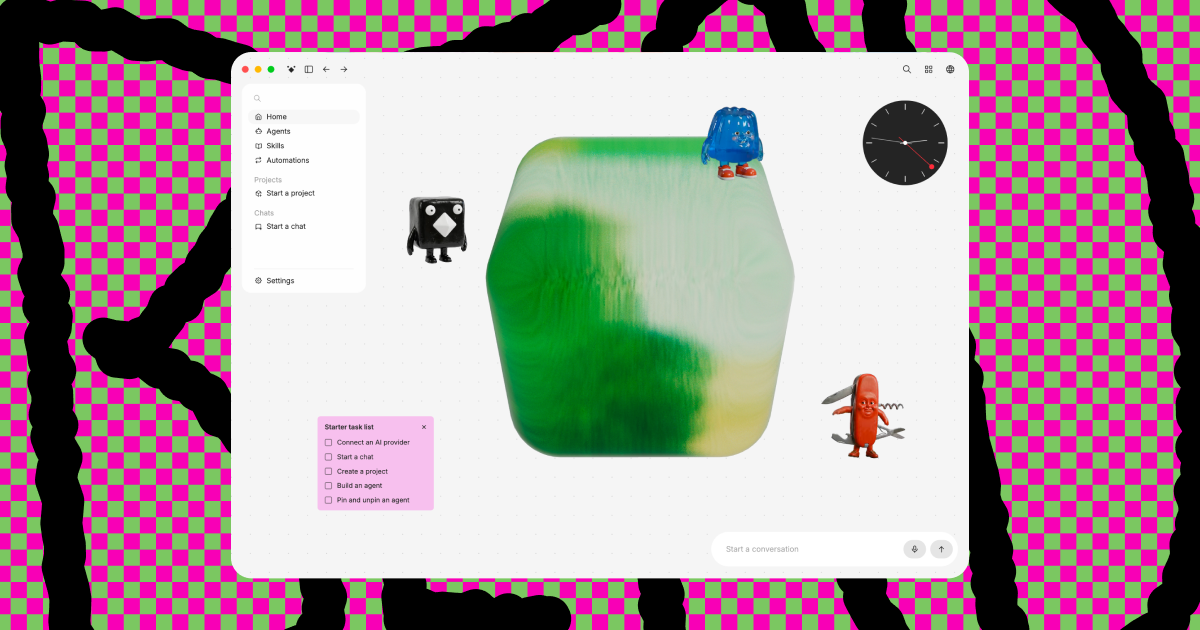
21. Berd (berd.xyz)

Berd is a weird, playful desktop app for building with AI agents.

Berd allows users to create and interact with AI agents in a fun and creative way. Its unique approach to desktop applications makes it an intriguing tool for those interested in AI experimentation.

29. Win-V combo from Windows on Ubuntu (leo98ml.github.io)

A small Win+V-style clipboard history extension built for GNOME Shell 50 on Wayland.

A new clipboard history extension designed for GNOME Shell 50 on Wayland mimics the Win+V functionality, enhancing productivity for Ubuntu users. Discover how this tool can streamline your clipboard management.

Article Details

Browse by Date

Type to search HN and engineering blog articles
Press Escape to close  |  ↑↓ to navigate  |  Enter to open