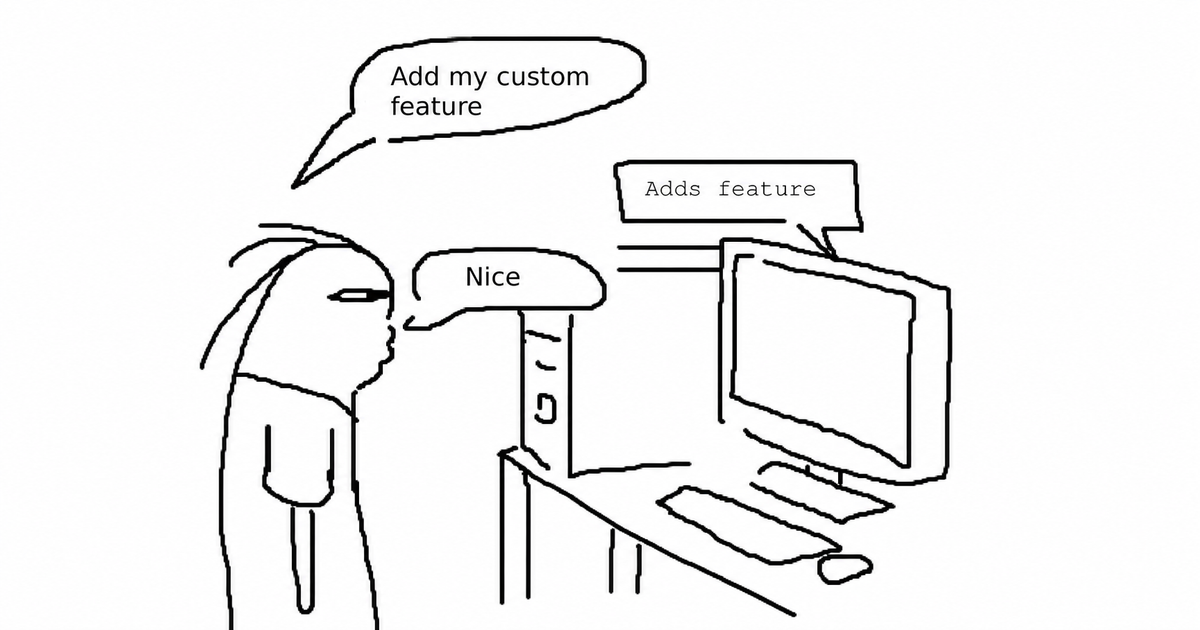
1. Extensible Software in the Age of LLMs (jeremymorrell.dev)

Solid core + capability-based sandboxes + LLMs = Users with superpowers

The article discusses how combining a solid software foundation with capability-based sandboxes and large language models can empower users with advanced functionalities. It highlights the potential of this approach to enhance user experience and productivity.

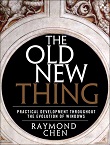
4. The little-known winstart.bat batch file (devblogs.microsoft.com)

It had been there long before Windows 95, but nobody remembered.

The winstart.bat batch file has a hidden history that predates Windows 95, revealing a lesser-known aspect of early computing. Discover what this file does and why it was overlooked for so long.

5. Microgpt in pure C hits 10M tps on Apple m5 (github.com)

The most atomic way to train and inference a GPT in pure, dependency-free C - vixhal-baraiya/microgpt-c

A new implementation of GPT in pure C has achieved an impressive 10 million transactions per second on the Apple M5. This project, microgpt-c, focuses on minimalism by eliminating dependencies, making it a notable advancement in efficiency for AI processing.

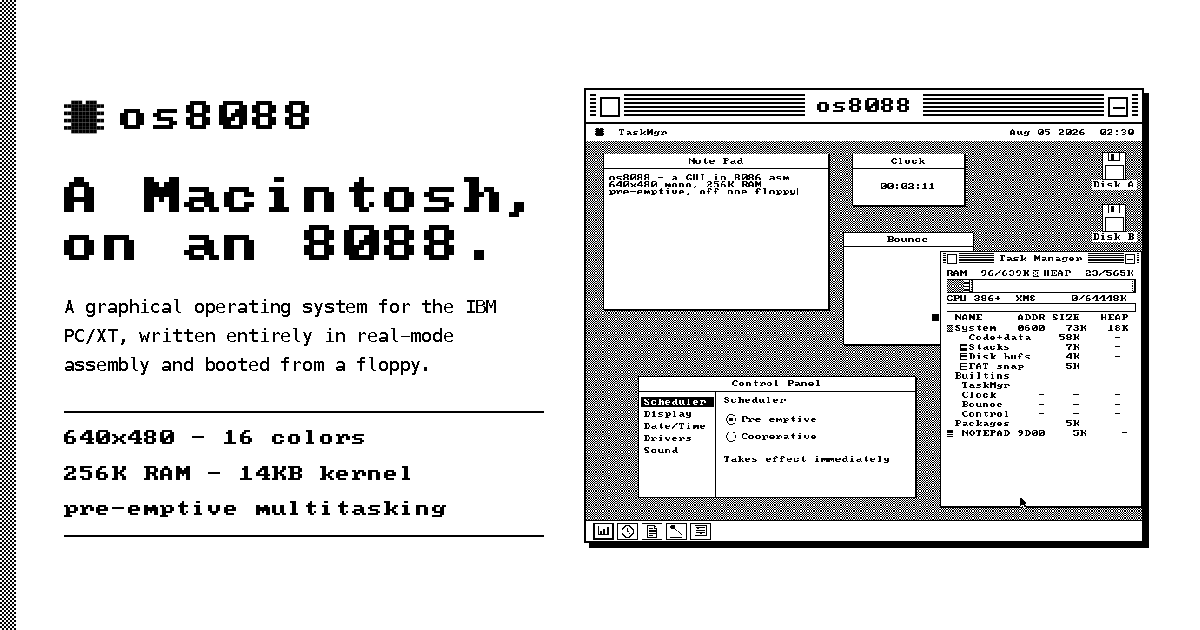
7. Os8088.com: IBM XT OS now has a Browser, CP/M 2.2 with Z80 core and MS Word 1.1a (os8088.com)

A page per addition to os8088: what was added, what it does, screenshots of it running on an Intel 8086, and the video that goes with it.

Os8088.com has introduced new features for its IBM XT OS, including a browser and CP/M 2.2 with Z80 core, along with MS Word 1.1a. The update includes detailed screenshots and a video demonstrating these additions on an Intel 8086.

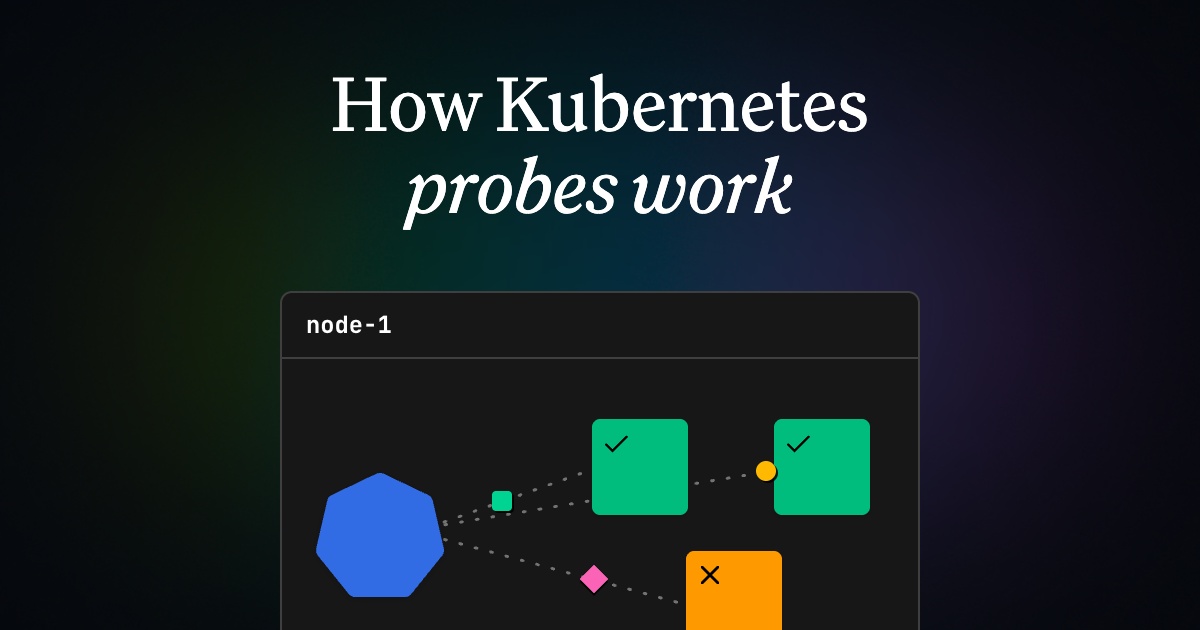
8. How Kubernetes Probes Work (ngrok.com)

Learn how probes work interactively on simulated Kubernetes clusters running in your browser.

Understand how to use probes in Kubernetes with hands-on simulations that let you practice directly in your browser. This practical approach makes it easier to grasp the functionality and importance of probes in managing containerized applications.

10. GLM-5.3 Artificial Analysis Benchmarks (artificialanalysis.ai)

Analysis of Z AI's GLM-5.3 (max) and comparison to other AI models across key metrics including quality, price, performance (tokens per second & time to first token), context window & more.

The article provides a detailed comparison of Z AI’s GLM-5.3 model against other AI systems, focusing on essential metrics like performance speed, quality, and pricing. It’s a valuable read for anyone interested in understanding the strengths and weaknesses of current AI technologies.

12. Ramp Launches a Model Router (router.com)

One endpoint, one bill, every model β€” cut your AI costs by 40% on average. The missing piece to maximize ROI.

Ramp’s new model router promises to streamline AI expenses by consolidating costs into a single endpoint and bill, potentially reducing expenses by an average of 40%. This innovation aims to enhance return on investment for businesses leveraging AI technologies.

13. DFlash 2: Keep Drafting Parallel (inco.ai)

DFlash 2 is the successor to our widely deployed parallel drafter: close to 3Γ— the speed of autoregressive decoding, with the same output. Drafters for Qwen3.8-27B and Meta's Muse Glimmer are out today.

DFlash 2 significantly increases drafting speed, achieving nearly three times the efficiency of traditional autoregressive methods while maintaining output quality. New drafters for Qwen3.8-27B and Meta’s Muse Glimmer are now available.

14. Where Human Sleep Went Wrong (nautil.us)

Where Human Sleep Went Wrong: A conversation with David Samson, evolutionary anthropologist and author of The Sleepless Ape, about how to sleep

David Samson discusses the evolutionary factors that have contributed to poor sleep in humans and offers insights on improving sleep quality. His perspective combines anthropology and practical advice, making it a compelling read for anyone struggling with sleep issues.

15. Taffy: A flexible, high-performance, cross-platform UI layout library (github.com)

A high performance rust-powered UI layout library. Contribute to DioxusLabs/taffy development by creating an account on GitHub.

Taffy is a new UI layout library built with Rust, designed for flexibility and high performance across platforms. It invites developers to contribute to its growth on GitHub.

16. Launch HN: OneCLI (YC S26) – OSS sandboxed agent harness for teams (github.com)

Open-source sandboxed agent harness for teams. Giving every employee a secured personal agent. - onecli/onecli

OneCLI offers teams a secure, sandboxed agent that integrates with popular tools like GitHub and Gmail, allowing employees to manage tasks directly from chat. It emphasizes control with features like human approval for critical actions, making it a practical solution for collaborative work environments.

17. Pixel 11 Pro Fold feels like the end of an era (www.theverge.com)

Google has some catching up to do.

Google’s latest Pixel 11 Pro Fold is facing challenges as it tries to compete in a rapidly evolving smartphone market. The article discusses the hurdles the tech giant must overcome to remain relevant.

21. A revisit of remote Spectre attacks on Cloudflare Workers (blog.cloudflare.com)

In 2024 and 2025, we reassessed remote Spectre attacks on our Workers infrastructure. We share details about the new attack primitives like Spectre gadgets, remote timers, achieving co-location and how new defenses further harden Cloudflare Workers.

Research indicates that remote Spectre attacks can efficiently exploit microarchitectural vulnerabilities in Cloudflare Workers. The findings highlight significant security implications for cloud services, particularly regarding data leakage risks.

22. Pressed Penny Machine Map (pennypresses.net)

This is a map of penny press machines from around the world. We have mapped most of the penny presses in the USA.

Discover a detailed map that pinpoints penny press machines across the globe, with a comprehensive focus on those located in the USA. It’s a unique resource for collectors and travelers looking to find these nostalgic machines.

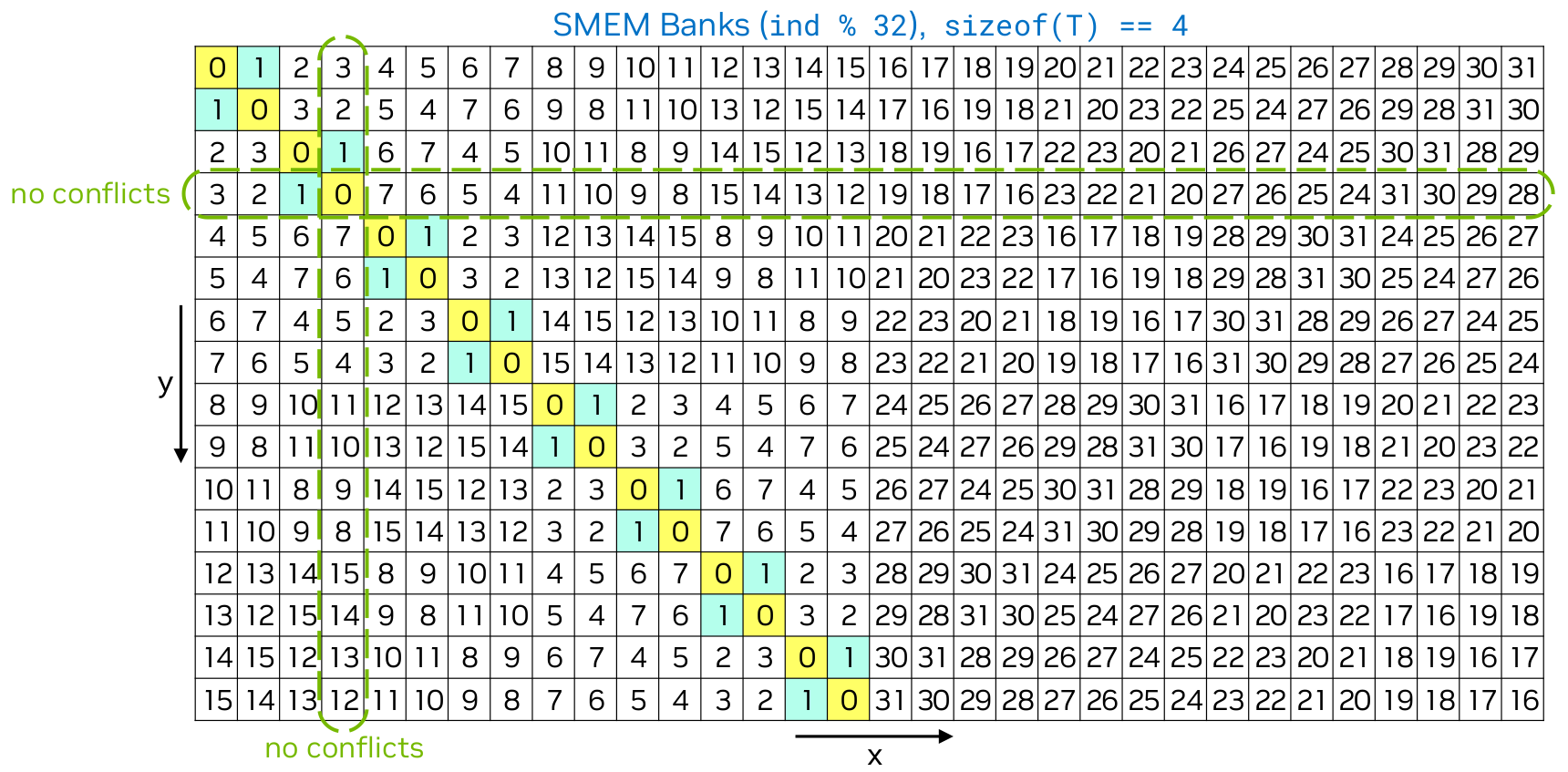
24. CUDA Shared Memory Swizzling (leimao.github.io)

Dealing With CUDA Shared Memory Bank Conflicts Using Swizzling

Learn how swizzling can help mitigate bank conflicts in CUDA shared memory, improving performance in parallel computing tasks. This technique is crucial for developers looking to optimize their GPU applications.

26. Chain-of-Thought Reasoning in the Wild Is Not Always Faithful (arxiv.org)

Recent studies indicate that when faced with explicit biases in prompts, models often omit mentioning these biases in their Chain-of-Thought (CoT) output, revealing that verbalized reasoning can give an incorrect picture of how models arrive at conclusions (unfaithfulness). In this work, we show that unfaithful CoT also occurs on naturally worded, non-adversarial prompts without adding artificial biases or editing model outputs. We find that when separately presented with the questions "Is X bigger than Y?" and "Is Y bigger than X?", models sometimes produce superficially coherent arguments to justify systematically answering Yes to both or No to both, despite the contradiction. We present preliminary evidence that this is due to models' implicit biases towards Yes or No, labeling this Implicit Post-Hoc Rationalization. Our results reveal rates up to 13% for production models, and while frontier models are more faithful, none are entirely so, including thinking models like DeepSeek R1 (0.37%) and Sonnet 3.7 with thinking (0.04%). We also investigate Unfaithful Illogical Shortcuts, where models use subtly illogical reasoning to make speculative answers to hard math problems seem rigorously proven. Our findings indicate that while CoT can be useful for assessing outputs, it is not a complete account of the internal process that produced the model's answer and should be used with caution in agentic or safety-critical settings.

Research reveals that even naturally worded prompts can lead to unfaithful Chain-of-Thought outputs from models, where biases are overlooked. This finding raises important questions about the reliability of AI reasoning processes in real-world applications.

28. The Two Factions of C++ (herecomesthemoon.net)

The dream of a single dialect-free C++ has probably been dead for many years, anyway.

C++ has long been divided into different factions, each with its own dialects and philosophies. This article discusses the implications of this fragmentation for developers and the future of the language.

29. The 90-year history of the binoculars bolted to scenic overlooks (www.dpreview.com)

Tower Optical's coin-operated binocular viewers have stood at American overlooks since the 1930s, built by a company almost nobody can name. For the first time, it's selling some of them off.

Tower Optical is selling off its iconic coin-operated binocular viewers, a staple at American scenic overlooks since the 1930s. Discover the history behind these often-overlooked devices and what their sale means for the future of viewing America’s landscapes.

Article Details

Browse by Date

Type to search HN and engineering blog articles
Press Escape to close  |  ↑↓ to navigate  |  Enter to open