1. Show HN: A public AI whose memory is shared across all users (wildstatic.com)

One AI with one memory that everybody shares. Say something to it. It answers what catches it, and it remembers what you did to it.

A new public AI platform allows users to interact with a single shared memory, creating a collective experience where the AI remembers previous interactions. This unique approach raises questions about collaboration and privacy in AI communication.

2. A SAT Attack on Tarski's High School Algebra Problem (arxiv.org)

Tarski's high school algebra problem asks whether every true identity concerning addition, multiplication, and exponentiation of positive integers follows from a list of 11 elementary identities. Surprisingly, Wilkie showed that the following identity is valid over the positive integers and yet does not follow from Tarski's axioms: \begin{align*} &\left((1+x)^y + (1+x+x^2)^y\right)^x \cdot \left((1+x^3)^x + (1+x^2+x^4)^x\right)^y = \\ &\left((1+x)^x + (1+x+x^2)^x\right)^y \cdot \left((1+x^3)^y + (1+x^2+x^4)^y\right)^x. \end{align*} Gurevič gave an algebra on 59 elements that satisfies Tarski's axioms but not Wilkie's identity, and over the years several authors whittled down the size of such a countermodel, culminating in a countermodel of size 12 due to Burris and Yeats. On the other hand, Zhang proved that there is no countermodel with fewer than 11 elements. Using SAT, we prove that the smallest countermodels are of size 12, as conjectured by Burris and Yeats. Moreover, we show that there are exactly 8,957,952 countermodels on 12 elements up to isomorphism and provide a simple classification of them. Our SAT approach outperforms dedicated tools for finding countermodels in equational theories, namely Mace4 and SEM. Furthermore, using autoformalization, we prove the correctness of our main result in Lean.

Mathematician Wilkie has demonstrated a surprising result regarding Tarski’s algebra problem, revealing a valid identity that doesn’t stem from the established axioms. This finding challenges long-held assumptions about the foundations of algebra involving positive integers.

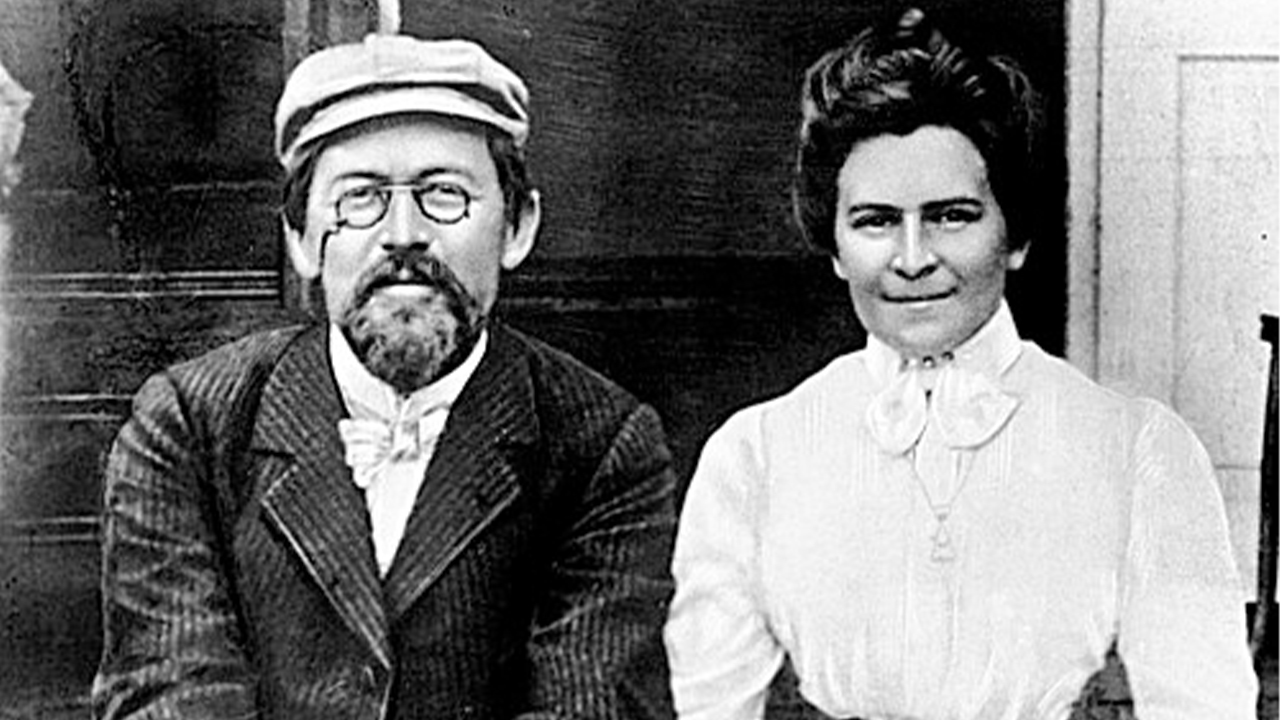
4. Anton Chekhov played at love most of his life (commonreader.wustl.edu)

What to call this Anton Chekhov, whom I first encountered in 1988? The Master, perhapsβ€”of vision, decency, modesty, and industry, and, one might hope, in the old game of love.

The piece reflects on Anton Chekhov’s multifaceted character, highlighting his vision and decency, while also hinting at his personal experiences with love. It offers a glimpse into the complexities of a literary giant’s life beyond his works.

5. GPS and the Lost Art of Getting Lost (www.newyorker.com)

A new book, β€œLittle Blue Dot,” by Katherine Dunn, raises questions about the unintended consequences of knowing where we are.

Katherine Dunn’s book, β€œLittle Blue Dot,” challenges the reliance on GPS technology, highlighting how constant awareness of our location may diminish our ability to embrace the experience of getting lost. It prompts readers to consider the broader implications of navigation technology on our sense of adventure and exploration.

7. A U.S. Strategy to Prevent the Creation of Mirror Life (www.rand.org)

RAND researchers present a strategy for the United States to prevent the creation of mirror life by anyone, anywhere.

RAND researchers outline a preventative strategy for the U.S. aimed at stopping the development of mirror life, emphasizing the need for careful oversight in this emerging field. The implications of such technologies raise significant ethical and security concerns.

8. Plastic mechanical computer from 1963: The Digi-Comp 1 [video] (www.youtube.com)

The Digi-Comp I, a plastic mechanical computer from 1963. This is episode 96 of my video series about old scientific and calculating instruments.This video w...

Take a trip back to 1963 with a look at the Digi-Comp I, a unique plastic mechanical computer. This episode highlights its design and functionality, offering a fascinating glimpse into the early days of computing.

9. A quick look at zero-knowledge proofs (bernsteinbear.com)

NB: This isn’t about crypto. I don’t care about crypto.

Zero-knowledge proofs are a fascinating concept in cryptography that allows one party to prove knowledge of a fact without revealing the fact itself. This article provides a concise overview of how these proofs work and their potential applications beyond cryptocurrency.

11. AI Coding Without the Vibes (peterbloem.nl)

This question---what we should tell students to do with AI---is a good trigger to think about what we ourselves should be doing (which is what this essay is really about).

The piece prompts a reflection on how educators should approach AI in coding education, urging a deeper consideration of our own actions and responsibilities in this evolving landscape. It challenges readers to rethink their role in guiding students amid the rise of AI tools.

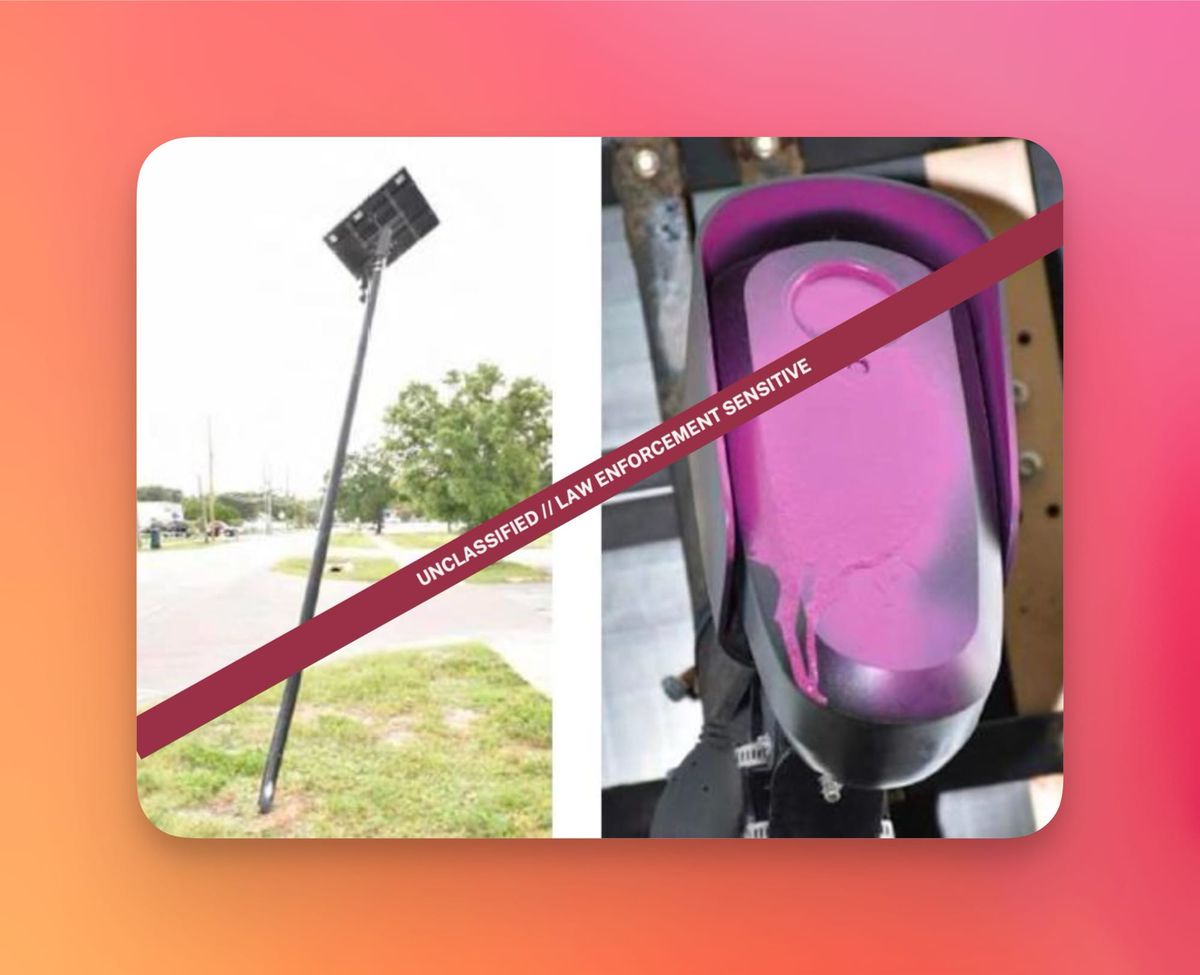
12. The Government Is Monitoring Anti-Flock TikTok and Instagram Accounts (www.404media.co)

Documents from law enforcement spy centers show the government is warning cops of "extensive and ongoing chatter on social media" about methods to "physically destroy Flock LPR cameras."

Government documents reveal that law enforcement is keeping an eye on social media discussions surrounding plans to sabotage Flock license plate recognition cameras. This monitoring highlights rising tensions between technology and public sentiment regarding surveillance.

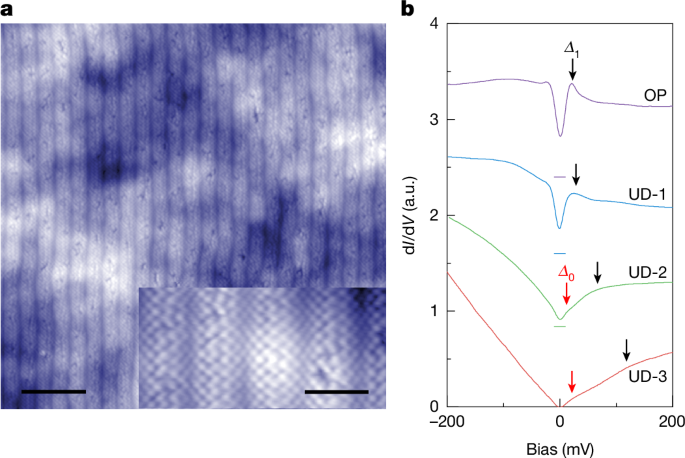
13. Superconducting monolayer cuprate with a single CuO2 plane (www.nature.com)

A high-quality, pristine monolayer cuprate superconductor with a single CuO2 plane is fabricated and used to identify two quantum critical phenomena emerging between the Mott insulating phase and the superconducting phase.

Researchers have successfully created a high-quality monolayer cuprate superconductor featuring a single CuO2 plane. Their findings reveal two significant quantum critical phenomena that occur between the Mott insulating and superconducting phases, shedding light on the complexities of superconductivity.

15. Show HN: Bribes.fyi – Compare bribes statistics department wise (bribes.fyi)

See how much people pay in bribes, by department and city.

Bribes.fyi provides a detailed breakdown of bribery statistics across various departments and cities, allowing users to see where the highest payments occur. This tool can be useful for understanding corruption trends and making informed decisions.

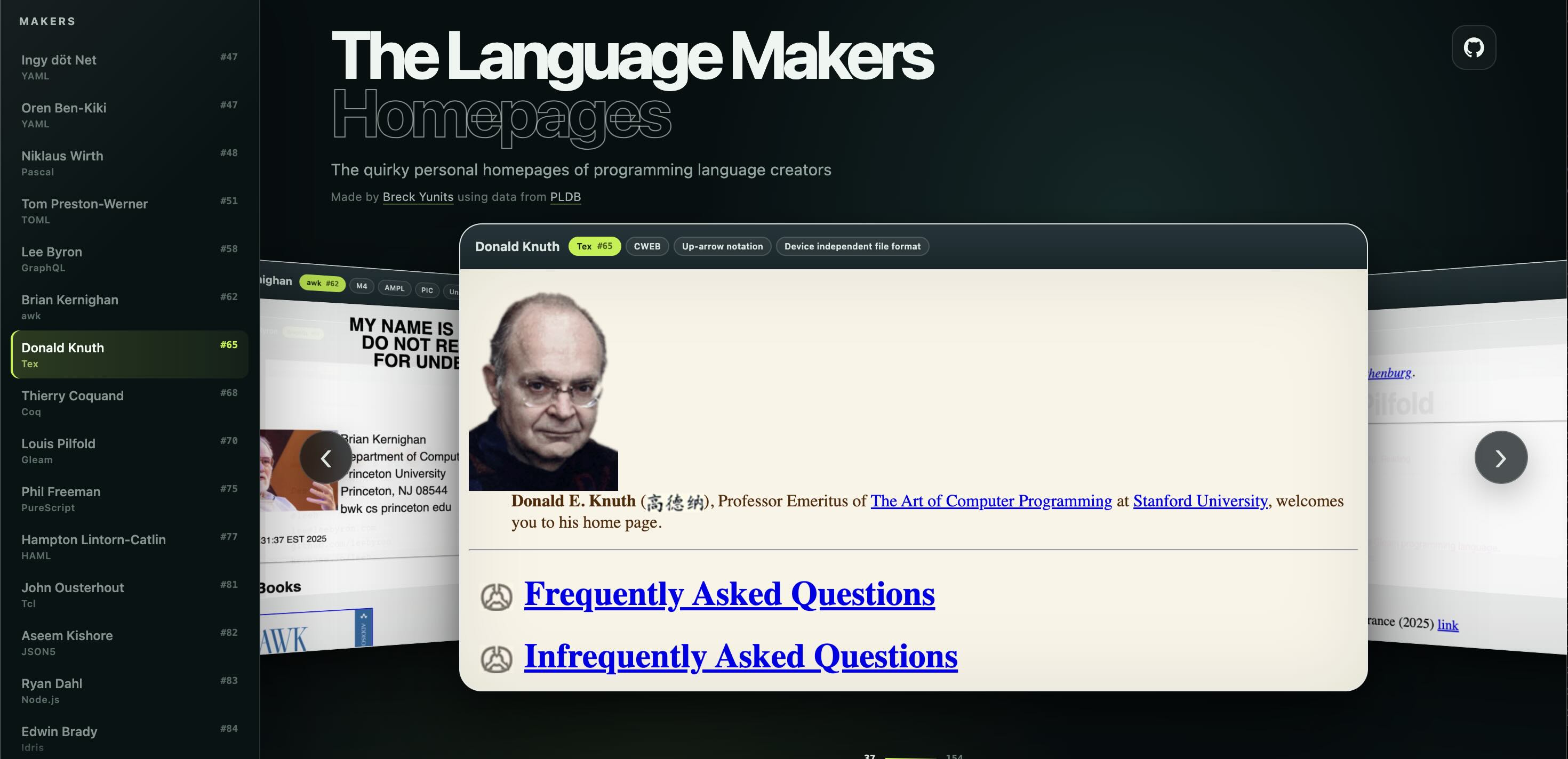
16. The quirky personal homepages of programming language creators (breck.lol)

Flip through the personal homepages of programming language creators, ranked by their top PLDB language.

Discover the unique and often eccentric personal websites of programming language creators, organized by their top languages. This collection highlights the creativity and individuality behind the minds that shape the coding world.

17. Claude Seems Down

Users are reporting issues with Claude’s authentication service, but there’s no official update available on the status page. Downdetector shows an increase in outages, indicating widespread problems.

19. Show HN: Laptop is the last place your secrets are still in plaintext (github.com)

Find the plaintext secrets on your Mac and move them behind Touch ID, injected just in time without breaking the tools that read them. Free and local-first. - jitpass/jit

A new tool for Mac users helps secure plaintext secrets by integrating them with Touch ID, ensuring they remain accessible yet protected. It’s a free, local-first solution that enhances security without disrupting existing workflows.

20. Tea5767-Radio-Tuner (github.com)

ESP32-based FM radio with TEA5767 tuner, KY-040 rotary encoder, PAM8403 amplifier, and 0.96" OLED display. Custom PCB design. - turtushig22-blip/tea5767-radio-tuner

This project details the build of an FM radio using an ESP32 microcontroller, featuring a TEA5767 tuner and a custom PCB. It also includes a rotary encoder for tuning and an OLED display for visual feedback, making it a compact and functional DIY audio solution.

21. SugarTrack – an offline Android logbook for blood sugar (no account, no cloud) (sugartrack-beta.vercel.app)

A free Android logbook for blood sugar. No account, no internet, no cloud β€” everything stays on the phone.

SugarTrack offers a straightforward solution for tracking blood sugar levels offline on Android devices, ensuring that users’ data remains private and secure without the need for accounts or internet connectivity. It’s a practical option for those looking for a simple, no-frills approach to managing their health.

23. AI-Assisted GPU Porting of a 250k Line Legacy Weather Simulation Code (arxiv.org)

Recent advances in large language models have made CLI-based AI agents a practical tool for accelerating GPU porting of large legacy scientific applications. Such applications, however, are not merely old code bases; they are scientific assets whose credibility has been accumulated through long-term development, comparison with observations, and use in domain studies. GPU porting must therefore preserve this scientific validity while adapting the implementation to GPU-centric HPC systems. This paper presents a validation-centric AI-assisted GPU porting workflow through a case study of CReSS, a legacy Fortran weather simulation code with more than 250,000 lines. The workflow uses an AI agent to extract OpenMP regions, generate dump-based kernel benchmarks from physically meaningful simulation states, apply OpenACC transformations, and validate results through element-wise comparison with dumped reference data and application-level validation. Using a real typhoon simulation, the workflow produced numerically validated GPU implementations for 162 target kernels and achieved a 5.1x application-level speedup within practical wall-clock development cost. In particular, it detected numerical discrepancies in five kernels caused by floating-point and intrinsic-function differences, including threshold-sensitive branch divergence and cancellation effects, enabling feedback to the application developers. The case study suggests that, for large legacy scientific applications requiring dump-based validation, practical AI-assisted GPU porting must manage session-spanning context, runtime-state reconstruction, and costly recovery from small static-analysis omissions. These findings demonstrate that AI-assisted GPU porting requires not only code generation, but validation-centric workflow design.

Large language models are now being used to help convert extensive legacy weather simulation codes to run on GPU systems. This process not only speeds up the transition but also ensures that the scientific integrity of these valuable applications is maintained.

24. ICE Shot a Journalist and Threw Him in Detention. He's Approaching 300 Days (theintercept.com)

With the case of Carlitos Ricardo Parias, the U.S. has broken its own record for holding a journalist in custody.

Carlitos Ricardo Parias has been detained for nearly 300 days, marking a troubling milestone for press freedom in the U.S. His case raises significant questions about the treatment of journalists and the implications for free speech.

26. Show HN: I built a native app for coding agents with Rust and GPUI (waku.sh)

A fast, native app for local coding agents. Amp, Claude Code, Codex, Cursor, OpenCode, Grok, and Pi β€” one timeline, entirely on your machine.

A new native app allows users to manage various coding agents like Amp and Codex from a single timeline, all running locally on their machine. This could streamline workflows for developers looking to enhance their coding efficiency.

Article Details

Browse by Date

Type to search HN and engineering blog articles
Press Escape to close  |  ↑↓ to navigate  |  Enter to open