1. Germany Records Historic 12B KWh Solar Feed-In in July 2026 (solarquarter.com)

Germany set a record by feeding 12 billion kWh of solar power into the grid in July 2026, highlighting photovoltaics' growing role and the IWR's clarification of EEG support costs.

Germany achieved a milestone by feeding 12 billion kWh of solar energy into its grid in July 2026, underscoring the increasing significance of solar power. The article also discusses the implications of this achievement on support costs under the EEG framework.

4. When AI Benchmarks Plateau: A Systematic Study of Benchmark Saturation (arxiv.org)

Artificial intelligence benchmarks are an important mechanism for measuring model progress and guiding deployment decisions. However, benchmarks quickly "saturate", making it difficult to differentiate models and diminishing their long-term value. In this study, we define benchmark saturation and analyze it across 60 language model benchmarks using 14 properties that relate to saturation. We find that nearly half of the our benchmarks exhibit saturation, with rates increasing with age. Further, we find that resilience to saturation is impacted by expert-curation, not by public test data. Our results suggest that design choices can extend benchmark longevity and inform more durable evaluation approaches.

AI benchmarks are crucial for assessing model advancements, but many are reaching a saturation point, complicating the evaluation of new models. This study analyzes 60 language model benchmarks, revealing that nearly half show signs of saturation, which raises concerns about their long-term utility.

6. Most tech revolutions made work worse for employees (www.thisandthat.chat)

Every productivity wave since the PC made work faster and piled on more of it, so companies gained more than workers did. AI does the work itself, which is why this one could land differently.

Recent advancements in technology, particularly AI, have historically increased workloads for employees while benefiting companies. This time, however, AI’s ability to perform tasks might change the dynamic, potentially offering a different outcome for workers.

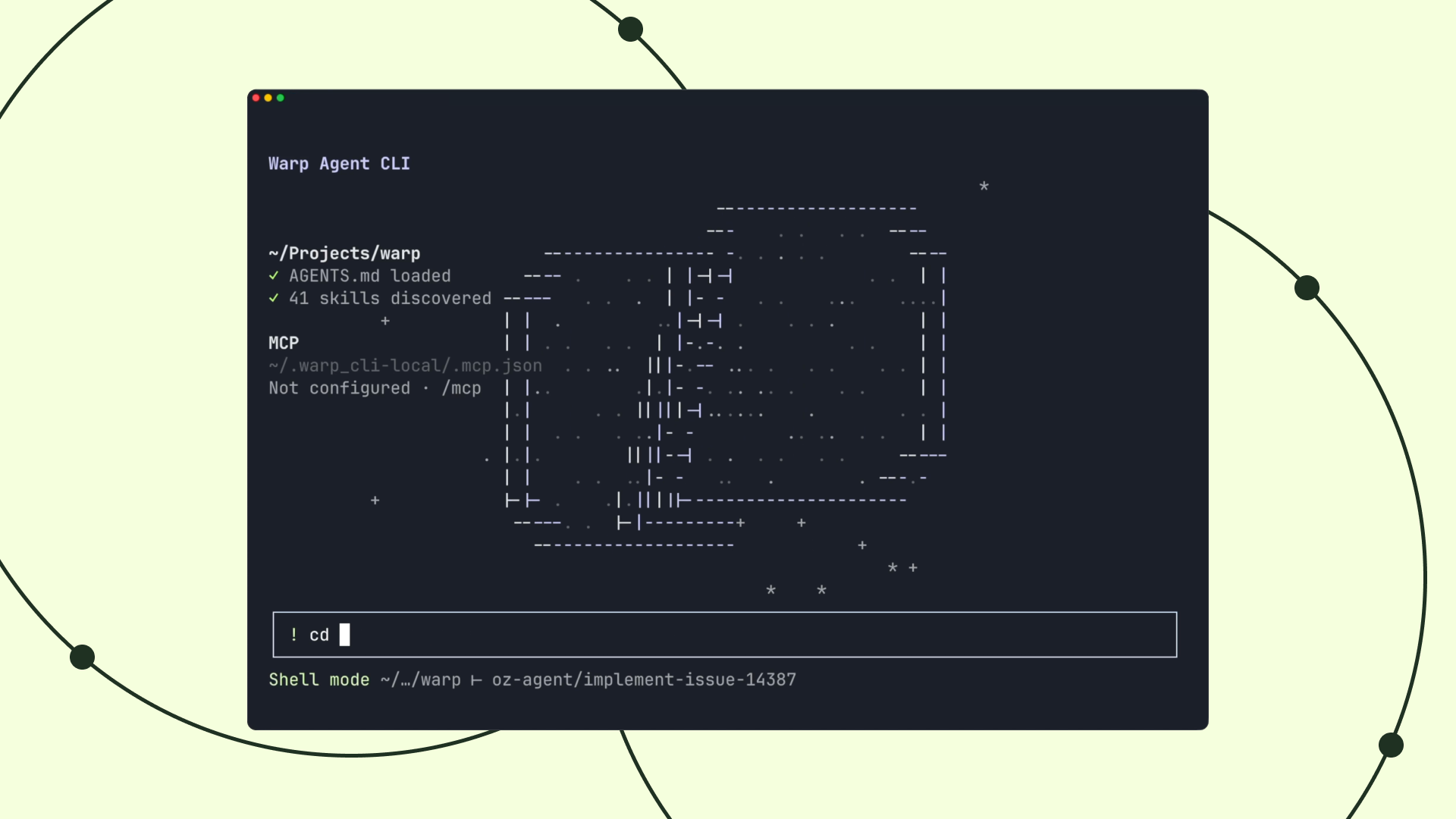
7. The Warp Agent CLI (www.warp.dev)

The Warp Agent is now available as a standalone CLI that you can use anywhere – Ghostty, iTerm 2, VS Code, built-in Windows and Mac Terminals – and provides a superior experience for developers who do heavy terminal workflows

The Warp Agent CLI offers developers a powerful tool that enhances terminal workflows across various platforms, including Ghostty, iTerm 2, and VS Code. Its standalone availability promises to improve efficiency and user experience for those who rely heavily on terminal commands.

9. Why Large Language Models Fail at Tabular Prediction (arxiv.org)

Large language models (LLMs) have become the default tool for a remarkable range of tasks, yet they have had conspicuously little success at one of the most common machine learning workloads: predictive analytics over tabular data. This gap is the founding premise of the fast-growing field of tabular foundation models, but the question of why generic LLMs fail has remained open. We study a frontier LLM in its purest inference regime - a single generation pass over a prompt containing the full training and test data, with no tools, no agentic scaffolding, and no fine-tuning - and systematically evaluate five hypotheses for the failure: (a) an inability to handle noisy or non-linearly-separable data; (b) the linearised CSV format obscuring column structure; (c) the tokenisation of numeric values; (d) the number of test points classified per query; and (e) the dimensionality of the input. Controlled experiments falsify (a)-(d). Dimensionality, in contrast, is decisive: sweeping random linear projections of thirty-one benchmark datasets, the LLM is the only method among nine whose accuracy decreases as dimensionality grows, while every classical baseline stays flat or improves. A behavioural comparison against 252 configured classical models finds that in two dimensions the LLM predicts like a local, distance-based method (up to 91.6% grid agreement), but in higher dimensions no classical model - even when augmented with tuned, dimension-dependent noise - reproduces its predictions. We do not claim to have identified the internal mechanism; our results show, more modestly, that the LLM's capability dissolves with dimension in a way no noise-corrupted classical learner mimics - which explains why LLMs, so capable elsewhere, keep losing to fifty-year-old baselines on tables, while leaving the mechanism of the prediction as an open question.

Large language models struggle with predictive analytics for tabular data, despite their success in many other areas. This article investigates the reasons behind their shortcomings and discusses the emerging field of tabular foundation models designed to address this gap.

11. The AI Demand Bubble (www.wheresyoured.at)

If you liked this piece, you should subscribe to my premium newsletter. It’s $70 a year, or $7 a month, and in return you get a weekly newsletter that’s usually anywhere from 5,000 to 18,000 words, including vast, detailed analyses of NVIDIA, Anthropic and OpenAI’s

14. Don't stop early: Case-folding source code at memory speed (github.blog)

How a branch-free loop and byte-space arithmetic let GitHub case-fold every byte of code search at >45 GiB/s on a single core.

GitHub has developed a method that uses a branch-free loop and byte-space arithmetic to achieve impressive case-folding speeds, processing over 45 GiB of code per second on a single core. This approach could significantly enhance code search efficiency, making it a key advancement for developers.

16. The US is not a democracy but an oligarchy, study concludes (2014) (www.upi.com)

A study from Princeton and Northwestern Universities concludes that U.S. political policy is determined by the economic elite, not the majority of citizens.

A study from Princeton and Northwestern Universities reveals that U.S. political decisions are largely influenced by the wealthy elite rather than the general population. This finding raises important questions about the nature of American democracy and who truly holds power.

18. New cars are getting 1.2cm longer and 0.5cm taller each year (www.transportenvironment.org)

The impacts on safety, space and resource use if carspreading continues to go unchecked.

Growing vehicle dimensions could have significant implications for safety, interior space, and resource consumption. The article discusses the potential consequences of this trend if it remains unaddressed.

20. Homebench – Benchmark local LLMs for speed, memory, and quality (github.com)

Benchmark your local LLMs: speed, memory, and quality, in one command. TUI leaderboard for Ollama, LM Studio, llama.cpp, and vLLM. - david-g-3654/homebench

Homebench allows users to efficiently benchmark local large language models (LLMs) across speed, memory usage, and quality with a single command. It features a TUI leaderboard for popular frameworks like Ollama and llama.cpp, making it a handy tool for developers looking to optimize their models.

22. Vlt 1.0 and Hosted Package Registries (www.vlt.io)

Stable client release and general availability of hosted registries & ecosystem mirrors.

The latest release of Vlt 1.0 introduces hosted package registries and ecosystem mirrors, providing users with stable client options for managing their packages. This update enhances accessibility and reliability for developers looking to streamline their workflows.

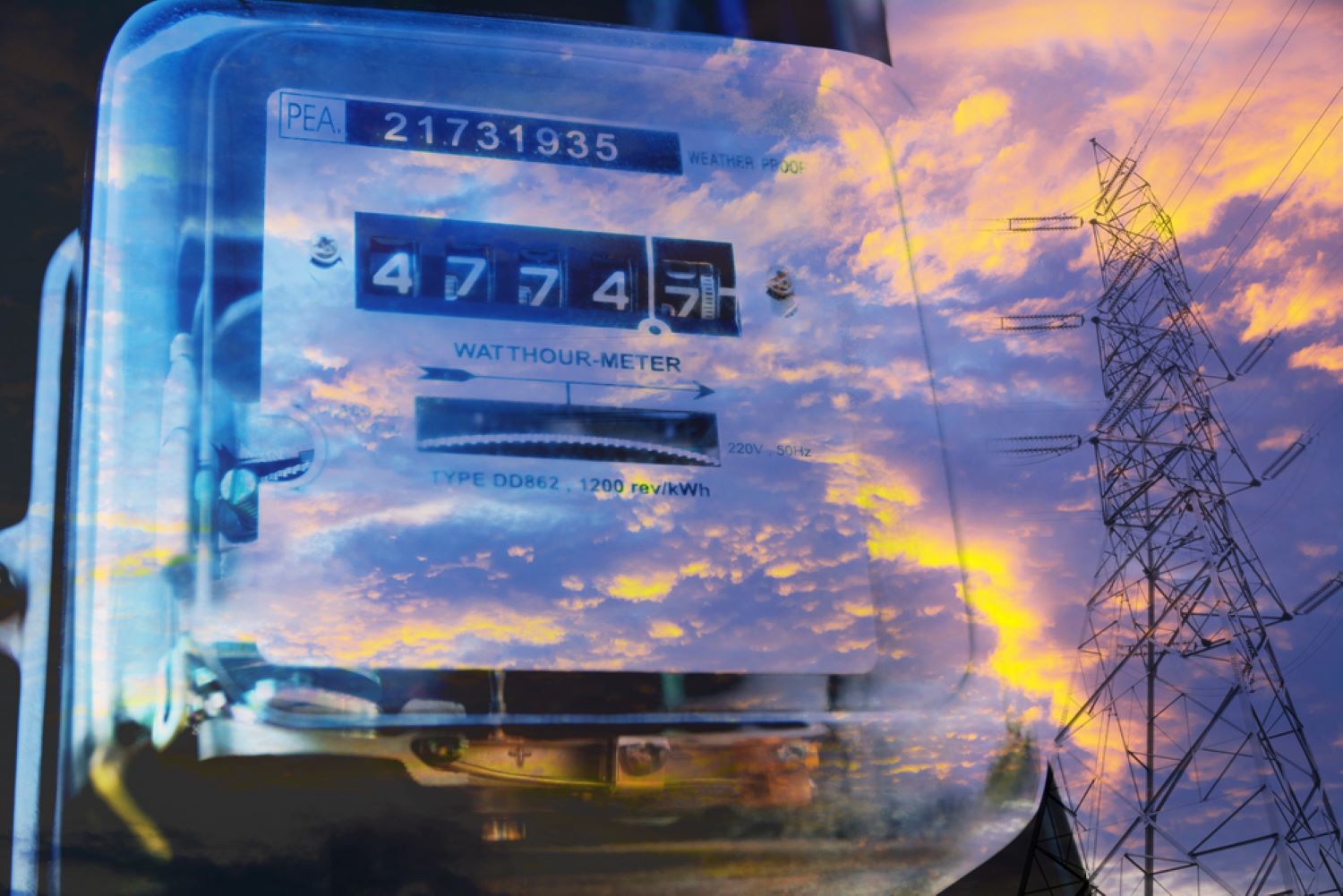
24. AI Data Centers Are Driving Up Power Bills – This Map Shows Where (www.gadgetreview.com)

AI data centers have added $29B to U.S. grid costs, raising some state electricity bills by up to 28% — and ratepayers are footing the tab.

AI data centers are significantly impacting electricity costs across the U.S., contributing $29 billion to grid expenses and causing some states to see bill increases of up to 28%. A new map illustrates the areas most affected by these rising costs.

25. Why did we wait so long for the bicycle? (2019) (blog.rootsofprogress.org)

The bicycle, as we know it today, was not invented until the late 1800s. Here are some theories about why

Discover the reasons behind the late arrival of the modern bicycle, with various theories that shed light on its historical context and development. The article examines factors influencing innovation and transportation in the 19th century.

27. MariaDB: Promote getting to 10k GitHub stars in server log and client prompt (github.com)

Description
Ask users to give MariaDB a star by having an extra line in the MariaDB client prompt:
Welcome to the MariaDB monitor. Commands end with ; or \g.
Your MariaDB connection id is 33
Serve...

MariaDB is encouraging users to help boost its GitHub profile by adding a prompt in its client that asks for stars. The initiative aims to increase visibility and support for the database management system.

30. Third-party cyber evaluations involving OpenAI models (openai.com)

OpenAI explains recent third-party cybersecurity evaluation incidents and outlines new safeguards to strengthen AI model testing and evaluation.

OpenAI details recent incidents involving third-party cybersecurity evaluations of its models and introduces enhanced safeguards aimed at improving the testing and evaluation process for its AI technologies.

Article Details

Browse by Date

Type to search HN and engineering blog articles
Press Escape to close  |  ↑↓ to navigate  |  Enter to open