
2. AI-Generated Images Discourage Me from Reading Your Blog (nelson.cloud)
If you're willing to use AI-generated images, how do I know the text isn't AI-generated?
Concerns are rising about the authenticity of blog content as AI-generated images become more prevalent. The skepticism around whether the text accompanying these visuals is also artificially created raises important questions about trust and originality in online writing.
3. Xbox goes down. You can't play games you own on disc (birchtree.me)
Jay Peters: Xbox’s huge outage even blocked games on disc
An extended Xbox outage that began Sunday evening hasn’t just caused issues for people trying to play digital games — it blocked people from playing their disc-based games, too.
When Sony announced that they were discontinuing physical discs
An extended Xbox outage that began Sunday evening hasn’t just caused issues for people trying to play digital games — it blocked people from playing their disc-based games, too.
When Sony announced that they were discontinuing physical discs

4. Show HN: Simple algorithm and color space to generate diverse skin tones (toneyalexander.github.io)
Simple equations and a color picker to inclusively select simplified skin tones in a custom color space for digital art or game development.
A developer shares a new color picker and algorithm designed to simplify the selection of diverse skin tones for digital art and games. The project includes various demos and detailed explanations of the underlying methods, making it a valuable resource for artists and developers alike.
5. Ray Bradbury's "There Will Come Soft Rains" is set today (2026-08-04) (short-stories.co)
The voice-clock sang, breakfast was ejected, but no doors slammed. The garage chimed and lifted its door to reveal the waiting car.
The house sat alone in a city of rubble and…
The house sat alone in a city of rubble and…
Ray Bradbury’s story comes to life in a modern setting, depicting a solitary house operating on automation amidst a desolate landscape. This portrayal raises questions about technology’s role in our lives and the consequences of a world stripped of humanity.

6. Mistral's Shieldstral: 3B open-weights model for multimodal moderation (mistral.ai)
Shieldstral introduces a 3B open-weights multimodal safety classifier that outperforms models up to 7x its size.
Mistral’s new Shieldstral model is a multimodal safety classifier that boasts impressive performance, exceeding the capabilities of larger models by up to seven times. This advancement could significantly enhance moderation processes across various platforms.
7. FFmpeg 9.0 (github.com)
Mirror of https://git.ffmpeg.org/ffmpeg.git. Contribute to FFmpeg/FFmpeg development by creating an account on GitHub.
8. There Will Come Soft Rains (1950) [pdf] (users.wpi.edu)
9. All of Winona Police Department's Flock cameras cut down and stolen (www.valleynewslive.com)
Lost cameras valued at about $24,000
The Winona Police Department has reported the theft of all its Flock cameras, resulting in a loss of around $24,000. The incident raises concerns about public safety and the impact on crime surveillance in the area.

10. Apple says more ex-employees may have taken confidential data to OpenAI (techcrunch.com)
Apple says its trade secrets investigation into OpenAI has widened. In a new court filing, Apple claims additional former staff may have retained or accessed confidential information.
Apple’s investigation into OpenAI is expanding, with claims that more former employees may have taken sensitive data. The court filing highlights ongoing concerns about the potential mishandling of trade secrets.
11. DeepSeek V4 Flash on a Single AMD MI300X (github.com)
Contribute to ryanzhou/deepseek-v4-flash-mi300x development by creating an account on GitHub.
12. U.S. used 'virtually all' of its long-range precision missiles during Iran war (www.cnbc.com)
The U.S. Army has used up much of its stockpile of highly accurate long-range missiles during its war with Iran, people familiar with the data told Reuters.
The U.S. Army has significantly depleted its inventory of long-range precision missiles amid ongoing conflicts in Iran, raising concerns about future military readiness. Insights from insiders reveal the extent of the military’s reliance on these advanced weapons.

13. Thanks FedEx, This Is Why We Keep Getting Phished (2024) (www.troyhunt.com)
I've been getting a lot of those "your parcel couldn't be delivered" phishing attacks lately and if you're a human with a phone, you probably have been too. Just as a brief reminder, they look like this:
These get through all the technical controls that exist at
These get through all the technical controls that exist at
Phishing attacks disguised as delivery notifications are on the rise, and they continue to bypass many security measures. The article highlights the tactics used in these scams and offers insights on how to protect yourself from falling victim.
14. Waymo – Dallas Open to All (waymo.com)
Starting today, anyone in Dallas can download the Waymo app and hail a fully autonomous ride.
Waymo has launched its fully autonomous ride-hailing service in Dallas, allowing anyone to request a ride through its app. This expansion marks a significant step in making self-driving technology more accessible to the public.
15. Harness Engineering for Self-Improvement (lilianweng.github.io)
The concept of recursive self-improvement (RSI) dates back to I. J. Good (1965), where he defined an "ultraintelligent machine" as a system that can surpass humans in all intellectual activities and design better machines to improve itself. Yudkowsky (2008) used the phrase "recursive self-improvement" for a specific feedback loop: an AI uses its current intelligence to improve the cognitive machinery that produces its intelligence.
This feedback loop in modern AI may indicate the model rewriting its own weights directly, or more broadly the model improves the training pipeline and the deployment system, which in turn enables a better successor model with improved performance across economically valuable tasks. The speed of research development in AI has been shown to drastically accelerated in frontier labs (Anthropic; OpenAI).
This feedback loop in modern AI may indicate the model rewriting its own weights directly, or more broadly the model improves the training pipeline and the deployment system, which in turn enables a better successor model with improved performance across economically valuable tasks. The speed of research development in AI has been shown to drastically accelerated in frontier labs (Anthropic; OpenAI).
The piece discusses the history and implications of recursive self-improvement in AI, tracing its origins from I. J. Good’s concept of ultraintelligent machines to its modern applications. It highlights how AI could potentially enhance its own capabilities, raising important questions about the future of intelligent systems.
16. Gwern reties from fulltime writing to launch Guardian Angel Inc (twitter.com)
17. Show HN: Run an 80B Qwen in 4.3 GB of RAM on a Mac, and a 35B on an iPhone (github.com)
Contribute to leonickson1/Swiftlet development by creating an account on GitHub.
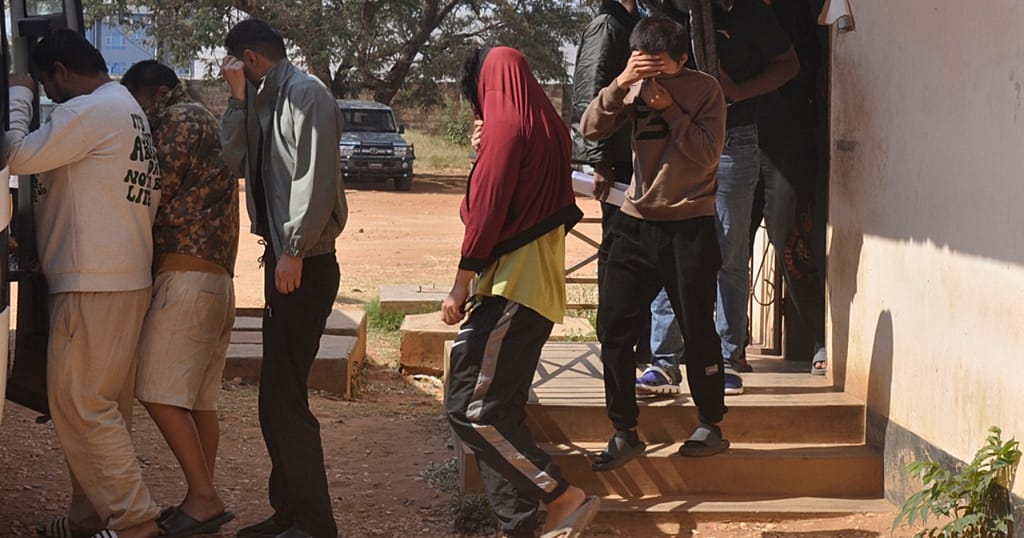
18. AI fuels more than half of cybercrime in Africa as digital scams surge: INTERPOL (www.africanews.com)
Artificial intelligence is now powering more than half of reported cybercrime across Africa, allowing criminals to launch faster, more convincing and larger-scale attacks, according to INTERPOL
INTERPOL reports that AI is driving over 50% of cybercrime in Africa, enabling criminals to execute increasingly sophisticated and widespread digital scams. The rise of these technologies presents significant challenges for cybersecurity efforts on the continent.
19. Apple is getting this wrong (openai.com)
20. Oxide Computer raises $445M (SEC Form D) (www.sec.gov)
21. Amazonian civilization had estimated 3M people in 3% of forest area (www.science.org)
22. Keyv and friends compromised in active Shai-Hulud supply chain attack (www.aikido.dev)

23. Online ad giant Adform was hacked, proving once again why ad blockers are needed (this.weekinsecurity.com)
The hacked digital advertiser was caught serving malicious ads that allowed hackers to steal a victim's cryptocurrency.
Adform’s recent hack highlights the vulnerabilities in online advertising, as the company was found distributing harmful ads that enabled the theft of cryptocurrency from users. This incident underscores the importance of ad blockers for protecting against such cyber threats.
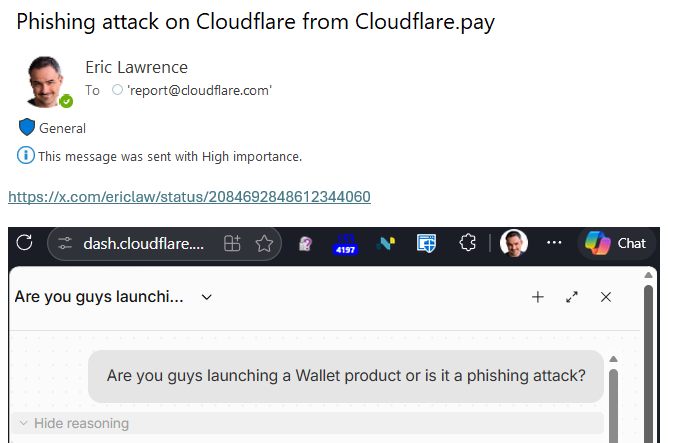
25. Security Is Hard, Y'all (textslashplain.com)
It started innocently enough. I saw a tweet about a new product offering from one of my favorite companies, Cloudflare. Neat! I clicked through to the site and there it is: And huzzah!, my preferre…

26. Why some people mow a lawn better than others (pudding.cool)
We analyzed 132,003 attempts to mow a virtual lawn efficiently.
Research reveals significant differences in mowing efficiency, based on an analysis of over 132,000 virtual lawn mowing attempts. Discover what factors contribute to better mowing skills and how they can be applied in real life.
27. DuckDB – Data power tools for your laptop, now in Clojure (2023) (techascent.com)
28. Show HN: Fine-tune an 8B model on a 4 GB laptop GPU (github.com)
Soup turns the pain of LLM fine-tuning into a simple workflow. One config, one command, done. - MakazhanAlpamys/Soup
Soup simplifies the process of fine-tuning large language models, allowing users to do it efficiently on a laptop GPU with just a single command. This tool could significantly ease the workflow for developers looking to customize AI models without needing extensive resources.

29. Buckminster Fuller: everything I know (www.bfi.org)
Everything I Know During the last two weeks of January 1975 Buckminster Fuller gave an extraordinary series of lectures concerning his entire life’s work. Jump to Sections Introduction These …
Buckminster Fuller shared insights from his life’s work in a remarkable series of lectures in January 1975. The content promises a deep dive into his philosophies and innovations, offering a unique perspective on his vision for the future.

30. That time when I failed the Microsoft interview (ochagavia.nl)
The year was 2015, halfway through my Computer Science bachelor’s degree. I had spent a few months contributing to open source and my confidence levels were high, so I thought: why not aim for a summer internship at Microsoft?
Microsoft, of all places, might sound like a weird company to target in 2026. Back then, however, they were cool (in my book at least). I was impressed by their work on Typescript, and also by their open source rewrite of the C# compiler.
Microsoft, of all places, might sound like a weird company to target in 2026. Back then, however, they were cool (in my book at least). I was impressed by their work on Typescript, and also by their open source rewrite of the C# compiler.
Reflecting on a pivotal moment from 2015, the author shares their ambitious attempt to land a summer internship at Microsoft, fueled by a newfound confidence from open source contributions. The piece captures the mix of aspiration and reality in the tech industry’s competitive landscape.