

2. Show HN: FeyNoBg – Automatic background removal model and training library (usefeyn.com)
FeyNoBg beats or matches the current leaders across eight benchmarks. Alongside the model, we
FeyNoBg offers an automatic background removal model along with an open-source Python library called NoBg for training and running it. This tool is designed to help developers create custom models tailored to their data needs.
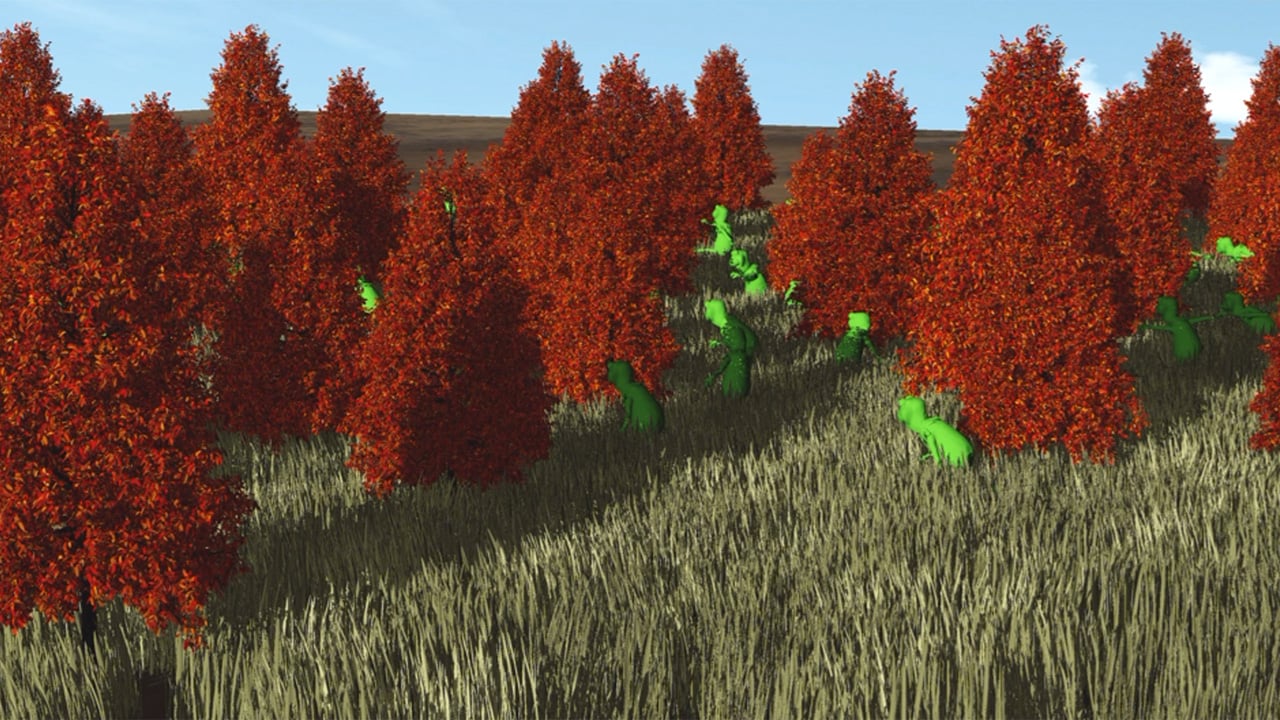
3. Ray tracing massive amounts of animated geometry using tetrahedral cages (gpuopen.com)
Animate compact tetrahedral cages and reuse static mini-BLASes to ray-trace hundreds of millions of triangles in real time, dramatically cutting per-frame update and memory costs for dense foliage, grass, and crowds.
Researchers have developed a method to efficiently animate and ray-trace vast amounts of geometry using compact tetrahedral cages, significantly reducing both memory usage and processing time for complex scenes like dense foliage and crowds. This innovation could enhance real-time graphics rendering in gaming and simulations.
4. Securing Services with Rootless Containers (blog.coderspirit.xyz)
Some tips to improve security in applications deployed as containers.
Learn practical strategies to enhance security for applications running in containerized environments. Implementing these tips can help mitigate risks and protect your services effectively.
5. The Usefulness of Useless Knowledge (1939) [pdf] (faculty.lsu.edu)
6. The Artist Who Colored Ghibli (animationobsessive.substack.com)
7. Show HN: Let's Seal – Let's Encrypt for document signing, free and self-hosted (github.com)
The open standard for proving any file is real, unaltered, sealed - letsseal/letsseal
Let’s Seal offers a free, self-hosted solution for document signing that aims to disrupt costly services like Adobe and DocuSign. By removing the barriers to verification, it promises an accessible alternative for authenticating documents without the usual fees.
8. Fonts In Use – Find out where a font is used (fontsinuse.com)
A searchable archive of typographic design, indexed by typeface, format, and topic.
Discover a comprehensive archive that allows you to search for typographic designs by typeface, format, and topic, making it easier to see how different fonts are applied in various contexts. Perfect for designers and typography enthusiasts looking for inspiration.

9. How real are real numbers? (2004) (arxiv.org)
We discuss mathematical and physical arguments against continuity and in favor of discreteness, with particular emphasis on the ideas of Emile Borel (1871-1956).
The article presents a discussion on the debate between continuity and discreteness in mathematics and physics, highlighting the contributions of Emile Borel. It offers insights into foundational questions about the nature of real numbers and their implications in these fields.
10. Worse on Purpose (ledger.worseonpurpose.com)

11. Elevated errors on Claude Opus 5 (status.claude.com)
Claude's Status Page - Elevated errors on Claude Opus 5.
Issues with elevated errors are currently affecting Claude Opus 5, as noted on the service’s status page. Users may experience disruptions or degraded performance while these problems persist.

12. Launch HN: Rise Reforming (YC S26) – Turning Waste Gases into Valuable Chemicals (www.rise-reforming.com)
Rise Reforming is working on a modular technology that transforms biogas from landfills and farms into valuable chemicals, providing a sustainable solution for waste management. Their approach connects biogas producers directly with chemical end users, potentially reshaping the market for renewable chemical production.

13. Building a Fast Lock-Free Queue in Modern C++ from Scratch (blog.jaysmito.dev)
Why do standard mutex-based queues feel very slow under extreme contention? Lets take a deep dive into the chaotic world of lock-free programming, Hazard Pointers, cache-line optimizations, and C++20 concepts to build a Multi-Producer Multi-Consumer queue that scales to dozens of threads without choking on the OS scheduler.
Learn how to create a high-performance, lock-free queue in C++ that can handle multiple threads efficiently, addressing the limitations of traditional mutex-based queues. The article covers advanced programming techniques including Hazard Pointers and cache-line optimizations to enhance scalability.

14. First Robotic Satellite Servicer Launched (www.nrl.navy.mil)
The Robotic Servicing of Geosynchronous Satellite (RSGS) payload, on board SpaceLogistic’s Mission Robotic Vehicle (MRV) has successfully launched from Space Launch Complex 40 at Cape Canaveral U.S.
A new robotic satellite servicer has successfully launched, marking a significant advancement in satellite maintenance capabilities. The Robotic Servicing of Geosynchronous Satellite (RSGS) payload aims to enhance the longevity and functionality of satellites in orbit.
15. Show HN: Distill and serve small models with frontier quality for half the cost (github.com)
Build continually improving models on your agent traces by distilling frontier open models - experientiallabs/world-model-optimizer
A new open-source tool called wmo serve helps optimize and serve smaller models for AI agents, allowing users to enhance performance while cutting costs. It leverages existing agent traces to refine models continuously, focusing on efficiency and effectiveness.
16. Jacobian Conjecture for Baby (muchmirul.github.io)
A step-by-step illustrated guide, starting from zero, to the Jacobian Conjecture and its July 2026 fall. Every idea is animated, and the final discovery is checkable by hand.
This guide breaks down the Jacobian Conjecture with clear illustrations and animations, making complex concepts accessible to beginners. Readers can follow along and verify the final findings themselves by hand.
17. Shay Locomotives (www.shaylocomotives.com)

18. Professor's invisible prompt trap catches 32/35 students cheating with AI (www.techspot.com)
In an online discussion post, Alcorn State University history professor Dr. Jason Gibson posed a question that represented part of his students' midterm. It was about the...
A history professor at Alcorn State University devised a clever question in an online discussion that revealed cheating among 32 out of 35 students using AI. This incident highlights the challenges educators face in maintaining academic integrity in the age of technology.
19. The Birth of the American 12-string Guitar (www.harpguitars.net)
20. EU Fines Google $1.02B for Favoring Its Own Services (www.wsj.com)
21. Towards a Theory of Bugs: The Ruliology of the Unexpected (writings.stephenwolfram.com)
22. How Unix spell ran in 64 kB of RAM (blog.codingconfessions.com)

23. US DOT deleting bike lane references (www.npr.org)
Transportation officials have removed a growing list of safety materials that mention bike lanes from federal websites. Safety advocates warn that's undermining proven measures for reducing crashes.
Federal transportation officials are removing references to bike lanes from safety materials, raising concerns among advocates about the potential increase in crashes due to the lack of support for effective safety measures. This shift could have significant implications for urban cycling and road safety initiatives.

24. Google Chrome Arrives on ARM64 Linux, Widevine DRM Included (www.omgubuntu.co.uk)
Google Chrome now has an official Arm64 Linux build, including for the Raspberry Pi, available via Google's Debian and RPM repos with Widevine DRM support.
Google Chrome is now officially available for ARM64 Linux, making it accessible for devices like the Raspberry Pi. The new build also includes support for Widevine DRM, allowing users to stream protected content seamlessly.
25. Nvidia's $750B in Deals Reignite Circular AI Fears (www.bloomberg.com)
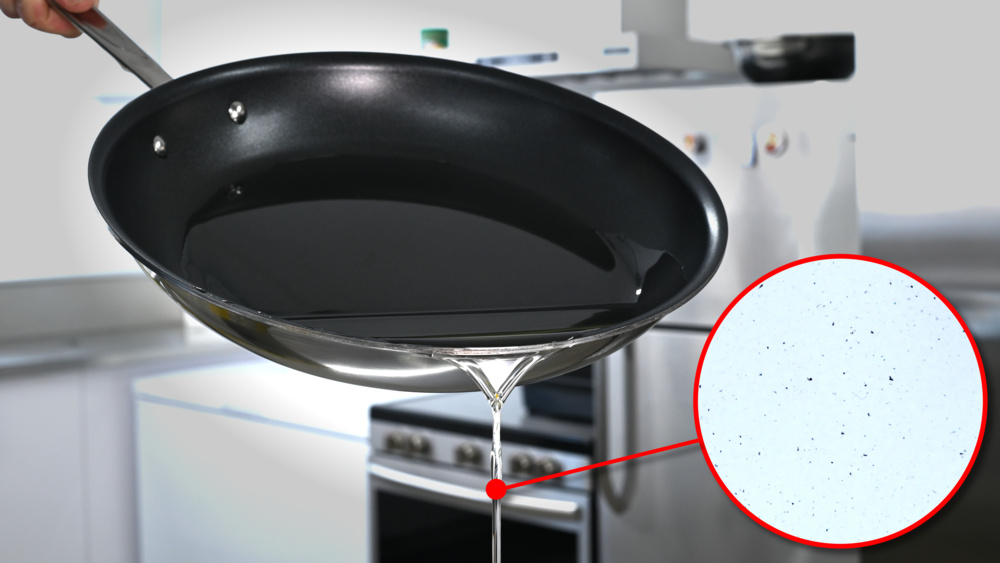
26. We Tested Nonstick Cookware: Coatings Don't Need to Look Worn to Shed Particles (www.rtings.com)
We tested new and worn PTFE nonstick cookware to see whether the coatings shed particles into cooking oil during ordinary use.
Testing on both new and worn PTFE nonstick cookware reveals that coatings can release particles into cooking oil, regardless of their appearance. The findings raise important questions about the safety of using nonstick surfaces in everyday cooking.
27. Tokio Gives Progress, Not Ordering: Scheduling 1M Tasks (pranitha.dev)
How spawning 1M Tokio tasks preserved throughput while letting polling order drift from event submission order, and why task creation needs an application-level bound.
The article discusses how managing one million Tokio tasks can maintain system throughput despite variations in task execution order. It also emphasizes the importance of setting application-level limits on task creation for optimal performance.

28. Minecraft Java raises recommended memory to 16GB ahead of Vulkan transition (videocardz.com)
Mojang has updated the system requirements for Minecraft: Java Edition, raising recommended system memory from 4GB to 16GB. The minimum is now 8GB with a dedicated GPU or 12GB with integrated graphics.
Mojang has significantly increased the recommended memory for Minecraft: Java Edition, reflecting the upcoming transition to Vulkan. Players will now need at least 8GB of RAM, with 16GB recommended for optimal performance.
29. The Author of Clean Code No Longer Reviews AI-Generated Code
Robert Martin, known for his influential work on coding standards, has decided to stop reviewing AI-generated code to maintain productivity. Instead, he focuses on implementing strict quality controls around the code produced by AI.