1. The End of Code Review: Coding Agents Supersede Human Inspection (arxiv.org)

Code review has been the primary quality gate in software development since Fagan formalised code inspection in 1976. For five decades, having a human examine and comment on a colleague's changes before merge has been a cornerstone practice at organisations of every size. Coding agents are large language model (LLM)-based autonomous systems capable of reading, writing, testing, and repairing software. We argue that coding agents have crossed a threshold of capability at which traditional human code review is no longer a necessary component of a software quality pipeline. Our argument rests on two claims: every stated goal of code review can be served by agents at lower cost and higher throughput; the naive integration in which agents write code and humans remain the mandatory reviewers is a dead end because it neither provides meaningful assurance nor scales with AI-assisted throughput.

4. The Reversal Curse: LLMs trained on "A is B" fail to learn "B is A" (arxiv.org)

We expose a surprising failure of generalization in auto-regressive large language models (LLMs). If a model is trained on a sentence of the form "A is B", it will not automatically generalize to the reverse direction "B is A". This is the Reversal Curse. For instance, if a model is trained on "Valentina Tereshkova was the first woman to travel to space", it will not automatically be able to answer the question, "Who was the first woman to travel to space?". Moreover, the likelihood of the correct answer ("Valentina Tershkova") will not be higher than for a random name. Thus, models do not generalize a prevalent pattern in their training set: if "A is B" occurs, "B is A" is more likely to occur. It is worth noting, however, that if "A is B" appears in-context, models can deduce the reverse relationship. We provide evidence for the Reversal Curse by finetuning GPT-3 and Llama-1 on fictitious statements such as "Uriah Hawthorne is the composer of Abyssal Melodies" and showing that they fail to correctly answer "Who composed Abyssal Melodies?". The Reversal Curse is robust across model sizes and model families and is not alleviated by data augmentation. We also evaluate ChatGPT (GPT-3.5 and GPT-4) on questions about real-world celebrities, such as "Who is Tom Cruise's mother? [A: Mary Lee Pfeiffer]" and the reverse "Who is Mary Lee Pfeiffer's son?". GPT-4 correctly answers questions like the former 79% of the time, compared to 33% for the latter.
Code available at: https://github.com/lukasberglund/reversal_curse.

6. WaPo Loves Data Centers More Than Disclosing Bezos's Financial Interest in Them (washingtonian.com)

The Washington Post’s opinion editors love data centers, the humongous and increasingly unpopular server warehouses that are the physical backbone of the internet and artificial intelligence. In unsigned editorials, podcasts, and guest op-ed columns, the Post’s take has been focused and forceful. America needs more data centers to boost the economy, compete with China, and

15. How Lume Works: The Retrieval Primitives (deepbluedynamics.com)

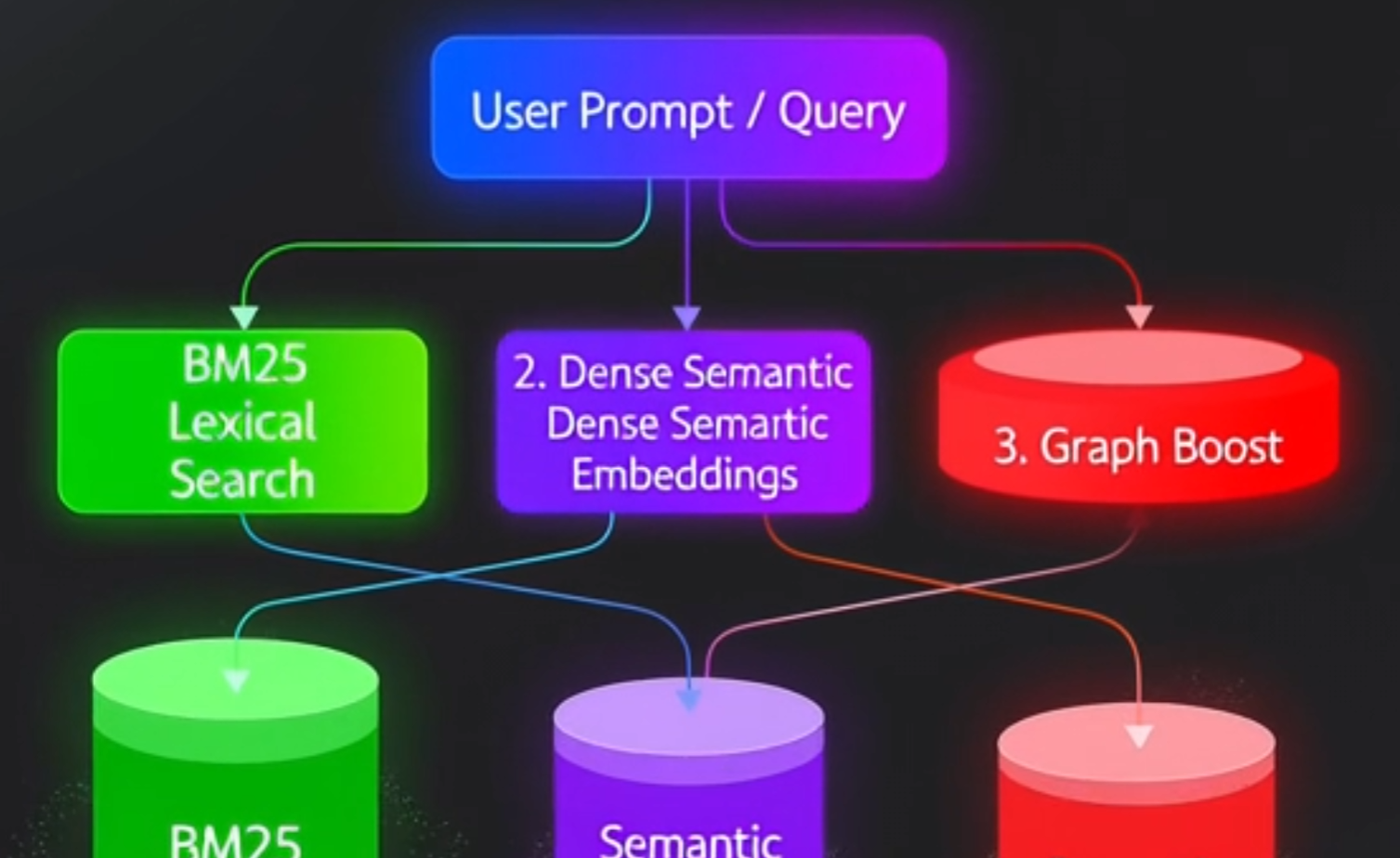
A grounded walk through Lume's retrieval core - field-aware BM25, two-stage roaring/Godel pruning, local GTR-T5 vectors via Shivvr, a significance-scored entity graph, the multiplicative blend that fuses them, and the knobs that tune it all.

Article Details

Browse by Date

Type to search HN and engineering blog articles
Press Escape to close  |  ↑↓ to navigate  |  Enter to open