The detection of fast astronomical transients in photographic plates from the Palomar sky surveys conducted in the 1950s, was subject to the criticism that such transients could be just the effect of otherwise unaccounted for plate artifacts. In this paper, we show that transient images exhibit the coma aberration pattern expected from off-axis point sources recorded through the telescope optics, a signature that plate artifacts cannot naturally reproduce. Although the data does not by themselves establish the physical origin of the light that generated the images, they lend support to hypotheses that do not rely on instrumental effects to explain transients.
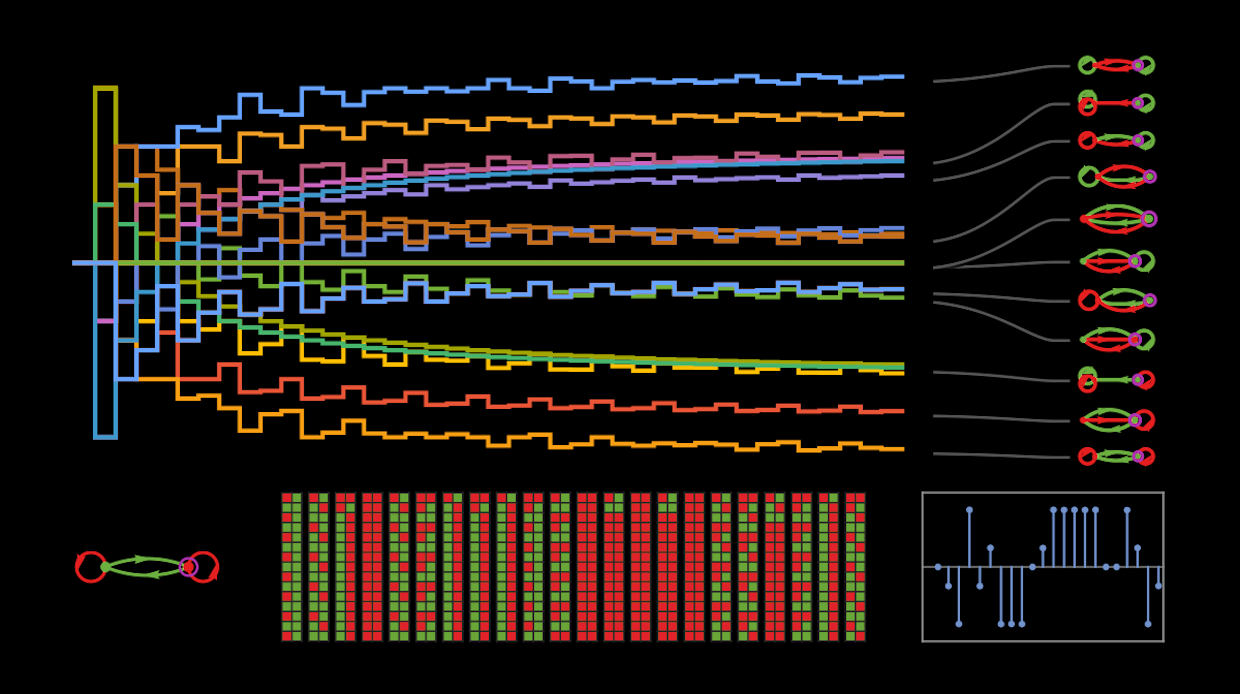
Stephen Wolfram applies ruliological methods to competition, considering all possibilities in looking for a winning strategy. Does competition lead to complexity or simplicity?
On Apple platforms, the development experience was designed around making the compile-link-debug cycle as fast as possible. For debugging, that means that rather than processing large amounts of DWARF to link it into the final binary, the linker leaves the debug info in the object files and records a debug map that tells the debugger where to find it. When you're debugging locally, that's all you need. But if you want to archive the debug info for crash reporting or remote debugging, you need a way to produce a self-contained bundle.
Mergeable Containers let Loro peers concurrently create the same child container under a Map key and still merge into one shared child, by deriving identity from the logical parent/key/type instead of the creation OpID.
Hey everyone! We're thrilled to announce Blaise v0.10.0 — our biggest release yet, packing in a native x86-64 backend, thread support, incremental separate compilation, and a language-level clarity...
Compilers, especially method just-in-time compilers, operate on one function at a time. It is a natural code unit size, especially for a dynamic language JIT: at a given point in time, what more information can you gather about other parts of a running, changing system?
Anthropic published how its data team automated close to 100% of business analytics at 95%+ accuracy. The four-layer architecture they describe is the same one we had already open-sourced as ktx, an independent, Apache-2.0 context engine for data agents.