

2. Scientists warn Atlantic current at risk of shutting down (e360.yale.edu)
Scientists are increasingly worried that a vast system of ocean circulation, which delivers warmth to northern Europe and impacts climate globally, is at risk of collapse. Mounting evidence suggests it may be nearing a tipping point, though the research is far from certain.
3. 5x perf increase on writes with FPW disabled in Postgres (www.databricks.com)

4. Rotten Dot Com (www.theparisreview.org)
May 6, 2026 – “Rotten.com was a haunted arcade, dispensing trauma in gumball-machine doses straight to kids with dial-up, who chewed on images never meant for their half-formed stomachs.”

5. Chrome's AI features may be hogging 4GB of your computer storage (www.theverge.com)
You can take steps to delete it though.
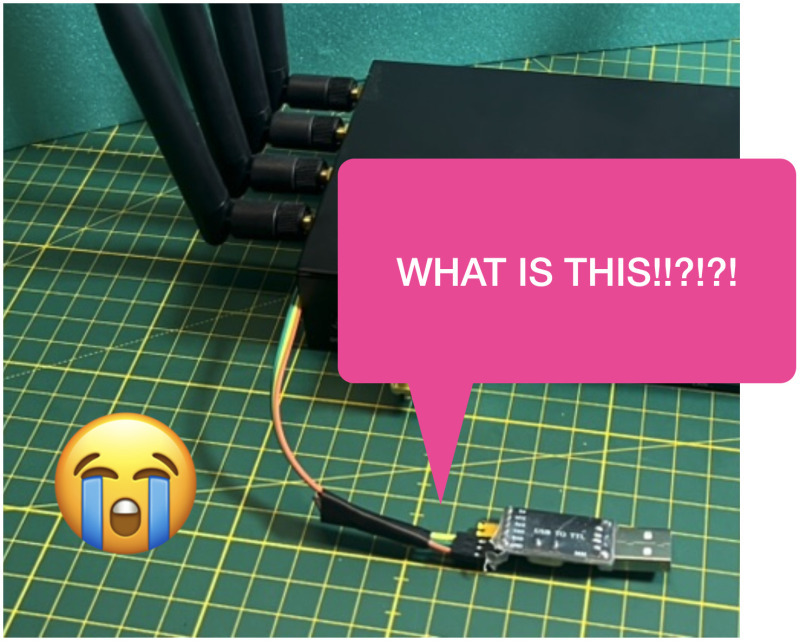
6. The Serial TTL connector we deserve (kohlschuetter.github.io)
Goodbye dangling Dupont pins, hello Julet E-Bike connector. I have them now everywhere, from my router to my servers.
7. Eight More 8-bit Era Microprocessors (2024) (thechipletter.substack.com)

8. The River Otter's Remarkable Comeback (www.rewildingmag.com)
In North America’s Great Lakes region, river otters are coming back from the brink thanks to decades of effort on both sides of the border.
9. Show HN: Countries where you can leave your MacBook at a random coffee shop (vouchatlas.com)
Would you vouch for this country? A crowd-sourced safety map.

10. Why modern parents feel more sleep deprived than our ancestors did (www.bbc.com)
Our ancestors probably didn't suffer as much from parental sleep deprivation, leading some scientists to reconsider guidelines for today's new parents.
11. The first microcomputer: The transfluxor-powered Arma Micro Computer from 1962 (www.righto.com)
12. Academic Research Skills for Claude Code (github.com)
Academic Research Skills for Claude Code: research → write → review → revise → finalize - Imbad0202/academic-research-skills
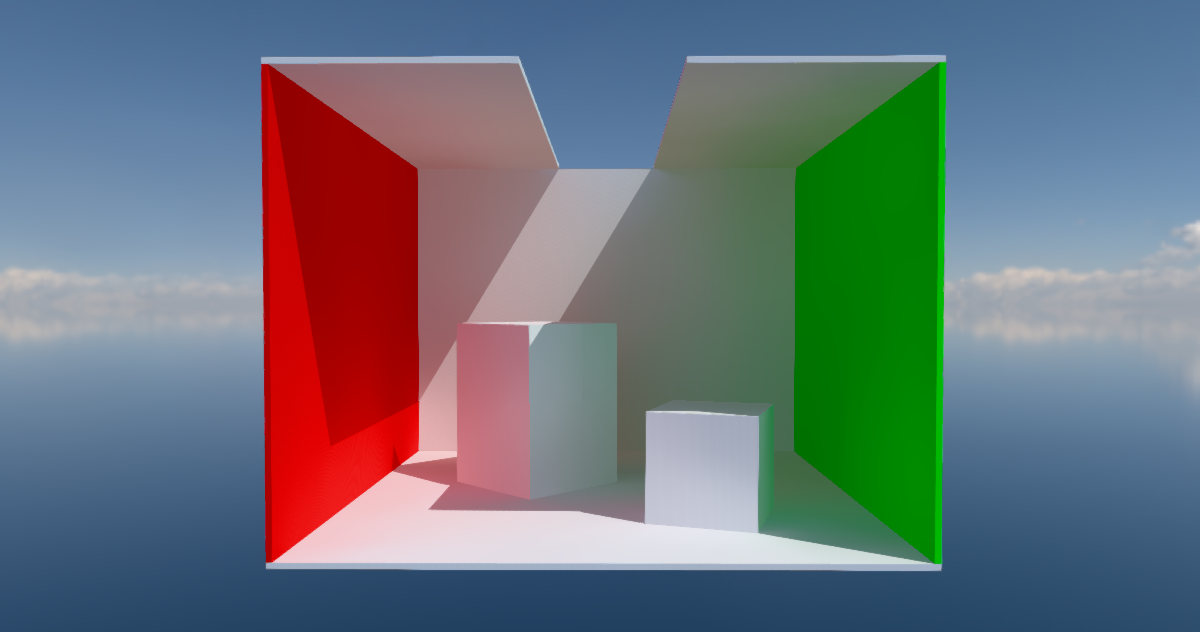
13. Surfel-based global illumination on the web (juretriglav.si)
Can we use WebGPU to compute real-time global illumination with surface patches called surfels? Does it look good enough? Is it fast enough? And can we finally construct viable compute-heavy rendering pipelines right here on the open web? Join me on this journey and let's find out!

14. LLMorphism: When humans come to see themselves as language models (arxiv.org)
LLMorphism is the biased belief that human cognition works like a large language model. I argue that the rise of conversational LLMs may make this bias increasingly psychologically available. When artificial systems produce human-like language, people may draw a reverse inference: if LLMs can speak like humans, perhaps humans think like LLMs. This inference is biased because similarity at the level of linguistic output does not imply similarity in cognitive architecture. Yet, LLMorphism may spread through two mechanisms: analogical transfer, whereby features of LLMs are projected onto humans, and metaphorical availability, whereby LLM vocabulary becomes a culturally salient vocabulary for describing thought. I distinguish LLMorphism from mechanomorphism, anthropomorphism, computationalism, dehumanization, objectification, and predictive-processing theories of mind. I outline its implications for work, education, responsibility, healthcare, communication, creativity, and human dignity, while also discussing boundary conditions and forms of resistance. I conclude that the public debate may be missing half of the problem: the issue is not only whether we are attributing too much mind to machines, but also whether we are beginning to attribute too little mind to humans.

15. The people preserving the scientific practice of bird banding (thenarwhal.ca)
Birds migrate across the world, as do the volunteers who participate in bird-banding practices. But Canadian conservation programs are threatened by cross-border funding cuts

16. Chindogu: Weird and Useless Japanese Inventions (rarehistoricalphotos.com)
Discover a curated list of peculiar Japanese inventions that add a playful twist to everyday life. Explore the weird and useless yet strangely intriguing creations from Japan.
17. Shunting-Yard Animation (somethingorotherwhatever.com)

18. Gen Z Resentment Toward AI Grows as Adoption Stagnates and Workplace Fears Mount (www.waltonfamilyfoundation.org)
Walton-GSV-Gallup survey finds young people are feeling angrier about AI, cautious about integrating AI in the classroom

19. Taxpayers May Be Eligible for Significant Tax Refunds – If They Act by July 10 (www.taxpayeradvocate.irs.gov)
Millions may qualify for refunds on COVID-era penalties and interest. Learn how to claim yours and why you must act before the July 10, 2026 deadline.
20. Sparse Cholesky Elimination Tree (www.reidatcheson.com)
Here I derive the elimination tree for the (right-looking) sparse Cholesky algorithm for computing A = LL^T for lower triangular L and sparse matrices A. This tree forms the foundation for most sparse factorization software, even when the underlying assumptions of Cholesky (symmetric and definite) do not apply. Ultimately this tree tells us two things: 1. where nonzeros appear in the matrix L even if not present in the original A (i.e. “fill-in”) and 2. the task dependency graph of our resulting factorization. Traditionally this concept is usually presented in the context sparse triangular solves which is then used as a building-block to a Cholesky factorization. I wanted to instead work directly from a Cholesky factorization, which is what I do below.
21. SpaceX wants to launch a million satellites (www.cbc.ca)
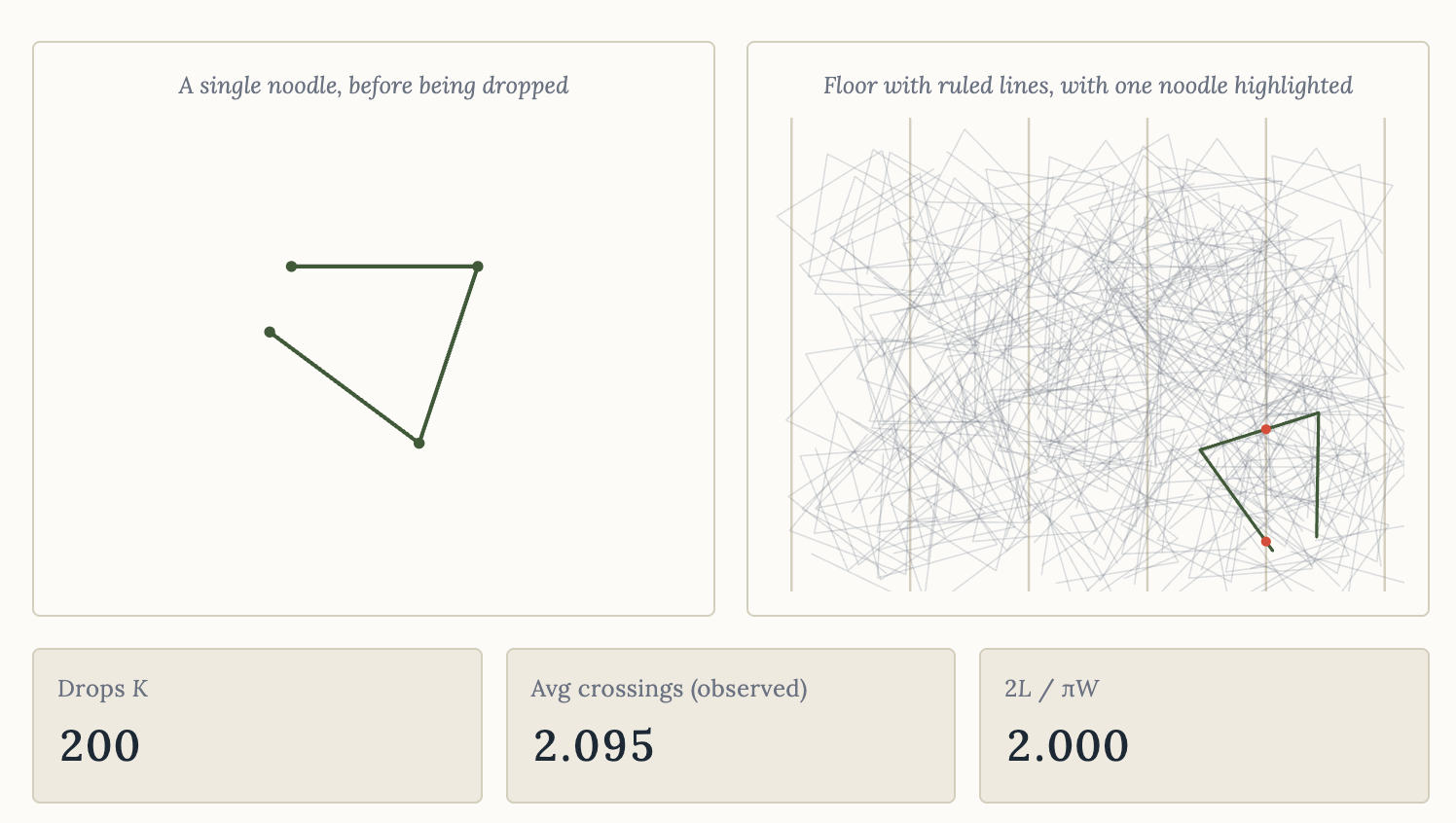
22. From Buffon's Needle to Buffon's Noodle (mbmccoy.dev)
Bending the needle with geometric probability

24. Scouting's Real Crisis Is Not Marketing. It Is Decades of Neglect. (www.untendedfire.org)
When the Boy Scouts of America, recently rebranded as Scouting America, gathers in Dallas May 11-15 for its National Annual Meeting, its leaders will confront a crisis that messaging cannot solve. At the end of 2025, the organization’s market share sank to about 1.25 percent of American youth, the lowest since about 1923. The organization...
26. I have seen the dystopian future of elderly care (www.telegraph.co.uk)

27. Show HN: All 55,256 Slides of the WAR.GOV/UFO Files Searchable and Linkable (hypergrid.systems)
Browse war.gov/UFO Release 01 with collated reports, responsive flipbook viewers, and searchable archive metadata.
29. Show HN: Modafinil - Let agents continue running while MacBook lid is closed (github.com)
Let your agents run with your MacBook lid closed. Contribute to narcotic-sh/modafinil development by creating an account on GitHub.