In 2015, two geographers noticed solar panels popping up on houses in their small US state of Connecticut. Curious, they set out to see if they could figure out what predicted who had them. Would t…
By Robert Smith Coalton is a statically typed functional programming language that lives inside Common Lisp. It has had an exciting few years. It is being used for industrial purposes, being put to its limits as a production language to build good, reliable, efficient, and robust products. Happily, with Coalton, many products shipped with tremendous success. But as we built these products, we noticed gaps in the language. As such, we’re setting the stage for the next tranche of Coalton work, and we’re going to preview some of these improvements here, including how Coalton can prove $\sqrt{2+\sqrt{3}} = \sqrt{2}(\sqrt{3}+1)/2$ exactly.
Stores the user's birth date for age verification, as required by recent laws in California (AB-1043), Colorado (SB26-051), Brazil (Lei 15.211/2025), etc. The xdg-desktop-portal project is addi...
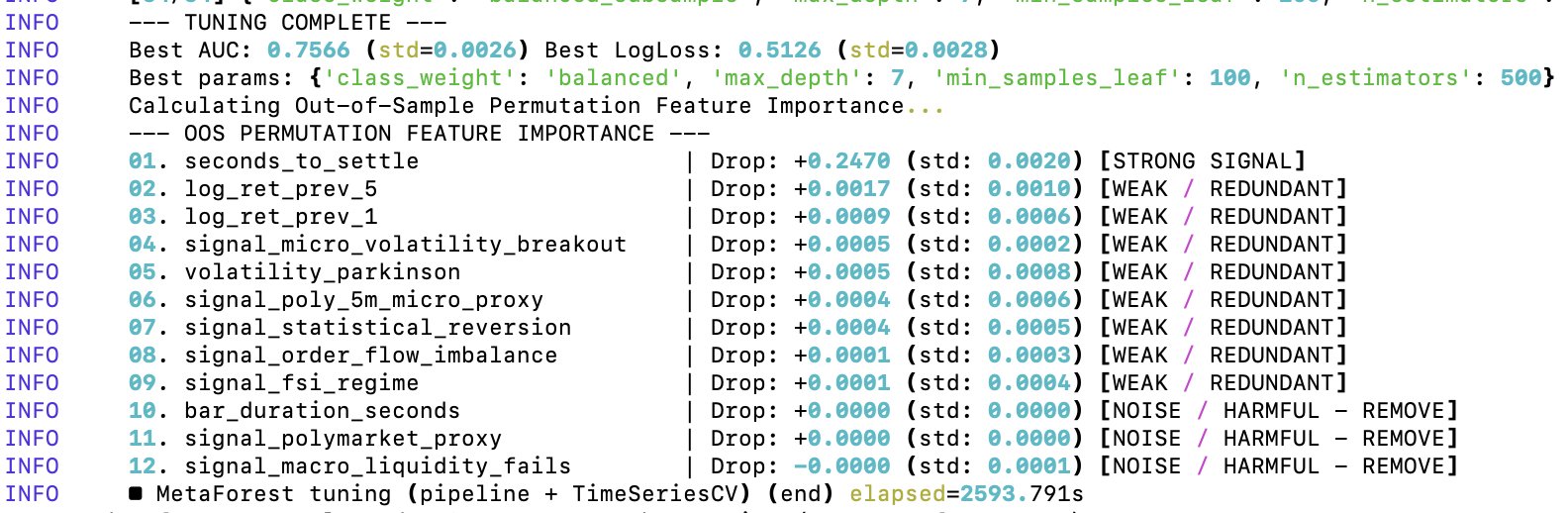
After the first level of tuning of the random forest’s parameters, it came time to optimize the features on which the random forest gets trained on. I’ve already did a minor cleanup, but I didn’t...
Use Garry Tan's exact Claude Code setup: 15 opinionated tools that serve as CEO, Designer, Eng Manager, Release Manager, Doc Engineer, and QA - Translate README from Linkedin-speak to plain English by tornikeo · Pull Request #213 · garrytan/gstack
I instrumented a FastAPI app and measured where time actually goes. Network is 69-83% of what users experience. Framework overhead is 0.2-0.8%. Your framework choice doesn
The core processing engine behind LlamaParse is now open source. LiteParse runs entirely locally, has zero Python dependencies, and is built around how agents actually iterate on documents: parse text fast, fall back to screenshots when you need visual reasoning.
Non-Display Smart Glasses hold the potential to support everyday activities by combining continuous environmental sensing with voice-only interaction powered by large language models (LLMs). Understanding how conversational successes and breakdowns arise in everyday contexts can better inform the design of future voice-only interfaces. To investigate this, we conducted a month-long collaborative autoethnography (n=2) to identify patterns of successes and breakdowns when using such devices. We then compare these patterns with prior findings on voice-only interactions to highlight the unique affordances and opportunities offered by non-display smart glasses.