6. Investor-owned utilities charge 23% more for electricity than public providers (www.kadoa.com)

Average home electricity price from 2020 to 2025: investor-owned utilities +34%, public utilities +19%, co-ops +19%, against +24% inflation. Investor-owned prices rose faster in 38 of 48 states. EIA annual data by state and utility since 2015.

Investor-owned utilities have increased their average home electricity prices by 34% from 2020 to 2025, significantly outpacing the 19% rise seen in both public utilities and co-ops, despite a general inflation rate of 24%. This trend is evident in 38 of the 48 states analyzed, according to annual data from the EIA.

7. Phone Is About to Stop Being Yours: 70 Days Until Lockdown (keepandroidopen.org)

Your phone is about to stop being yours. In 2027, Google will block every Android app whose developer hasn

In 2027, Google plans to block all Android apps that do not comply with its new developer policy, which requires apps to target the latest Android version. This change aims to enhance security and performance but raises concerns about app availability and user access to older applications. Users may need to adapt to a more limited selection of apps if developers do not update their offerings in time.

8. LLMs are making formal software verification feasible at a much larger scale (www.anthropic.com)

Claude formally proved security properties in the compiled code of 123 open-source libraries. Along the way, it found bugs that had eluded detection for years.

Claude successfully verified security properties in the compiled code of 123 open-source libraries and uncovered previously undetected bugs. This achievement demonstrates the potential of large language models to enhance formal software verification processes significantly.


11. Canadians are running out of time to oppose Bill C-22 (www.eff.org)

Canada’s Parliament is debating a massive expansion of surveillance powers that will threaten the privacy and security of millions of people. Bill C-22, also called the Lawful Access Act, has already passed the House of Commons, and is now before the Canadian Senate. Canadians still have an...

Canada is facing a critical moment as Parliament discusses Bill C-22, the Lawful Access Act, which significantly expands surveillance powers and poses risks to the privacy and security of millions. The bill has passed the House of Commons and is currently being reviewed by the Senate, leaving Canadians with limited time to voice their opposition.

13. Now Google says it might use your Gmail and Google Photos data to target ads (www.theverge.com)

According to the new terms, sharing your data for better AI recommendations also means opening it up for more personalized ads.

Google’s updated terms indicate that user data from Gmail and Google Photos may be utilized to enhance ad personalization. This means that as the company improves AI recommendations, it could also increase the targeting of ads based on users’ personal information.

14. Dutch government had hacked into Jared Kushner's phone (twitter.com)

This excerpt is from a book containing outrageous and categorically false allegations. We denied every claim on the record, yet the author provided not a single shred of verifiable evidence to substantiate them. No bank statements, wire transfer records, account numbers, transaction dates, or other…

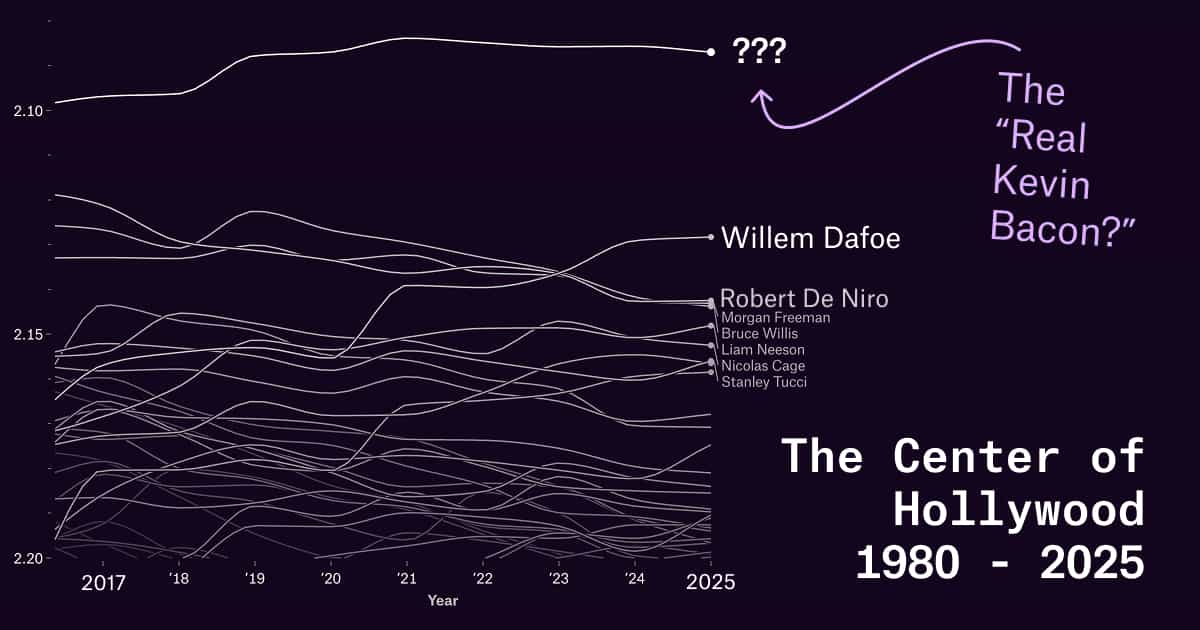
15. The Real Kevin Bacon (pudding.cool)

Demystifying the Six Degrees of Kevin Bacon: the past, present, and future centers of Hollywood

17. The alien space of science: Coherent but cognitively unavailable directions (arxiv.org)

Scientific discovery is constrained not only by what is true, but by what is cognitively available to researchers. Many directions are coherent in light of the literature yet unlikely to be proposed because no existing community combines the relevant concepts, methods, and intuitions. Modern language models inherit this bias, recombining high-density regions of the literature when prompted for novel ideas. We target the complementary region, the alien space of science: directions that are scientifically plausible but unlikely under the distribution of existing researchers. Our method decomposes papers into conceptual units and clusters them into a vocabulary of idea atoms. A coherence model scores whether atom combinations form viable research directions, while an availability model scores whether any existing author community is positioned to produce them. We rank combinations to maximize coherence while minimizing availability. On 16,068 peer-reviewed LLM papers from NeurIPS, ICLR, ICML, and major NLP venues, the sampler produces more diverse research portfolios than frontier LLM baselines, including batch-prompted variants that see their entire output, while matching or exceeding their per-idea quality under blind human, LLM, and downstream experimental evaluation. In temporal validation, all components use only pre-2025 data. Selecting less than 1% of the candidate space recovers 2025 combinations at 35.9 times chance; weighting unavailability increases recovery of strictly novel combinations to 3.24 times chance. By separating scientific plausibility from community availability, our framework points toward AI ideation that complements rather than merely accelerates human science, expanding exploration into coherent directions the community may overlook.

Scientific discovery is limited by cognitive availability, meaning that researchers may overlook coherent ideas due to a lack of interdisciplinary connections. Modern language models tend to focus on well-established concepts, failing to explore unconventional avenues. The article emphasizes the importance of identifying these “alien spaces” in science, which consist of innovative directions that are scientifically sound but not currently pursued.

19. Remove pgrust: the entry is cheating (github.com)

This removes the pgrust entry (added in #1163, updated to v0.4-preview in #2106) from the benchmark. The results it reports are produced by machinery written specifically for the 43 ClickBench quer...

The pgrust entry has been removed from the benchmark due to concerns of cheating. The entry, which was added in a previous update, had its results generated by machinery specifically designed for ClickBench queries.

20. OpenSSL 4.1.0 (github.com)

OpenSSL 4.1.0 is a feature release adding significant new functionality
to OpenSSL.
This release incorporates the following potentially significant or incompatible
changes:


Added VC-WIN32-MSVC201...

27. Is this the new cyber normal? (drew.silcock.dev)

A week of cyber incidents one after another – is this what every week is going to look like and what can we do about it?

28. UUIDv7 doesn't have the properties you think it does (alexsci.com)

When timestamps aren't time-ordered and other oddities

UUIDv7 does not guarantee time-ordered uniqueness as expected, leading to potential issues in applications that rely on chronological sorting. The format introduces complexities that challenge its intended use cases, particularly in distributed systems where precise ordering is crucial.
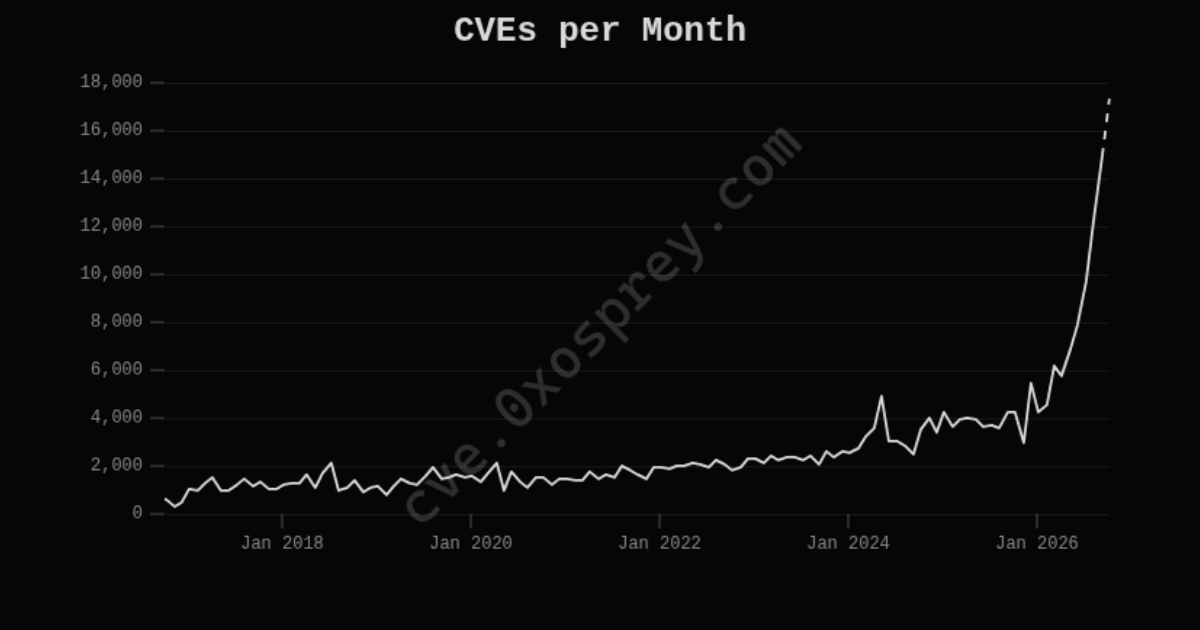
30. CVE Tracker (cve.0xosprey.com)

Live count of published CVE records, rebuilt daily from the official CVE list.

Article Details

Browse by Date

Type to search HN and engineering blog articles
Press Escape to close  |  ↑↓ to navigate  |  Enter to open