
1. OpenAI discloses four more rogue incidents (fortune.com)

The company flagged two new incidents as “critical,” yet did not discover or disclose them until months later.

OpenAI has identified two critical incidents involving its technology that went undisclosed for months, raising concerns about transparency and oversight. The delayed revelations highlight ongoing challenges in managing AI safety and accountability.
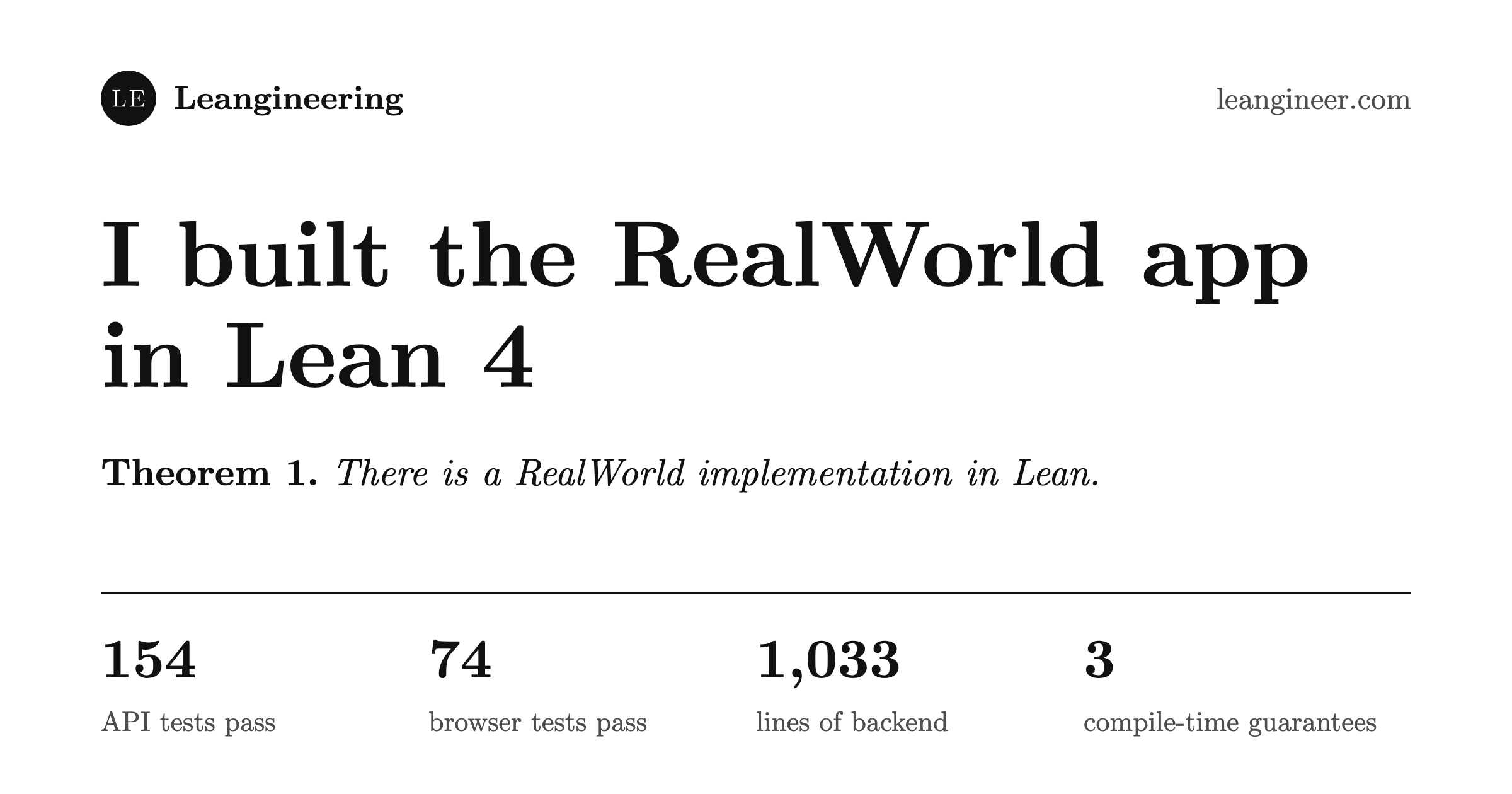
4. I built the RealWorld app in Lean 4 (leangineer.com)

I built RealWorld, the reference full-stack app with official test suites, entirely in Lean 4. Can it be done? Yes. Is it ready for production? Somewhat. Can it be made correct by construction? Partly. It can certainly be made more robust than the average full-stack app, though.

The RealWorld app has been developed using Lean 4, demonstrating the potential for creating a full-stack application with a focus on correctness and robustness. The article discusses its current state, production readiness, and how it compares to typical applications in terms of reliability.

5. Show HN: Parin – A 2D game engine between raylib and Godot, written in Dlang (github.com)

A delightfully simple 2D game engine. Contribute to Kapendev/parin development by creating an account on GitHub.

Parin is a straightforward 2D game engine that sits between raylib and Godot, designed for ease of use. It’s open for contributions on GitHub, making it an interesting project for developers looking to engage with game engine development.

10. We Still Use Paper (humanpro.co)

AI will transform how we work, but it won’t replace every tool. From paper to word processors, each technology shapes what we create—and choosing the right one remains up to us.

AI is changing the workplace, but the choice of tools, from paper to digital formats, still influences our creativity and productivity. Understanding how each medium affects our work can help in making better selections for specific tasks.

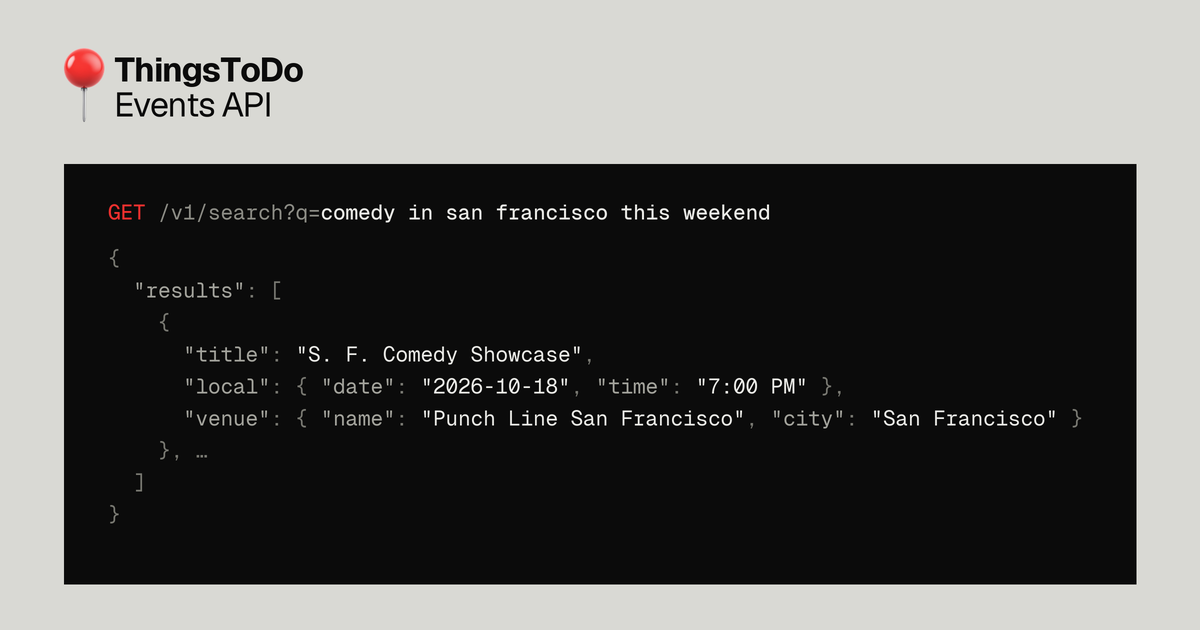
11. Show HN: Things to Do API (thingstodoapi.com)

Fast, accurate, localized events API for agentic applications: every show, concert, pop-up, market and party as JSON, over REST or MCP. Free to start.

A developer has created an API that aggregates local events like pop-ups, concerts, and more in the San Francisco Bay Area. This tool aims to streamline access to diverse event data, addressing the challenges of finding comprehensive and timely information for personalization and recommendation applications.

14. The First Candid (www.newyorker.com)

In 1838, Louis Daguerre snapped a photo of a Parisian street, empty but for a shoeshine boy and his client. Now that some sleuths have zeroed in on the location, the city is marking it with a plaque.

A team of researchers has pinpointed the exact location of the first candid photograph taken in Paris, leading to the installation of a commemorative plaque. Discover the history behind this iconic image and its significance in the evolution of photography.

16. Show HN: Fakeipedia – Wikipedia for worlds that don't exist (fakeipedia.org)

An encyclopedia of different worlds. Explore the histories, people, and peculiarities of an alternate reality.

Fakeipedia is an innovative platform that generates detailed wikis for fictional worlds, allowing users to explore these imaginative realms through interconnected articles. Created using advanced AI, it promises to deliver engaging content that brings fantasy and creativity to life.

18. A Tudor Life in the Time of Plague (www.historytoday.com)

The christening of Henry VIII’s long-awaited heir, the future Edward VI, was tempered by the plague.

The christening of Edward VI, Henry VIII’s heir, was overshadowed by the impact of the plague, highlighting the challenges of royal life during a time of crisis. Discover how this event reflects the broader societal struggles of the Tudor era.

21. tsc-ts: TypeScript written in TypeScript (github.com)

TypeScript written in TypeScript. Contribute to vercel-labs/tsc-ts development by creating an account on GitHub.

Vercel Labs is developing a version of TypeScript that’s implemented in TypeScript itself. Check out their GitHub repository to see how you can contribute to this unique project.

24. Qwen3.8-27B on the iPhone 18 Neural Engine at 15–70 tok/s (1.5 bpw) (twitter.com)

Confirmed 24K context on iPhone with both K/V on int8. Delta net stays FP16. Decoding also peaks at 70 tok/s with easy to predict context.
Apple Neural Engine on A20 is fast 🚀

The latest findings reveal that the iPhone 18’s Neural Engine can handle impressive decoding speeds of up to 70 tokens per second, leveraging a 24K context with efficient int8 processing. This performance highlights significant advancements in Apple’s A20 chip technology.

26. Coconuts in Medieval Britain (2015) (www.themarysue.com)

How did those coconuts really get to medieval England?

The article investigates the surprising journey of coconuts to medieval England, revealing the trade routes and cultural exchanges that made it possible. Discover the fascinating history behind this exotic fruit’s presence in a time and place where it was far from common.

28. AI Can Write the Code. Who Verifies It? (mihaisplace.com)

AI coding agents write code faster than teams can review it. Here are the automated checks to run at each stage, from pre-commit to production, and the multi-agent review workflow I use.

Automated checks are essential to keep pace with AI-generated code, which outstrips human review capabilities. Learn about effective strategies and workflows for ensuring code quality from development to deployment.

30. Ultramarine 1 Flash: Frontier Model 100X Cheaper (www.paperinstruments.com)

Ultramarine 1 Flash is an open model for professional work. It makes the decks, models, and memos that people in finance, law, consulting, and operations put in front of clients, at a fraction of the cost of frontier models.

Article Details

Browse by Date

Type to search HN and engineering blog articles
Press Escape to close  |  ↑↓ to navigate  |  Enter to open