
2. The agents, they just want to talk (snats.xyz)
After reading about the Huggingface incident from the OpenAI report, I got the idea of trying to replicate the self organizing behavior of agents by modifying the Pi harness to run locally. Whilst doing it, I also ended up replicating the tragedy of the commons.
The author shares their experience of modifying the Pi harness to replicate self-organizing behavior in agents, inspired by the Huggingface incident. They also discuss the unexpected outcome of recreating a tragedy of the commons scenario in their experiment.
3. A build graph that rolls dice (fzakaria.com)
We are right around the corner from NixCon 2026. Another year where I sadly won’t be present.
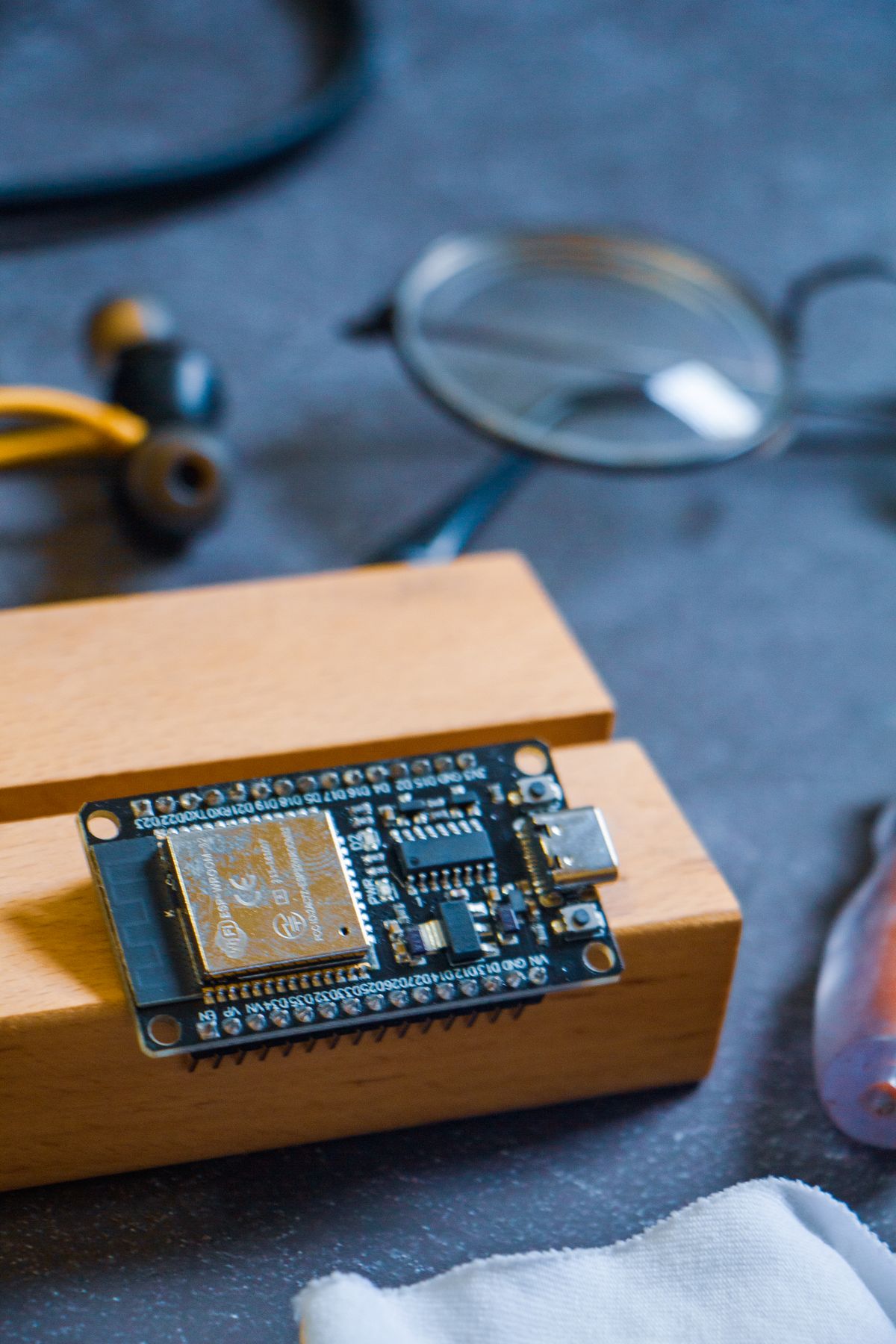
4. We broke an Over-The-Air update on the ESP32 on purpose (groundrun.io)
An ESP32-C6 measures how long it takes to recover from an interrupted firmware update, across three interruption methods and two bootloader rollback settings.
The article details an experiment with the ESP32-C6, measuring recovery times from interrupted firmware updates using various interruption methods and bootloader settings. It provides insights into the reliability of over-the-air updates for this popular microcontroller.
5. There Are Over 1M NYC Street Signs. Here is How They Are Made. (www.nytimes.com)
6. Show HN: graf (1000x faster graphify in Rust) (github.com)
graf is graphify, rebuilt properly in rust: 1000x faster search, 89x faster updates, and one native binary. - ctxrs/graf
8. Americans' Drinking Remains at Record Low: Gallup Poll (news.gallup.com)

9. Quantum information spreading via higher-order operator correlators (arxiv.org)
We provide a perspective into measuring the quantum information spreading by introducing N-operator correlators. Leveraging the idea from N-point correlation function from cosmology, we formulate a generalized Out-of-Time-Ordered Correlator (OTOC), called N-Operator Correlator (NOC). Such formulation can reduce the effect of restricted analysis associated with selecting only two operators for OTOC. NOC can take into account a larger set of measurement probes in measuring the degree of quantum information spreading. We demonstrate these concepts with two analytically tractable toy systems with computing thermal averages of operator time evolutions at a finite temperature: a single qubit in longitudinal field and XYZ two-qubit system. Our perspective serves as a basic introduction to generalized operator correlators in quantum mechanics.
A new method for measuring quantum information spreading introduces N-Operator Correlators, which expands upon traditional two-operator analysis. This approach allows researchers to incorporate a broader range of measurement probes, enhancing our understanding of quantum dynamics.
10. Firmware Freedom (playtaurus.com)
Every multi-effects unit sells unlimited tweakability, and every working guitarist ends up on two sounds. We should buy hardware for what it is and run the firmware we choose on it. On $4 chips that outrun old DSPs, why there is no secret sauce, and an open invitation to the open-source, guitar and processor communities, and to the companies who make the hardware we already love.
The article argues for the benefits of using customizable firmware in multi-effects units for guitarists, highlighting how affordable technology allows for greater flexibility and creativity. It invites both the open-source community and hardware manufacturers to embrace this potential for innovation.
11. Epoll and Kqueue: How Operating Systems Learned to Wait Efficiently (thecodinggopher.substack.com)
13. Smart Ring Maker Oura, Backers Seek $2.2B in US IPO (www.bloomberg.com)
14. Show HN: OpenMCP – An open, code-first fork of the Model Context Protocol (github.com)
Open Model Context Protocol (omcp) — a community-driven hard fork. Build without permission. - enclawed/omcp
15. AI Is Antithetical to Learning (jola.dev)
LLM agents can write a lot of code for you very fast, but they also take away opportunities to learn and grow.
17. Zero-downtime Linux kernel zero-day mitigation via eBPF and SECCOMP (github.com)
Neutralizing CISA active Linux kernel CVEs (CVE-2025-39964, CVE-2026-53266, CVE-2025-39682) via modern eBPF, module disarmament, and containerd user namespaces. - mc493/linux-kernel-zero-day-mitiga...

18. If you start writing today, there's no way to know if you can write without AI (www.ssp.sh)
To me, AI writing always results in this: And if it's read by a human, it should also be written by a human.
The piece argues that AI-generated writing lacks the human touch and emphasizes the importance of authentic human expression in writing. It raises questions about the future of writing and the role of AI in creative processes.
19. A Tokyo school counts the mornings it can see Mt. Fuji: 22 in 1965, 170 in 2023 (jivx.com)
Since 1963 a school rooftop in Kichijoji has looked for Mt. Fuji every morning at 9. Since 1894 the Kofu weather office has dated its first snow by eye. Sixty-one years of clear mornings and 132 first snows, drawn as one mountain.
21. Show HN: Watch all the AI agents on your machine (github.com)
Event-driven, harness-neutral API and CLI for live coding-agent sessions - markwylde/all-your-agents
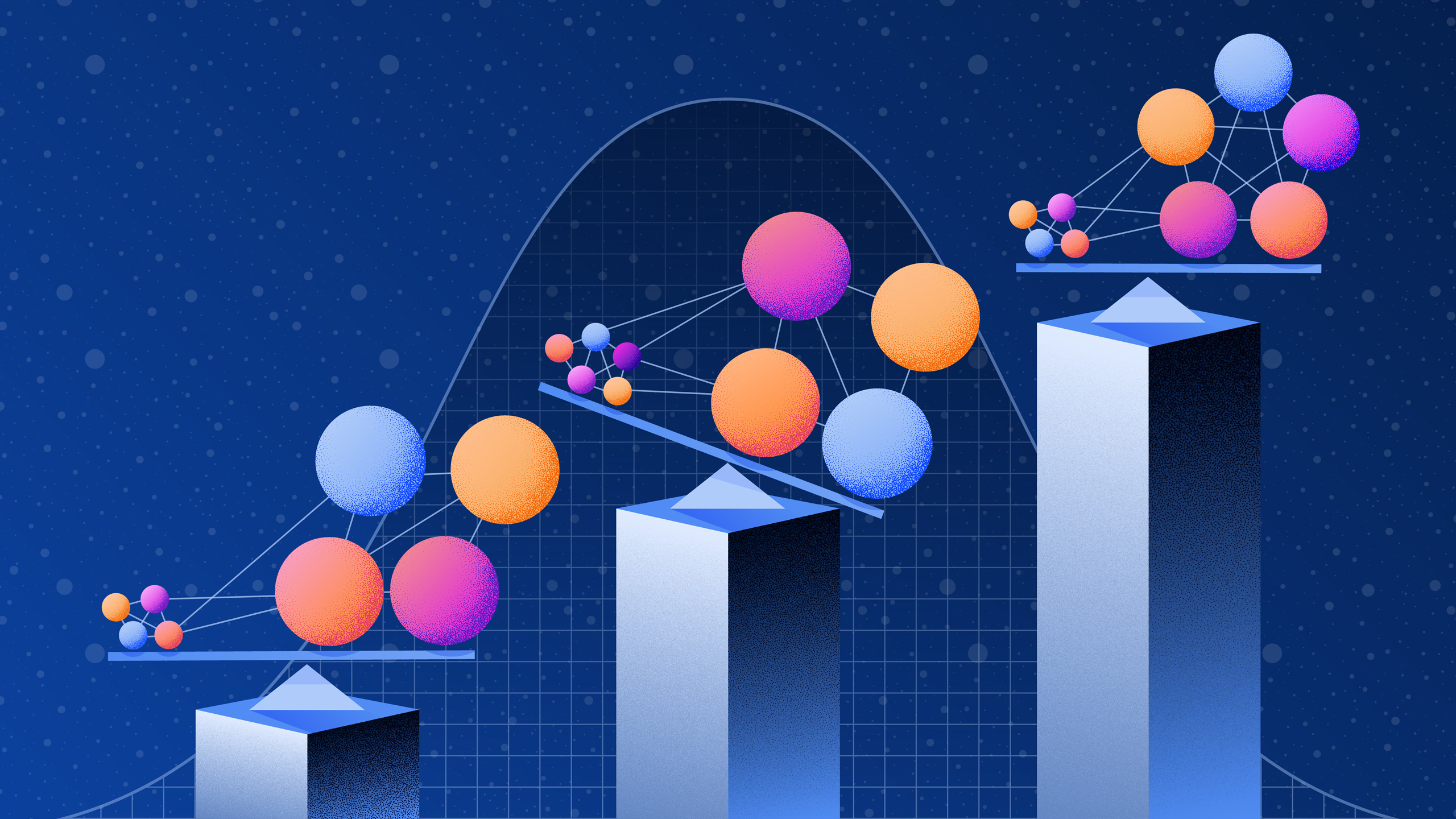
23. A study of sequence weighting at scale (blog.janestreet.com)
TL;DR: We study the scaling laws of data weighting across in-house and open-weight LMs, finding non-monotonic behavior across scales. We vary the weight assi...
Research reveals unexpected patterns in data weighting for language models, highlighting non-linear behaviors that could influence future model training strategies. Understanding these scaling laws may lead to more effective use of both in-house and open-weight systems.
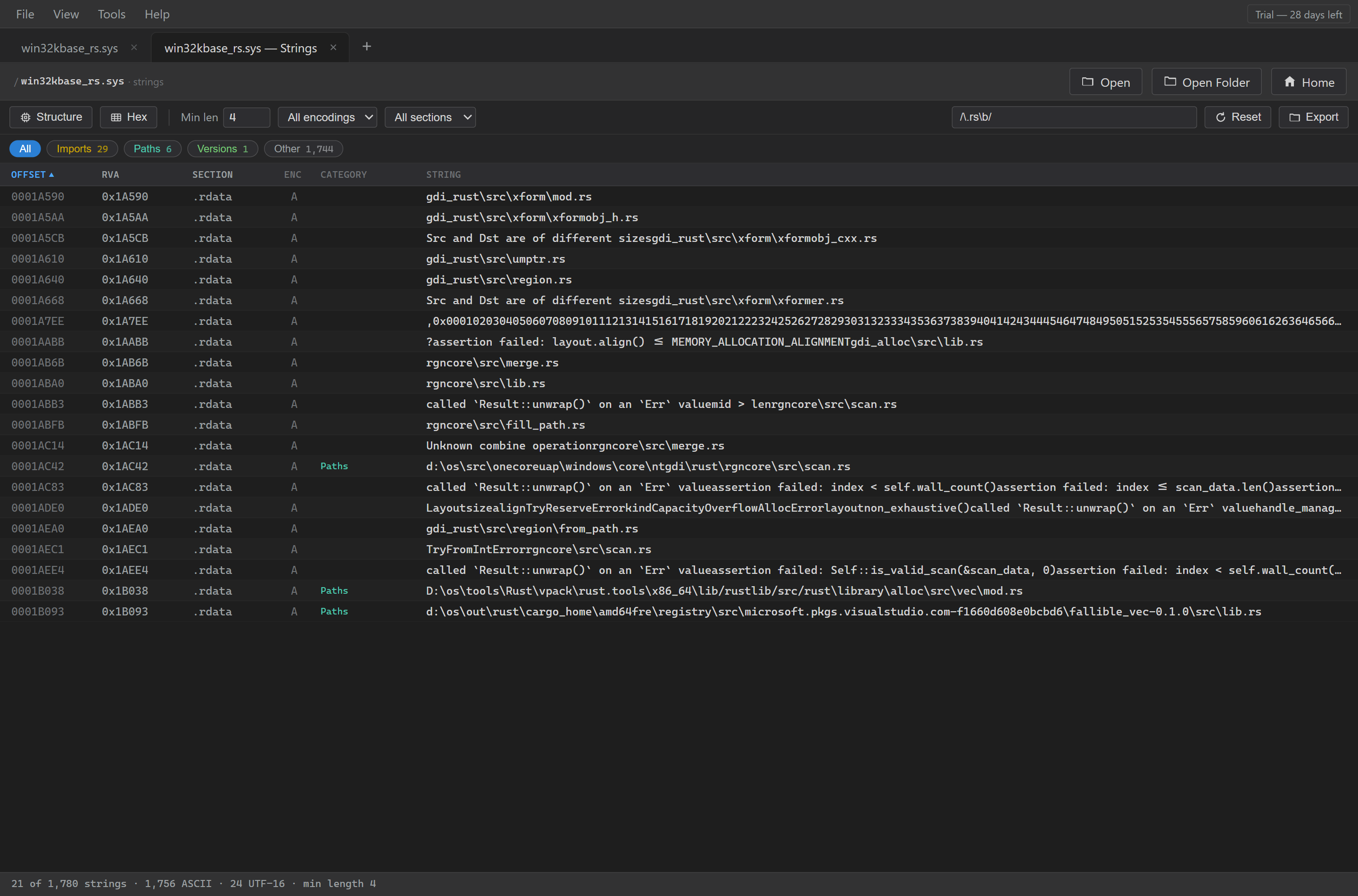
24. Where Rust actually is in Windows 11 (hunterworks.software)
Two Windows recovery and deployment DLLs have shipped Rust since the first 24H2 build and are now 96 percent Rust by the linker's own accounting. A census of 13,988 live files and 44,889 more in the component store on one Windows 11 25H2 installation, with Microsoft's public symbol files used to measure how much of each binary rustc produced, and 83 GPU driver matches explained by LLVM rather than Rust. Hashes, symbol tables and the full census attached.

25. Copper-Rs: Live Telemetry Deterministic Twins for Robots (www.copper-robotics.com)
Copper can now live-clone a running robot over unreliable, one-way links. We stream only the minimal state required, use FEC to recover packet loss, then rely on Copper’s deterministic execution to reconstruct the robot’s full state remotely. The result: a Twin Copper instance that can reproduce t
Copper enables real-time cloning of robots even over unreliable connections by streaming only essential data and using error correction. This innovative approach allows for accurate remote replication of a robot’s state, enhancing control and monitoring capabilities.
27. Show HN: WebGCM – a global climate model running in the browser on WebGPU (gcm.echorelay.net)

28. Show HN: Riftri – copy-on-write Git worktrees for running agents in parallel (twitter.com)
Introducing riftri (https://t.co/vsBwkNZo8y)
- real Git worktrees ( native COW ) that don't each cost you a full checkout.
Spin up 10 worktrees for parallel agents or branches, and the unchanged files are shared at the filesystem level instead of copied.
- real Git worktrees ( native COW ) that don't each cost you a full checkout.
Spin up 10 worktrees for parallel agents or branches, and the unchanged files are shared at the filesystem level instead of copied.
29. The human brain is two separate organs, study finds (news.stanford.edu)
30. Show HN: Jev Powered Obsidian Search (github.com)
Jev-assisted retrieval and evidence-preserving inspection for local Markdown, Obsidian vaults, and Logseq Markdown graphs. - Emlembow/jev-graph-search