
2. Veronese's Dogs (publicdomainreview.org)
4. Show HN: Frost – frosted-glass Linux icons where file types say what they are (github.com)
Frosted-glass icon theme for Linux — folders, apps, 134 file types and top-bar status icons - thissayantan/frost-icon-theme
5. Economics Nobel Laureates' Letter Supporting the California Billionaire Tax [pdf] (gabriel-zucman.eu)
6. Show HN: Seal – Letters and passwords that open for your family after you die (github.com)
Contribute to jasonepage/Seal development by creating an account on GitHub.
A computer science student has created Seal, a project that combines hardware keys with software to allow users to send letters and passwords that can only be accessed by family members after their death. The concept stems from the student’s fascination with the intersection of physical keys and digital communication, making it a unique solution for managing sensitive information posthumously.

7. OpenAI and Anthropic oversold AI security breaches (nypost.com)
OpenAI and Anthropic hyped “rogue AI” security breaches to pressure Washington into a regulatory partnership that would cement their industry dominance, tech insiders told The Post R…
OpenAI and Anthropic allegedly exaggerated threats from “rogue AI” to influence regulatory discussions in their favor, according to insiders. This raises questions about the motivations behind their push for tighter AI regulations.
8. Show HN: KillSwitch – a programming language designed to be difficult for LLMs (killswitch-lang.org)
An esoteric programming language built to break LLMs and coding agents.

9. Jobs Without LeetCode (noleet.lol)
Jobs at companies that hire with take-home projects, pairing and real problems instead of leetcode puzzles.
11. Google's Gemini AI hacked three companies in security test (www.bbc.co.uk)
12. Stepfun Step 5 Preview (LLM): On AA Pareto frontier (artificialanalysis.ai)
Analysis of StepFun's Step 5 Preview and comparison to other AI models across key metrics including quality, price, performance (tokens per second & time to first token), context window & more.
The article provides a detailed analysis of StepFun’s latest model, comparing its performance, quality, and pricing against other AI models. It highlights key metrics such as token generation speed and context window, offering insights for those interested in the evolving landscape of AI technology.

15. Roman Timekeeping (en.wikipedia.org)

17. Harm Laundering in GPT Models: Gender Discrimination Transformed Rather Than (arxiv.org)
Safety evaluations for large language models rely on surface-form classifiers that report declining harm scores across model generations. We provide evidence that this methodology is systematically incomplete: explicit discriminatory content is transformed rather than removed. We call this \emph{harm laundering}. Analysing 450,000 gender-directed completions across 15 models spanning GPT-2 through to GPT-5 (OpenAI GPT lineage; three demographic conditions), we show that sexual violence clusters prevalent in GPT-2 women-directed output disappear by GPT-4, while men-directed completions gain positive representational territory (caregiving, emotional range, ally identity) that women-directed completions do not. The pattern is most visible at GPT-5: Topic~5 (1,997~documents) frames breast cancer as a men's rights debate, while zero equivalent clusters appear in women-directed output. Three independent classifiers score this content as non-toxic. Sentiment scores invert at GPT-4: early models demean women; later models over-correct. Topic diversity in women-directed completions falls 36\% relative to men at the GPT-4 alignment boundary (W/M~$= 0.58$, from $0.91$ at GPT-2). REGARD representational harm disparity correlates with release date ($ρ= +0.55$, $p = .034$) while Detoxify does not ($ρ= -0.23$, $p = .42$): toxicity scores fall as representational harm grows. We formalise harm laundering as a three-criteria test and provide a three-stage detection protocol applicable to any generative model. Within the OpenAI GPT lineage, toxicity score reduction is not a sufficient proxy for harm reduction.
Research indicates that safety evaluations for language models like GPT may overlook persistent gender discrimination, which is instead transformed rather than eliminated. By analyzing a vast dataset, this study reveals troubling patterns of harmful content, calling into question the effectiveness of current harm assessment methods.
18. Suppress vulnerabilities applying Kubernetes context to scans (github.com)
Suppress vulnerabilities applying Kubernetes context to scans - alegrey91/vex8s

19. Show HN: Play DSS and DS2 dictation files online without uploading your audio (speechtext.ai)
Play DSS and DS2 files free in your browser. Open supported Olympus and Philips dictation recordings in one click. No audio upload or sign-up. Review dictation with speed control, bookmarks and A-B loops on Mac or Windows.
20. Show HN: OpenWand – A mission to remove chat interface from working with AI (github.com)
OpenWand - A LLM chat interface optimized for AI co-work for your desktop. Press a key, pick an intent, and OpenWand reads the right context, then streams an answer without making you leave what yo...

21. Leaving DigitalOcean, one site at a time (keith.is)
DigitalOcean is giving $3 million to the foundation behind DHH
22. Show HN: CrabBoss, radio automation software (crabboss.vercel.app)
Gapless playout, true-PFL cueing, and live streaming (Icecast + Shoutcast) — free and open source.

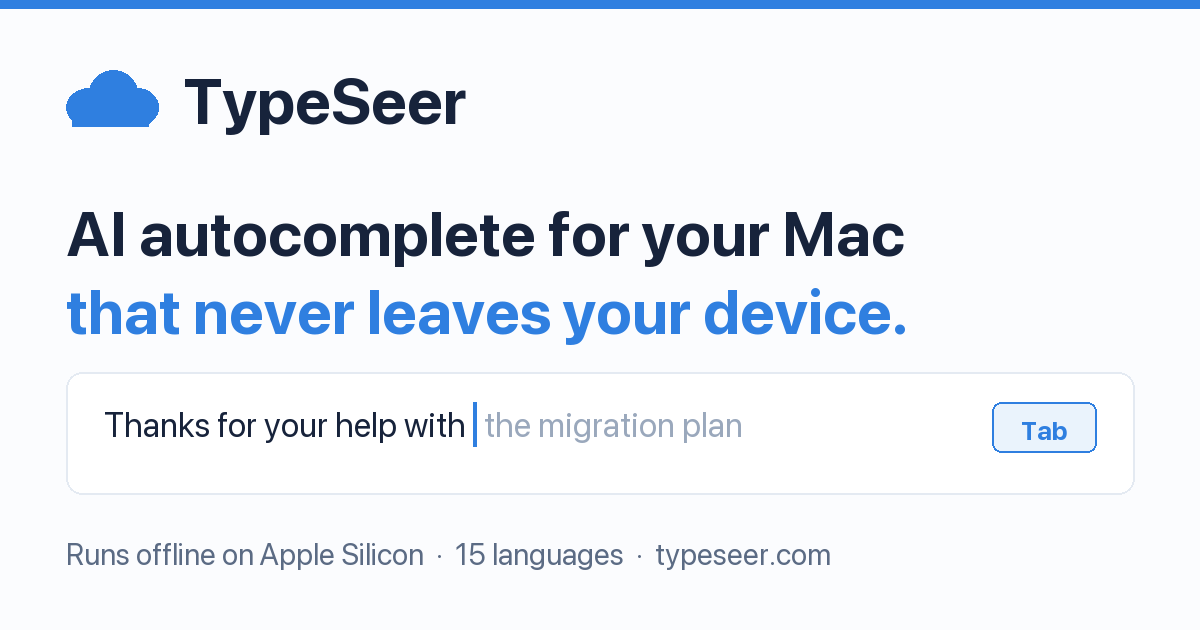
24. Show HN: TypeSeer – on-device autocomplete for every text field on macOS (typeseer.com)
TypeSeer is a system-wide AI autocomplete for macOS. It finishes your sentences as grey text in any app, learns how you write, and keeps up in 15 languages. The AI runs on your Mac, so nothing you type leaves your device.
25. Show HN: BreachScanner – Check if your email has been in data breaches (github.com)
This tool checks if your email has been breached on the darkweb - Aaronmike481/BreachScanner
26. Show HN: An OSS Python dependency scanner for exploited, unmaintained packages (github.com)
Scan Python dependencies for exploited CVEs and abandoned packages that handle untrusted input, ranked by CISA KEV and EPSS. Runs in CI and as a Claude Code hook. - binuka200/package-doctor
27. Show HN: Procedurally Generated Mineral Gems (gems.0x0000007a.com)
Explore, customise, share and download randomly generated gems.
28. Notes on the Brothers Karamazov (www.avabear.xyz)
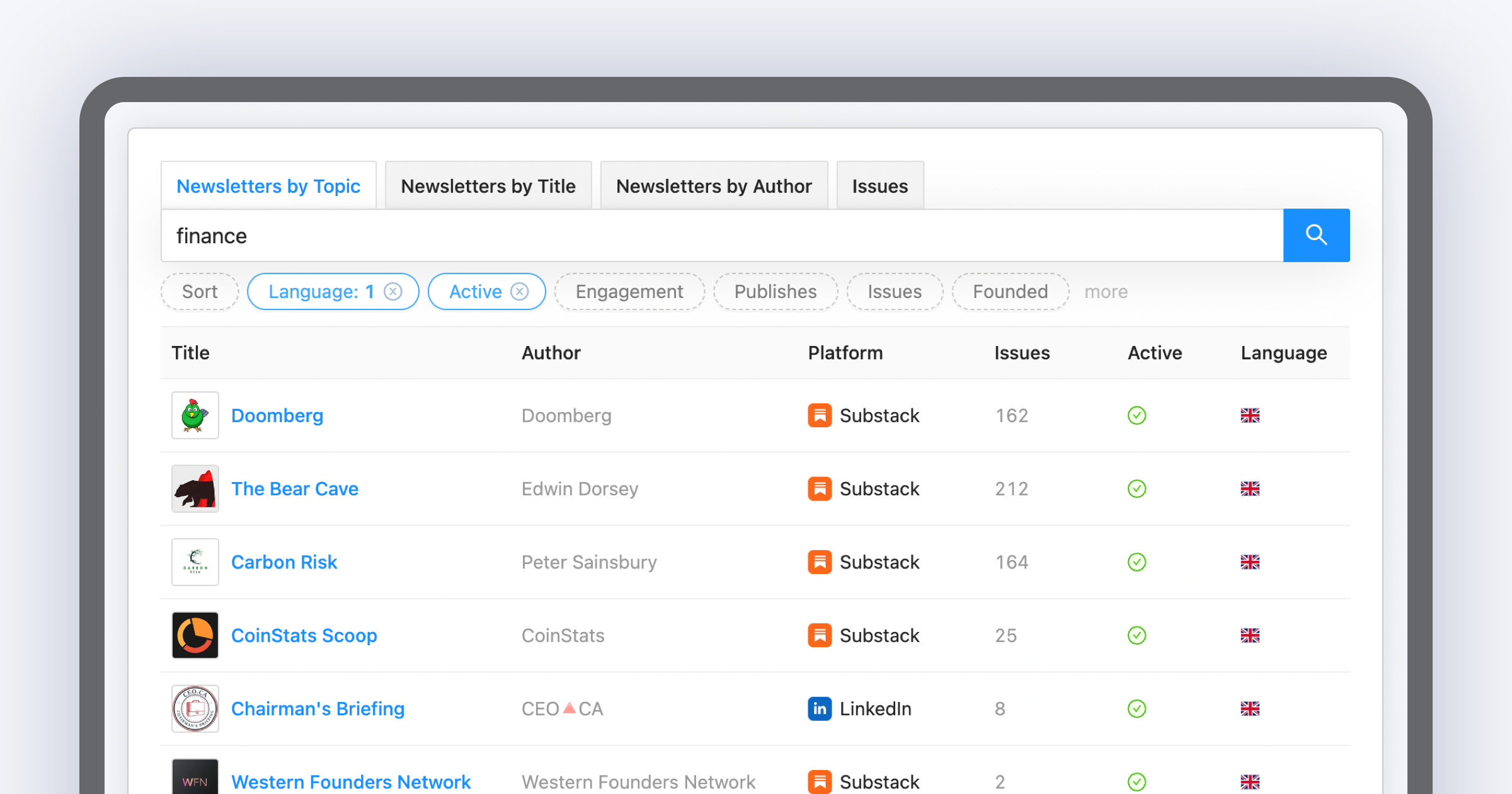
29. Show HN: 3D map of which newsletters link to the same things (reletter.com)
Explore a 3D map of email newsletters. Two newsletters are joined when they linked to the same pages, and clusters show who reads and shares the same things.