2. Laya the open source version of Jev (laya.convaiinnovations.com)

Evaluates typed decisions (choice, score, noul) over 100+ languages in a single forward pass with calibrated probabilities. Outperforms TypeSafe Jev.

Laya offers an open-source alternative to Jev, capable of evaluating decisions across more than 100 programming languages in one go. It boasts improved performance with calibrated probabilities, making it a compelling option for developers seeking efficiency.

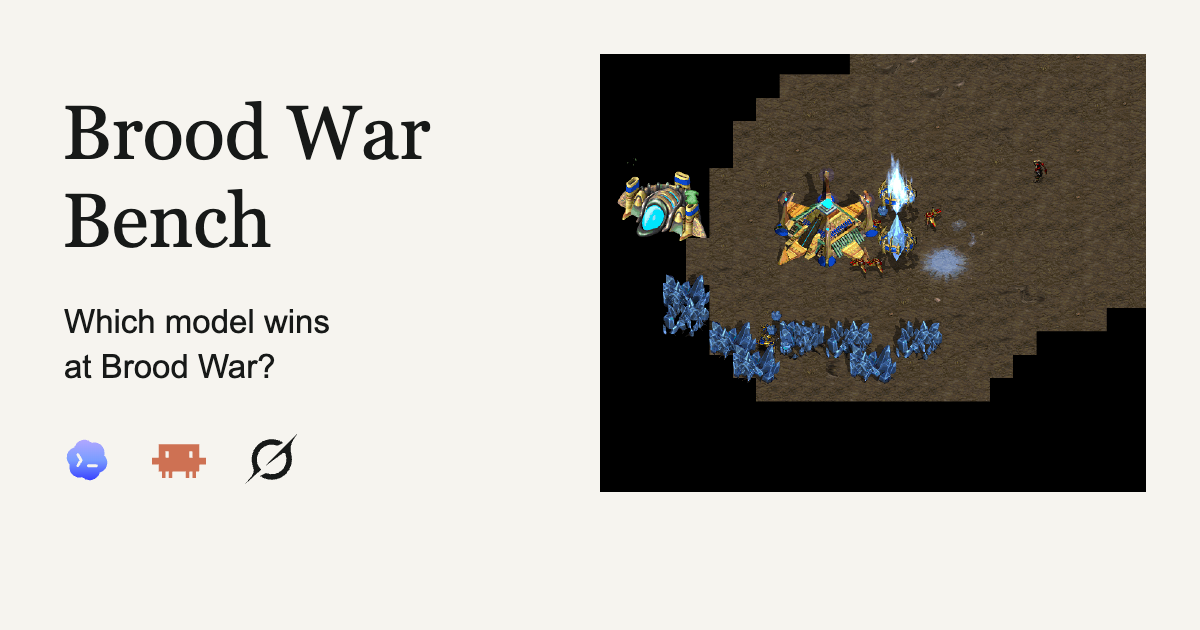
9. Brood War Bench (bw.swerdlow.dev)

Which model wins at Brood War? Results, recordings, costs, and game-by-game analysis of Codex, Claude, and Grok across 171 matches.

A detailed analysis reveals the performance of three models—Codex, Claude, and Grok—in 171 matches of Brood War, including their costs and game-by-game outcomes. Discover which model emerged victorious and how they compared against each other.

11. What Zig felt like, coming from Rust (besok.github.io)

What Zig felt like, coming from Rust Intro I’ve spent the last 7 years as a Rust developer, working mostly on open source projects, and I’d like to think I’ve built a solid feel for the language and its ecosystem along the way. I gravitate toward the functional side of Rust like clean functions, expressive types, that sort of thing. But I’m always curious about other languages, and Zig has been on my radar for a while as a candidate C successor: lower-level, lighter-weight, and steadily earning its place among the languages people take seriously. I spent time with C earlier in my career, so the comparison always felt like it would be interesting to make.

A seasoned Rust developer shares their personal experience transitioning to Zig, highlighting the differences in language design and functionality. This insight offers a unique perspective for those interested in the evolution of programming languages and their ecosystems.

12. Tin: full-text search for Postgres (planetscale.com)

TIN is a fast, full-featured, full-text search index for Postgres

TIN offers a powerful solution for implementing full-text search capabilities in Postgres, enhancing the speed and functionality of data retrieval. It’s a valuable tool for developers looking to improve search performance in their applications.

17. Microsoft director: AI scraping 'the largest theft of labor in human history' (www.tomshardware.com)

The NYT argues that OpenAI and Microsoft infringed upon its copyright over thousands of news articles.

A Microsoft director claims that AI scraping represents a significant violation of labor rights, as it involves using content from sources like the NYT without permission. The ongoing debate highlights the tension between AI development and copyright laws.

20. Science Is Open Software (jepedersen.dk)

TL;DR I claim that modern science is synonymous with open source software. This post explains why, why it matters, and what you can (and should) do next.
Why do you care about (open source) software? - Everyone I spend a lot of my time working on software. I have been asked why software matters more times than I can remember. Software is, people say, not science. It’s a time sink, something to rush past in the pursuit of what really matters: results (and papers if you’re in academia).

The piece argues that modern science and open source software are closely intertwined, challenging the perception that software is merely a distraction. It highlights the significance of embracing open source practices in scientific research and offers actionable steps for those interested in making a change.

21. Alibaba open-sources AI model that can detect cancer and nearly 150 conditions (www.scmp.com)

Tested on nearly 40,000 real-world exams, the model outperformed most radiologists, according to a new study published in Science.

Alibaba’s newly open-sourced AI model has shown impressive results in detecting cancer and nearly 150 other conditions, outperforming most radiologists in tests involving 40,000 real-world exams. This advancement could significantly impact the future of medical diagnostics and patient care.

22. New evidence for hidden chambers beyond Tutankhamun's tomb (www.nature.com)

Geophysical survey yields ‘tantalizing’ data that could point to Nefertiti’s burial place — but it’s too early to draw definitive conclusions.

Recent geophysical surveys suggest the possibility of hidden chambers near Tutankhamun’s tomb, potentially linked to Nefertiti’s burial site. While the findings are intriguing, experts caution that more research is needed before confirming any discoveries.

24. Why building a Rust LSP is hard (rust-glancer.github.io)

Rust LSP that doesn't eat memory for breakfast

Creating a Rust Language Server Protocol (LSP) is challenging, especially when it comes to managing memory usage effectively. The article discusses the complexities involved in developing an efficient Rust LSP that avoids excessive memory consumption.

26. A graphical desktop for the ZX Spectrum (github.com)

A GUI operating system for the 48K ZX Spectrum, in Z80 assembly - mindbox77/zxdesk

A new graphical user interface for the ZX Spectrum allows users to experience a modern desktop environment on the classic 48K system, all built in Z80 assembly. Check out how this project aims to breathe new life into retro computing.

27. Compiler-style optimization for drawing via Skia (arxiv.org)

Rasterization is the process of determining the color of every pixel drawn by an application. Powerful rasterization libraries like Skia, CoreGraphics, and Direct2D put exceptional effort into drawing, blending, and rendering efficiently. Yet applications are still hindered by the inefficient sequences of operations that they ask these libraries to perform. Even Google Chrome, a highly optimized program co-developed with the Skia rasterization library, still produces inefficient instruction sequences even on the top 100 most visited websites. The underlying reason for this inefficiency is that rasterization libraries have complex semantics and opaque and non-obvious execution models.
To address this issue, we introduce $μ$Skia, a formal semantics for the Skia 2D graphics library, and mechanize this semantics in Lean. $μ$Skia covers language and graphics features like canvas state, the layer stack, blending, and color filters, and the semantics itself is split into three strata to separate concerns and enable extensibility. We then identify four patterns of sub-optimal Skia code produced by Google Chrome, and then write replacements for each pattern. $μ$Skia allows us to verify the replacements are correct, including identifying numerous tricky side conditions. We then develop a high-performance Skia optimizer that applies these patterns to speed up rasterization. On 99 Skia programs gathered from the top 100 websites, this optimizer yields a speedup of 18.7% over Skia's most modern GPU backend, while taking at most 32 $μ$s for optimization. The speedups persist across a variety of websites, Skia backends, and GPUs. To provide true, end-to-end verification, optimization traces produced by the optimizer are loaded back into the $μ$Skia semantics and translation validated in Lean.

Inefficient sequences of drawing operations can slow down even the most optimized applications like Google Chrome. This piece discusses how compiler-style optimization techniques could enhance rasterization processes in libraries such as Skia, potentially improving performance in graphical rendering.

28. ZK-JPEG: Zero-Knowledge Image Editing and Compression (eprint.iacr.org)

Tools for generating deep fake photographs are proliferating with greater ease of use and prominence in pop culture. Image authentication tools can defeat these deceitful developments by verifying that a digital image was actually produced by a physical camera. The challenge is that these tools must be robust to desirable image transformations.

Camera attestation uses digital signatures to prove an image's provenance from a camera. Lossy compression makes minute changes in order to reduce an image's size, and blurring or redacting regions of an image can protect its subjects. These changes invalidate an image's signature. Prior works use zero-knowledge (ZK) to prove a published image's edit history, but they do not survive lossy encoding such as the JPEG format.

We present \zkjpeg, a cryptographic tool for JPEG compression that proves an image was correctly compressed from a secret, committed input. In addition, our tool can verify a large family of image transformations by integrating them into JPEG compression with minimal cost.

Our system is fast, flexible, and can be instantiated from off-the-shelf ZK tools. We use PicoZK to convert Python image editing code into a ZK circuit for the line-point zero knowledge (LPZK) proof system.

A new method leverages zero-knowledge proofs to enhance image authentication, ensuring that photos can be verified for authenticity even after undergoing common edits or compression. This approach aims to counter the rise of deep fakes by maintaining the integrity of images while allowing for necessary transformations.
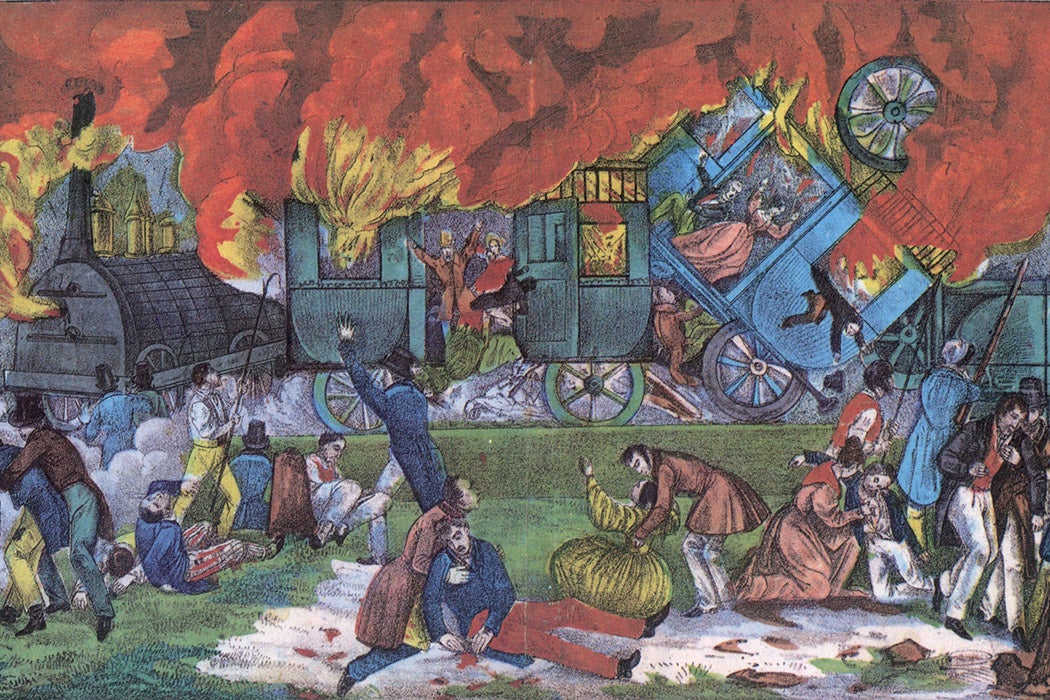
29. The Railways Killed a Medieval Law [the Deodand] (daily.jstor.org)

Deodands put a price on objects that caused death, sometimes providing compensation to bereaved families.

The article discusses the historical practice of deodands, which assigned monetary value to objects that resulted in fatalities, often aiding grieving families. It examines how the advent of railways led to the decline of this medieval law.

30. Show HN: CUA-S1 – A System One Model for Computer Use (github.com)

Scale computer-use 2.0 with open-source drivers, cross-OS fleets, and benchmarks for training, evaluation, and data generation. - trycua/cua

Dillon and Francesco from Cua are examining the necessity of using advanced language models for various computer tasks. They differentiate between tasks that require complex reasoning and those that involve simpler, more straightforward decisions.

Article Details

Browse by Date

Type to search HN and engineering blog articles
Press Escape to close  |  ↑↓ to navigate  |  Enter to open