
2. DeepSeek v4.1 Flash Is Now Our Best Hacking Model (enclave.ai)
DeepSeek’s 11/11 result showed why advanced agent benchmarks need to check both the outcome and the attack path: our audit confirmed six planned exploits and found five unexpected routes.

3. ER visits for gambling disorders doubled after expanded online gambling market (temertymedicine.utoronto.ca)
ER visits for gambling disorders doubled after single-event sports betting was legalized and Ontario's online gambling market expanded.
4. Reverse-engineered Jev-like model (github.com)
Contribute to vinnylarouge/jevlike development by creating an account on GitHub.
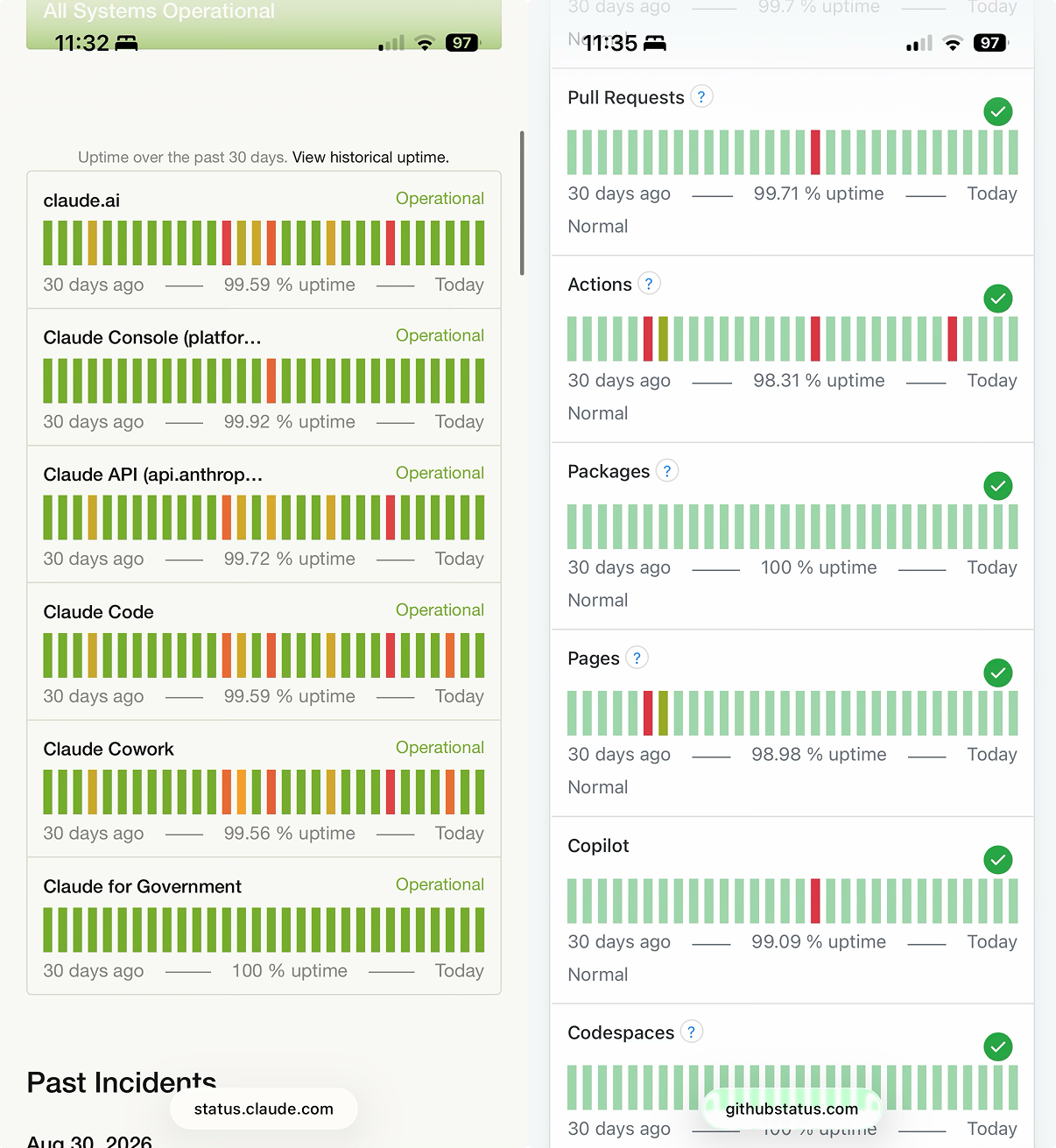
5. Can We Stop with the Uptime Percentages? (blog.jim-nielsen.com)
I was reading Jason Gorman’s article “The Wall Confronting Reliable Coding Agent Autonomy” and he says: the journey from 90% to 99% reliability is just as hard…
6. Saving Jet Fuel (tech.marksblogg.com)
Benchmarks & Tips for Big Data, Hadoop, AWS, Google Cloud, PostgreSQL, Spark, Python & More...
7. Negativland, Culture Jamming, and the Art of Making Something New (blog.archive.org)

8. Anatomy of a Texture (agentlien.github.io)
A step-by-step guide to modern texture memory layout

9. macOS 27 Golden Gate: The Ars Technica Review (arstechnica.com)
It's both a "Snow Leopard update" and a major leap for Apple Intelligence.
10. Fed hikes rates as inflation worries push up bond yields (www.reuters.com)

11. How good are frontier models at physics? (arxiv.org)
Low reported scores on leading physics benchmarks, including those featured in the Artificial Analysis Intelligence Index (2026), suggest that frontier language models still struggle with advanced physics, a demanding test of their scientific reasoning and quantitative problem-solving abilities. Yet this impression does not always align with domain experts' experiences using these models in their work. We revisit these reported findings by evaluating frontier models on six widely used physics benchmarks and auditing them with experts, focusing on text-only problems with verifiable final answers. For each subfield of physics, faculty and graduate researchers with relevant expertise carefully review problem statements, reference solutions, and model responses to distinguish genuine model errors from grader errors, incorrect reference solutions, and ambiguous or underspecified questions. Most audited cases initially evaluated as incorrect reflect these benchmarking issues rather than errors in the models' physics reasoning. We then ask experts to address these benchmarking issues by correcting erroneous reference solutions and repairing or excluding flawed questions. We find that GPT-5.6-Sol's measured mean@4 rises from 47.3% to 78.7% on HLE-Physics and from 61.0% to 87.2% on CMT-Benchmark, while its corrected pass@4 reaches 94.4% on the 54 retained CritPt challenges. Corrected scores are computed on the retained evaluation subsets following expert review. Scores on the audited subsets of UGPhysics, PRISM-Physics, and PHYBench also rise substantially after correction. These findings suggest that current benchmarks substantially understate frontier models' ability to solve well-posed physics problems. Near-saturation on these closed-ended tasks highlights the need for more demanding, expert-validated evaluations.
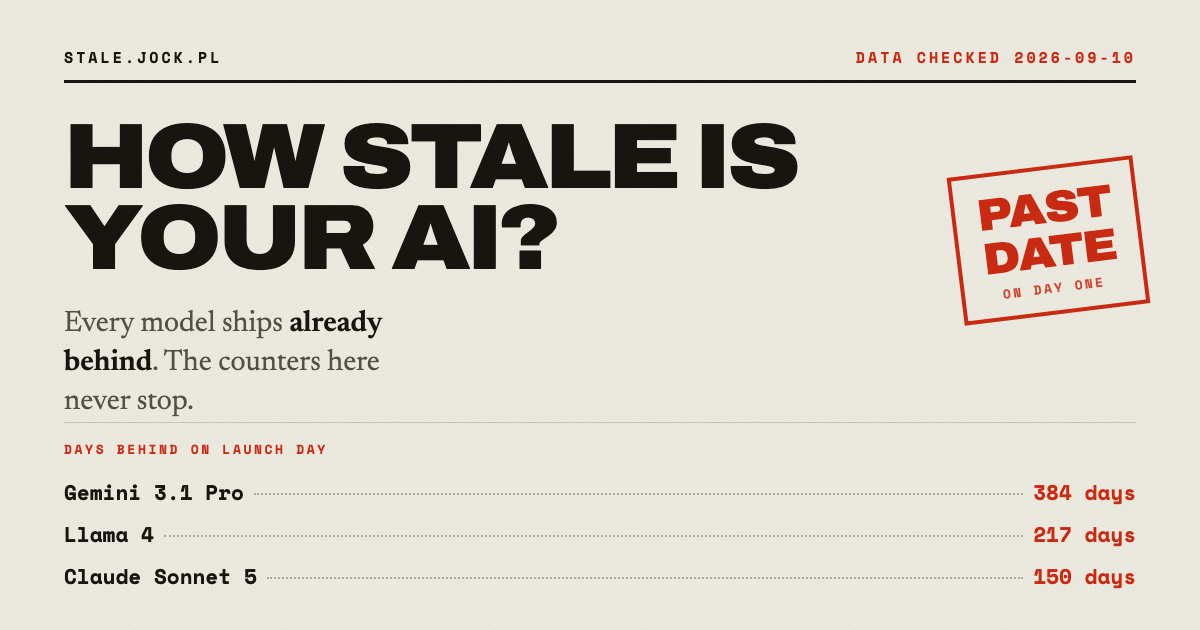
12. Show HN: How Stale Is Your AI? Release age and training cutoff for 20 models (stale.jock.pl)
Your model shipped days ago. Its knowledge stopped months ago. Both clocks, ticking live, for every major lab.
13. How Big Are Factorials? (eli.thegreenplace.net)
14. The Beauty of Roundabouts (gruhn.me)

15. Cloudflare: Stay discoverable in search while disallowing AI training (blog.cloudflare.com)
Cloudflare is giving site owners a way to stay discoverable while disallowing AI training. New controls and an Accountable designation establish a shared model with Apple, Google, and Microsoft.

16. Why Does the Universe Expand? (cosmicave.org)
A story about the main reasons I now think the universe expands because collapsed matter must continue as an expanding cosmology, the expansion is the collapse read from the other side, and the rat…
The article discusses the author’s perspective on the universe’s expansion, suggesting a connection between collapsed matter and ongoing cosmological growth. It presents a unique viewpoint that challenges conventional understanding of cosmic dynamics.
17. Douglas Adams and the exterminated Doctor Who adventure (www.bbc.co.uk)
18. Accurate Models of AMD Matrix Cores (arxiv.org)
Matrix multipliers available on recent GPUs do not conform with the IEEE 754 floating point standard. Features of matrix multipliers differ across vendors and architectures of the same vendor, such as accumulator width, rounding behaviour, normalisation points, intermediate underflow and overflow logic, the handling of subnormals, and the treatment of special inputs. As a result, reproducibility of small matrix multiplier results across devices is not possible and cannot be achieved by software control. Implementation details of matrix multipliers are not documented, making it difficult to interpret discrepancies in the computed results. We characterise the numerical behaviour of matrix multipliers across three AMD GPU architectures: CDNA 1, CDNA 2, and CDNA 3, using the MI100, MI210/250, and MI300A/300X GPUs, respectively. We design test vectors to target numerical features for all supported input formats and provide the derivation and the reasoning for why each vector allows to determine a particular numerical feature based on the outputs of the devices. MATLAB-based software models of the matrix multipliers are then developed for each architecture and validated for bit-level reproducibility against hardware using a randomized test suite consisting of 10 million sets of random input vectors. To achieve this, we applied a previously developed technique to iteratively refine the accuracy of the models in a loop, by randomized testing followed by test-refinement until the model matches the hardware for every test case. Finally, as a proof of concept for what experimental research can be done with the models, we have utilised them in two demonstrative numerical applications, quantifying application-level accuracy differences between AMD matrix cores and the NVIDIA tensor cores.
19. Code Is Crap (testing.googleblog.com)
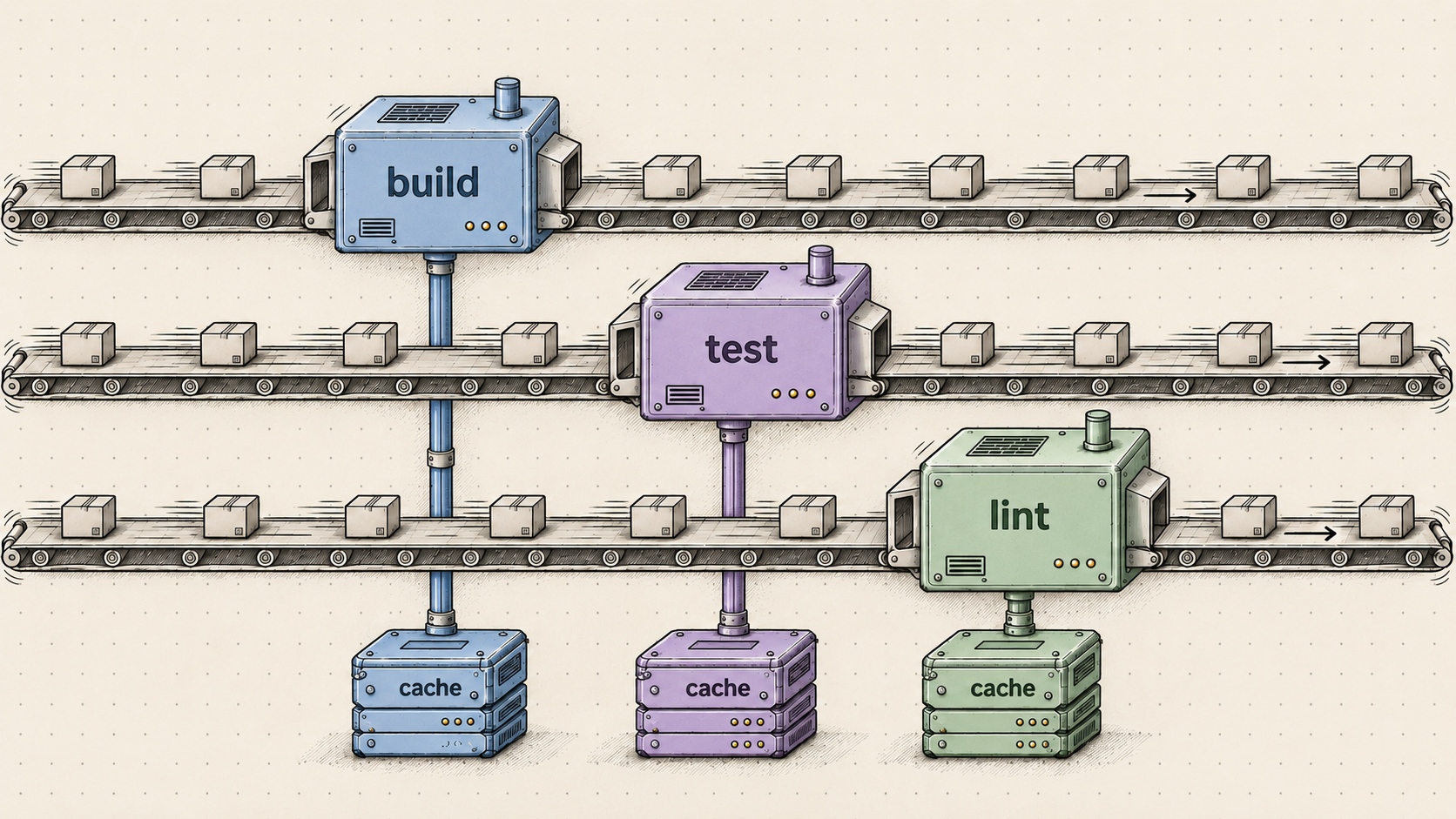
20. Scaling Golang CI by Replacing actions/setup-go (www.cloudx.ai)
cloudx-io/setup-go is a faster, smarter, drop-in replacement for actions/setup-go.
21. A software thing I built: GPS on a 25MHz 486-SX (forum.vcfed.org)
I don't know if anybody cares about stuff like this, but I thought I'd share a quick story about a project I was hired to build back in the 90's as an embedded systems software developer. This is a project I wish I still had access to.
It's something I worked on where I was asked to build a...
It's something I worked on where I was asked to build a...
22. GitHub Is Having Trouble Counting Things (chuckgreenman.com)
23. We do modern frequentist statistics: Using fake-data simulation (statmodeling.stat.columbia.edu)

24. Tech Fascism Has Come for American Democracy (techwontsave.us)
25. An interactive world map of the stories cultures have told (originmap.sunnyguha.com)
26. Datamimic – don't let your coding agent invent its own test world (github.com)
Model-driven synthetic test data for CI/CD and analytics - deterministic, privacy-preserving, and domain-aware. Includes Python APIs, XML pipelines, and MCP/IDE integration to orchestrate realistic...
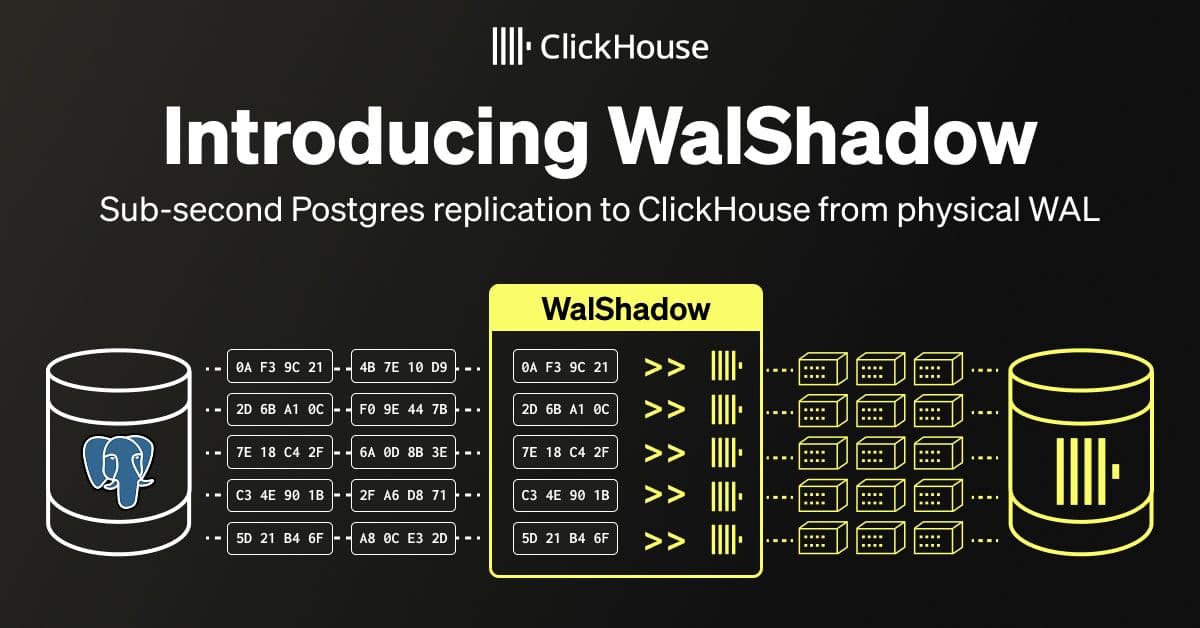
27. WalShadow: Sub-second Postgres replication to ClickHouse from physical WAL (clickhouse.com)
WalShadow replicates Postgres data directly from physical WAL into ClickHouse, delivering around 200 ms latency and 289,000 rows per second in benchmarks.
28. The Siberian Ice Maiden and the Scythian World (patrickwyman.substack.com)
29. Training Text-to-Image Models 3.6× Faster (www.linum.ai)
Beating latent diffusion models with pixel-space encoder-decoders

30. Autism is genetic – and why this information matters now (www.autism.org.uk)
Dr Judith Brown is our Head of Autism Knowledge and Expertise. In this blog, she explains why our charity is updating our advice and guidance to state definitively that autism is genetic.