2. Fast and Hard Code (lucumr.pocoo.org)

People pick languages differently with LLMs.

A new study reveals how people choose programming languages when using large language models (LLMs). The findings could shed light on the evolving relationship between developers and AI tools.

3. Sydney Marathon medal mistakenly depicts Munich stadium (www.bbc.com)

Online sleuths detected the error after Sydney Marathon unveiled the double-sided medal.

The Sydney Marathon’s new double-sided medal features an image of Munich’s stadium instead of a local landmark, a mistake spotted by keen-eyed online users. This mix-up has sparked discussions about accuracy in event branding and design.

7. Show HN: Live 3D satellite tracker and the declassified Pentagon UFO archive (skylens.yantraai.app)

Track thousands of live satellites in real-time 3D. Browse 535+ declassified UAP case files. NASA asteroid context. Daily space news. Free.

A new platform allows users to track thousands of satellites in real-time with a 3D interface while also providing access to over 535 declassified UFO case files and daily space news. It’s a unique resource for space enthusiasts and UFO researchers alike.

9. The Planet Now Has More Trees Than It Did 35 Years Ago (psmag.com)

Tree cover loss in the tropics was outweighed by tree cover gain in subtropical, temperate, boreal, and polar regions.

Tree cover has increased globally over the past 35 years, with gains in subtropical, temperate, boreal, and polar regions offsetting losses in tropical areas. This shift highlights the complex dynamics of global reforestation efforts and environmental changes.

10. AI and Infrastructure Engineering (omegion.dev)

How I actually use AI in day-to-day infrastructure work, and why I think it

Learn how AI can enhance daily tasks in infrastructure engineering, providing practical insights and personal experiences that highlight its effectiveness. Discover specific applications and benefits that can transform traditional workflows.

11. Kodak DC50 now usable on the Apple II (www.colino.net)

It is now possible and easy to use a Kodak DC50 camera with an Apple II.

Users can now connect and operate the Kodak DC50 camera with their Apple II, making it easier to integrate photography into their computing experience. This update opens up new possibilities for Apple II enthusiasts looking to enhance their projects with digital images.
14. The Remote Work Challenge: Lessons from 5 Cities (www.pew.org)

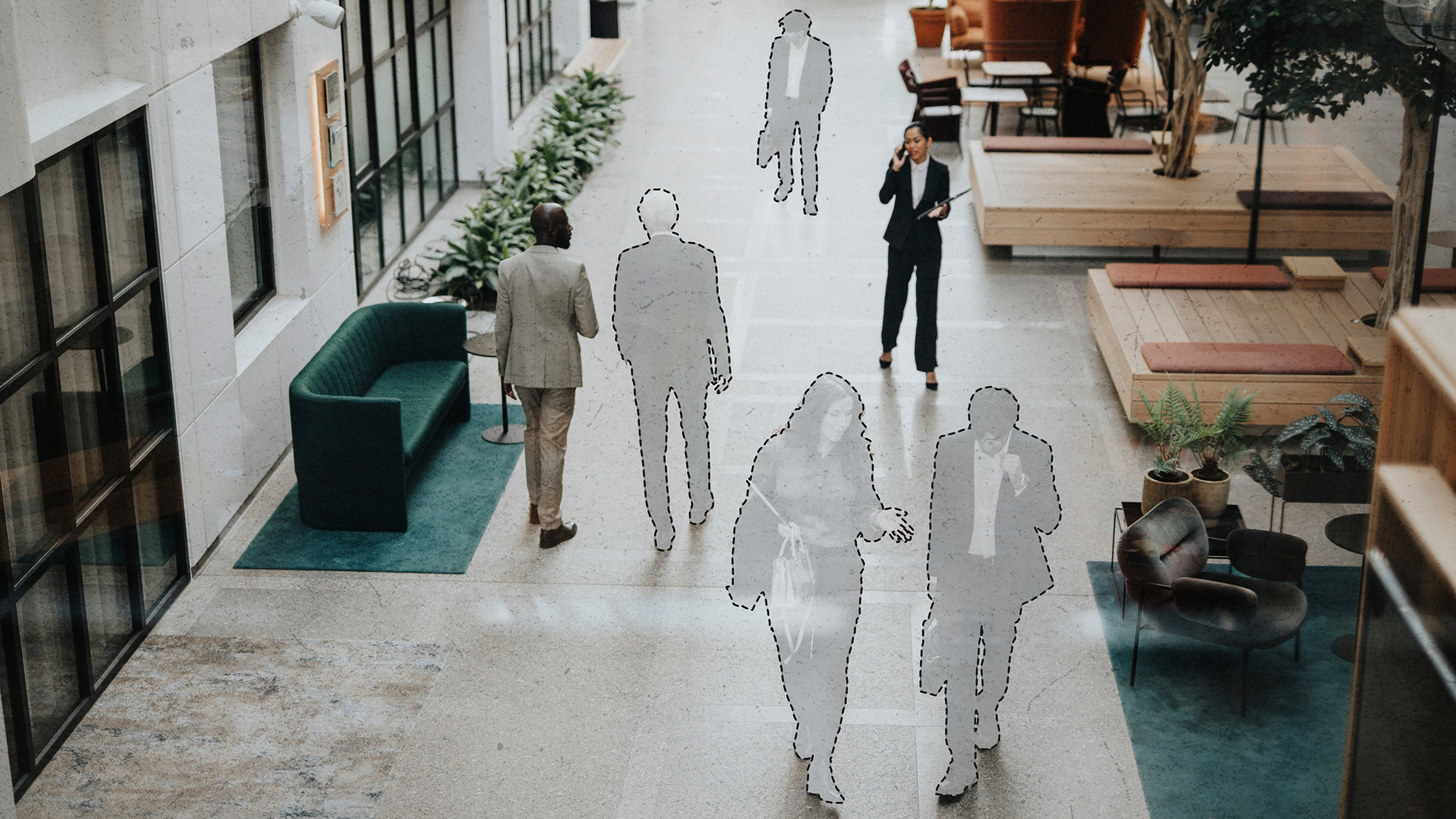
The COVID-19 pandemic called into question the economic vitality of U.S. cities. The rise of remote work meant employees experienced zero-minute commutes and a greater ability to balance their work and home lives. Cities, however, confronted the possibility that fewer people would choose to live and work in urban areas. For cities, this economic risk has also posed a budget risk: Cities’ primary revenue sources—property taxes, sales taxes, and income taxes—are typically influenced by the value of office buildings and the wages and spending of office workers.

As remote work reshapes the landscape of employment, U.S. cities face significant economic challenges tied to declining populations and revenue streams. This analysis highlights key lessons learned from five cities grappling with the impact of these changes.

15. 'The Nerd Reich' tracks the 'unmasking of Silicon Valley's true politics' (www.npr.org)

Journalist Gil Durán argues that a small circle of Silicon Valley billionaires and venture capitalists have concluded that democracy is in their way — and that they should be governing in its place.

Gil Durán highlights the alarming perspective of Silicon Valley elites who believe their wealth and influence justify replacing democratic governance with their own rule. The piece raises important questions about power dynamics and accountability in the tech industry.

17. Decoding silent reading from non-invasive EEG (arxiv.org)

Non-invasive decoding of inner speech faces a fundamental data problem: a corpus pairing brain activity with a person's spontaneous inner monologue cannot be collected, and the available proxy paradigms (cued repetitive and retrospectively reported generative inner speech) are slow to acquire, poorly time-locked, and subject compliance is unverifiable. We therefore treat silent reading as a scalable proxy task and ask how much lexical and semantic information a contrastive decoder can extract from it. We report an open-vocabulary analysis of approximately 240,000 word presentations recorded from a single densely-sampled participant across 393 runs (ca. 49 h) of 19-channel dry-electrode EEG. Words from continuous narrative text were presented in rapid serial visual presentation, with typography randomised on every trial to partially decorrelate word identity from low-level visual form. A convolutional EEG encoder, optionally followed by a causal transformer, was trained with a CLIP-style contrastive objective to align short EEG windows with hidden-state embeddings of the presented word taken from a large language model. Decoding, evaluated as word-grouped top-10 retrieval against permutation baselines, was reliably above chance, extended to mid-frequency and rare words, and scaled log-linearly with training-data volume with no sign of saturation. Removing occipital and posterior-temporal electrodes reduced the word-level gain by roughly one third but left context tracking unchanged. Control analyses separate word-level decoding from narrative context tracking and from a non-neural positional prior introduced by the transformer's positional embedding. These results establish that open-vocabulary word-level information is recoverable from EEG during silent reading, and that decoding is data-limited rather than saturated.

Researchers are tackling the challenges of decoding inner speech by using silent reading as a proxy. This approach aims to determine how much lexical and semantic information can be gleaned from brain activity, potentially advancing our understanding of non-invasive EEG techniques.

18. We must not grant AI agents legal personhood (www.ft.com)

What kind of sanctions could keep a non-human corporation in check?

The discussion highlights the challenges of regulating AI agents and the implications of granting them legal personhood. It raises important questions about accountability and the potential need for sanctions against non-human entities.

21. US Military newspaper editor voices censorship fears after being fired (www.bbc.com)

Erik Slavin believes he was fired for saying in an interview that "in a hypothetical situation, censorship would be a red line".

Erik Slavin argues that his dismissal from a military newspaper stems from his comments on the dangers of censorship, highlighting concerns about freedom of speech within military media. His situation raises important questions about editorial independence and the limits of expression in the armed forces.

22. Dutch regulator fines Uber $966M for automating driver suspensions (www.theguardian.com)

European regulators have imposed billions in penalties on US technology companies due to privacy, competition and digital market rules

European regulators are intensifying their scrutiny of US tech firms, with Uber facing a hefty $966 million fine for automating driver suspensions. This marks another significant step in the ongoing battle over compliance with privacy and competition laws.

25. Reading Maps – Journeys from fiction drawn on the real world (readingmaps.com)

Reading Maps plots real-world journeys from classic novels and films - Around the World in 80 Days, Heart of Darkness, James Bond, On the Road - on an interactive atlas.

An interactive atlas brings to life the journeys from classic novels and films, allowing users to trace routes from stories like “Around the World in 80 Days” and “On the Road.” It’s a unique way to connect literature and geography, making it a fascinating tool for both readers and travelers.
27. Predicting AI model release dates with stats (releaseoracle.xyz)

The next Kimi K model is the next major AI model expected, around Sep 13, 2026. Release Oracle tracks 16 models with market-implied release dates, uncertainty windows, and daily forecast history.

Release Oracle provides insights on upcoming AI models, including the next Kimi K model expected by September 2026. It tracks 16 models, offering detailed statistics on their anticipated release dates and the uncertainties surrounding them.

29. Universal Housing (twitter.com)

Thought experiment I discussed with my family at the dinner table:

What if we completely redesign housing: making it a universal right, while keeping market-like mechanisms for creating and improving it?

• Every citizen has the right to live in one home, for free
• All

The article presents a thought-provoking concept of redesigning housing as a universal right, allowing every citizen to live in one home at no cost while still incorporating market mechanisms for enhancement. It’s a compelling discussion on how to balance social equity with economic incentives in housing.

30. Authoritarianism of Code (zedshaw.com)

An essay on the pervasive internalized authoritarianism found in the programming profession.

The piece examines how programming culture often reflects and reinforces authoritarian attitudes, shaping the behaviors and beliefs of those within the profession. It offers insights into the implications of these dynamics for the tech industry and society at large.

Article Details

Browse by Date

Type to search HN and engineering blog articles
Press Escape to close  |  ↑↓ to navigate  |  Enter to open