2. Don't Paste the AI, please (dontpastetheai.com)

If someone asks you a question, paste your answer — not the chatbot

Relying on AI chatbots for answers can undermine personal communication skills. Learn why it’s better to share your own insights instead of copying responses from these tools.

4. HTML Can Do That (chrisburnell.com)

HTML has been gobbling up swathes of what used to be JavaScript’s remit. This page lists a bunch of dynamic functionality that we can now achieve with just HTML.

HTML is increasingly capable of handling tasks that traditionally required JavaScript. Check out this list of dynamic features now achievable with only HTML.

6. The August 17 outage, and the work ahead (github.blog)

An update on the August 17 outage and the steps we're taking to improve reliability.

Learn about the recent August 17 outage and the measures being implemented to enhance system reliability moving forward.
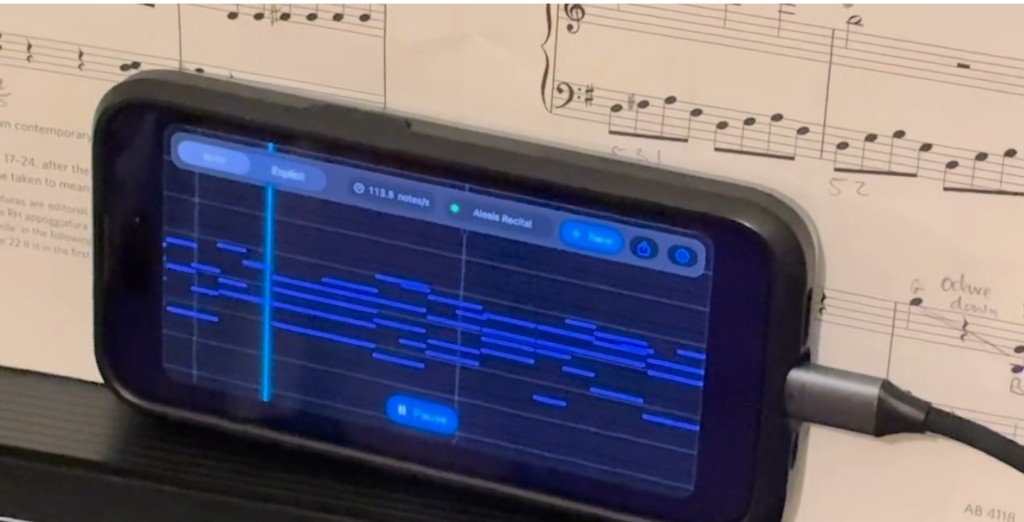
7. Show HN: I trained a 125M model to autocomplete piano on-device (simedw.com)

Can a small transformer autocomplete MIDI performances in real time?

A developer has created a 125M-parameter model that autocompletes piano music in real time on an iPhone, allowing users to extend their musical ideas by playing just a few notes. The app is free to try, and the creator invites questions about the training process and the challenges faced during development.

8. Malicious Rust Crate Arrayref Runs a Build-Time Payload (safedep.io)

A compromised release of the popular Rust crate arrayref pulled in a typosquatted proc-macro1 whose build script downloads and runs a remote binary at compile…

A popular Rust crate, arrayref, was compromised through a typosquatted dependency that executes a remote binary during the build process. This incident highlights the vulnerabilities that can arise in package management systems and the importance of verifying dependencies.

11. Show HN: Huzzah – a novel approach to coding with AI (www.danielvaughn.dev)

A new experimental way to code with AI

Huzzah is an experimental coding editor aimed at simplifying interactions with coding agents, addressing the fatigue developers feel when writing lengthy instructions. It offers a fresh perspective on how to streamline coding tasks, especially as projects grow in complexity.

12. Scientific study reveals TikTok videos deactivate key cognitive brain regions (www.rathbiotaclan.com)

Millions of people finish short video after short video every day; a new brain-scan study shows that the very act

A new brain-scan study indicates that watching TikTok videos may deactivate important cognitive regions of the brain. This research highlights potential impacts on attention and cognitive processing in frequent users of the platform.

13. Windows brings out the Rorschach test in everyone (devblogs.microsoft.com)

It seems that no matter what you do, somebody will get offended. Every Windows 95 box has an anti-piracy hologram on the side. The photographer chose his

The discussion highlights how the imagery on Windows 95 boxes, particularly the anti-piracy hologram, can provoke mixed reactions and offend different viewers. It’s a reflection on how perceptions can vary widely based on personal interpretations.

17. Clean up Claude 5's token vomit with a separate LLM (github.com)

Clean up Claude 5's token vomit with a separate LLM. Save your tokens, Claude 5 is hopeless - zachahn/vomit

A new approach suggests using a different language model to manage the excessive token output from Claude 5, which is criticized for its inefficiency. This method could help users save on token usage and improve overall performance.

18. Consumer Rights Wiki (consumerrights.wiki)

The community-built wiki documenting anti-ownership, anti-consumer practices ranging from right-to-repair restrictions, planned obsolescence, subscription traps, & digital rights issues.

A community-driven resource highlights various anti-consumer practices, including right-to-repair limitations and subscription traps. It’s a valuable tool for anyone looking to understand and combat these challenges in today’s marketplace.

19. Linux 7.2 Released (www.igalia.com)

Igalia is an open source consulting firm specialised in the development of innovative projects and solutions. Our engineers have expertise in a wide range of technological areas, including browsers and client-side web technologies, graphics pipeline, compilers and virtual machines. We have the most WPE, WebKit, Chromium/Blink and Firefox expertise found in the consulting business, including many reviewers and committers. Igalia designs, develops, customises and optimises GNU/Linux-based solutions for companies across the globe. Our work and contributions are present in many projects such as GStreamer, Mesa 3D, WebKit, Chromium, etc.

20. Stop Anthropomorphizing Intermediate Tokens as Reasoning/Thinking Traces (arxiv.org)

Intermediate token generation (ITG), where a model produces output before the solution, has become a standard method to improve the performance of language models on reasoning tasks. These intermediate tokens have been called \say{reasoning traces} or even \say{thinking traces} -- implicitly anthropomorphizing the traces, and implying that these traces resemble steps a human might take when solving a challenging problem, and as such can provide an interpretable window into the operation of the model's thinking process to the end user. In this position paper, we present evidence that this anthropomorphization isn't a harmless metaphor, and instead is quite dangerous -- it confuses the nature of these models and how to use them effectively, and leads to questionable research. We call on the community to avoid such anthropomorphization of intermediate tokens.

Language models often use intermediate token generation to enhance reasoning abilities, but referring to these outputs as “reasoning traces” misrepresents their function. The article critiques this anthropomorphism, highlighting the need for clearer understanding of how these models operate without attributing human-like reasoning processes.

22. Bun 1.4 (bun.com)

Bun 1.4 rewrites Bun in Rust, ships built-in headless browser automation (Bun.WebView), Bun.Image, Bun.markdown, JSON5, JSONL, Terminal and cron APIs, Node.js 26.3.0 compatibility with 1,517 newly passing tests, parallel test and run, Windows ARM64, and an opt-in global virtual store for up to 7× faster installs.

Bun 1.4 introduces a complete rewrite in Rust and adds several new features, including built-in headless browser automation and enhanced APIs for image handling and markdown. With improved compatibility and performance, it promises significantly faster installations and broader platform support.
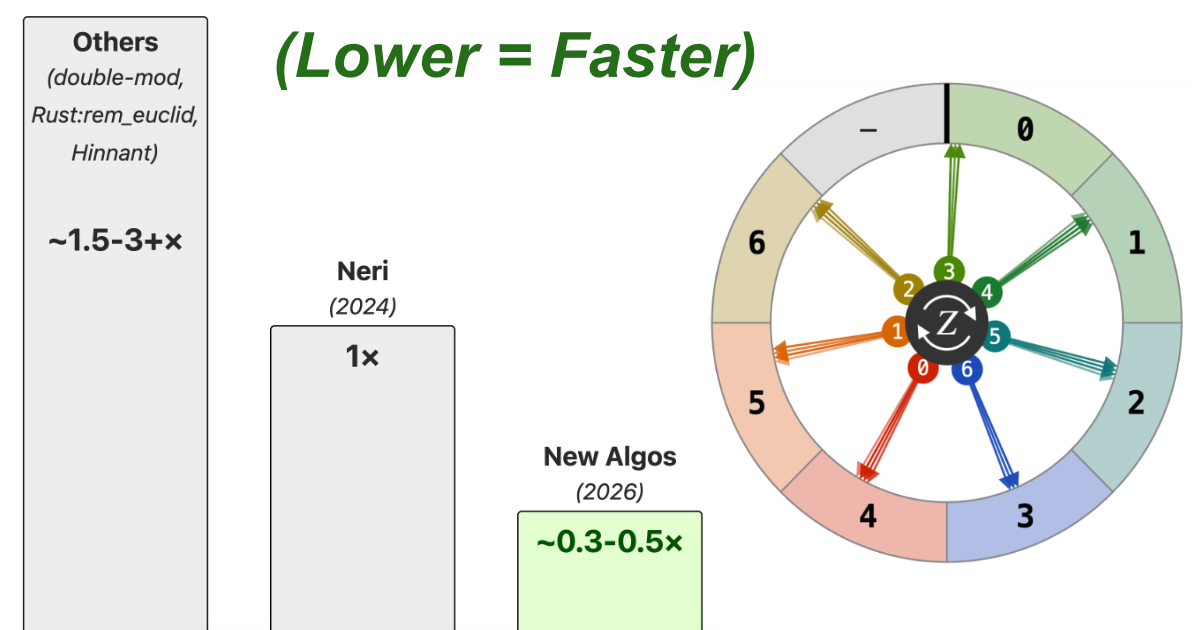
23. A faster way to calculate the day of the week (www.benjoffe.com)

A range of fast modulus techniques that beat compiler output

Learn about innovative modulus techniques that outperform typical compiler methods for quickly determining the day of the week. This approach could significantly enhance computational efficiency in various applications.

24. Stwipe Acquires OpenWouter (stwipe.com)

They bought a router. We bought a Wouter.

Stwipe has made an intriguing acquisition by purchasing OpenWouter, a company known for its innovative router technology. The move hints at potential advancements in Stwipe’s offerings in the networking space.

25. Anti-AI fonts are useless and harmful (blog.yaros.ae)

Trying to obfuscate the web is a bad, pointless idea

Obscuring web content with anti-AI fonts is not only ineffective but could also lead to harmful consequences. The article argues against the trend of using these fonts to combat AI, emphasizing their futility.


28. How to compromise your system with a job interview (www.codedge.de)

The current situation on the IT job market is hard. So you are lucky when a recruiter on LinkedIn reaches out to you having a suitable match for a new position based on your prior experience. It might not be what it seems at a first glance.

Job seekers should be cautious when engaging with recruiters, as opportunities may hide potential risks to their systems. This article reveals how a seemingly promising job offer could lead to security vulnerabilities.

29. DiffusionGemma Technical Report (arxiv.org)

We introduce DiffusionGemma, an experimental open-weight language model that uses discrete diffusion to generate text at exceptionally high speed. Rather than decoding one token at a time, DiffusionGemma iteratively refines blocks of 256 tokens in parallel, avoiding the sequential decoding bottleneck of conventional autoregressive (AR) large language models. Instead of training from scratch, we obtain DiffusionGemma by fine-tuning the mixture-of-experts Gemma 4 model with 3.8B activated and 25.2B total parameters. Our compute-efficient two-stage training pipeline uses fewer than 10% of the starting AR model's total training token budget. The first stage uses supervised fine-tuning to teach bidirectional denoising, while the second stage combines reinforcement learning with sampler distillation to jointly improve generation quality and inference efficiency. DiffusionGemma establishes a new Pareto frontier for the trade-off between generation speed and model capability. Averaged across our full evaluation suite, it generates around 20 tokens per forward pass and achieves roughly 1,500 output tokens per second on a single NVIDIA H100 GPU, which is substantially faster than AR models even with state-of-the-art speculative decoding. DiffusionGemma also retains the starting model's support for thinking mode, multimodal inputs, and long contexts. Despite diffusion fine-tuning, it remains capable of AR generation with only minor performance degradation, suggesting a path toward hybrid diffusion-AR decoding.

DiffusionGemma is a new language model that enhances text generation speed by processing multiple tokens simultaneously, sidestepping the typical delays seen in traditional models. It builds on the existing Gemma 4 framework, making it a noteworthy development in the field of AI text generation.

30. Error by AI scribe during medical appointment leaves patient devastated (www.abc.net.au)

Artificial Intelligence is listening to many people's medical appointments, but it is not always hearing things correctly.

A patient’s experience highlights the risks of AI note-taking in medical settings, as inaccuracies can lead to devastating misunderstandings. The story raises important questions about the reliability of technology in sensitive environments.

Article Details

Browse by Date

Type to search HN and engineering blog articles
Press Escape to close  |  ↑↓ to navigate  |  Enter to open