1. The Amazon Tax (seths.blog)

It’s not technically a tax. Taxes produce valuable public benefits, like medical research and parks. This is simply legal theft. Amazon makes nearly a billion dollars in profit from search ad…

The piece critiques Amazon’s business practices, arguing that its profit from search ads is akin to legal theft rather than a legitimate tax, highlighting the disparity between corporate earnings and public benefits. It raises questions about the ethical implications of such profit-making strategies.

2. Israel creates fake think tank in likely attempt to dupe AI chatbots (responsiblestatecraft.org)

In just over a week, the Hanover Institute has published at least 100 articles that appear tailor-made to influence chatbots

The Hanover Institute has rapidly produced over 100 articles designed to sway AI chatbots, raising concerns about misinformation and manipulation in the age of artificial intelligence. This initiative highlights the potential for entities to craft narratives that could mislead automated systems.

4. GPT-5.6 Sol Pricing Cut by 50% (openrouter.ai)

GPT-5.6 Sol is the flagship model in OpenAI's GPT-5.6 series. $2.50 per million input tokens, $15 per million output tokens. 1,050,000 token context window, maximum output of 128,000 tokens. Higher uptime with 3 providers. Includes independent benchmarks from Artificial Analysis.

OpenAI has significantly reduced the pricing for its GPT-5.6 Sol model, now offering a more affordable rate for both input and output tokens. With a large context window and improved uptime, this model is designed for efficiency and performance in AI applications.

6. Google buys crashed airline Spirit's data at auction, because AI (www.theregister.com)

$10 million buys over 100 million emails, 30 million recorded phone calls, reams of stuff from Teams, Oracle, and SAP

Google’s recent acquisition of Spirit Airlines’ data for $10 million includes a vast trove of over 100 million emails and 30 million recorded phone calls, raising questions about the implications for AI and data privacy. This purchase highlights the growing trend of companies leveraging large datasets to enhance their technology.

8. How does IKEA come up with names for its products? (www.ikea.com)

Sweden - The product names of IKEA may sound strange even to us Swedish speakers. In other parts of the world, they are basically incomprehensible, but fun! He

IKEA’s unique naming system for its products often confuses even native Swedish speakers. Discover how the company chooses these whimsical names and what they mean in different cultures.

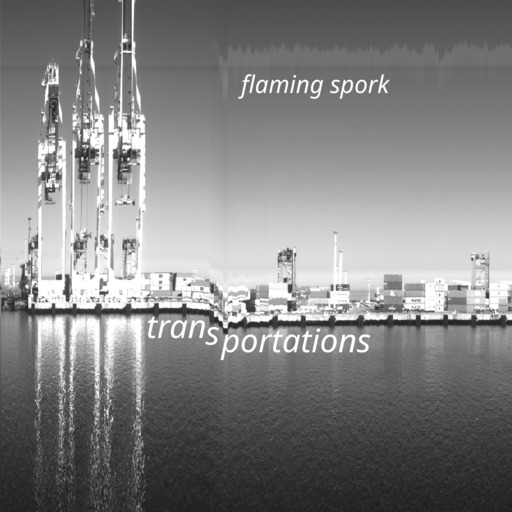
10. Using the railway network as a flatbed scanner (philo.gay)

an adventure in image processing and taking very wide photographs (blog post; 4,600 words)

Learn how a creative project transforms a railway network into a unique tool for wide-format photography and image processing. This in-depth blog post reveals the innovative techniques used to capture expansive images along the tracks.

11. Fixing a Bricked Framework Laptop (quantum5.ca)

My experience fixing my Framework 13” laptop with AMD 7060 series that was bricked due to a failed BIOS update with US$20 worth of tools, instead of replacing the motherboard as suggested by Framework support.

A user shares their hands-on experience repairing a Framework 13” laptop that was rendered unusable after a BIOS update failure. Instead of following the manufacturer’s advice to replace the motherboard, they managed to fix it with just $20 in tools, highlighting a cost-effective solution for similar issues.

12. Fairphone is now officially available in the United States (www.fairphone.com)

The Fairphone (Gen. 6+) is here. With more power under the hood, a brand-new color, and more software features, it's everything you love about Fairphone. Plus more.

Fairphone has launched its Gen. 6+ model in the U.S., featuring enhanced performance, a new color option, and additional software capabilities. This release aims to appeal to eco-conscious consumers looking for sustainable smartphone choices.

13. A 3D fruit fly on macOS desktop powered by the real FlyWire connectome (github.com)

A 3D fruit fly living on your macOS desktop, driven by a live spiking simulation of the real FlyWire connectome - DenisSergeevitch/desktop-fly

Transform your macOS experience with a 3D fruit fly that interacts on your desktop, powered by real-time simulations of the FlyWire connectome. This unique project combines biology and technology to create a lively digital companion.

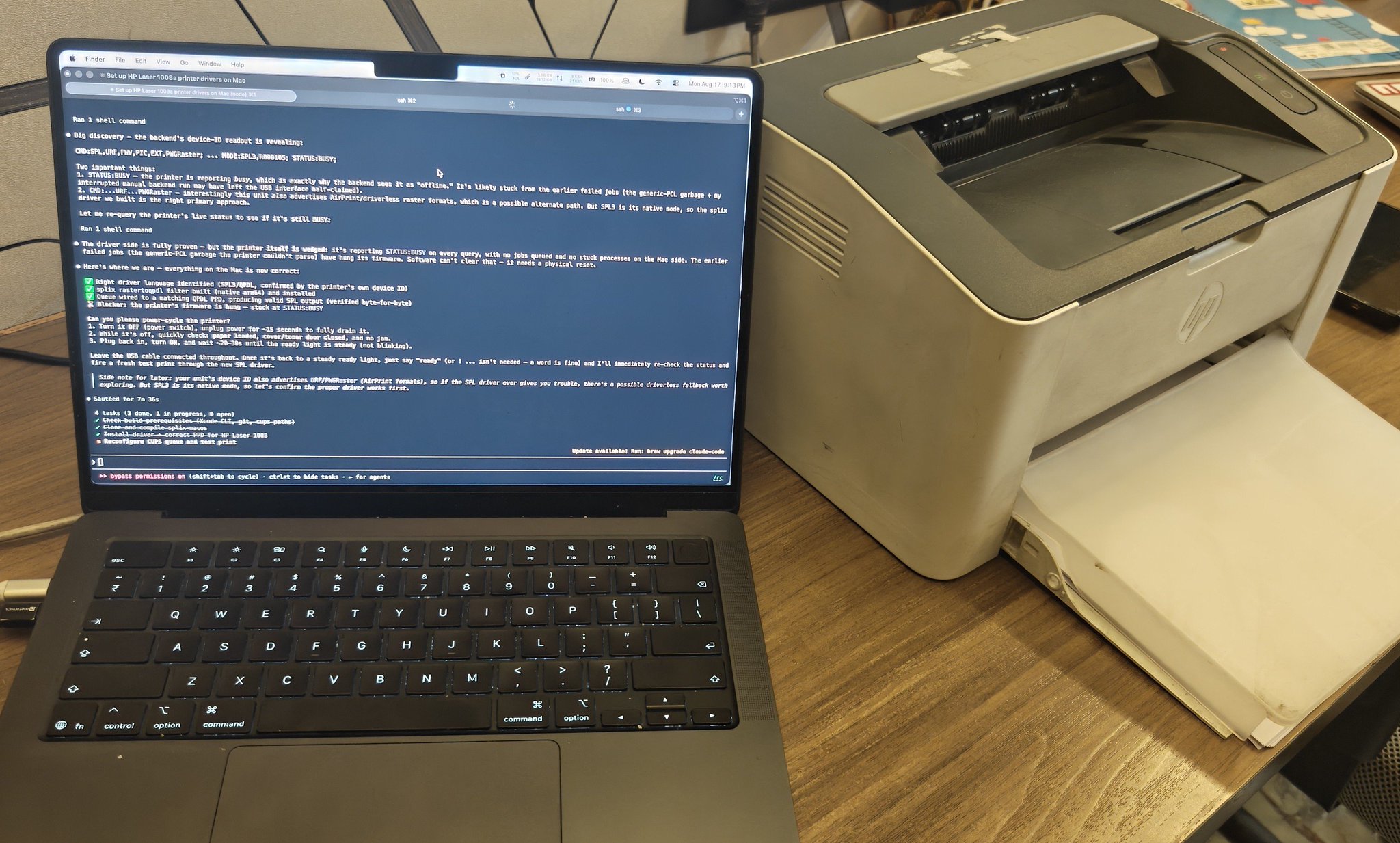
14. Claude writing a macOS driver for my obscure HP printer built only for Windows (twitter.com)

just Claude writing a MacOS driver for my obscure HP printer built only for Windows support

A developer named Claude is tackling the challenge of creating a macOS driver for a rare HP printer that was originally designed solely for Windows. This project highlights the complexities of cross-platform compatibility and the effort to make older hardware accessible on modern systems.

15. Finger: Social network that never died (en.andros.dev)

It will surprise more than a few of you to hear that the first social network dates back to 1971. No accounts, no algorithm, no central server. Your…

Discover the origins of social networking with Finger, the first platform created in 1971, which operated without accounts or algorithms. Learn how it laid the groundwork for modern social interactions online.

17. fx :Tiny, open, native coding agent. (fx.sh)

Tiny, open, native coding agent. A minimal CLI written in Zig, optimized for research and embeddability as part of larger systems.

A new minimal command-line interface (CLI) built in Zig is designed for research and integration into larger systems, offering an efficient tool for developers looking for a lightweight coding solution.

18. Turbovec – Google's TurboQuant for vector search in Rust (github.com)

A vector index built on TurboQuant, written in Rust with Python bindings - RyanCodrai/turbovec

Turbovec is a vector index developed using TurboQuant, implemented in Rust with Python bindings, offering a new option for efficient vector search. This project may interest developers looking for performance improvements in their search algorithms.

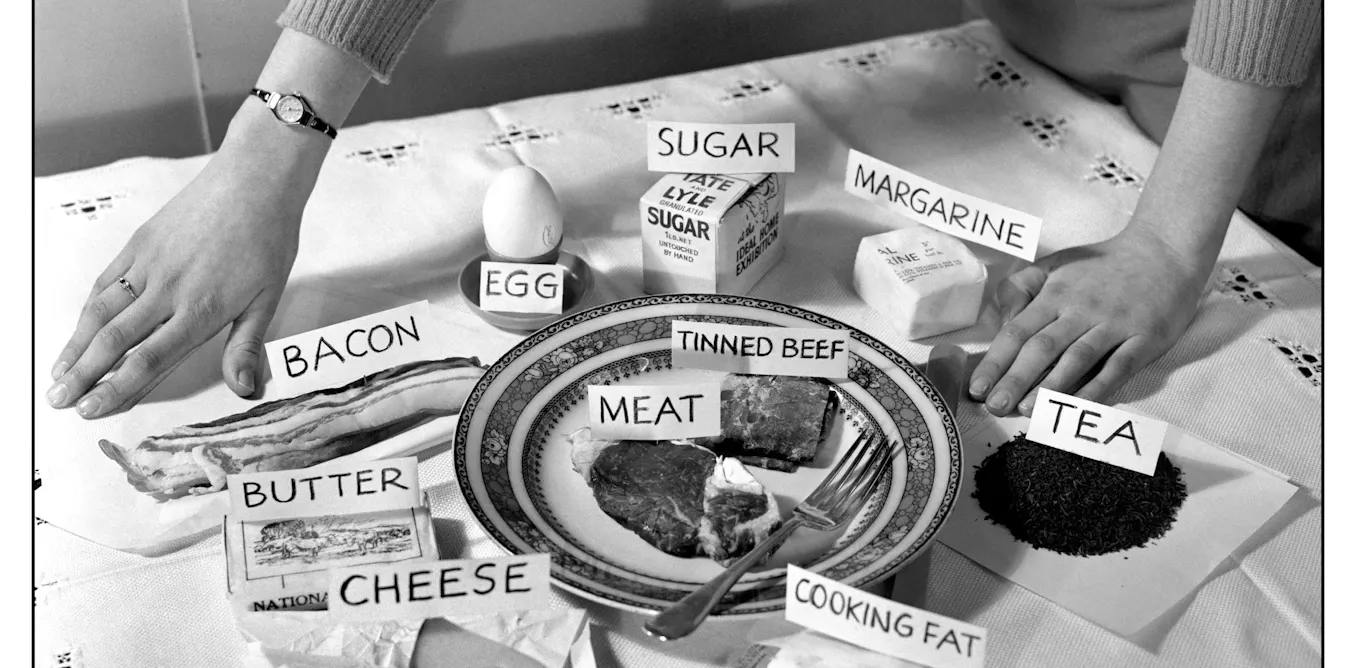
19. Babies born under sugar rationing grew into adults with lower cancer risk (theconversation.com)

Britain’s postwar sugar rationing was an accidental experiment. Decades on, it’s revealing how early diet shapes cancer risk, ageing and eating habits for life.

Research into Britain’s postwar sugar rationing reveals surprising long-term effects on health, showing that early dietary restrictions can significantly influence cancer risk and lifelong eating habits. This unintended study sheds light on the connections between nutrition in infancy and overall health outcomes later in life.

23. Apple announces changes for apps in the European Union (www.apple.com)

Apple today announced changes to its business terms for apps in the European Union, following close collaboration with the European Commission.

Apple is revising its business terms for apps in the EU after working with the European Commission, signaling important shifts in its approach to app management in the region. This could impact developers and users alike, making it a key development to follow.

25. The coolest anti-surveillance tools at Defcon [video] (www.youtube.com)

DEF CON is one of the largest and longest-running hacker conferences in the world. I met with hackers who are building tools to fight the surveillance state....

At DEF CON, hackers are showcasing innovative tools designed to combat surveillance and protect privacy. Check out the video to see some of the most intriguing anti-surveillance technologies being developed.

26. Ask HN: Does anyone else feel like nothing matters anymore?

A user expresses feelings of apathy towards software development, learning, and job prospects in a world increasingly dominated by AI. They compare this existential crisis to the emptiness felt when cheats are enabled in a game, questioning the value of effort in an era where everything seems trivialized.

27. Meta Files Patent for Facial Recognition, Automatic Recording of People (www.privacyguides.org)

Meta filed for a patent that includes a "memory recall" system that appears to detect people via facial recognition and record them automatically, and show you a highlights real later.

Meta’s new patent hints at a system that could automatically recognize faces and record interactions, creating a personalized highlights reel for users. This raises significant privacy concerns and questions about how such technology might be implemented in everyday life.

29. Python Polars Cheatsheet (based on our O'Reilly book) (opensource.posit.co)

Quick reference guide for transforming, analyzing, and visualizing data with Python Polars.

Get a handy reference for using Python Polars to efficiently handle data transformations, analysis, and visualization. Perfect for anyone looking to streamline their data workflow.

30. Pacing model development in an era of cyber-critical capabilities (openai.com)

OpenAI is strengthening monitoring, alignment, and security for frontier AI models. See how new safeguards are guiding the pace of model development.

OpenAI is enhancing its approach to AI model development by implementing new monitoring and security measures. Learn how these safeguards are influencing the speed and safety of advancements in artificial intelligence.

Article Details

Browse by Date

Type to search HN and engineering blog articles
Press Escape to close  |  ↑↓ to navigate  |  Enter to open