1. What an Improv Stage Can Teach You About Leading Cross-Cultural Teams in Tokyo (www.tokyodev.com)

What does 20 years of improv comedy teach about leading product teams in Japan? Four practical habits for listening, collaboration, and resilience.

Learn how techniques from improv comedy can enhance leadership skills for cross-cultural teams in Japan, focusing on effective listening, collaboration, and building resilience. This piece outlines four practical habits that can transform team dynamics.
2. HashAgent – Share an AI agent as a URL, runs locally via WebGPU (hashagent.pages.dev)

Runs locally in your browser, with built-in web search. No account or tracking.

HashAgent allows users to run an AI agent directly in their browser without needing an account or tracking, making it a privacy-focused tool for web searches. It’s a convenient way to leverage AI capabilities locally using WebGPU technology.

4. Show HN: Graft – Claude Code hooks that cut grep tokens by 42% (github.com)

Turbocharge Claude Code, Cursor, Codex, Gemini & every coding agent: faster, cheaper, with contextual understanding specific to your codebase. - NanoNets/Graft

Graft enhances various coding tools by improving their efficiency and contextual understanding, allowing for faster and more cost-effective code analysis. It claims to reduce the token count significantly, which could streamline coding processes.

7. Protect Your Relays (www.iroh.computer)

Managed relays are now authenticated by default, so the relay capacity you pay for is only ever used by your endpoints.

Managed relays now come with default authentication, ensuring that the capacity you pay for is exclusively utilized by your endpoints. This update enhances security and efficiency in managing your relay services.

9. Ntfy – open-source Push to Mobile (ntfy.sh)

ntfy is a simple HTTP-based pub-sub notification service. It allows you to send notifications to your phone or desktop via scripts from any computer, and/or using a REST API.

Ntfy is an open-source notification service that enables users to send alerts to their devices through HTTP requests or a REST API. It’s a straightforward solution for those looking to integrate notifications into their scripts or applications.

10. How Claude's text watermarking works (www.anthropic.com)

Future Claude models will generate text that contains a watermark. This is a way of determining the likelihood that Claude was involved in writing the text, and we, along with several other major AI providers, are implementing this change to comply with the EU AI Act. In this article, we share answers to some of the questions we’ve received about how our chosen watermarking method works, whether it affects Claude’s outputs, and why we’re making this change.

Claude’s upcoming models will feature a watermarking system to help identify AI-generated text, aligning with EU regulations. Learn how this method functions, its impact on text generation, and the reasons behind this significant shift in AI practices.

11. For the love of god stop using CPU limits in Kubernetes (github.com)

Kubernetes CPU limits make your apps (very) slow and costly - inevolin/k8s-cpu-limits-analyzed

Setting CPU limits in Kubernetes can significantly hinder application performance and increase costs. Learn why avoiding these limits might be a better strategy for your deployments.

12. Moving integer division to floating-point is trivial (marc-b-reynolds.github.io)

Shows that floating point trunc(x/y) equals integer x/y provided the integers fit in the floating point format.

Floating-point arithmetic can simplify integer division, as it demonstrates that the truncation of x/y in floating-point form yields the same result as traditional integer division, given the values fit within the floating-point limits. This insight could streamline calculations in various programming scenarios.

14. Major oil slick washes up on Iran coast after Hormuz ship strike (www.bbc.com)

Experts tell BBC Verify pollution has spread from a ship attacked on 3 August and threatens vulnerable wildlife.

An oil slick resulting from a ship attack in August is now impacting Iran’s coastline, raising concerns among experts about the potential harm to local wildlife. The incident highlights ongoing environmental risks in the region.

15. A Contract-Grade Verifier for LLM-Generated GPU Kernels (arxiv.org)

Systems that generate GPU kernels with language models report high correctness rates. Those rates come from a single loose test: run the kernel on a few random inputs at one fixed shape and accept it if the output is close to a reference. A kernel can pass that test and still be silently wrong. It can return an ordinary number where the true answer is a NaN or an infinity, differ from run to run, break when the shape changes, or accumulate in fp16 where the reference keeps an fp32 total. We build the instrument that checks correctness properly: a contract-grade verifier of twelve adversarial gates, each a property a correct kernel must satisfy, several of them tolerance-free, so no choice of threshold can explain a failure away. Aimed outward, the verifier audits 2,638 machine-generated kernels that a public system's own harness had already accepted as correct. It finds 39.5% broken beyond any tolerance argument and 62.1% carrying at least one violation. The field's standard test accepts 1,487 kernels the verifier rejects, against only 14 the other way. We defend the finding four independent ways: a 7/7 positive control, a threshold-calibration sweep, 98.5% agreement with the reference benchmark's own correctness code, and a stratified hand-audit. Aimed inward, the verifier judges a kernel of our own: the first native Blackwell tcgen05 training backward for the gated-linear-recurrence (GDN) family, including the reverse-state stage the field still runs on a fallback. We establish its correctness independently, against a double-precision oracle, and train five family members through it. The correctness signal behind reported progress in kernel generation is far weaker than the numbers suggest, and a set of tolerance-free contracts would close most of the gap.

A new verification system addresses the limitations of existing tests for GPU kernels generated by language models, which often miss critical errors. By implementing a more rigorous evaluation process, it aims to ensure that the kernels produced are not only correct for random inputs but also reliable across different scenarios.

16. RayforceDB – a pure C analytics database with a Lisp-like syntax (rayforcedb.com)

Pure C zero-dependency embeddable engine where columnar analytics and graph operations share a single operation DAG, pass through a multi-pass optimizer, and execute as fused morsel-driven bytecode.

RayforceDB is an embeddable analytics database written in pure C that combines columnar analytics with graph operations through a unique operation DAG. Its innovative multi-pass optimizer and execution method promise efficient data processing.

18. How a device finds encrypted DNS by itself (blog.dundns.eu)

DDR lets a device discover the encrypted endpoints of the resolver it is already using.

A new method called DDR enables devices to automatically locate the encrypted DNS endpoints for their current resolvers, enhancing privacy and security in internet browsing. This development could simplify how users connect to secure DNS services without manual configuration.

19. Homeland Security spied on Minnesotans who spoke out against ICE (www.mprnews.org)

Defense attorney Kevin Riach alleges that just four days after Alex Pretti was shot and killed by federal agents, that Homeland Security Investigations launched Operation Puppet Master. The agency couched this program in language about rooting out people they describe as “violent opportunists.”

Homeland Security Investigations initiated Operation Puppet Master shortly after a fatal incident involving federal agents, with allegations that it targeted Minnesotans critical of ICE. The program’s focus on identifying “violent opportunists” raises concerns about surveillance and civil liberties in the region.

20. Private prisons announce $1.4B in revenue as immigration detentions climb (www.npr.org)

That revenue does not include net proceeds of $1.6 billion made by CoreCivic after the recent sale of four of their facilities to the Department of Homeland Security.

Private prisons are reporting significant revenue growth, with $1.4 billion attributed to rising immigration detentions, not factoring in an additional $1.6 billion from recent facility sales to the Department of Homeland Security. This financial surge highlights the increasing role of private companies in the immigration detention landscape.

21. Every fucking website: 2026 edition (op.tngl.io)

Every AI-generated landing page, all at once, labelling itself as it goes.

A new wave of AI-generated landing pages is flooding the internet, each one uniquely branding itself. This trend raises questions about originality and the future of web design.

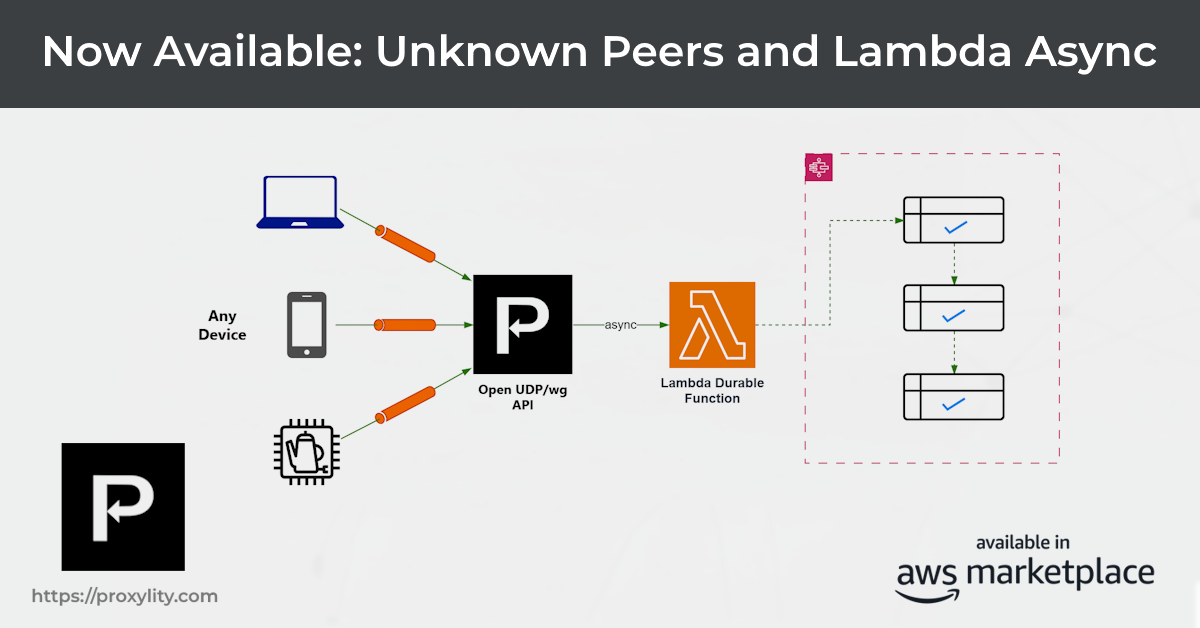
24. Open WireGuard Endpoints (proxylity.com)

Two new UDP Gateway capabilities: WireGuard Listeners can now accept connections from any peer without pre-registration, and Lambda destinations can be invoked asynchronously to trigger long-running workflows.

New capabilities in WireGuard allow for connections from any peer without the need for pre-registration, enhancing flexibility in network setups. Additionally, Lambda destinations can now trigger long-running workflows asynchronously, streamlining processes for developers.

25. Phones should have a 'guest lock' feature (curvise.net)

Short post, I've just had these ideas bouncing in my head for a while and it keeps annoying me phones have never implemented them.

First is a "guest lock"...

A user proposes a “guest lock” feature for phones to enhance privacy when sharing devices. The idea aims to prevent unauthorized access to personal information while allowing others to use the phone.

28. Show HN: Streambench – Native Mac Client for Kafka and NATS (streambench.app)

Browse topics, tail messages in real time, inspect consumer lag, and manage streams — Kafka and NATS JetStream in one fast, native Mac app.

A developer created a native Mac client for Kafka and NATS, providing a more user-friendly GUI experience compared to the command line interface. If you’re looking for a smoother way to interact with NATS Jetstream, this tool might be worth checking out.

30. Show HN: Online SNMP MIB database - upload/view your own MIBs (mib-viewer.com)

Search, upload, browse, or download from a database of over 11,000 SNMP MIBs. MIB Viewer lets you look up any MIB object by name, OID, or number, view its syntax, access level, and description, trace its place in the MIB tree, and generate ready-to-run SNMP commands — all in your browser.

MIB Viewer offers a comprehensive online database with over 11,000 SNMP MIBs, allowing users to search and manage MIB objects effortlessly. With features like syntax viewing, access level details, and SNMP command generation, it’s a valuable tool for network management professionals.

Article Details

Browse by Date

Type to search HN and engineering blog articles
Press Escape to close  |  ↑↓ to navigate  |  Enter to open