

2. Show HN: A website for exploring historical photographs of my city (yesterdays.maprva.org)
Place historical images of Richmond, Virginia on the map!
A new website allows users to view and explore historical photographs of Richmond, Virginia, integrated with an interactive map. Discover the city’s past through its visual history and see how places have changed over time.
3. Build a Stratum 1 PTP Grandmaster on a Budget (opscode.io)
Building a GPS-disciplined PTP grandmaster from a Raspberry Pi CM4 and SR1723U10 GPS module. Part 1 of the homelab PTP series.
Learn how to construct an affordable PTP grandmaster using a Raspberry Pi CM4 and a GPS module, perfect for enhancing your homelab’s time synchronization. This guide kicks off a series focused on precision time protocol setups.

4. From rubber boots to Copa: When MicroProse Soccer revolutionized football (spillhistorie.no)
Sensible Softwares legendariske bananskru – er klassikeren like god som vi husker den? Vi tester MicroProse Soccer i 2026.
A nostalgic look at how MicroProse Soccer holds up in 2026, comparing its iconic gameplay to modern football games. Find out if this classic still delivers the fun we remember.

5. The punched card tabulator (www.ibm.com)
An electrical counting machine automated data handling, transformed industries, and became the basis for a highly profitable new company called IBM.
The punched card tabulator revolutionized data processing by automating counting tasks, leading to significant industrial changes and the creation of IBM, a major player in tech history. Discover how this innovation laid the groundwork for modern computing.

6. Claude users are mad that Anthropic's new watermarks will catch them using it (techcrunch.com)
Is Anthropic's new watermarking system a travesty? Some have taken to social media to complain that it is.
Anthropic’s introduction of a watermarking system has sparked backlash among users, who are voicing their frustrations on social media. The controversy centers around concerns that the watermarks will expose users’ interactions with the AI.
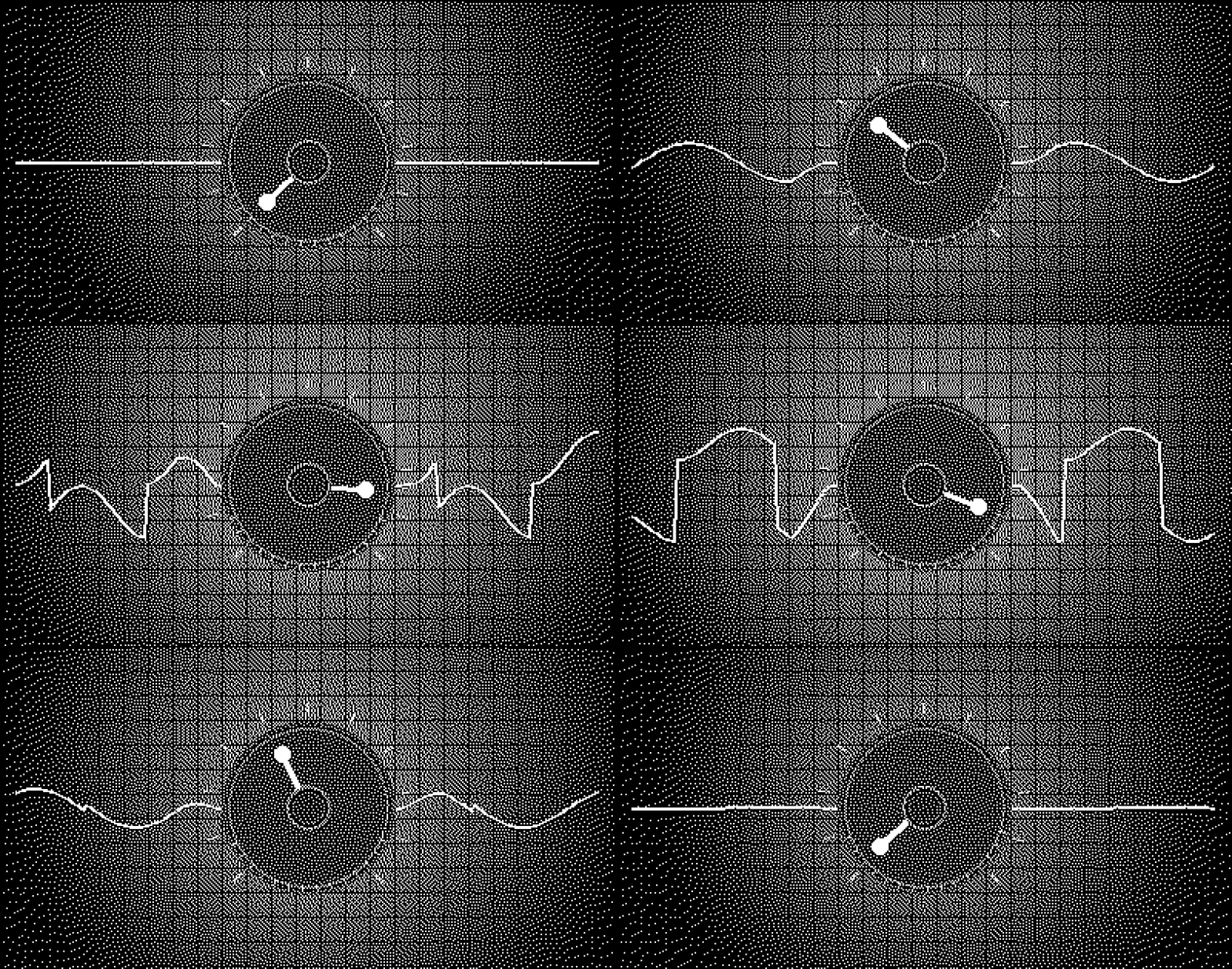
7. I built a browser-native SysEx librarian for 80s/90s synthesizers (bipluk.com)
Backup & recall presets from vintage DX7, Juno-106, and Korg M1 synthesizers in the cloud via Web MIDI.
A new tool allows musicians to back up and recall presets from classic synthesizers like the DX7, Juno-106, and Korg M1 directly through their browser using Web MIDI, making it easier to manage vintage sounds in the cloud.
8. Probabilistic Estimation for Localizing a Radioactive Source in an Urban Setting (repository.lib.ncsu.edu)
9. The Three-Stroke Problem (penpot.app)
When three kinds of strokes entangle with each other, the resulting design system is chaotic for most initial conditions. Let's go through the stroke rendering in design software.
The article examines how three different stroke types interact in design software, leading to unpredictable outcomes for various initial conditions. It provides insights into the complexities of stroke rendering that designers should consider.
10. The mathematical physics of rainbows and glories(2001) [pdf] (tlakoba.w3.uvm.edu)
11. Show HN: UTC Time - live clock, ISO 8601, Unix timestamp (utctime.app)
Live UTC clock with one-click copy for ISO 8601, RFC 3339, RFC 2822 and Unix time, a device clock-skew check, and get-the-time-now code for 14 languages. Dark, fast, no signup.
12. Show HN: OxiSH, a modern, memory-safe SSH server (dirkjan.ochtman.nl)
13. Smooth Move: Taming Trajectories with Polynomials (nick.zoic.org)
14. What Garbage Collection Costs (shivanshuag.com)
Why the cost of a GC cycle is about objects and references, not bytes — and what to measure before you try to optimize it.
Understanding the costs associated with garbage collection is crucial for optimizing performance. This piece breaks down how object relationships, rather than just memory size, impact GC cycles and offers guidance on what metrics to track for effective optimization.
15. Flock Safety changes system defaults in response to criticisms (www.flocksafety.com)

16. Mozilla says stricter antitrust measures against Google 'threaten Firefox' (www.techcentral.ie)
Mozilla, the developer of Firefox, has warned that it may be forced to exit the browser market if it is no longer allowed to receive payments from Google for offering its search engine. According to Mozilla, a ban on these payments could lead the company and other independent browser developers to withdraw from the market. [&hellip
Mozilla has raised concerns that stricter antitrust measures targeting Google could jeopardize its ability to sustain Firefox, potentially forcing it out of the browser market altogether. The company argues that banning payments from Google for search services could have dire consequences for independent browser developers.

17. Celld: Self-hosted, distributed Durable Objects (celld.dev)
20. Show HN: A Rosetta Stone for UI component libraries (www.frontfamily.com)
Deterministic component conversion between MUI, Chakra UI, Ant Design, EUI, Mantine, Bootstrap, and Quasar. 219 hand-verified mappings. Runs in your browser — no code sent anywhere.
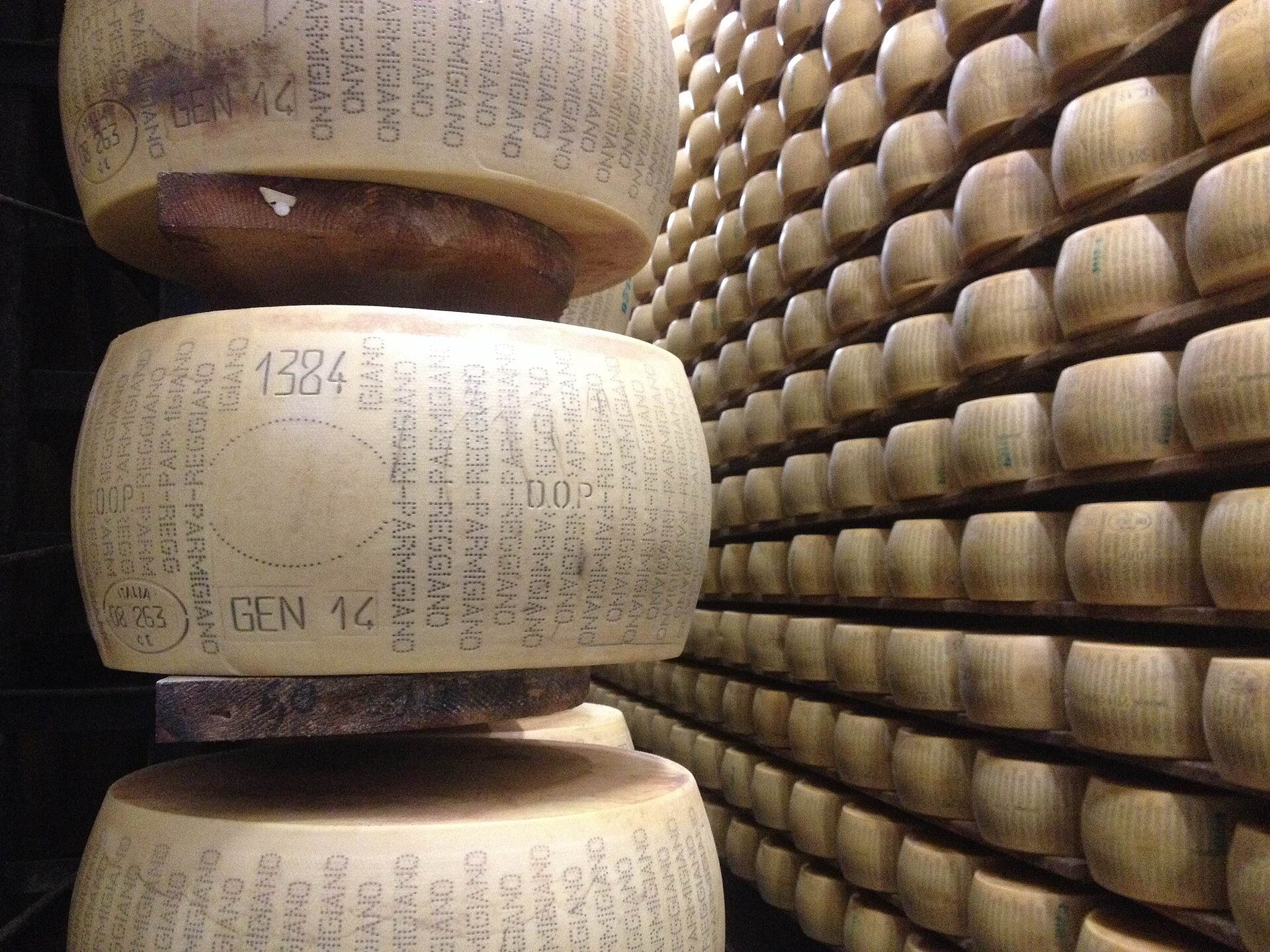
21. Italian Bank Stores 400K Wheels of Cheese as Collateral for Farmer Loans (travelandtannins.com)
Collateral is usually something inert. A bank takes a claim on a house, a vehicle, or a piece of machinery, and its job is simply to make sure the asset still

23. Show HN: Artificial Analysis tool to create custom benchmarks for any use case (artificialanalysis.ai)
Turn your own tasks into a repeatable benchmark, run frontier models on it, and compare quality against cost per task. Bring your own dataset, agent trajectories, or your own agent.
24. Show HN: At 16K features, flat autoencoders break. Curved space doesn't (github.com)
High-Performance Hyperbolic Sparse Autoencoders for Mechanistic Interpretability - vishal-dehurdle/hypersae
26. Show HN: NanoRL – RL training for LLMs in ~1,800 lines (github.com)
One RL training loop that runs CartPole on a laptop and disaggregated async RLVR on a GPU cluster. About 1,800 lines across 7 files. No Ray, no TRL, no DeepSpeed. It's small enough to read in a...
27. America really might restore democracy to Venezuela (economist.com)
28. Show HN: Decant – Understand how you spend tokens (github.com)
Local-first analysis of Claude Code and Codex sessions: token spend, context windows, files touched, and cost. - dosu-ai/decant
29. Show HN: Meat-O-Meter – the internet most generous ruler (18+) (meat-o-meter.ya-abr97.chatgpt.site)
The internet
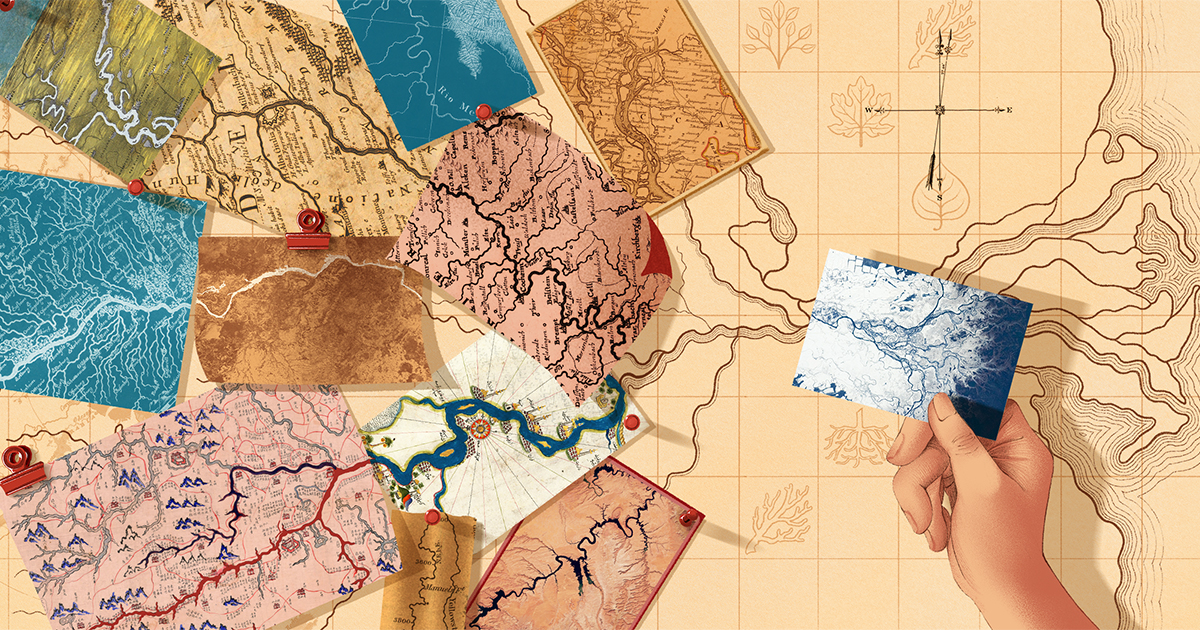
30. Why Are Rivers So Mathematical? (www.quantamagazine.org)
A simple scaling law brings order to the chaos of flowing water, rock, and sediment. New findings have extended the law even further.
Researchers have found that a simple scaling law can help explain the complex behaviors of rivers, including how they manage water, rocks, and sediment. Recent discoveries have expanded this law, shedding light on the mathematical patterns underlying river dynamics.