1. Winding Down Artichoke Ruby (hyperbo.la)

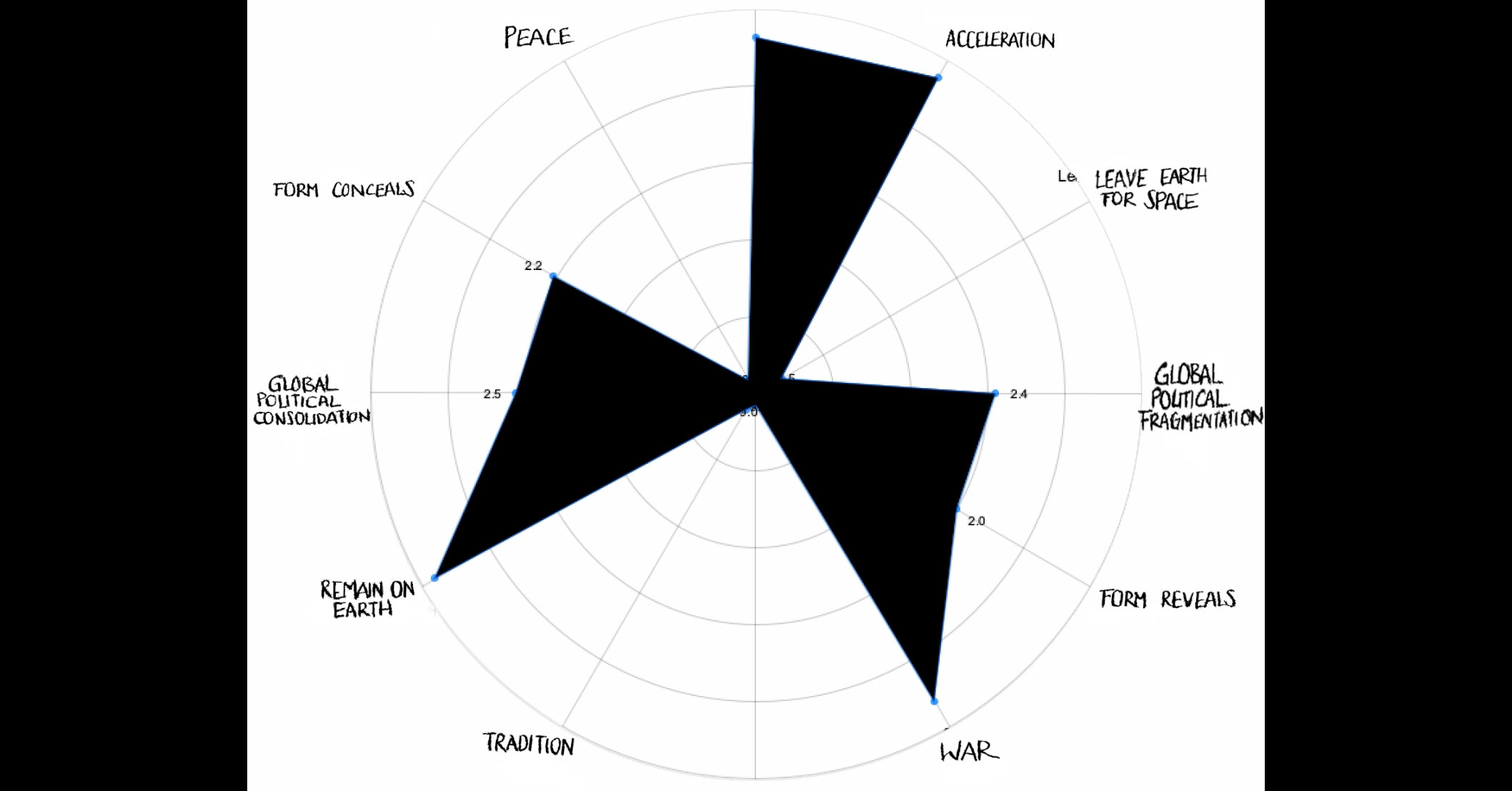
After six years of building a Ruby implementation in Rust, it’s time to archive Artichoke. This is a look back at why it started, what we built, and why I’m letting it rest.

The creator reflects on the journey of Artichoke, a Ruby implementation in Rust, detailing its origins, achievements, and the decision to archive the project after six years. It’s a thoughtful retrospective on the challenges and milestones of this unique endeavor.

2. The American Grilled Cheese Sandwich Essay (2024) (buttondown.com)

Welcome back to Notable Sandwiches, the feature where David and I travel the world on wings made of bread, chronicling Wikipedia’s List of Notable...

Join David and the author as they embark on a journey to explore the cultural significance and variations of the grilled cheese sandwich across different regions. Discover how this simple dish has become a beloved staple with unique twists around the globe.

3. New Defcon Badges Pack a Unique Open-Source Chip That Doubles as a Security Key (www.wired.com)

Created by legendary hardware hacker Andrew “bunnie” Huang, the badges for this year’s famed security conference aim to push the boundaries of security and transparency.

The latest Defcon badges, designed by renowned hacker Andrew “bunnie” Huang, feature an innovative open-source chip that also functions as a security key, highlighting a commitment to both security and transparency. These badges not only serve as conference memorabilia but also offer practical security applications for users.

4. Show HN: Slope remade in HTML5 to load instantly on any browser, any device (hurtle.site)

Everyone in the world gets the same track today. Ten sliders, one ball, and a floor that will not stay still.

A new HTML5 game offers a fresh track every day, loads in under 100kb, and requires no ads or logins. Players can customize their experience with adjustable settings, making it an accessible option for anyone looking for a quick gaming fix.

5. We shall dwell amidst wonder and glory for ever: On weird fiction (clereviewofbooks.com)

The Weird lives in the terrifying space between apprehension and comprehension.

Weird fiction navigates the unsettling territory where understanding meets fear, challenging readers to confront the unknown. Discover how this genre captures the essence of human experience through its bizarre and often unsettling narratives.

6. The great wealth transfer reality check (usa.visa.com)

$36 trillion will transfer from baby boomers to Gen X and millennial households over the next 20 years, but only about $8 trillion is expected to be spent.

The impending transfer of $36 trillion from baby boomers to younger generations raises questions about how much will actually be utilized. With only $8 trillion projected to be spent, the article examines the implications for wealth management and economic growth.

7. "the very foundation of modern academia has been blown to bits" (twitter.com)

Tony Feng is a mathematics professor at UC Berkeley, and he tells us:

« In the past, the path to a math Ph.D. cultivated resilience, resourcefulness, critical thinking, and a healthy skepticism (…) but suddenly you can produce a passable Ph.D. thesis with the push of a button.

A UC Berkeley math professor argues that the rise of AI tools is undermining the traditional rigor and critical thinking skills developed during the Ph.D. process. He highlights concerns about how easily one can now generate a thesis, raising questions about the future of academic standards.

8. Does Speaking to Agents Like Cavemen Save 65% of Tokens? We Test (blog.jetbrains.com)

A paired A/B benchmark of the token-compression skill Caveman on Claude Code, run on SkillsBench: does it actually save tokens, and does it degrade AI agent output quality? Advertised saving: 65%.

A recent benchmark test evaluates the token-saving capabilities of the Caveman skill on Claude Code, aiming to determine if it truly achieves the claimed 65% reduction without compromising the quality of AI responses. Discover the results of this experiment and its implications for AI efficiency.

11. 13 Models and 4 Agents on SWE Tasks: Go, Java, Python, Rust, TS (swe-rebench.com)

SWE-rebench: A Continuously Evolving and Decontaminated Benchmark for Software Engineering LLMs.

The article discusses SWE-rebench, a new benchmark designed for evaluating software engineering language models across multiple programming languages. It highlights how this tool aims to improve the performance and reliability of these models in software development tasks.

15. The Art of Decision-Making (2019) (www.newyorker.com)

Your life choices aren’t just about what you want to do; they’re about who you want to be.

Making decisions shapes not only your actions but also your identity. This piece examines the deeper implications of your choices and how they reflect your values and aspirations.

20. Orca-Bench: How Ready Are Language Model Agents for Oncall? (arxiv.org)

Large language models can write, patch, and search code, but oncall root cause analysis (RCA) demands something different: reasoning over noisy metrics, logs, traces, and source code, starting from ambiguous user-facing reports, often hours after the incident began. We introduce ORCA-bench, a benchmark that puts general-purpose coding agents in a production-fidelity oncall setting. ORCA-bench pairs a live OpenTelemetry-instrumented microservice system--exposing six days of metrics, logs, and traces through real telemetry interfaces (Prometheus, Jaeger, and OpenSearch via Grafana) and full source-code access--with 1,079 RCA tasks that systematically vary report specificity, time-to-detection, and co-occurring fault scenarios. Ground-truth symptoms are curated and signed off by expert SREs, and our LLM-as-judge is independently re-scored by humans (Cohen's $κ_w=0.90$). Across five frontier agents, the best RCA Accuracy is 25.3% on Medium-difficulty tasks (the realistic-input setting) and 10.0% on Hard--a gap that remains even with Claude Fable 5. The weakest model hallucinates an implausible root cause in 40% of incident reports, and removing source-code access degrades every metric. Crucially, these are performances on a curated 50 GB / six-day testbed with tasks investigated in isolation on a system whose code and instrumentation are public. Since real production systems are order of magnitudes larger, more dynamic, and more idiosyncratic, the gap we report is a lower bound on the engineering investment required before frontier coding agents can be safely entrusted with production reliability. We release the public set at https://hub.harborframework.com/datasets/orca-bench/ORCA-bench.

ORCA-bench tests how well language model agents handle oncall situations by simulating real-world incidents with extensive data from a live microservice system. This benchmark assesses their ability to perform root cause analysis in challenging conditions, highlighting the gaps in their current capabilities.

23. Making Referential Stability a Type (jovidecroock.com)

What happens when we stop treating referential stability as a linting heuristic and start carrying it through React and Preact as a type-level proof.

The article discusses the implications of treating referential stability as a type-level proof in React and Preact, rather than just a linting guideline. It examines how this shift could enhance code reliability and maintainability in these frameworks.

24. Apple Will 'Watch Everything Burn' When AI Bubble Bursts (asymco.com)

I would say they will simply collect all the available profits MacRumors interviewed AI critic Ed Zitron, author of the Where’s Your Ed At newsletter and host of the Better Off…

AI critic Ed Zitron discusses Apple’s strategy amidst concerns about the sustainability of the AI boom, suggesting the company is poised to capitalize on profits while others may struggle. His insights offer a thought-provoking perspective on the tech giant’s future in a potentially volatile market.

25. Make Everything to Markdown (klartext.it-handwerk-stuttgart.de)

PDF, Scan, Foto, Word oder Excel in sauberes Markdown und JSON umwandeln. Kostenlos, ohne Konto-Tarife, Texterkennung lokal auf dem Server.

Convert various file types like PDF, Word, and Excel into clean Markdown and JSON effortlessly. This tool offers free and local text recognition without the need for an account.

27. Show HN: I built a cross-browser extension that controls fingerprinting surfaces (privacything.com)

Privacy Thing — a browser extension that puts you in control of the information shared with websites.

Privacy Thing is a new browser extension designed to combat browser fingerprinting by simulating user environments. With features covering over 50 APIs and methods, it offers users enhanced control over their online privacy.

30. A simple clustering algorithm for lists (cassidoo.co)

I nerd-sniped myself deeply when sorting baby toys and came up with a fun pattern for doing so!

A playful approach to organizing baby toys led to the development of a straightforward clustering algorithm. Discover how this unique method can simplify sorting tasks in an engaging way.

Article Details

Browse by Date

Type to search HN and engineering blog articles
Press Escape to close  |  ↑↓ to navigate  |  Enter to open