1. Anthropeum (anthropeum.com)

A daily game that challenges our understanding of human cultures. Ten objects. 5,000 years of human history. Guess where and when each artifact was made. See how you rank.

Test your knowledge of human history with a daily game that presents ten artifacts from various cultures over 5,000 years. Challenge yourself to guess their origins and see how you compare with others.

2. RTX 2080 Ti Memory Upgrade to 22 GB (gpusolutions.net)

Upgrade your RTX 2080 Ti from 11GB to 22GB worldwide. Professional VRAM replacement, BIOS tuning & testing by GPU Solutions.

A professional service is now available to double the VRAM of the RTX 2080 Ti from 11GB to 22GB, complete with BIOS tuning and testing. This upgrade could significantly enhance performance for demanding applications and gaming.

3. Show HN: XY – Fast, composable, GPU-accelerated charts, written in Rust (github.com)

Fast, composable, GPU-accelerated charts for the web and notebooks - reflex-dev/xy

XY offers a new way to create fast and customizable charts for web applications and notebooks, utilizing GPU acceleration for improved performance. Built in Rust, it promises efficiency and flexibility for developers looking to enhance their data visualization tools.

5. Underwater Oxygen Loss Threatens Earth's Stability, Researchers Warn (scripps.ucsd.edu)

A new review paper led by scientists at UC San Diego’s Scripps Institution of Oceanography warns that the rapid loss of oxygen from the ocean and other aquatic ecosystems is pushing Earth toward an “unsafe space,” with consequences that could be irreversible on human timescales.

A team at UC San Diego highlights alarming research on declining oxygen levels in oceans, suggesting that this trend could lead to severe and potentially irreversible impacts on global stability. The findings raise urgent questions about the future of aquatic ecosystems and human survival.

6. Pacing the Frontier (www.pacingthefrontier.com)

A statement from over 1000 employees of frontier AI companies

Over a thousand employees from frontier AI companies have issued a collective statement, highlighting their concerns and aspirations for the future of artificial intelligence. Their unified voice sheds light on the ethical considerations and responsibilities that come with advancing technology.

7. Kimi K3 Now Available via Telnyx Inference API (telnyx.com)

Kimi K3, the first 2.8T parameter open-source model, is now on Telnyx Inference. 1M context window, native vision, configurable reasoning. Input $2.70/1M tokens.

Kimi K3, an advanced open-source AI model with 2.8 trillion parameters, is now accessible through the Telnyx Inference API, featuring a one million token context window and native vision capabilities. It offers a cost-effective solution at $2.70 per million tokens, making it an attractive option for developers interested in cutting-edge AI technology.

8. Show HN: Formally verified 3D CSG: Trust 93 lines spec, not 1000 lines AI code (github.com)

Formally verified 3D mesh intersection - trust 93 lines of spec, not 1000+ lines of AI-written code - schildep/verified-3d-mesh-intersection

A new project implements the first formally verified 3D constructive solid geometry operation, focusing on mesh intersection with a concise 93-line specification. It aims to reduce reliance on AI-generated code by ensuring that the human-readable specification guarantees accuracy and well-formedness in the resulting mesh.

9. How Do I Profile eBPF Code? (naveensrinivasan.com)

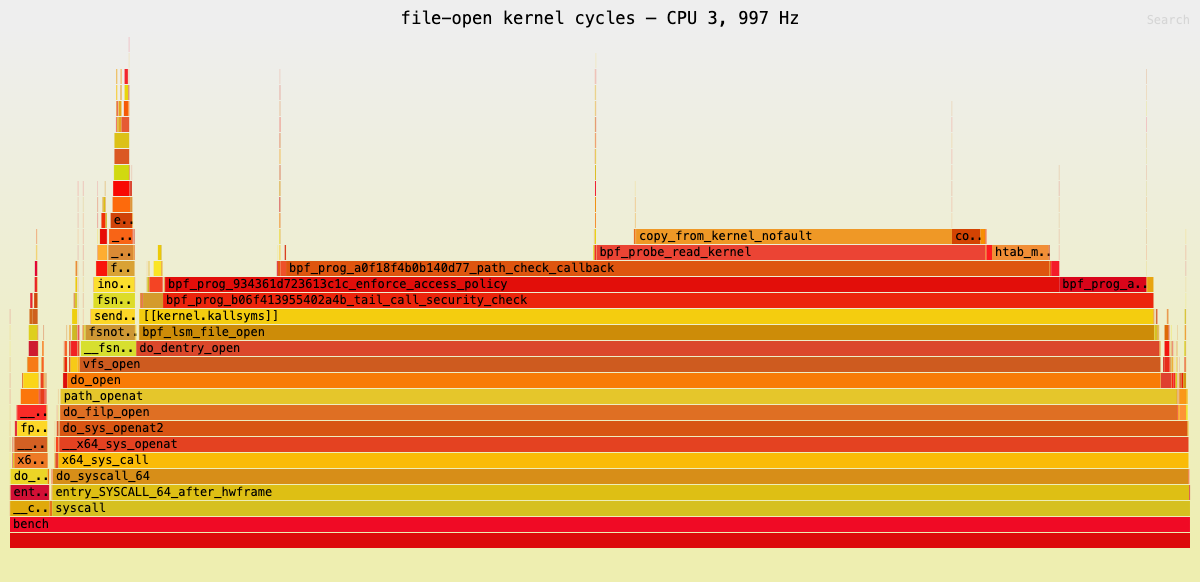
If we are running any eBPF workload or writing eBPF code, we want to measure its performance impact, and in this post we will demonstrate an example of how to do it.
In this example, our goal is to measure the performance of file open operations, one of the most critical functions in the OS. Our code used file open hooks in eBPF, we wanted to measure the performance overhead introduced by adding this hook.

Learn how to assess the performance impact of eBPF code by measuring the overhead of file open operations. This practical example highlights the use of eBPF hooks to gain insights into critical OS functions.

10. MCP 2026-07-28 Specification: transport going stateless (blog.modelcontextprotocol.io)

The 2026-07-28 Model Context Protocol specification is out, bringing a stateless protocol core, Multi Round-Trip Requests, header-based routing, cacheable list results, authorization hardening, a formal extensions framework, and updated Tier 1 SDKs.

The latest Model Context Protocol specification introduces a stateless core and several enhancements, including Multi Round-Trip Requests and improved authorization. These updates aim to streamline communication and expand functionality for developers working with the protocol.

12. Show HN: Yap – OSS on-device voice dictation for macOS with no model to download (github.com)

Free, open source voice dictation for macOS. On-device transcription with Apple's Speech framework. No cloud, no API keys, no account. - FrigadeHQ/yap

Yap is a new open-source menu-bar app for macOS that allows users to convert speech to text without needing to download any models. It operates locally, ensuring privacy, and utilizes Apple’s latest APIs for efficient voice dictation in any text field.

13. Neutrino-1 8B (www.fermionresearch.com)

The flagship of the Neutrino family: 36 decoder layers behind a coded ternary-family container that serves a datacenter GPU, a MacBook, and a desktop CPU from one artifact.

The Neutrino-1 8B features an innovative design with 36 decoder layers that enables it to function as a versatile computing solution, supporting a datacenter GPU, a MacBook, and a desktop CPU from a single unit. This approach could streamline hardware requirements and enhance efficiency across various platforms.

14. Running Kimi K3 on a M1 Mac (github.com)

Run Kimi K3, a 2.8T-parameter Mixture-of-Experts LLM, on a single Apple Silicon Mac. Streams MXFP4 experts on demand over HTTP into a local disk cache — fused NEON kernels, Metal/MPS compute, exact...

Learn how to run the Kimi K3 language model on an M1 Mac, utilizing its powerful hardware to efficiently manage a large number of parameters and stream experts on demand. This setup leverages advanced computing techniques like fused NEON kernels and Metal/MPS for optimized performance.

15. uv 0.12.0 (github.com)

Release Notes
Released on 2026-07-28.
Since we released uv 0.11.0 in March, we've accumulated changes that improve correctness, safety, and compatibility with specifications, but could break some w...

The latest uv 0.12.0 release includes important updates that enhance correctness and safety, while also improving compatibility with specifications. However, users should be aware that some changes may disrupt existing workflows.

16. Ars Astronomica – English translations of rare Hebrew and Latin astronomy texts (arsastronomica.com)

First English translations of historical Hebrew and Latin works in astronomy, cosmology, and natural philosophy.

The first English translations of rare Hebrew and Latin texts shed light on historical perspectives in astronomy, cosmology, and natural philosophy. Discover insights from these overlooked works that shaped our understanding of the universe.

19. Harmony Explained: Progress Towards a Scientific Theory of Music (2012) (arxiv.org)

Most music theory books are like medieval medical textbooks: they contain unjustified superstition, non-reasoning, and funny symbols glorified by Latin phrases. How does music, in particular harmony, actually work, presented as a real, scientific theory of music?

The core to our approach is to consider not only the Physical phenomena of nature but also the Computational phenomena of any machine that must make sense of sound, such as the human brain. In particular we derive the following three fundamental phenomena of music:

* the Major Scale,
* the Standard Chord Dictionary, and
* the difference in feeling between the Major and Minor Triads.

While the Major Scale has been independently derived before by others in a similar manner [Helmholtz1863, Birkhoff1933], I believe the derivation of the Standard Chord Dictionary as well as the difference in feeling between the Major and Minor Triads to be original.

We show to be incomplete the theory of the heretofore agreed-upon authority on this subject, 19th-century Physicist Hermann Helmholtz [Helmholtz1863]: he says notes are in "concord" because the sound playing them together is "less worse" than that of some other notes. But note that, in this theory, more notes can only penalize, some merely less than others, and so the most harmonious sound should be a single note by itself(!) and harmony would not exist as a phenomenon of music at all.

I intend this article to be satisfying to scientists as an original contribution to science and art, yet I also intend it to be approachable by musicians and other curious members of the general public who may have long wondered at the curious properties of tonal music and been frustrated by the lack of satisfying, readable exposition on the subject. Therefore I have written in a deliberately plain and conversational style, avoiding unnecessarily formal language.

This piece critiques traditional music theory for its reliance on outdated concepts and symbols, advocating instead for a scientific approach to understanding harmony. It promises insights into how both natural and computational phenomena shape our perception of music.

20. Italy Blocks Reproductive Health Websites Women on Web and Women Help Women (ooni.org)

This report documents the blocking of Women on Web (WoW) and Women Help Women (WHW) domains in Italy based on OONI data.

Italy has blocked access to the reproductive health websites Women on Web and Women Help Women, as highlighted by recent OONI data. The move raises significant questions about online access to reproductive health resources in the country.

21. Why a $154B CEO just endorsed stripping most Americans of voting rights (fortune.com)

Should how much you pay in taxes determine how much your vote counts? Shopify CEO Tobi Lütke seems to think so.

Shopify’s CEO Tobi Lütke suggests that voting power should be linked to tax contributions, a proposal that raises significant ethical and democratic questions about representation in America. This controversial stance could spark heated debates about the intersection of wealth and political influence.

22. An Uncomplicated Man (www.lrb.co.uk)

As they say at the awards shows, I was humbled to learn that Christopher Nolan has read at least the first line of my...

Christopher Nolan’s acknowledgment of a writer’s work adds an intriguing layer to the discussion about their creative relationship. The piece hints at personal insights and reflections that could interest fans of both the filmmaker and the author.

24. EYG: A Programming Language for Humans (crowdhailer.me)

The rationale and resulting feature set of the EYG programming language.

EYG is designed with a focus on human readability and usability, aiming to simplify coding for programmers. The article details its unique features and the reasoning behind its development.

25. Show HN: tale.fyi, we deserve a home for fiction (tale.fyi)

Announcing tale.fyi: read (or listen) to an entire book from a single link. by samuel cole, as one long readable page.

A new platform aims to celebrate fiction on the internet by providing a space for both public domain works and user-generated stories. The creator is seeking feedback and recommendations, inviting readers to contribute to this literary initiative.

26. Show HN: How far do I have to go to run into 100k people? (imjasonh.github.io)

How far must a 5° slice go in each direction before it hits N people?

A new project calculates the distance needed to encounter a specific number of people within a defined angle. It offers a unique perspective on population density and movement, making it an interesting read for those curious about social dynamics and spatial statistics.

30. Interview with Boris Cherny [video] (www.youtube.com)

Fresh off the launch of Opus 5, Claude Code creator Boris Cherny joins Diana Hu at Startup School 2026 to talk about what the newest models can do, how Claud...

Boris Cherny discusses the capabilities of Opus 5 and shares insights on the advancements in Claude Code during his conversation with Diana Hu. This interview offers a glimpse into the latest developments in AI technology.

Article Details

Browse by Date

Type to search HN and engineering blog articles
Press Escape to close  |  ↑↓ to navigate  |  Enter to open