

3. Kaiser nurses say AI, workplace surveillance are making their jobs, care worse (localnewsmatters.org)
KAISER PERMANENTE NURSES who answer advice and triage calls say their duty of care for patients is being increasingly threatened by workplace

4. First atmosphere found on Earth-like planet in habitable zone of distant star (www.bbc.com)
Researchers have found an Earth-like, rocky planet orbiting within the habitable zone of a distant star with an atmosphere.
5. Mozilla: The state of open source AI (stateofopensource.ai)

6. Blatant AI slop just won a 25k USD DeepMind Kaggle Grand Prize (www.kaggle.com)
Design high-quality benchmarks that go beyond recall to evaluate how frontier models truly reason, act, and judge.

7. Apple targets dozens of OpenAI employees with legal letters (www.ft.com)
iPhone maker steps up aggressive tactics in trade secrets dispute with AI lab
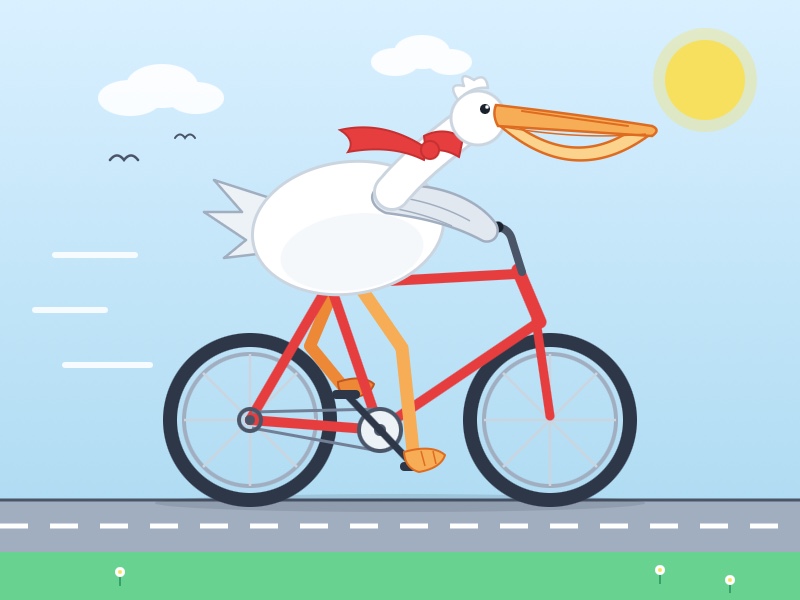
8. Kimi K3, and what we can still learn from the pelican benchmark (simonwillison.net)
Chinese AI lab Moonshot AI announced Kimi K3 this morning, describing it as their “most capable model to date, with 2.8 trillion parameters”. It’s currently available via their website and …
9. Learning a few things about running SQLite (jvns.ca)
Learning a few things about running SQLite
10. The Human-in-the-Loop Is Tired (pydantic.dev)
On reward functions, dopamine, and what it actually feels like when the code starts writing itself
11. The Zilog Z80 has turned 50 (goliath32.com)

12. Three ways people respond to a problem (other than solving it) (improvesomething.today)
Noticing responses to problems; there’s a whole set. The consultant’s reaction to each of these as they arise.

14. How Has Roman Concrete Lasted for Millennia? 1,900-Year-Old Latrine Offers Clues (www.smithsonianmag.com)
A chemical process called carbonation, which helps seal cracks, could help explain why many ancient Roman structures are still standing today. Researchers hope that the insights will lead to better modern-day building materials
15. An Engineer's Guide to USB Typе-С (2024) (www.ti.com)
16. EEG shows brain can simultaneous encode two speech streams (journals.plos.org)
How the brain rapidly switches attention between competing speech streams in complex listening environments is not fully understood. This study shows that neural tracking of a new speaker emerges before disengagement, with transient dual encoding and reduced alpha power supporting flexible auditory attention.
18. Camera Chase Vehicle (transistor-man.com)
20. FAA lets Boeing sign off on 737 MAX, 787 airworthiness certificates again (www.cnbc.com)
The move is a vote of confidence in Boeing from the U.S. government.
21. Static search trees: 40x faster than binary search (2024) (curiouscoding.nl)
Table of Contents 1 Introduction 1.1 Problem statement 1.2 Motivation 1.3 Recommended reading 1.4 Binary search and Eytzinger layout 1.5 Hugepages 1.6 A note on benchmarking 1.7 Cache lines 1.8 S-trees and B-trees 2 Optimizing find 2.1 Linear 2.2 Auto-vectorization 2.3 Trailing zeros 2.4 Popcount 2.5 Manual SIMD 3 Optimizing the search 3.1 Batching 3.2 Prefetching 3.3 Pointer arithmetic 3.3.1 Up-front splat 3.3.2 Byte-based pointers 3.3.3 The final version 3.4 Skip prefetch 3.5 Interleave 4 Optimizing the tree layout 4.1 Left-tree 4.2 Memory layouts 4.3 Node size \(B=15\) 4.3.1 Data structure size 4.4 Summary 5 Prefix partitioning 5.1 Full layout 5.2 Compact subtrees 5.3 The best of both: compact first level 5.4 Overlapping trees 5.5 Human data 5.6 Prefix map 5.7 Summary 6 Multi-threaded comparison 7 Conclusion 7.1 Future work 7.1.1 Branchy search 7.1.2 Interpolation search 7.1.3 Packing data smaller 7.1.4 Returning indices in original data 7.1.5 Range queries 7.1.6 Sorting queries 7.1.7 Suffix array searching In this post, we will implement a static search tree (S+ tree) for high-throughput searching of sorted data, as introduced on Algorithmica. We’ll mostly take the code presented there as a starting point, and optimize it to its limits. For a large part, I’m simply taking the ‘future work’ ideas of that post and implementing them. And then there will be a bunch of looking at assembly code to shave off all the instructions we can. Lastly, there will be one big addition to optimize throughput: batching.
22. Solod: Go can be a better C (solod.dev)
23. Show HN: Watch bots interact with an SSH honeypot in real time (honeypotlive.cc)

24. GrapheneOS recommended for domestic abuse victims (privacypros.com.au)
Tech abuse is increasing in domestic violence cases across Australia. Learn how configured DV Safe Phones help survivors reduce tracking, and regain control.


26. Open Book Touch: open-source e-reader (www.crowdsupply.com)
A pocketable, front-lit, open source e-reader — for every book, in every language
27. Lego building instructions through time (www.lego.com)
28. Short sellers notch $8.7B profit as SpaceX shares dip to IPO price (www.reuters.com)
29. Frame – the first Linux Assembly X server (isene.org)
Philosophy - Sciences - Geekery - Art - Life - Coaching - Fun < Simplify Everything
30. Claude Code: Anatomy of a Misfeature (www.olafalders.com)
On Canada Day (July 1), 2026, Anthropic shipped a surprising