

2. Japan develops a method to recover up to 90% of lithium from used EV batteries (tech.supercarblondie.com)
In a real win for Earth Day, it has been reported that scientists in Japan have developed a method to recover up to 90% of lithium from used EV batteries
4. How to stop Claude from saying load-bearing (jola.dev)
Hack the text output of Claude Code to make life a little bit sillier.
5. European "age verification" "app" forcing everyone to use Android or iOS (github.com)
In the README, the following is listed: App and device verification based on Google Play Integrity API and Apple App Attestation I would like to strongly urge to abandon this plan. Requiring a depe...
6. The Tower Keeps Rising (lucumr.pocoo.org)
Vibecoding and the possible collapse of a shared language.
7. Are we offloading too much of our thinking to AI? (www.artfish.ai)
9. The Git history command deserves more attention (lalitm.com)
Working with lots of changes in parallel on git can be painful. You end up juggling branches and commits, and running scary rebase -i commands that can leave your tree in a half-broken state if you so much as sneeze.
jj, an alternative to git, gets discussed a lot these days (1, 2, 3, 4) and is often pitched as a solution. While I’m very sold on the problems jj is trying to solve, the way it solves them hasn’t quite hit home with me. Every 3 months, for the last 1.5 years, I try it out for a few days, really trying to make it part of my workflow but eventually I give up and go back to git [1].
That’s where git history comes in. It’s an experimental command that arrived across two releases, 2.54 (April, reword and split subcommands) and 2.55 (June, fixup subcommand). It got a flurry of attention on each release day, and then, as far as I can tell, not much community discussion since. Which is a shame, because IMO it already delivers several of the benefits people tout for jj without needing to switch your whole workflow. And the cool part is that it’s part of the core git distribution, so you can try it without installing anything.
10. Codex starts encrypting prompts, uses ciphertext for inference instead (github.com)
What version of Codex CLI is running? Upstream main after #26210 (Encrypt multi-agent v2 message payloads, merged 2026-06-05). This appears to affect versions that include that change and enable Mu...
11. Measuring Input Latency on Linux: X11 vs. Wayland, VRR, and DXVK (marco-nett.de)
I built a device to measure end-to-end input latency, then used it to find out what actually moves the needle.
12. I'm a USB-C Maximalist (shkspr.mobi)

13. S&P downgrades Oracle to BBB – only one notch above junk level (www.heise.de)
S&P Global has downgraded Oracle
14. How I use HTMX with Go (www.alexedwards.net)

15. Australia is offering free daytime electricity (lenergy.com.au)
The Solar Sharer Offer launches 1 July 2026. Here's what changed, how the cap works, and how to maximise free daytime electricity for your home.
16. Show HN: Juggler – an open-source GUI coding agent, by the creator of JUCE (github.com)
The Juggler Code Agent. Contribute to juggler-ai/juggler development by creating an account on GitHub.
17. Germany set to restrict its Freedom of Information Act (www.dw.com)
18. Punch Yourself in the Face with Reality (adi.bio)
Who can punch themselves in the face with reality the most? This is who will win in the age of AI.
19. Kids (With Phones) Are Alright (heatherburns.tech)
20. The largest available Minecraft world, totalling 15 TB (2b2t.place)
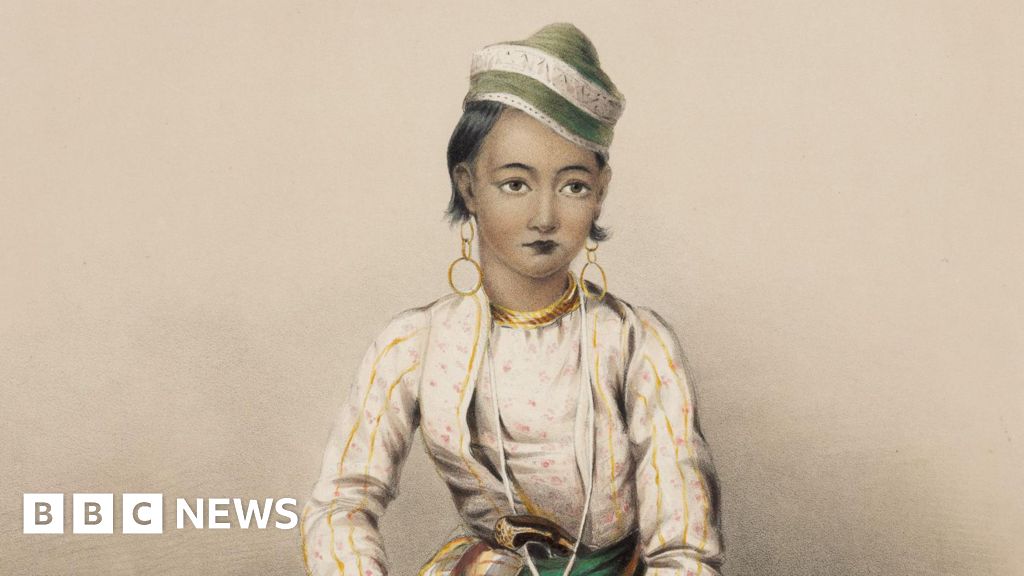
21. An Englishwoman who sketched India before photography took hold (www.bbc.com)
Emily Eden travelled across northern India in the 1830s, sketching princes, warriors, hill communities and even animals.
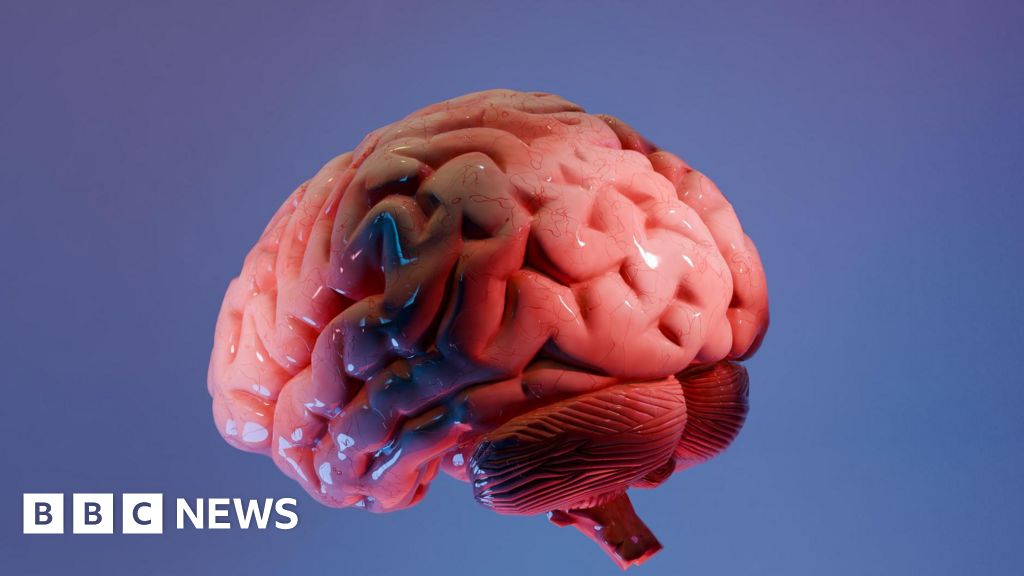
22. Indian scientists produce most detailed 3D atlas of the human brainstem (www.bbc.com)
India's new brainstem atlas offers scientists an unprecedented map of one of the brain's least known regions.
23. Dependabot version updates introduce default package cooldown (github.blog)
Dependabot now waits until a new release has been available on its registry for at least three days before opening a version update pull request. This cooldown is now the…
24. Show HN: Opening lines of famous literary works (www.verbaprima.com)
25. Fundamentals of Wireless Communication (web.stanford.edu)
26. YouTrackDB is a general-use object-oriented graph database (github.com)
YouTrackDB is a general-use object-oriented graph database with storage format native to handle graph relations. YouTrackDB supports Gremlin queries and ACID transactions. - JetBrains/youtrackdb
27. How the FSF sysadmins block botnets with reaction (www.fsf.org)
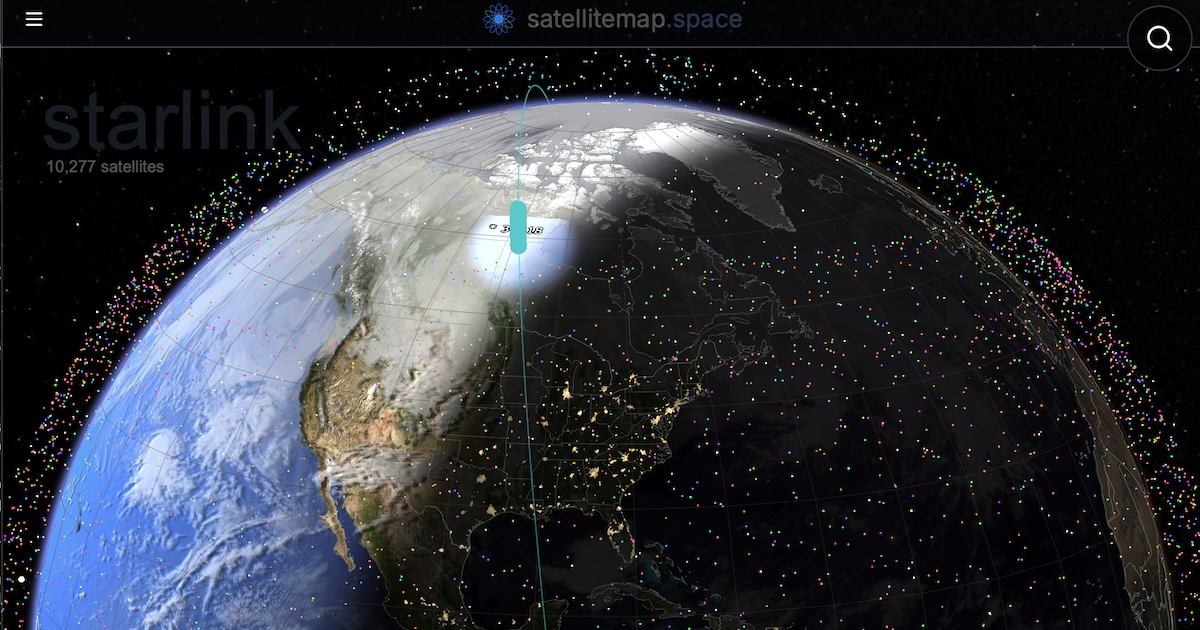
28. Satellite Tracker – Live Map of Starlink and 30k Satellites (satellitemap.space)
Track satellites in real-time on an interactive 3D map. See Starlink trains, space stations, rocket bodies, and satellite passes visible from your location.
29. Financing the AI boom: from cash flows to debt [pdf] (www.bis.org)
30. The zero-cost fallacy: open-source software in the agentic era (www.thoughtworks.com)
Open source software is the foundation of much of our digital infrastructure. However, is AI undermining the incentive structure? What needs to change?