
2. How RCA Victor sold Sound Service to classrooms in 1939 (pncnmnp.github.io)
This blog post explores a retro poster from my collection - RCA Victor
4. Why We Don't Trust the Database with Authentication (blog.sturdystatistics.com)

5. Show HN: SubjectiveZero, an open-source agentic node editor for creative coding (sxp.studio)
Independent solo studio building creative software, immersive experiences, and apps. Based in Paris, France.

7. Proton AG Services is currently experiencing some issues (status.proton.me)
Proton Services's Status Page - Investigating Incident.
8. Materials innovation has a scale-up problem, not discovery (www.atomscale.ai)
9. Harman and Dr. Sean Olive are reshaping headphone sound (www.crutchfield.com)
10. Software Engineer's Firing Ruled Illegal in a Rare Win for a Tech Worker (www.nytimes.com)
11. You're Not a Better Engineer Because You Type Git Commands by Hand (www.minid.net)
After 27 years of writing code, I have stopped spending time on a long list of small but painful engineering tasks. AI agents now handle commit messages, pull request descriptions, code comments, naming conventions, Git hygiene, issue tracking, and release workflows with more consistency than most teams ever managed by hand.
12. Offline tool to stabilize TV volume using IR control and spike detection (github.com)
A small Windows tool that lowers loud TV ads automatically and restores normal volume smoothly. - AdBusterOfficial/Adbuster--WinApp
13. Damaged Earth Catalog (damaged.bleu255.com)

14. Ancient Coins: What About Spartan Coins? (coinweek.com)
Spartans disdained many things that other ancient Greeks valued. One of these things was money, even coins. CoinWeek Ancient Coin Series by Mike Markowitz
15. 80-year-old woman with Alzheimer's took mushrooms and started speaking again (www.microdos.in)
Personalisierte Mikrodosierungs-Berechnungen basierend auf wissenschaftlichen Erkenntnissen.
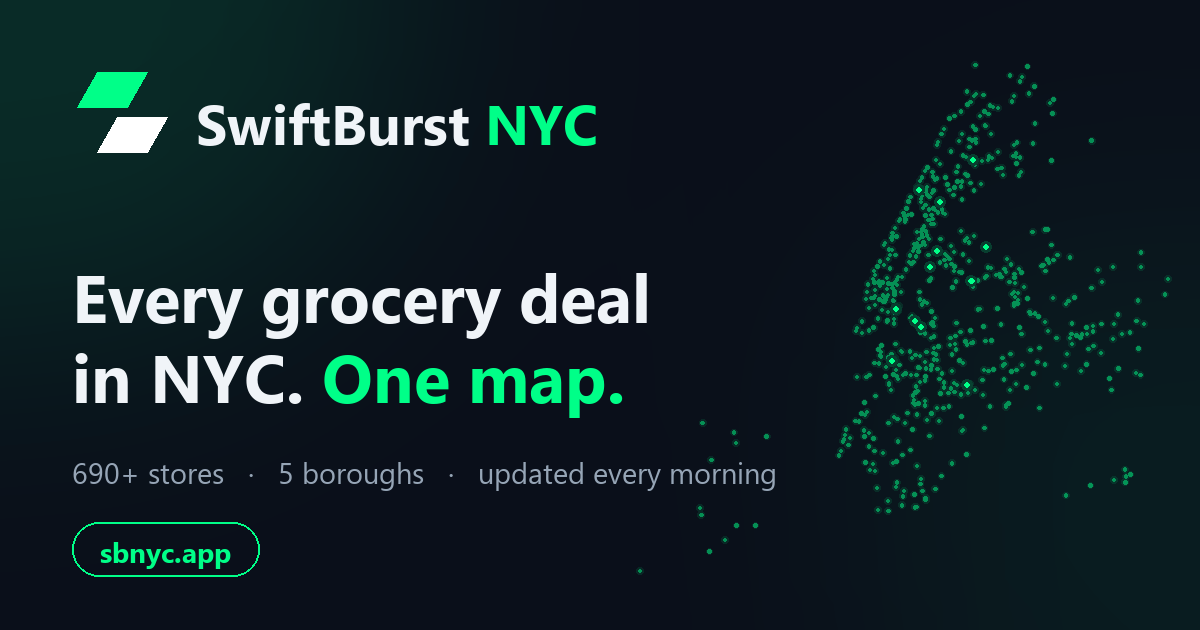
16. Show HN: I built a free app for New Yorkers to save money on groceries (sbnyc.app)
Compare this week

17. Prismata: Confining cross-site prompt injection in web agents (arxiv.org)
Autonomous web agents promise to automate everyday browsing tasks, but inherit one of the web's oldest attack surfaces. Cross-Site Scripting proved that mixing trusted and untrusted content is dangerous, even on benign pages. Agents resurface this risk by interpreting natural language as instructions, allowing third-party and user-generated content to hijack the agent via prompt injection. The core challenge is that deriving a task-specific security policy requires reasoning over page structure that is entangled with the attacker's content.
We present Prismata, a defense enforcing contextual least privilege for web agents, constraining both what the agent sees and what it can do. Prismata's dynamic trust derivation produces permission labels for page content, with structural confinement guarantees, inspired by classical integrity models, that bound any labeling errors so that labels can only decrease in privilege and mislabelings are bounded. Prismata's mechanical confinement enforces these labels by redacting content and restricting agent capabilities. Importantly, these mechanisms require no developer annotations, so Prismata supports the long tail of websites. Across recent published web agent attacks, including adaptive variants, Prismata substantially reduces attack success while preserving benign task utility.
We present Prismata, a defense enforcing contextual least privilege for web agents, constraining both what the agent sees and what it can do. Prismata's dynamic trust derivation produces permission labels for page content, with structural confinement guarantees, inspired by classical integrity models, that bound any labeling errors so that labels can only decrease in privilege and mislabelings are bounded. Prismata's mechanical confinement enforces these labels by redacting content and restricting agent capabilities. Importantly, these mechanisms require no developer annotations, so Prismata supports the long tail of websites. Across recent published web agent attacks, including adaptive variants, Prismata substantially reduces attack success while preserving benign task utility.
18. Disable autoplay and infinite scroll or risk fines, EU tells Meta (arstechnica.com)
Digital Services Act may force Meta to make big changes on its platforms.
19. Garnix Is Joining Shopify (garnix.io)
We are open-sourcing garnix and shutting down the service.
21. Postgres locks do not scale (www.recall.ai)
22. Browser Fingerprinting – How websites track you across internet –without cookies (mysysinfo.com)
Browser fingerprinting tracks you across websites without cookies — using your screen, fonts, GPU and more. Learn how it works and how to protect yourself.
23. Capitalism Gone Wrong (kasperjunge.com)

24. Show HN: We beat Gemini Embedding 2 by training only 16M params (open weights) (huggingface.co)
We’re on a journey to advance and democratize artificial intelligence through open source and open science.
25. Show HN: Fortress – stealth Chromium + MCP so agents don't get blocked (tilion.dev)
An open-source recompiled-Chromium stealth engine, driven by a Python framework and an MCP server.
26. Bun vs. Deno vs. Node.js 2026: Real Benchmarks Mislead (byteiota.com)
Bun claims 52k req/sec vs Node.js 14k, but real apps show 3% variation. 2026 benchmarks reveal where runtimes actually differ: cold starts, tooling, stability.

28. Tiny Tapeout Explorer: WASM FET-level circuit SIM&vis (znah.net)
Interactive 3D circuit visualization and switch-level simulation for Tiny Tapeout silicon designs.