
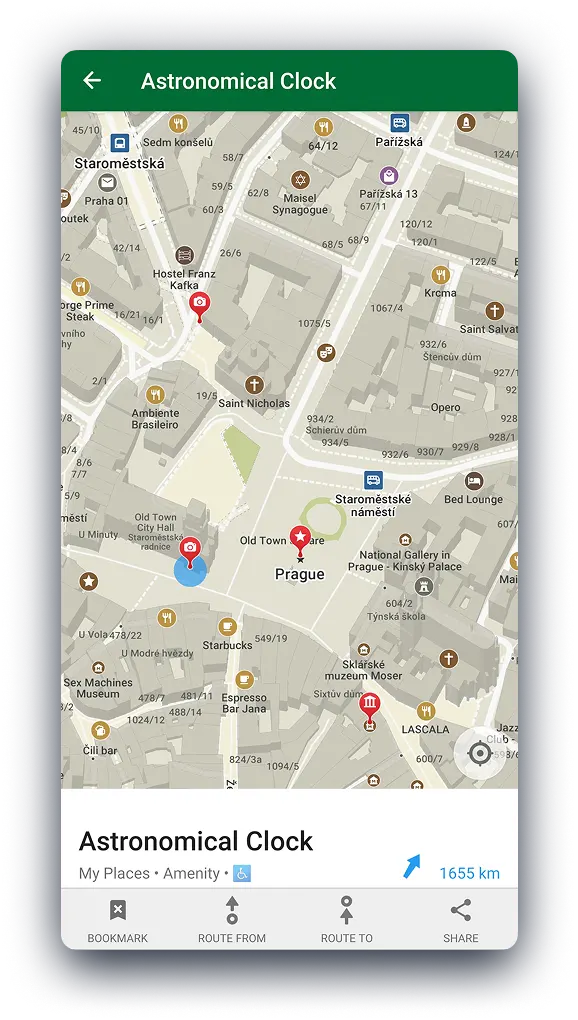
2. CoMaps – FOSS Offline Maps (www.comaps.app)
Discover more of your journey - Powered by the community

3. Resetting Xbox (news.xbox.com)
4. GLM 5.2 and the coming AI margin collapse (martinalderson.com)
GLM 5.2 is the first open weights model I'd call a genuine competitor to Opus and GPT for agentic work - at ~15-20% of the price. Part one of why AI inference margins are about to collapse.
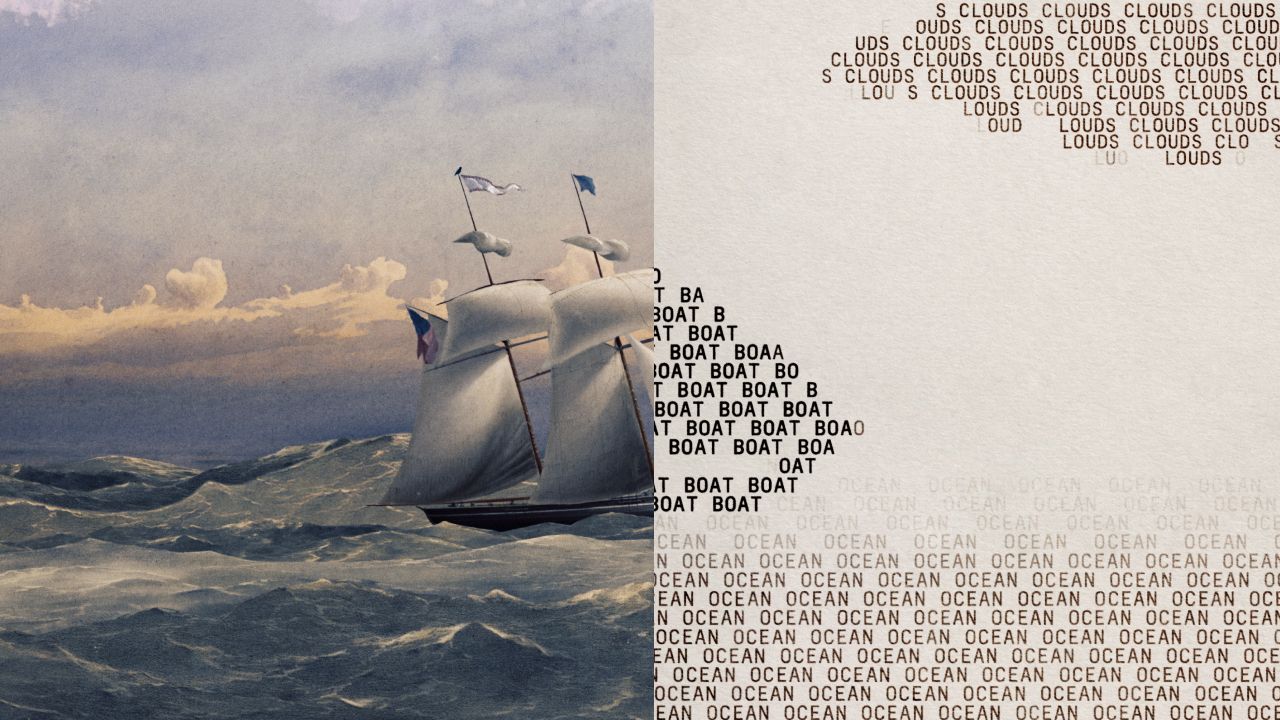
6. A global workspace in language models (www.anthropic.com)
Interpretability research on Claude's internal thoughts.

7. GPT-5.6 Sol Ultra will be in Codex (twitter.com)
@haider1 Ultra will be in codex.
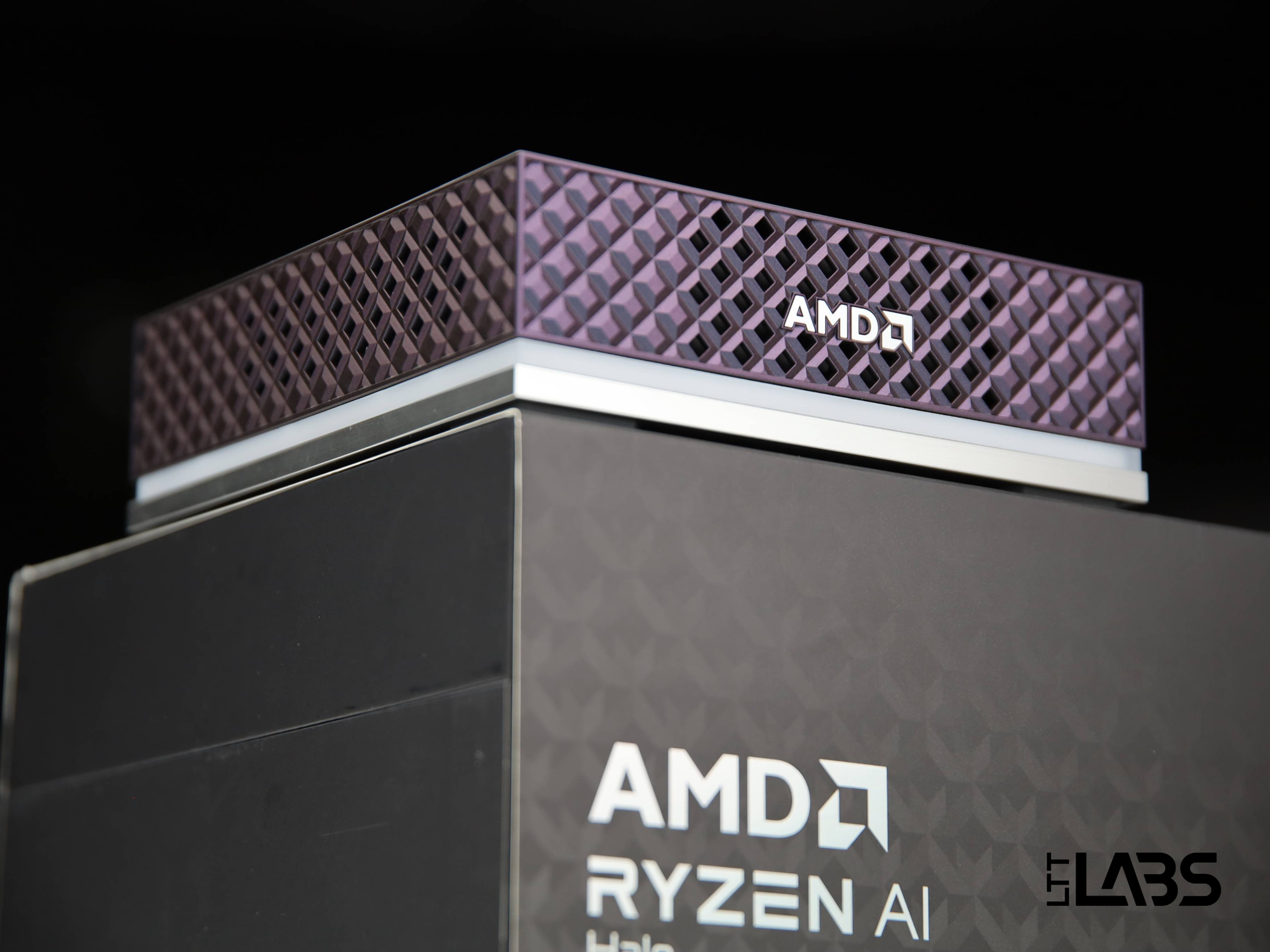
9. AMD Ryzen AI Halo – $4k AI Dev Kit (www.lttlabs.com)
Welcome to LTT Labs - your go-to destination for all things tech. Explore comprehensive test results, insightful commentary, and the latest analysis in hardware.

10. Nintendo announces new product revisions in Europe with replaceable batteries (www.nintendo.com)
Starting summer 2026, in preparation for upcoming changes in European battery regulations coming into effect in mid-February 2027, selected Nintend
11. Road to Elm 1.0 (elm-lang.org)
A delightful language with friendly error messages, great performance, small assets, and no runtime exceptions.
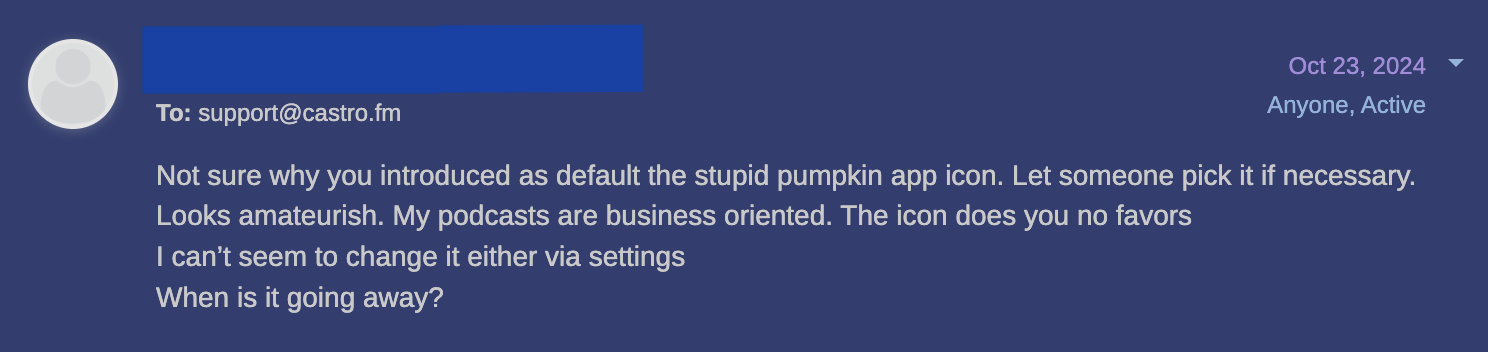
12. Building relationships with customers through support didn't turn out as hoped (www.uncommonapps.nyc)
Building meaningful relationships with customers through support didn't turn out as I'd hoped
13. Zuckerberg says AI agent development going slower than expected (www.reuters.com)
14. Learning to code is still worthwhile (stevekrouse.com)
15. Aluminum Foil (dernocua.github.io)
16. Anthropic's Method to Losing Goodwill in a Few Easy Steps (raheeljunaid.com)
17. Should DayQuil Be Legal? (www.theargumentmag.com)
18. Introduction to Genomics for Engineers (learngenomics.dev)
19. Clojure 1.13 adds support for checked keys (clojure.org)
20. OfficeCLI: Office suite for AI agents to read and edit Microsoft Office files (github.com)
OfficeCLI is the first and best Office suite purpose-built for AI agents to read, edit, and automate Word, Excel, and PowerPoint files. Free, open-source, single binary, no Office installation req...

21. Does Code Cleanliness Affect Coding Agents? (arxiv.org)
As autonomous coding agents see rapid adoption, their evaluation has primarily focused on task completion rates holding the target codebase fixed. This leaves a critical question unanswered: does the structural and stylistic quality, or ``cleanliness'' of the underlying code affect an agent's ability to navigate and modify it? To isolate the effect of code cleanliness from agent capability, we introduce an evaluation protocol built around minimal pairs: repositories that match on architecture, dependencies, and external behaviour, but differ on static-analysis rule violations and cognitive complexity. The pairs are constructed in both directions, by agent pipelines that either degrade a clean repository or clean a messy one. We author 33 tasks across six such pairs, evaluated through hidden tests at the application's public surface. Across 660 trials with Claude Code, code cleanliness does not change the agent's pass rate. However, it substantially alters the agent's operational footprint: agents working on cleaner code use 7 to 8% fewer tokens and reduce file revisitations by 34%. Our findings suggest that traditional maintainability principles remain highly relevant in the era of AI-driven development, shaping the computational cost and navigational efficiency of coding agents. Code cleanliness joins model choice, harness, and prompting as a factor that materially affects agent behaviours.

22. Workers Cache (blog.cloudflare.com)
We are launching Workers Cache, a regionally tiered cache that sits directly in front of your Worker entrypoints. Infinitely composable, configured via standard HTTP headers
23. How Kalshi Infects the News (www.publicnotice.co)
24. The Private Capture of Public Genius (www.wysr.xyz)

25. Fable 5 On Vending-Bench: Misbehaving, With Plausible Deniability (andonlabs.com)
Claude Fable 5 is a partial step back in alignment from Opus 4.8 on Vending-Bench, returning to price collusion and deceptive negotiation while rationalizing misbehavior it knows is wrong.
26. Linux on the Atari Jaguar. No, really. (cakehonolulu.github.io)
The challenges around porting Linux to an old videogame console by Atari
27. Al Vigier: Canada's AI strategy shouldn't include secret Palantir bills (www.readtheline.ca)
28. Kani: A Model Checker for Rust (arxiv.org)
Rust's ownership type system prevents memory errors in safe code, but certain desirable properties remain orthogonal to compilation: the soundness of unsafe operations (e.g., raw pointer dereferences), functional correctness, and absence of runtime panics. We present Kani, an open-source model checker for Rust that pushes bounded model checking beyond bug-finding to provide correctness guarantees for these properties. Kani compiles proof harnesses from Rust's Mid-level Intermediate Representation (MIR) into CBMC's bit-precise verification engine, automatically checking a comprehensive set of safety properties with no user annotation. To extend verification from bounded to unbounded, Kani provides a specification language comprising function contracts, loop contracts, quantifiers, and function stubbing. We demonstrate feasibility through case studies on industrial Rust projects, where contracts upgraded verification from panic-freedom to functional correctness, uncovering six previously unknown bugs. Kani operates at scale in production CI, with over 16,000 harnesses verified per code change in the Rust standard library verification campaign.

29. Emily Bender Sets the Record Straight on "Stochastic Parrots" (spectrum.ieee.org)
Five years later, its lead author revisits the paper in the age of ChatGPT

30. Pruning RAG context down to what the answer actually needs (www.kapa.ai)
Pruning agent context down to what the answer actually needs, while keeping 96% of recall