
2. Show HN: Neil the Seal Game (neiltheseal.app)
3. Cursed circuits #5: capacitance multiplier (lcamtuf.substack.com)
4. Rayfish, Peer-to-peer mesh VPN with no server to trust (rayfish.xyz)
Rayfish is a peer-to-peer mesh VPN. Connect your devices by cryptographic identity. No port forwarding, no hosted server to trust. Share a code, and you
5. Moby Dick Workout (www.hogbaysoftware.com)

6. The Log Is the Agent (arxiv.org)
Most agent frameworks are built around the language model: a conversation loop comes first, then tools, then rules, and finally a logging layer bolted on for observability, with state persisted as retrievable "memory." We describe ActiveGraph, a runtime that inverts this arrangement. The append-only event log is the source of truth; the working graph is a deterministic projection of that log; and behaviors--ordinary functions, classes, LLM-backed routines, or logic attached to typed edges--react to changes in the graph and emit new events. No component instructs another; coordination happens entirely through the shared graph. This single design decision yields three properties that retrieval-and-summarization memory systems do not provide: deterministic replay of any run from its log, cheap forking that branches a run at any event without re-executing the shared prefix, and end-to-end lineage from a high-level goal down to the individual model call that produced each artifact. We present the architecture, a determinism contract that makes replay sound, and a worked diligence example whose full causal structure is reconstructable from the log alone. We discuss--without claiming to demonstrate--why this substrate is unusually well suited to self-improving agents, and how it extends the BabyAGI lineage and prior graph-memory research.
7. Web-based cryptography is always snake oil (www.devever.net)
8. Jim Keller's startup is building a factory to mass-produce small chip fabs (www.tomshardware.com)
The firm has also moved its operations to Texas.
10. Medieval-style fortifications are back in the Sahel (www.economist.com)
11. "These cameras are just like the Eye of Sauron" (arxiv.org)
The growing adoption of AI-driven smart home devices has introduced new privacy risks for domestic workers (DWs), who are frequently monitored in employers' homes while also using smart devices in their own households. We conducted semi-structured interviews with 18 UK-based DWs and performed a human-centered threat modeling analysis of their experiences through the lens of Communication Privacy Management (CPM). Our findings extend existing threat models beyond abstract adversaries and single-household contexts by showing how AI analytics, residual data logs, and cross-household data flows shaped the privacy risks faced by participants. In employer-controlled homes, AI-enabled features and opaque, agency-mediated employment arrangements intensified surveillance and constrained participants' ability to negotiate privacy boundaries. In their own homes, participants had greater control as device owners but still faced challenges, including gendered administrative roles, opaque AI functionalities, and uncertainty around data retention. We synthesize these insights into a sociotechnical threat model that identifies DW agencies as institutional adversaries and maps AI-driven privacy risks across interconnected households, and we outline social and practical implications for strengthening DW privacy and agency.

12. Airplane Boneyards List and Map (airplaneboneyards.com)
13. Drone Autonomy Crash Course (www.cggonzalez.com)
14. Artful Cats: Feline-Inspired Art and Artifacts (www.si.edu)
15. DNSGlobe – Rust TUI to watch DNS propagate around the world (github.com)
Global DNS propagation checker TUI — watch a DNS record propagate across 34 public resolvers worldwide, on a world map in your terminal - 514-labs/dnsglobe

16. Autonomous flying umbrella follows and shields users from rain and sunlight (www.designboom.com)

17. Megawatts by Microwave (computer.rip)

18. Return of the Nigerian Prince Redux: Beware Book Club and Book Review Scams (writerbeware.blog)
A few weeks ago, I wrote about a rising and extremely prolific marketing scam that I’ve been able to trace back to operators in Nigeria. Using highly personalized (AI-generated) email solicitations that make it seem the sender (always with a Gmail address, always presenting as a marketing or PR expert) has really read the book,Read More

19. Knowledge Should Not Be Gated (www.formaly.io)
For years we locked context behind vector databases, SDKs, and proprietary catalogs. Then we noticed LLMs are happiest reading plain markdown. Google's Open Knowledge Format is the moment that realization became a standard.
20. Dungeon Proof Crawler: learn how to write proofs with RPG (dhilst.github.io)
A browser roguelike where every monster is an Algae proof. Recover Miriam

21. Solar rail could become common in Europe after successful trial in Switzerland (www.euronews.com)
Solar railways could soon become commonplace in Europe, following a successful trial in Switzerland.
22. Record-breaking solo rower Kelsey Pfendler arrives in Hawaii (www.hawaiinewsnow.com)
Pfendler began her crossing on May 21 in Monterey, California, and arrived at the Ala Wai Boat Harbor 43 days later.
23. Zero-copy in Go: sendfile, splice, and the cost of io.Copy (segflow.github.io)
24. Show HN: Osint tool that finds exposed files on domains (search.cerast-intelligence.com)
25. Installing A/UX 1.1 like it's the 90s (thomasw.dev)
Recently, I have been successful in making A/UX boot and run stable on my vintage Macintosh emulator; Snow. A/UX was Apple’s version of UNIX that ran on the 68k-based series Macs. It required a Memory Management Unit to achieve process isolation; either the optional 68851 PMMU on the original 68020-based Macintosh II or the integrated MMU in the 68030- and 68040-based machines. It also required an FPU; making it only run on the higher end machines such as the Macintosh II series and later the Quadra, but the LC was out of luck. A/UX Penelope is a nice resource on A/UX compatibility info.
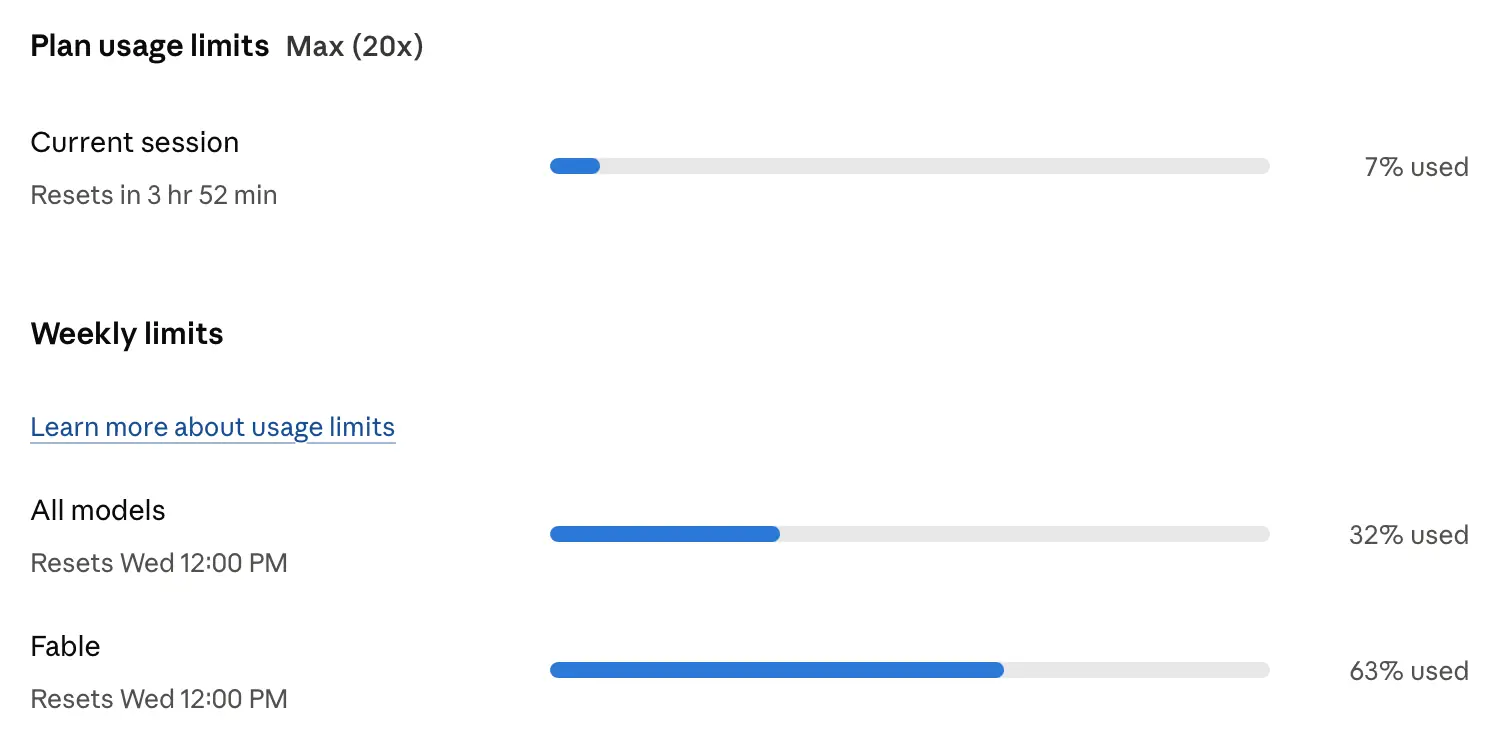
26. sqlite-utils 4.0rc2, mostly written by Claude Fable (for about $149.25) (simonwillison.net)
I wrote about the sqlite-utils 4.0rc1 release a couple of weeks ago. Since we only have Claude Fable on our Max subscriptions for a few more days, I decided to …

28. Egg consumption inversely correlated with Alzheimer's (pubmed.ncbi.nlm.nih.gov)
In this health-conscious population, moderate egg consumption was associated with a significantly lower risk of Alzheimer's disease. These findings suggest a potential neuroprotective benefit of nutrients found in eggs when consumed as part of a balanced diet.