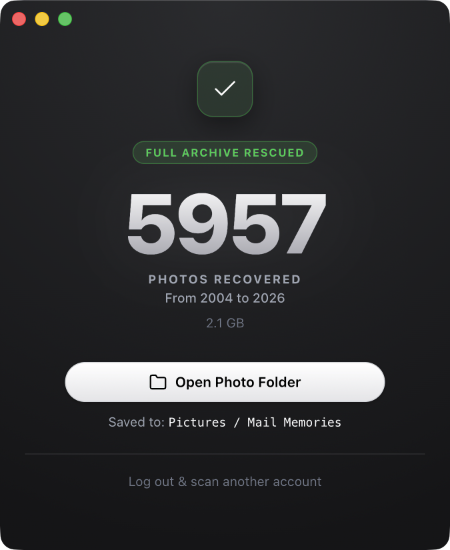
Let Claude (or any LLM) actually watch a video — scene-aware, deduplicated frames + transcript, from a URL or local file. Runs locally, MIT. - HUANGCHIHHUNGLeo/claude-real-video
John Boepple settled in Muscatine, Iowa, where he produced pearl buttons made from freshwater mussel shells. His innovations brought economic prosperity to the town—and disaster to the local mussel populations
Reinforcement learning (RL) has become a central component of post-training large language models (LLMs), yet little is understood about how RL adaptation is distributed across transformer layers. Existing approaches typically update all model parameters uniformly, implicitly assuming that every layer contributes similarly to the gains obtained during RL post-training. In this work, we challenge this assumption through a systematic layer-wise study of RL training. Surprisingly, we find that training a single transformer layer can recover most of the gains achieved by full-parameter RL training, and in some cases even surpass it. To quantify this phenomenon, we introduce the quantity layer contribution, which measures the fraction of full RL improvement recovered by training a layer in isolation. Across seven models spanning two model families (Qwen3, Qwen2.5), three RL algorithms (GRPO, GiGPO, Dr. GRPO), and multiple task domains including mathematical reasoning, code generation, and agentic decision-making, we observe a remarkably stable pattern: RL gains are highly concentrated in a small subset of, and in many cases even a single, transformer layers. More strikingly, the same structural pattern consistently emerges: high-contribution layers concentrate in the middle of the transformer stack, while layers near the input and output ends contribute substantially less. The resulting layer rankings remain strongly correlated across datasets, tasks, model families, and RL algorithms.
132 pointsby tcp_handshaker111 days ago30 comments
Manufact builds and maintains mcp-use, the open-source SDK for building MCP servers, clients, and agents in TypeScript and Python, and Manufact Cloud for dep...
Meta is imposing spending controls on employee AI usage after internal costs approached billions of dollars in 2026, according to an internal memo reported by …
Late interaction makes retrieval more precise but turns every document into many vectors. Asymmetric quantization keeps query vectors precise and stores document vectors as binary signs, cutting corpus storage 32x while holding 89.65 vs 90.26 NDCG@10.
Eliminate the overhead and lack of idempotency of a full Windows system in automated testing. A practical guide to configuring WinPE and QEMU for lightning-fast boot, automating kernel debugging, and avoiding KDNET pitfalls.