1. Qwen-AgentWorld: Language World Models for General Agents (arxiv.org)

A world model predicts environment dynamics based on current observations and actions, serving as a core cognitive mechanism for reasoning and planning. In this work, we investigate how world modeling based on language models can further push the boundaries of general agents. (i) We first focus on building foundation models for agentic environment simulation. We introduce Qwen-AgentWorld-35B-A3B and Qwen-AgentWorld-397B-A17B, the first language world models capable of simulating agentic environments covering 7 domains via long chain-of-thought reasoning. Leveraging more than 10M environment interaction trajectories of 7 domains in real-world environments, we develop Qwen-AgentWorld through a three-stage training pipeline: CPT injects general-purpose world modeling capabilities from the state transition dynamics and augmented professional corpora, SFT activates next-state-prediction reasoning, and RL sharpens simulation fidelity through a tailored framework with hybrid rubric-and-rule rewards. To evaluate language world models, we present AgentWorldBench, a comprehensive benchmark constructed from real-world interactions of 5 frontier models on 9 established benchmarks. Empirical results demonstrate that Qwen-AgentWorld significantly outperforms existing frontier models. (ii) Beyond foundation models, we further investigate two complementary paradigms through which world modeling enhances general agents. First, as a decoupled environment simulator, Qwen-AgentWorld supports scalable and controllable simulation of thousands of real-world environments for agentic RL, yielding gains that surpass real-environment training alone. Second, as a unified agent foundation model, world-model training acts as a highly effective warm-up that improves downstream performance across 7 agentic benchmarks. Code: https://github.com/QwenLM/Qwen-AgentWorld

2. Usbliter8: an A12/A13 SecureROM Exploit (ps.tc)

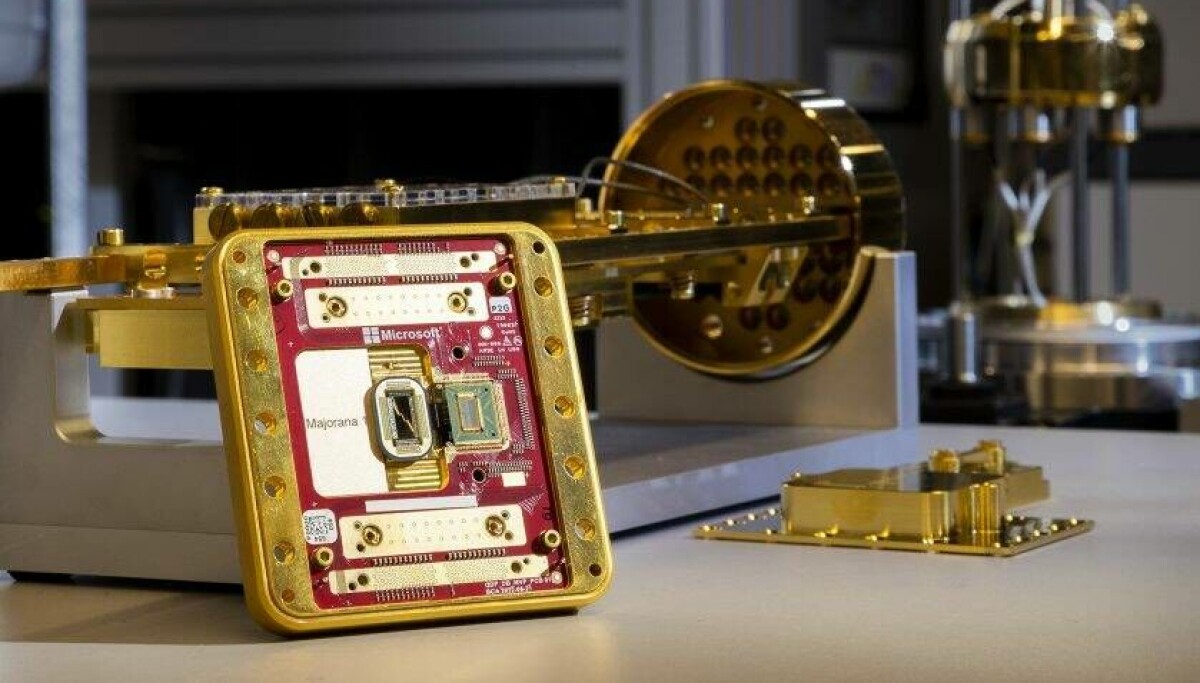
This write-up details a novel iPhone BootROM vulnerability discovered and exploited by our team. It covers the underlying bug, the associated exploitation techniques, and the post-exploitation steps required...

10. Statistics that live in your SQL (kolistat.com)

A tour of the-stats-duck v0.6.0: a one-shot data profiler, regression and bootstrap CIs in plain SQL, ten new distributions, and SAS/XPT imports that got 52x faster — with live Bedevere demos you can poke at.

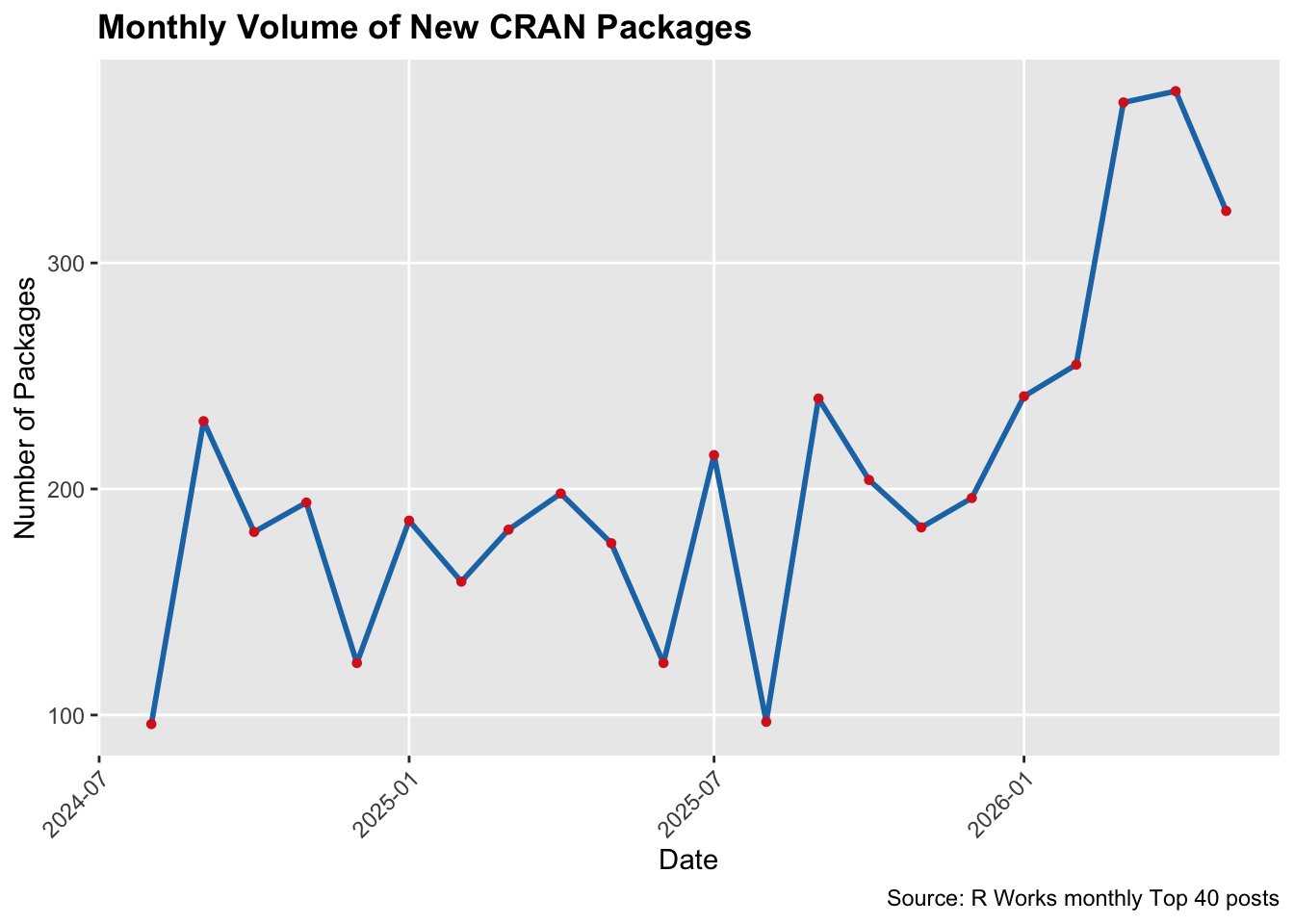
17. Too many R packages: CRAN is inundated with submissions (rworks.dev)

CRAN continues to be the most accessible repository for statistical knowledge on the planet, and the number of new packages being accepted by CRAN is growing faster than ever. But, is the R community really benefiting from this new growth?

19. Wikipedia Workers to Seek Union Recognition (www.cwu.org)

COMMUNICATION WORKERS UNION
24/06/2026
FOR IMMEDIATE RELEASE


Wikipedia workers in Britain are setting a “global first” by becoming the first body of workers at the online encyclopaedia to seek union recognition.

British-based employees at the Wikimedia Foundation (WMF) wrote a letter to

29. Self-Harness: Harnesses That Improve Themselves (arxiv.org)

The performance of LLM-based agents is jointly shaped by their base models and the harnesses that mediate their interaction with the environment. Because different models exhibit distinct behaviors, effective harness design is inherently model-specific. Yet agent harnesses are still largely engineered by human experts, a paradigm that scales poorly as modern LLMs become increasingly diverse and rapidly evolving. In this paper, we introduce Self-Harness, a new paradigm in which an LLM-based agent improves its own operating harness, without relying on human engineers or stronger external agents. We operationalize Self-Harness as an iterative loop with three stages: Weakness Mining, which identifies model-specific failure patterns from execution traces; Harness Proposal, which generates diverse yet minimal harness modifications tied to these failures; and Proposal Validation, which accepts candidate edits only after regression testing. We instantiate Self-Harness on Terminal-Bench-2.0 using a minimal initial harness and three base models from diverse families: MiniMax M2.5, Qwen3.5-35B-A3B, and GLM-5. Across all three models, Self-Harness consistently improves performance, with held-out pass rates increasing from 40.5% to 61.9%, 23.8% to 38.1%, and 42.9% to 57.1%, respectively. Qualitative analyses further show that Self-Harness does not simply add generic instructions, but effectively turns model-specific weaknesses into concrete, executable harness changes. These results suggest a path toward LLM-based agents that are not merely shaped by their harnesses, but can also participate in reshaping them.

Article Details

Browse by Date

Type to search HN and engineering blog articles
Press Escape to close  |  ↑↓ to navigate  |  Enter to open