

2. Fired by Google for Creating the Google Workspace CLI (twitter.com)
Two months ago I was fired by Google for creating the Google Workspace CLI. It went viral, hit #1 on Hacker News, gained thousands of GitHub stars and many thousands of actual users in just a couple days.
It was an incredible, confusing journey, from directors and leaders asking https://t.co/VprDW9DO9y
It was an incredible, confusing journey, from directors and leaders asking https://t.co/VprDW9DO9y
3. FUTO Swipe – A new swipe typing model (swipe.futo.tech)

5. In memory of the man who put red and green squiggles under words (devblogs.microsoft.com)
Starting in Word and expanding to nearly every other word processor, and even things that aren't word processors.
6. Jerry's Map (www.jerrysmap.com)
7. Israel targeted Gaza children resulting in genocide, UN inquiry says (www.reuters.com)
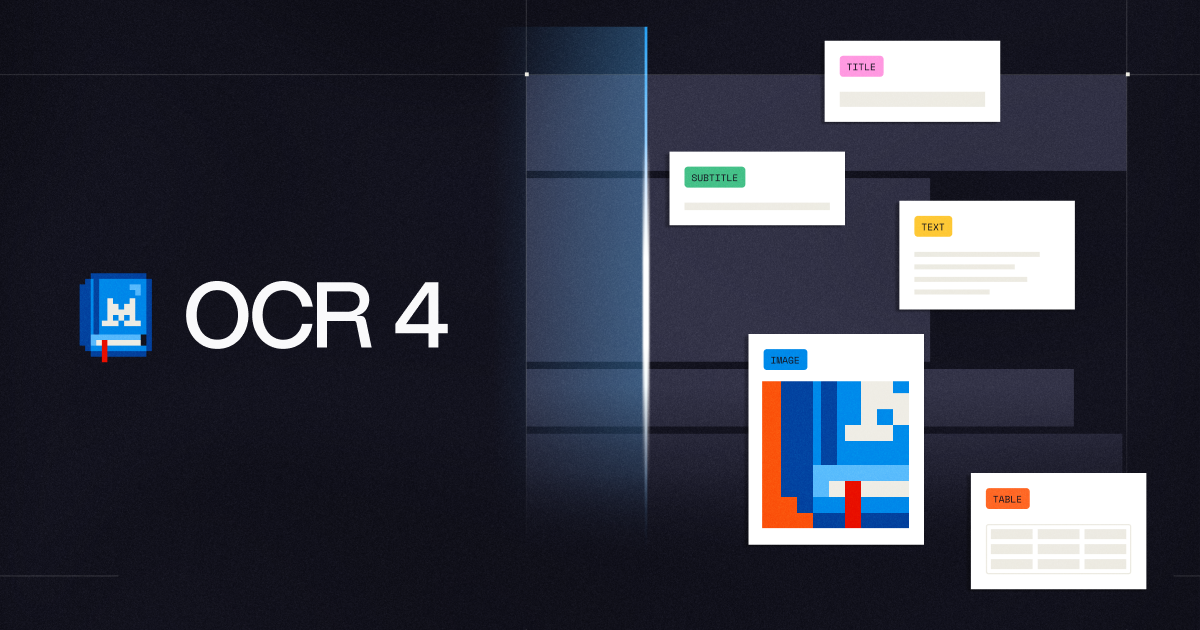
8. Mistral OCR 4 (mistral.ai)
Mistral OCR 4 delivers enterprise document AI with 170-language support, bounding boxes, and self-hosted deployment.
9. Unlimited OCR: One-Shot Long-Horizon Parsing (github.com)
Unlimited OCR Works: Welcome the Era of One-shot Long-horizon Parsing. - baidu/Unlimited-OCR
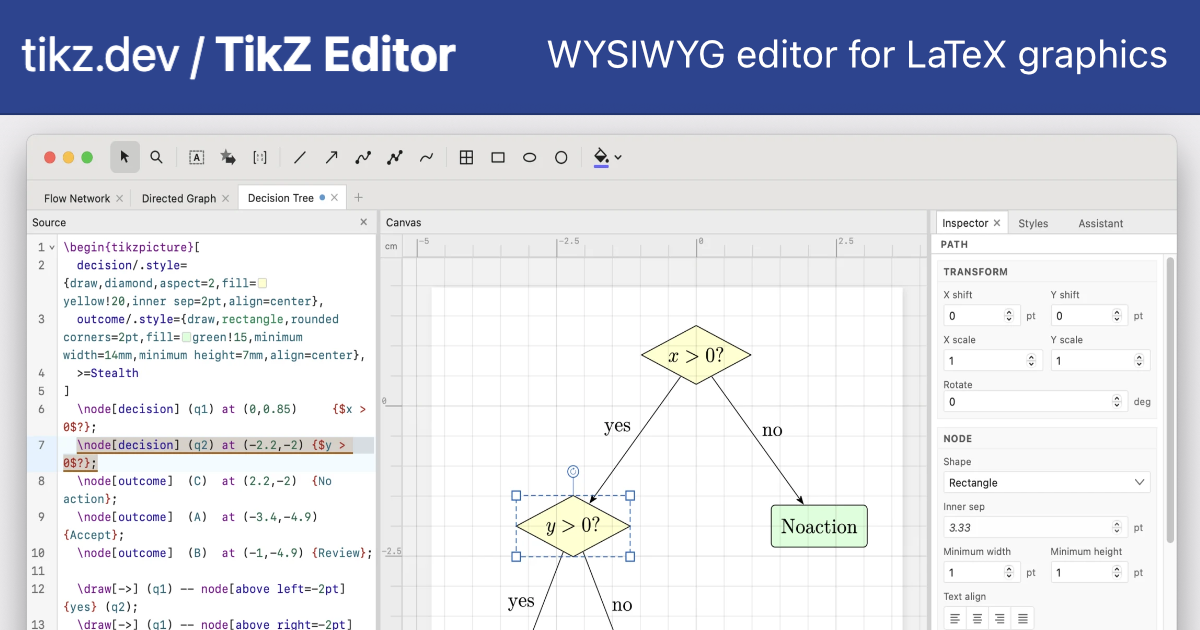
10. Show HN: TikZ Editor – WYSIWYG editor for figures in LaTeX (tikz.dev)
Free WYSIWYG editor for TikZ diagrams in LaTeX. Drag elements and the TikZ code updates instantly, without disturbing your formatting.
11. The Coming Loop (lucumr.pocoo.org)
Loops, harnesses, and why even loop skeptics may end up with them.

13. Crypto in 2026: Oh, This Is the Bad Place (www.stephendiehl.com)
Personal blog of Stephen Diehl - Software engineer writing about technology, programming, and the future

14. VibeThinker: 3B param model that beats Opus 4.5 on reasoning with novel SFT+GRPO (arxiv.org)
This technical report introduces VibeThinker-3B, a compact dense model with 3B parameters developed to investigate how far verifiable reasoning can be pushed within a strictly small-model regime. Building upon the Spectrum-to-Signal post-training paradigm, we systematically enhance the model through an optimized pipeline that includes curriculum-based supervised fine-tuning, multi-domain reinforcement learning, and offline self-distillation. Experimental evaluations demonstrate that VibeThinker-3B achieves frontier-level performance on highly demanding verifiable tasks. Specifically, it attains a score of 94.3 on AIME26 (improving to 97.1 with claim-level test-time scaling), an 80.2 Pass@1 on LiveCodeBench v6, and exhibits strong out-of-distribution generalization with a 96.1\% acceptance rate on recent unseen LeetCode contests. This effectively places it in the performance band of first-tier reasoning systems, matching or exceeding flagship models that are orders of magnitude larger, such as DeepSeek V3.2, GLM-5, and Gemini 3 Pro. Furthermore, a score of 93.4 on IFEval confirms that this extreme reasoning enhancement does not compromise strict instruction controllability. Extending our previous 1.5B work, these findings motivate the Parametric Compression-Coverage Hypothesis, which views verifiable reasoning as compressible into compact reasoning cores, while open-domain knowledge and general-purpose competence require broad parameter coverage over facts, concepts, and long-tail scenarios. This perspective suggests that compact models are not merely deployment-efficient substitutes, but a complementary path toward frontier-level performance in parameter-dense capability regimes.

15. The worthlessness of Vitamin D is mildly exaggerated (dynomight.net)
Some skepticism of vitamin D skepticism
16. Printing Gaussian Splats (www.patreon.com)
A while ago Teng Xu from crysta.ai contacted me and offered to print one of my insects as a present. Ever since I'm fascinated by the proces
17. AI's Affordability Crisis (blog.dshr.org)

18. MSG Made Dossier on Activists Who Opposed Facial Recognition (www.404media.co)
The document, titled “Facial Recognition Activists.docx,” includes specific activists’ comments about MSG's facial recognition program and tweets criticizing it.
19. Will It Mythos? (swelljoe.com)
OK, so Mythos finds really challenging security bugs, right? That’s why it’s cordoned off from the hoi polloi, to protect the world from such a powerful finder of exploits.
I am skeptical of the reasons given publicly, I suspect it’s really just so much more expensive to operate than their current models that they don’t want to offer it broadly, yet, given the difficulty they’ve had growing capacity to keep up with use.
I am skeptical of the reasons given publicly, I suspect it’s really just so much more expensive to operate than their current models that they don’t want to offer it broadly, yet, given the difficulty they’ve had growing capacity to keep up with use.

20. California AB 2047 makes 3d printers off-limits to students, educators, business (www.the3dprintingnerd.com)
A plain-language guide to AB2047 you can share with your school board, PTA, or neighbor. Learn what

21. Claude Tag (www.anthropic.com)
Anthropic is an AI safety and research company that's working to build reliable, interpretable, and steerable AI systems.
22. In Praise of Memcached (jchri.st)

23. 1,700 Free Online Courses from Top Universities (www.openculture.com)
Take online courses from the world’s top universities for free. Below, you will find 1,700 free online courses from universities like Yale, MIT, Harvard, Oxford and more.
Note: This page includes a lot of Massive Open Online Courses (MOOCs).
Note: This page includes a lot of Massive Open Online Courses (MOOCs).
25. Swift Package Index Joins Apple (swiftpackageindex.com)

26. Elevated error rate across multiple models (status.claude.com)
Claude's Status Page - Elevated error rate across multiple models.
27. The new HTTP QUERY method explained (kreya.app)
28. OpenAI DayBreak – GPT-5.5-Cyber (openai.com)
29. Giant Banana Pulled Over: Driver Says Cops Have Stopped Him 100s of Times (cowboystatedaily.com)
For 15 years, Steve Braithwaite has driven a 23-foot banana across the country and, on Wednesday, just like hundreds of times before, he was pulled over…

30. Anthropic updates their terms to verify age or identity (www.anthropic.com)
Anthropic is an AI safety and research company that's working to build reliable, interpretable, and steerable AI systems.