

2. Changing How We Develop Ladybird (ladybird.org)
Ladybird is changing how code enters the project as we prepare to ship a browser to real users.

4. Gov.uk goes Dutch on payments as it dumps Stripe (www.theregister.com)
Means residents can skip the credit card and use
5. Mouseless – keyboard-driven control of macOS/Linux/Windows (mouseless.click)
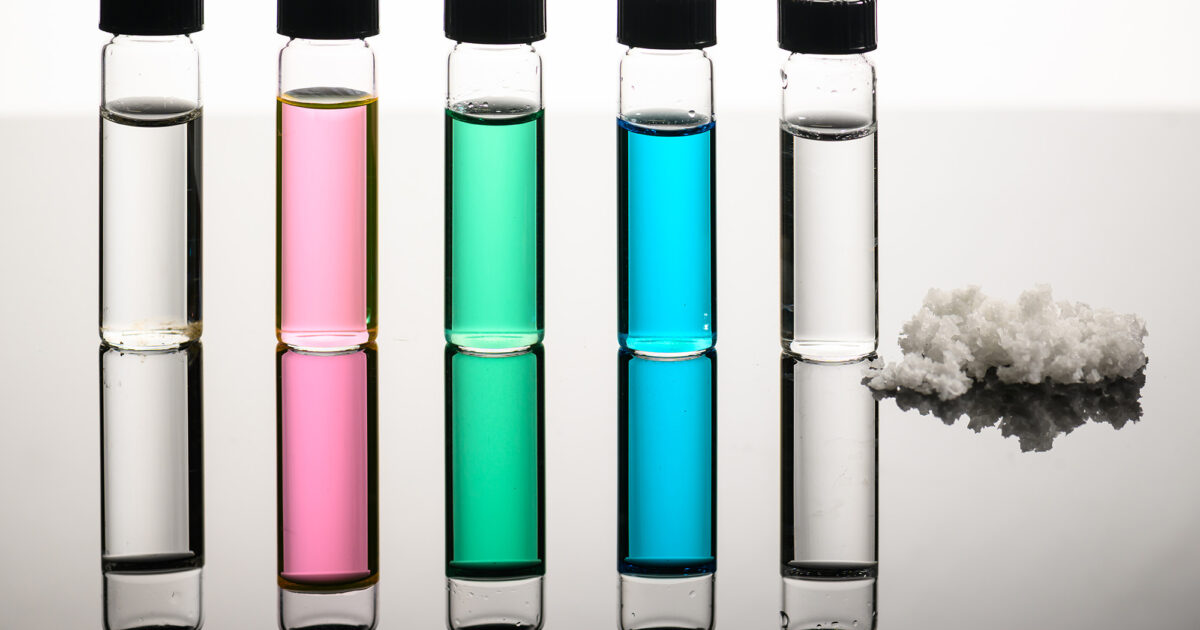
6. New method turns ocean water into drinking water, without waste (www.rochester.edu)
The energy-efficient desalination system produces fresh water without chemical additives and transforms leftover salts into useful materials.
7. Did Claude Increase Bugs in Rsync? (alexispurslane.github.io)
8. pg_durable: Microsoft open sources in-database durable execution (github.com)
Contribute to microsoft/pg_durable development by creating an account on GitHub.

9. Tracing a powerful GNSS interference source over Europe (arxiv.org)
This paper analyzes and identifies a space-based Global Navigation Satellite System (GNSS) interference source that has caused scores of powerful transient wide-area interference events over continental Europe, Greenland, and Canada since 2019. While terrestrial or near-terrestrial sources are primarily responsible for the recent uptick in GNSS interference worldwide, space-based interferers are of special concern given their potential for vast geographic reach and their portent of a qualitative escalation in GNSS interference. Based on data collected between 2019 and 2026 from a network of terrestrial GNSS reference stations, this paper (1) develops a received-power-based detection framework; (2) details the spatial, temporal, and spectral patterns of wide-area interference events caused by the source; (3) presents and analyzes identification techniques that blend received-power and time-difference-of-arrival measurements; and (4) applies these techniques to confidently identify the GNSS interference source as a constellation of Russian early warning satellites in Molniya ("lightning") orbits.
11. C++: The Documentary Released Today (herbsutter.com)
C++: The Documentary premiered today on YouTube, and it was great to be on the live chat with Bjarne and many other key folks who participated in C++’s history. I’m honored to have been…
12. Gemma 4 QAT models: Optimizing compression for mobile and laptop efficiency (blog.google)
We’re releasing Gemma 4 quantization-aware training checkpoints, reducing memory requirements and improving on-device performance.

13. Stop Using Conventional Commits (sumnerevans.com)
You’ve almost certainly encountered Conventional Commits before. It may have reared its ugly head in the changelog of an open source project you’ve used. It may have been the enforced commit format for an open source project you contributed to. A lot of people swear by it. I swear at it. Even though it is used by a large number of popular open source projects, Conventional Commits is an actively bad standard which encourages focus on the wrong things and fails to deliver on its promises.
14. I tested every IP KVM in my Homelab (www.jeffgeerling.com)
Since the PiKVM came out in 2017, there
15. Meta enables adb on deprecated Portal devices (fb.watch)
16. Google to pay SpaceX $920M a month for compute capacity at xAI data centers (www.cnbc.com)
Ahead of a planned IPO, SpaceX inked a deal to rent compute capacity to Google for $920 million per month for 32 months.

17. Dutch gov't will only allow European company to operate DigiD platform (nltimes.nl)
The next company to manage part of DigiD must be European, State Secretary Eric van der Burg of Interior wrote in a letter to parliament. The tender for the contract after August 2028 will be conducted via the Defense and Security Procurement Act (ADV).“The reason for this is that the ADV offers more possibilities than a regular European tender to limit risks to national security,” said the VVD Cabinet member. The ADV stipulates that only European companies are eligible to guarantee security.
18. Alibaba/Open-Code-Review (github.com)
Battle-tested at Alibaba's scale. Hybrid architecture code review tool: deterministic pipelines + LLM Agent, precise line-level comments, built-in fine-tuned ruleset (NPE, thread-safety, XSS, S...
19. Three of our worst VC stories (twitter.com)
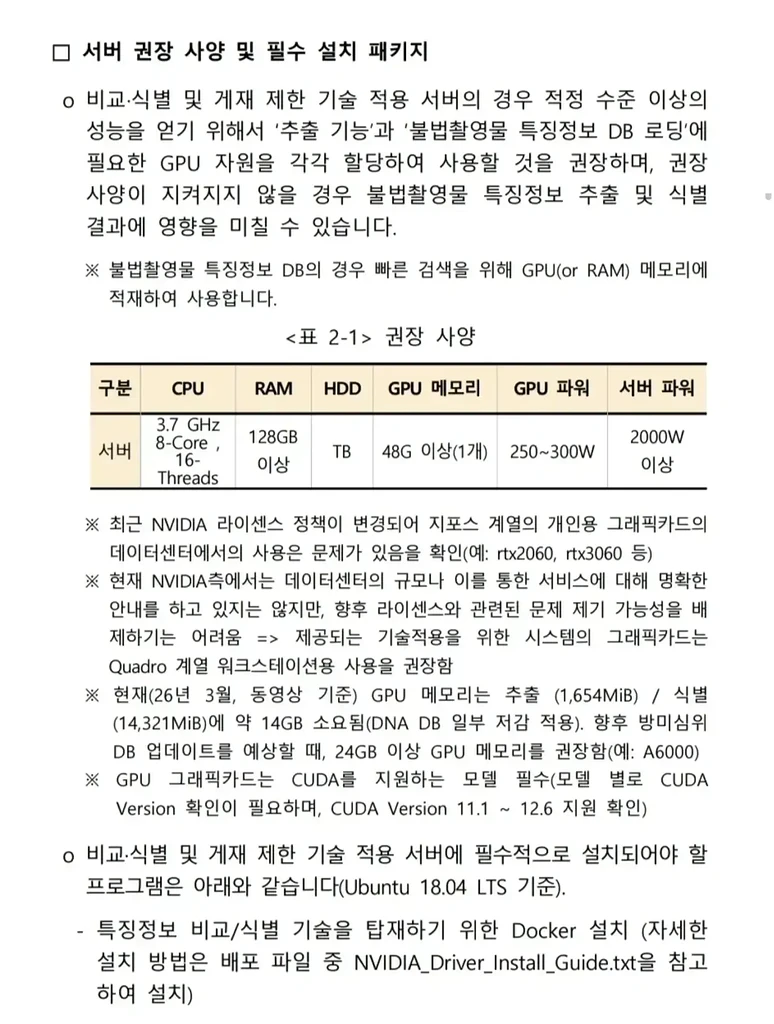
20. South Korean Forums Will Need to Scan Every Images with AI Censorship Tools (discuss.privacyguides.net)
Due to recent regulation changes (전기통신사업법), the South Korean government is requiring internet communities and forum owners to scan every user uploaded images and videos on their website, by AI. The hardware to run these AI models are also not provided by government, website owners have to buy datacenter grade Nvidia GPUs by themselves, putting financial pressure to small businesses and forums. Websites will need to implement these hardware and software features, starting immediately from July ...
21. India's surprise baby bust is a warning to the world (www.economist.com)
22. Do Transformers Need Three Projections? Systematic Study of QKV Variants (arxiv.org)
Transformers have become the standard solution for various AI tasks, with the query, key, and value (QKV) attention formulation playing a central role. However, the individual contribution of these three projections and the impact of omitting some remain poorly understood. We systematically evaluate three projection sharing constraints: a) Q-K=V (shared key-value), b) Q=K-V (shared query-key), and c) Q=K=V (single projection). The last two variants produce symmetric attention maps; to address this, we also explore asymmetric attention via 2D positional encodings. Through experiments spanning synthetic tasks, vision (MNIST, CIFAR, TinyImageNet, anomaly), and language modeling (300M and 1.2B parameter models on 10B tokens), we discovered that our transformers perform on par or occasionally better than the QKV transformer. In language modeling, Q-K=V projection sharing achieves 50% KV cache reduction with only 3.1% perplexity degradation. Crucially, projection sharing is complementary to head sharing (GQA/MQA): combining Q-K=V with GQA-4 yields 87.5% cache reduction, while Q-K=V + MQA achieves 96.9%, enabling practical on-device inference. We show that Q-K=V preserves quality because keys and values can occupy similar representational spaces and attention operates in a low-rank regime, whereas Q=K-V breaks attention directionality. Our results systematically characterize projection sharing as an underexplored instance of weight tying in attention, with direct, quantifiable inference memory benefits, particularly valuable for edge deployment. The code is publicly available at https://github.com/anushamadan02/Do-Transformers-Need-3-Projections
23. US tobacco firms applied tobacco strategies to globalize ultra-processed foods (ajph.aphapublications.org)
24. My Agent Skill for Test-Driven Development (www.saturnci.com)
AI agents tend to be, at least as of this writing, lousy at writing tests. The tests they write are often vague, cryptic, overcomplicated, hacky, disorganized, ...
25. Azure Linux 4.0 is Microsoft's first general-purpose Linux (www.boxofcables.dev)
Microsoft’s in-house Linux, the distribution that grew out of CBL-Mariner, just hit public preview as a general-purpose cloud OS you can run on any Azure VM. Here is why that is a real step in Microsoft’s Linux journey, not just a version bump.
26. ESP32 Bit Pirate, a Hardware Hacking Tool with WebCLI That Speaks Every Protocol (github.com)
A Hardware Hacking Tool with Web-Based CLI That Speaks Every Protocol - geo-tp/ESP32-Bit-Pirate
27. Redis 8.8: New array data structure, rate limiter, performance improvements (redis.io)
Redis 8.8 is now available in Open Source. Explore the new array data type, window counter rate limiter, streams NACK, and more performance-focused updates.

28. Fine-tuning an LLM to write docs like it's 1995 (passo.uno)
In my predictions for 2030 I wrote that tech writers would be using specialized LLMs, running locally on powerful hardware. I see hints of this move to “local first” among engineering pundits, but we’re not there yet, in part because of how much more powerful connected frontier models are. That doesn’t mean we can’t experiment, though. That’s precisely what I did last week, trying to fine-tune an instruct model to write like a software technical writer from the 80s and 90s.
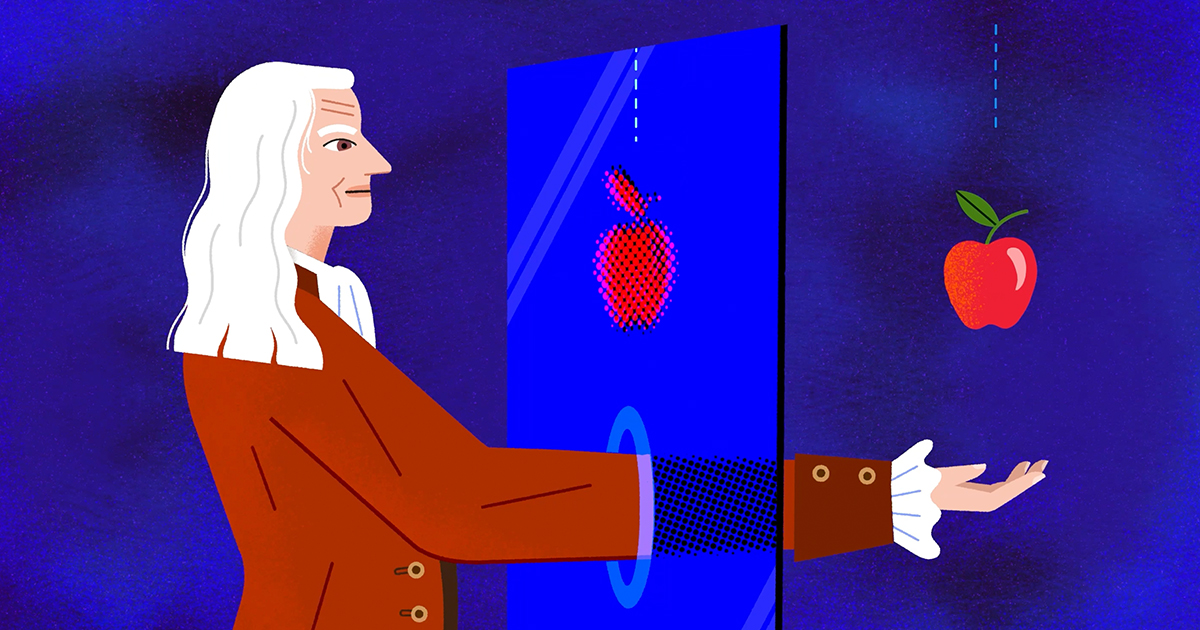
29. Entanglement Builds Space-Time. Now "Magic" Gives It Gravity (www.quantamagazine.org)
In holographic theories, physicists may have traced the pliability of space-time to its quantum roots: a measure of quantumness known as “magic.”

30. Programmers will document for Claude, but not for each other (blog.plover.com)
From the highly eclectic blog of Mark Dominus