Almost exactly one year ago, we announced Roto, a JIT-compiled embedded scripting language for Rust applications. A lot has happened since then that we'd like to tell you about!
💡Along with this post, we published Roto v0.11.0! You can check out the changelog for that
In this article we present pictorially the foundation of differential geometry which is a crucial tool for multiple areas of physics, notably general and special relativity, but also mechanics, thermodynamics and solving differential equations. As all the concepts are presented as pictures, there are no equations in this article. As such this article may be read by pre-university students who enjoy physics, mathematics and geometry. However it will also greatly aid the intuition of an undergraduate and masters students, learning general relativity and similar courses. It concentrates on the tools needed to understand Maxwell's equations thus leading to the goal of presenting Maxwell's equations as 3 pictures.
Scientists have developed a solar desalination system that turns seawater into drinking water without creating environmentally damaging brine. Special laser-textured metal panels use sunlight to evaporate water while automatically moving salt deposits away from the working surface, preventing clogging. The process was successfully tested with water from three oceans and can recover nearly all salts as solids. Those leftover materials could even become a source of valuable lithium for batteries.
I want to start this post with an admission that's a little uncomfortable, which is that the platform I built specifically to help other people solve their distribution problem is itself struggling with exactly the same distribution problem I built it to solve. ClaudeFolio is live, the submissions feature works, the upvoting works, the design is clean, and the rules are exactly the rules I wanted them to be. The only thing missing is the part where lots of people know it exists. And that part, as I'm learning the hard way, is the part that actually matters...
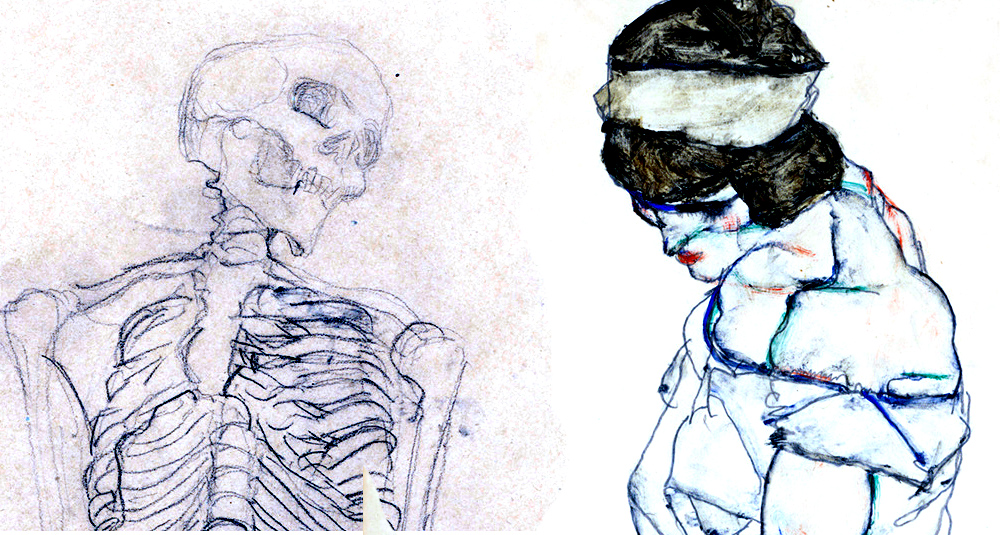
January 31, 2018 – The year 2018 marks the centenary of the deaths of the Austrian artists Gustav Klimt (born in 1862) and Egon Schiele (born in 1890). Even after a
Large language models have achieved remarkable capabilities through scaling, and this paper does not challenge that. It instead investigates a different question: once large models already exist, can they become more accessible to environments with substantially smaller hardware resources? The motivation came from deployment concerns rather than architecture research. Many organizations operate under hardware, budget, security, or closed-network constraints that limit access to large accelerator clusters, and as models continue to improve, deployment accessibility may matter as much as capability itself. This paper presents Rotary GPU, an exploratory execution approach derived from a previously disclosed rotary-based accelerator residency concept. A public validation was conducted using a Qwen3.6-35B-A3B-class Mixture-of-Experts model executed locally on a consumer laptop with an RTX 4060 Laptop GPU containing 8 GB of VRAM. Under the primary configuration, the system generated 2048 output tokens while maintaining approximately 6.3 GB of VRAM usage and an observed decode throughput of 21.06 tokens per second. The goal is not to replace data-center infrastructure but to explore whether some capabilities of large models can be brought closer to environments where such infrastructure is unavailable. The results should be read as exploratory rather than definitive, but they suggest deployment accessibility deserves continued investigation as these models evolve.