
3. Show HN: Write your BPF programs in Go, not C (github.com)
Write your BPF programs in Go, not C. gobee transpiles a Go subset to BPF C and generates typed cilium/ebpf bindings. - boratanrikulu/gobee

4. C constructs that still don't work in C++ (lospino.so)
A 2026 sequel to C Constructs That Don
5. Show HN: OpenBrief – Local-first video downloader/summarizer (github.com)
Contribute to tantara/openbrief development by creating an account on GitHub.

6. Rising seas will swallow New Orleans. People need to start relocating now (www.cnn.com)
New Orleans is locked into a watery future which could see it surrounded by ocean as early as this century, according to a new analysis, which says the city must start planning how to relocate residents now to avoid chaos.
7. 2026 HIPAA Security Rule Update (medcurity.com)
What the 2026 HIPAA Security Rule actually changes — finalization status, real OCR enforcement signals, and the operational checklist healthcare IT teams need now.
8. Show HN: Geomatic – a command-driven geometry studio enabled with autodiff (www.tinyvolt.com)
9. GPT Guesses Between 1 and 100 (github.com)
When asked to pick a random number between 1 and 100, ChatGPT does not follow a random uniform distribution - exmergo/research-chatgpt-guesses-between-1-and-100

10. Everyone Against Us (2023) (www.chicagomag.com)
In this exclusive adaptation of his new book, a former public defender describes what it’s like advocating for the accused — and recounts the injustices he witnessed.

12. Launch HN: Chert (YC P26) – Twilio for iMessage (www.trychert.com)
Build and deploy AI on iMessage to reach people at scale while maintaining quality, trust, and personalized interaction. Backed by Y Combinator.
13. I manage teams without a single call (orchidfiles.com)
What I dislike most is short calls. When someone tells me, “I have a slot tomorrow at 11:30, let’s do a 10-minute call”. That’s the worst thing possible. For the other person, it’s just another call, one of dozens they have that day. But for me,

14. Why Do We Sleep Under Blankets, Even on the Hottest Nights? (2017) (www.atlasobscura.com)
There's great comfort in being covered.
15. Notes about reading messages with the Python email packages (utcc.utoronto.ca)
16. The physicists who convinced Fermilab to send Brazil's emails (buttondown.com)
Neither the first nor the fastest international connection, it was the one that lasted.
17. you_can::turn_off_the_borrow_checker (docs.rs)
You can’t “turn off the borrow checker” in Rust, and you shouldn’t want to. Rust’s references aren’t pointers, and the compiler is free to decimate code that tries to use references as though they are. If you need raw pointer behaviour in Rust, don’t use this, use Rust’s actual raw pointers, which don’t make the same aliasing guarantees to the compiler. However, if you would like to pretend the borrow checker doesn’t exist for educational purposes and never in production code, this macro that will suppress many (though not all) borrow checker errors in the code it’s applied to.

18. Alaska's oil revival sparks a new energy rush Into the Arctic (fortune.com)
Alaska has seen a resurgence of oil industry interest — and investment — driven by discoveries suggesting the state’s crude potential is far greater than previously expected.
19. Ninth Circuit Panel Goes Out of Its Way to Question Section 230–DOE vs. Meta (blog.ericgoldman.org)
[I’ve been sitting on this ruling for almost a month because blog posts like this are time-consuming and emotionally draining to write. It may not look it, but this post took about 6 hours to write.] This case involves a...

20. CPPL: A Circuit Prompt Programming Language (arxiv.org)
Large language models (LLMs) have shown promise in register-transfer level (RTL) design automation, but direct RTL generation remains difficult to validate, optimize, and integrate with compiler-based hardware design flows. Hardware compiler infrastructures such as CIRCT provide typed intermediate representations, legality checks, and optimization passes, yet current LLMs struggle to emit raw compiler IR because of MLIR syntax, SSA discipline, dialect-specific operations, and strict width constraints. This paper presents CPPL, a compiler-mediated design framework that turns LLM-assisted hardware generation into a statically checkable frontend problem rather than an unconstrained RTL text-generation task. CPPL combines a Python frontend DSL for declaring module interfaces and hierarchy with CPPL IR, a JSON-based circuit IR designed to expose compiler-visible structure while remaining accessible to LLMs. The compiler infers operation widths from declared module ports, validates generated IR, checks hierarchy and port bindings, and deterministically lowers the result to CIRCT for synthesizable Verilog generation. On the RTLLM benchmark, CPPL improves functional correctness over direct Verilog and direct CIRCT IR generation, while CIRCT optimization reduces post-synthesis AIG node counts. These results show that a compiler-mediated interface can make LLM-assisted hardware design more reliable, analyzable, and amenable to backend optimization. CPPL is available at https://github.com/SawyDust1228/CPPL.

21. He Lost It at the Movies (www.theideasletter.org)
What begins as a study of the combative film critic A.S. Hamrah becomes a broader meditation on the fate of criticism in an age of streaming, commercialization, and online discourse.…
22. Anthropic Cofounder Chris Olah's Remarks on Pope Leo XIV's "Magnifica Humanitas" (www.anthropic.com)
The full text of Chris Olah's remarks on the Pope's encyclical on AI
23. The Coming Layoffs and the Revenge of the Measurers (www.hackyexperiments.com)
AI is gutting the middle of the org chart first. The cuts, the inequality runaway, and why proactive UBI is the only way through the backlash.
24. Show HN: Fungible – A local personal finance app in the terminal (github.com)
Terminal UI for personal finance — Plaid sync, CSV import, AI assistant, and MCP server - tomfunk/fungible

25. 1k-year-old dingo bones show that it was injured, cared for, and ritually buried (www.popsci.com)
The dog survived traumatic injuries, thanks to his Barkindji caretakers.

26. Ferrari Luce, Maranello's first ever electric car (www.topgear.com)
What were you expecting? Yeah, didn’t think so
27. Show HN: Volt – front end tooling for Phoenix that runs inside the BEAM (github.com)
Elixir-native frontend build tool — dev server, HMR, and production builds for JavaScript, TypeScript, Vue SFCs, and CSS. No Node.js required. - elixir-volt/volt
28. Riscrithm – An intuitive RISC-V assembler and optimizer coded in Go (github.com)
Riscrithm is a lightweight, low-boilerplate macro-assembly dialect that compiles straight down to pure, human-readable RISC-V assembly. It bridges the gap between the expressive syntax of high-leve...
29. The analog computer museum's online library (www.analogmuseum.org)
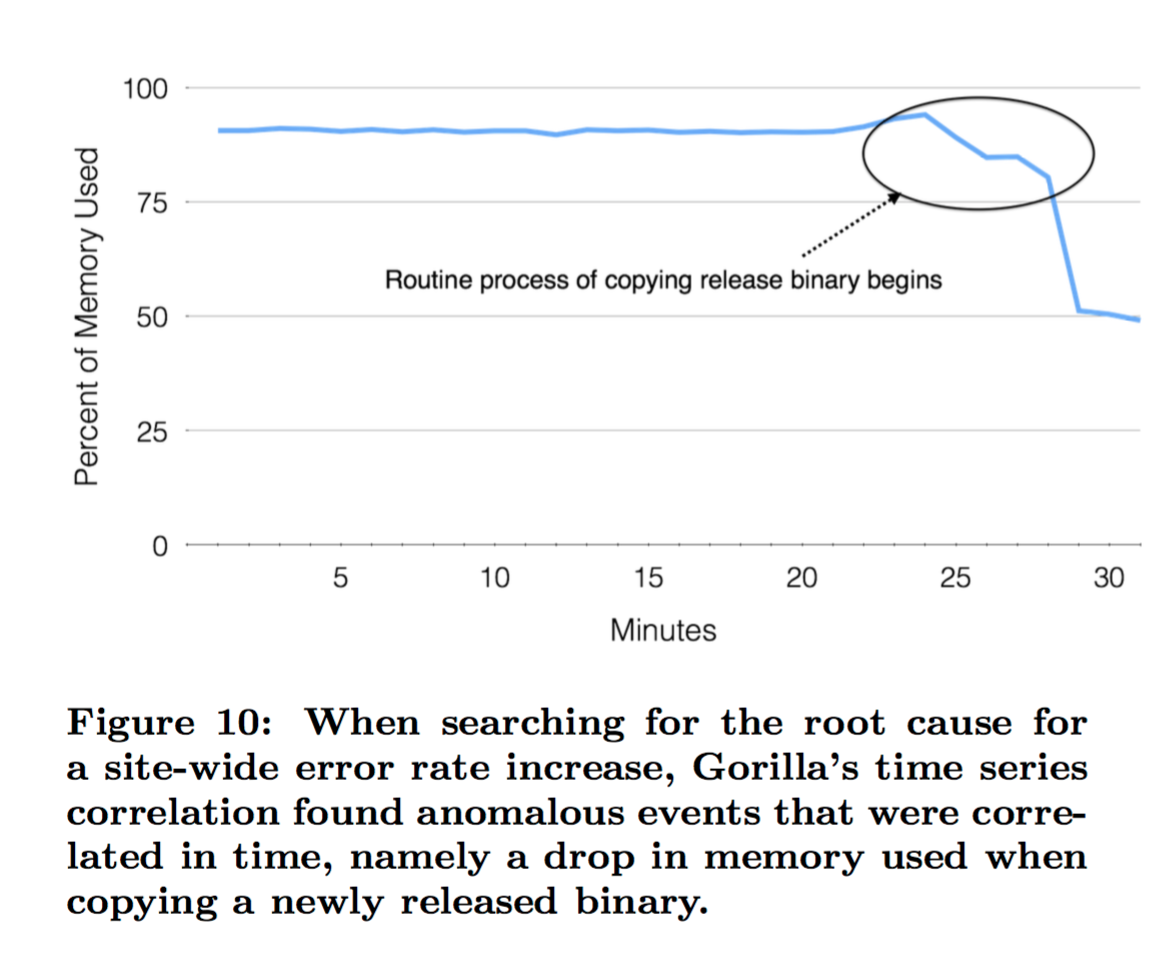
30. Gorilla: A fast, scalable, in-memory time series database (2016) (blog.acolyer.org)
Gorilla: A fast, scalable, in-memory time series database – Pelkonen et al. 2015 Error rates across one of Facebook’s sites were spiking. The problem had first shown up through an autom…