Over 460 million years ago, plants and mycorrhizal fungi formed a beneficial relationship below the soil surface that nurtured and protected plants while feeding the fungi and other organisms in the root zone of the plants.1 That relationship exists today for over ninety percent of terrestrial species in natural settings, allowing plants to survive harsh conditions of drought, diseases, temperature extremes, poor soil, and competition.
With the latest release of corecrypto, we’re publishing our implementations of quantum-secure ML-KEM and ML-DSA algorithms, along with the mathematical proofs we built to assure they are faithful to the FIPS 203 and FIPS 204 specifications. To advance the state of the art for assuring critical software, we're also publishing the formal verification libraries and tools that we created to achieve the strongest known correctness results for any widely-deployed production implementation of the relevant algorithms.
The real question of Elon Musk’s lawsuit against OpenAI was whether the company’s corporate transformation was cynical in intention or merely in outcome. Musk may have lost the case, but the trial was also a net negative for humanity.
101 pointsby littlexsparkee152 days ago67 comments
Transformer training systems are built around dense linear algebra, yet a nontrivial fraction of end-to-end time is spent on surrounding memory-bound operators. Normalization, activations, residual updates, reductions, and related computations repeatedly move large intermediate tensors through global memory while performing little arithmetic, making data movement an increasingly important bottleneck in otherwise highly optimized training stacks. We introduce CODA, a GPU kernel abstraction that expresses these computations as GEMM-plus-epilogue programs. CODA is based on the observation that many Transformer operators exposed as separate framework kernels can be algebraically reparameterized to execute while a GEMM output tile remains on chip, before it is written to memory. The abstraction fixes the GEMM mainloop and exposes a small set of composable epilogue primitives for scaling, reductions, pairwise transformations, and accumulation. This constrained interface preserves the performance structure of expert-written GEMMs while remaining expressive enough to cover nearly all non-attention computation in the forward and backward pass of a standard Transformer block. Across representative Transformer workloads, both human- and LLM-authored CODA kernels achieve high performance, suggesting that GEMM-plus-epilogue programming offers a practical path toward combining framework-level productivity with hardware-level efficiency.
A few years ago, I needed to save some cartridge space in a SNES project, and I did so by compressing that data with the LZ4 compression algorithm from 2012. I found that working within the constra…
<p>Every morning that we open our phones and laptops, we are staring pitifully at a necrotic digital organism.</p>
<p>It's sad and fucked up, no way around ...
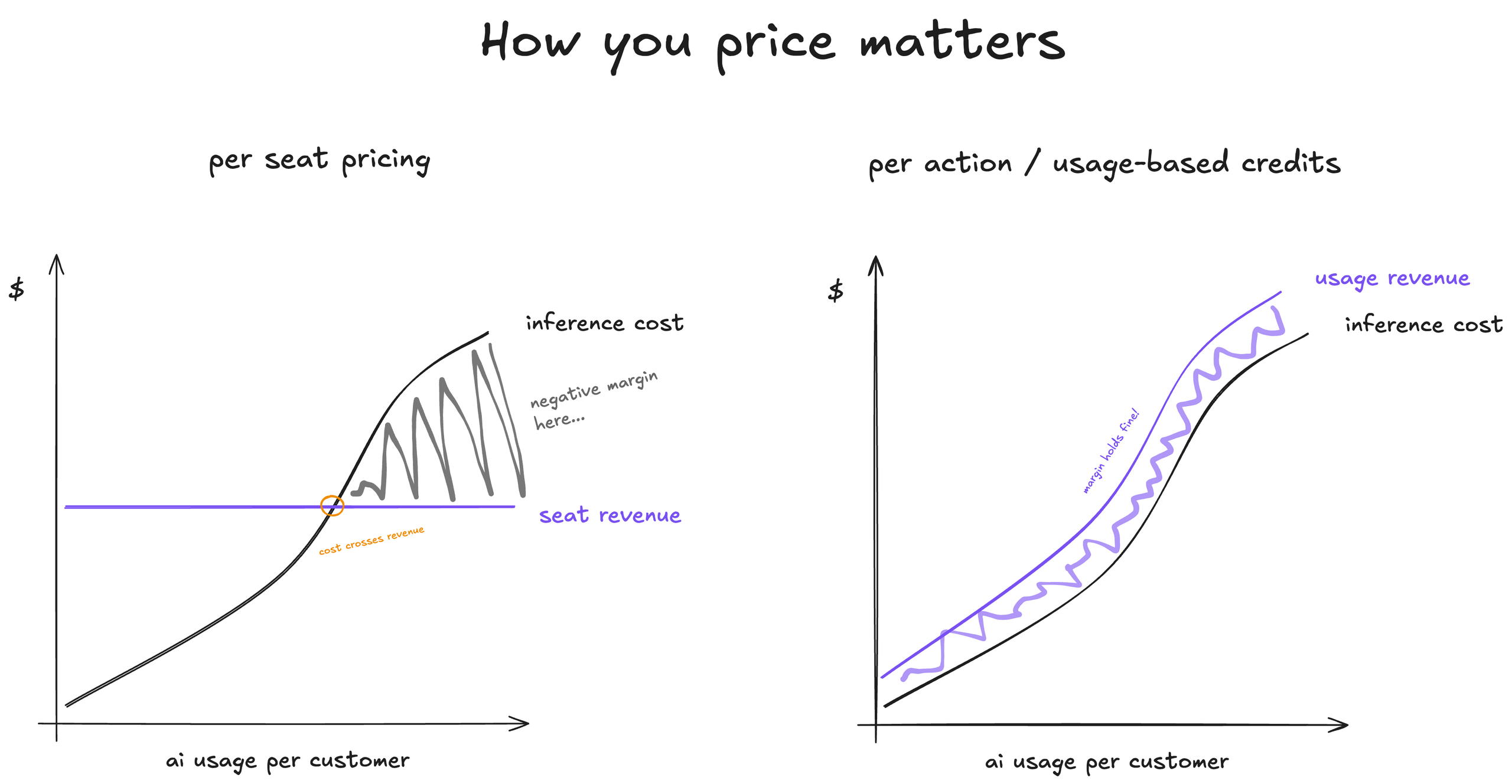
The current AI pricing was always going to go away. It just doesn’t make sense. Microsoft canceled internal Claude Code licenses this week (for whatever reason, even if it’s because they integrated it), Uber blew its entire 2026 AI budget in four months, and GitHub is dropping flat-rate plans across its products. You’ll see the […]
After five teen girls were targeted by AI-generated child sexual abuse material, Radnor Township High School in Pennsylvania has become a case study in how schools and police around the country grapple with how to response to deepfake crimes involving children.
The Free Software Foundation Europe has been granted permission to intervene at the Court of Justice of the European Union in the case T-359/25 - Apple aga...
U.S. Citizenship and Immigration Services today announced a new policy memo reiterating the fact that, consistent with long-standing immigration law and immigration court decisions, aliens seeking adjustment of status must do so through consular processing via the Department of State outside of the country.
Injection detectors deployed to protect LLM agents are calibrated on static, template-based payloads that announce themselves as override directives. We identify a systematic blind spot: when payloads are generated to mimic the domain vocabulary and authority structures of the target document, what we call domain camouflaged injection, standard detectors fail to flag them, with detection rates dropping from 93.8% to 9.7% on Llama 3.1 8B and from 100% to 55.6% on Gemini 2.0 Flash. We formalize this as the Camouflage Detection Gap (CDG), the difference in injection detection rate between static and camouflaged payloads. Across 45 tasks spanning three domains and two model families, CDG is large and statistically significant (chi^2 = 38.03, p < 0.001 for Llama; chi^2 = 17.05, p < 0.001 for Gemini), with zero reverse discordant pairs in either case. We additionally evaluate Llama Guard 3, a production safety classifier, which detects zero camouflage payloads (IDRcamouflage = 0.000), confirming that the blind spot extends beyond few-shot detectors to dedicated safety classifiers. We further show that multi-agent debate architectures amplify static injection attacks by up to 9.9x on smaller models, while stronger models show collective resistance. Targeted detector augmentation provides only partial remediation (10.2% improvement on Llama, 78.7% on Gemini), suggesting the vulnerability is architectural rather than incidental for weaker models. Our framework, task bank, and payload generator are released publicly.