Former Google CEO Eric Schmidt was booed multiple times Sunday while discussing artificial intelligence during a commencement speech at the University of Arizona. Other commencement speakers faced similar backlash for their AI comments, as new graduates face a daunting job market. NBC News’ Valerie Castro reports.
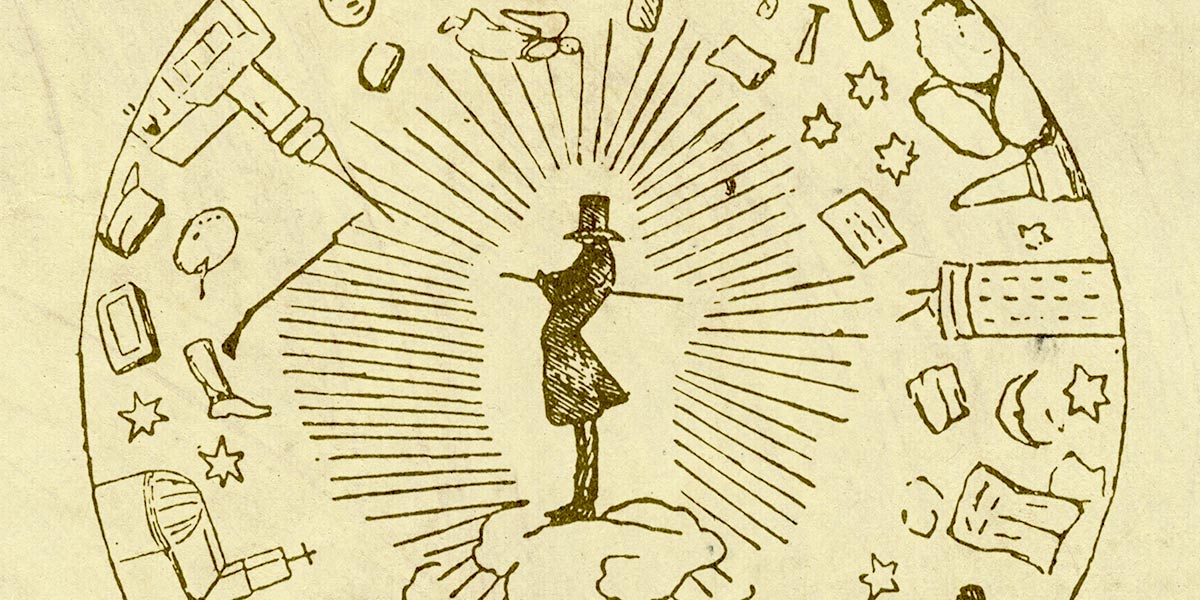
Charles Lutwidge Dodgson taught mathematics at Christ Church, Oxford, for twenty-six years. He wrote textbooks defending Euclid and treatises on symbolic logic. The children
New York state lawmakers are expected to place a new tax on luxury second homes in New York City, appeasing Mayor Zohran Mamdani and his progressive base as he moves to fund his ambitious agenda on the backs of the rich.
Emboldened by its blockade of the Strait of Hormuz, Iran is turning to one of the hidden arteries in the global economy: subsea cables beneath that carry vast internet and financial traffic between Europe, Asia and the Persian Gulf.
The popular version of this story has hardened into a fixed shape. NASA still runs the Voyagers on software written in a programming language nobody alive can read, kept going by a handful of engineers all in their eighties, with no one queued up to replace them. In our reading of the record, parts of […]
Pretraining corpora contain extensive discourse about AI systems, yet the causal influence of this discourse on downstream alignment remains poorly understood. If prevailing descriptions of AI behaviour are predominantly negative, LLMs may internalise corresponding behavioural priors, giving rise to self-fulfilling misalignment. This paper provides the first controlled study of this hypothesis by pretraining 6.9B-parameter LLMs with varying amounts of (mis)alignment discourse. We find that discussion of AI contributes to misalignment. Upsampling synthetic training documents about AI misalignment leads to a notable increase in misaligned behaviour. Conversely, upsampling documents about aligned behaviour reduces misalignment scores from 45% to 9%. We consider this evidence of self-fulfilling alignment. These effects are dampened, but persist through post-training. Our findings establish the study of how pretraining data shapes alignment priors, or alignment pretraining, as a complement to post-training. We recommend practitioners consider pretraining for alignment alongside capabilities. We share our models, data, and evaluations at AlignmentPretraining.ai.
In my work on Perfetto, a performance debugging tool, one question I get often is: “how do I split a Perfetto trace into multiple files?” Instead of answering directly, I say: “there isn’t an easy way to do that, but what’s leading you to collect traces large enough to want to split?” This is one of my golden rules at work. When a user asks me something “weird”: don’t answer the first version of the question. On the surface this might appear like I’m talking about the XY problem, but that stops one step short. It treats the user’s stated question as a puzzle to decode: figure out what they really meant, answer that, move on. I think we can go much further. Instead, the confusion that produced the wrong question is itself an opening, and the conversation it sparks is valuable to both sides. The user walks away with a better mental model of the tool. I walk away with a clearer picture of where the product confuses people. And sometimes, between us, we figure out that the product itself needs to change.