
2. The occasional ECONNRESET (movq.de)

3. Scientists believe ibogaine can help veterans overcome PTSD (www.bbc.com)
Trials on veterans suggest the potent hallucinogen could provide a new treatment for PTSD, but scientists still don't know how it works.
4. Dontsurveil.me (opencivics-labs.github.io)
Bill C-22 would force every messaging app in Canada to build a second key, and give the copy to the government. What

5. Playing Atari ST Music on the Amiga with Zero CPU (arnaud-carre.github.io)
How to emulate an Atari YM2149 audio chip on Amiga at litteraly 0 CPU cost, by Arnaud Carré
6. Illusions of Understanding in the Sciences (link.springer.com)
7. Roman Letters (romanletters.org)
Mapping the communication networks of the late Roman Empire through 7,049 surviving letters (100-800 AD).


9. New Nightmare Just Dropped: '3D' Animated Ads on Trucks in Traffic (www.thedrive.com)
A digital billboard company now has the technology to make 3D ads on moving trucks. Thanks, I hate it.

10. Self-Distillation Enables Continual Learning [PDF] (arxiv.org)
Continual learning, enabling models to acquire new skills and knowledge without degrading existing capabilities, remains a fundamental challenge for foundation models. While on-policy reinforcement learning can reduce forgetting, it requires explicit reward functions that are often unavailable. Learning from expert demonstrations, the primary alternative, is dominated by supervised fine-tuning (SFT), which is inherently off-policy. We introduce Self-Distillation Fine-Tuning (SDFT), a simple method that enables on-policy learning directly from demonstrations. SDFT leverages in-context learning by using a demonstration-conditioned model as its own teacher, generating on-policy training signals that preserve prior capabilities while acquiring new skills. Across skill learning and knowledge acquisition tasks, SDFT consistently outperforms SFT, achieving higher new-task accuracy while substantially reducing catastrophic forgetting. In sequential learning experiments, SDFT enables a single model to accumulate multiple skills over time without performance regression, establishing on-policy distillation as a practical path to continual learning from demonstrations.
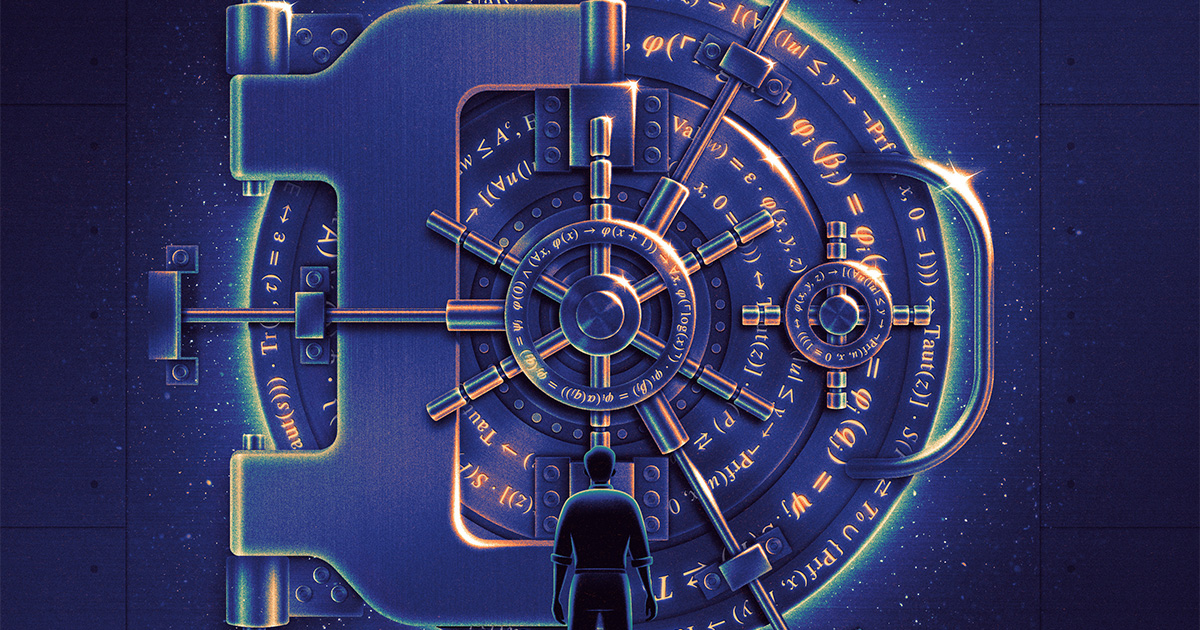
11. Unknowable Math Can Help Hide Secrets (www.quantamagazine.org)
A graduate student recently harnessed the complexity of mathematical proofs to create a powerful new tool in cryptography.
12. Mistral's CEO: Europe has 2 years to stop becoming America's AI 'vassal state' (www.businessinsider.com)
Mistral's CEO Arthur Mensch said AI dominance will depend on who controls chips, energy, and computing infrastructure.
13. XS: A programming language. Anywhere, anytime, by anyone (xslang.org)
A programming language. Anywhere, anytime, by anyone.
14. Mado: Fast Markdown linter written in Rust (github.com)
A fast Markdown linter written in Rust. Contribute to akiomik/mado development by creating an account on GitHub.
15. Grafana Labs internal source code accessed (twitter.com)
16. Stochastic Parrots: Frequently Unasked Questions (medium.com)

18. Twilight of the Velocipede: Typesetting Races Before the Age of Linotype (publicdomainreview.org)
19. Multi-Species Canopy Latrines in Costa Rican Cloud Forests (onlinelibrary.wiley.com)
20. Scientists "bottle the sun" with a liquid battery that stores solar energy (www.sciencedaily.com)
Scientists at UC Santa Barbara have created a remarkable new material that works like a “rechargeable solar battery,” storing sunlight inside tiny molecules and releasing it later as heat — even long after the sun goes down. Inspired by reversible changes found in DNA and photochromic sunglasses, the system captures solar energy without relying on bulky batteries or the electrical grid. The molecule can hold energy for years and packs more energy per kilogram than lithium-ion batteries.
21. Agentic Trading with Safe Guardrails (github.com)
Agent-consumable integration skills for the Shuriken platform 🥷 - ShurikenTrade/shuriken-skills
23. I tried to make Claude make me money on Algora bounties (data and tool) (github.com)
Contribute to ztc00/algora-scout development by creating an account on GitHub.
24. Citroën metropolis concept car (2010) (www.citroenet.org.uk)

26. Schanuel's Conjecture and the Semantics of Triton's FPSan (cp4space.hatsya.com)
I’ve been spending some of my time recently developing a tool called FPSan in collaboration with Pawel Szczerbuk. It’s implemented as a Triton compiler pass, but has none of the desirab…
27. Show HN: Codiff, a local diff review tool (github.com)
a fast local diff viewer. Contribute to nkzw-tech/codiff development by creating an account on GitHub.
29. Where OpenClaw Security Is Heading (openclaw.ai)
The security roadmap for making OpenClaw a powerful personal assistant runtime users can understand, observe, and trust.