I left GitHub for self-hosted Forgejo on a hardened NUC. The reason is digital sovereignty, not reliability outages. Here's the thinking and the architecture.
In the US, you can get a domain name like `somename.city.state.us` for free. If your town has its own domain, you can get nameservers from Amazon Lightsail, send the *Interim .US Domain Template* to the delegated manager for your locality, then point DNS entries at your webhost.
The faculty voted Monday to require universal proctoring for all in-person examinations in response to mounting concerns over AI-assisted cheating and declining student reporting of Honor Code violations. The policy, which takes effect July 1, preserves the student-run Honor Committee system while requiring instructors to serve as witnesses.
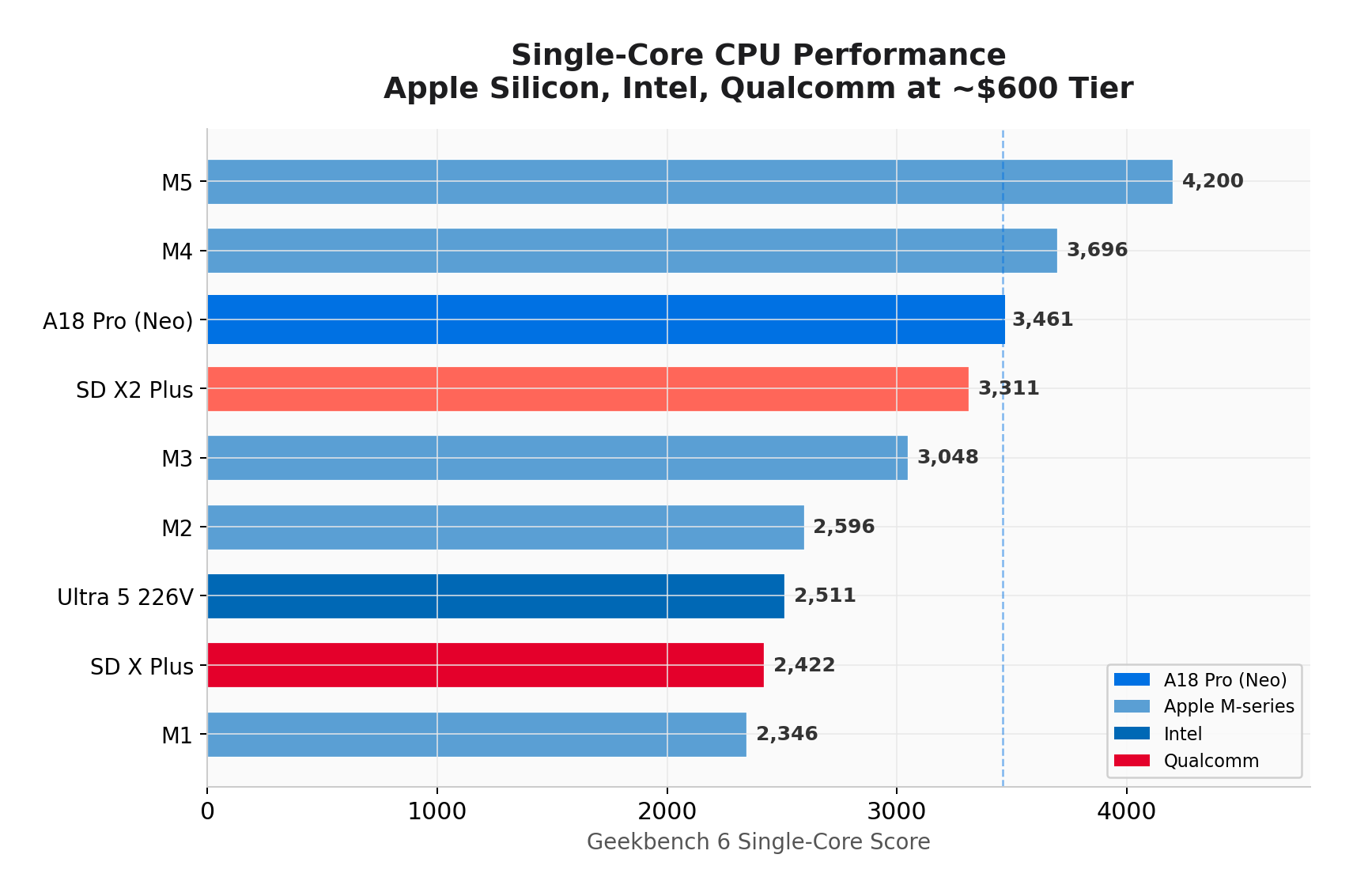
A18 Pro processor in the $599 MacBook Neo. Geekbench 6 scores 3,569 single-core, between M3 and M4. Full CPU benchmarks, power draw, and thermal analysis.
We present Elevator, the first binary translator that statically translates entire x86-64 executables to AArch64 without debug information, source code, or assumptions about code layout. Unlike existing systems, which rely on heuristics or runtime fallbacks to handle code-versus-data decoding errors, Elevator considers all possible interpretations of every byte and produces a separate translation for each feasible one ahead of time. Any byte may be interpreted as data, an opcode, or an opcode argument; we generate separate control flow paths for all interpretations, pruning only those leading to abnormal termination. Translations are built by composing code "tiles" automatically derived from a high-level description of the source ISA, yielding a nimble translation framework. The approach is deterministic and produces complete, self-contained binaries with no runtime component in the trusted code base. The principal cost is substantial code size expansion. The key benefit is that the output is the actual code that will run, enabling testing, validation, certification, and cryptographic signing prior to deployment, reducing risk compared to emulators or JIT compilers. We evaluate Elevator on a diverse corpus of real-world binaries, including the entire SPECint 2006 suite, demonstrating that static full-program binary translation can be both reliable and practical. Elevator achieves performance on par with or better than QEMU's user-mode JIT emulation.
A team at the University of Hong Kong has developed a new “super steel” that can survive the harsh conditions needed to make green hydrogen from seawater. The material uses an unexpected double-protection mechanism that resists corrosion far better than conventional stainless steel. Even more impressive, it could replace costly titanium parts used in today’s hydrogen systems.
The Dutch suicide prevention hotline 113 shared data from website visitors with third parties without consent, BNR reports based on research by ethical hacker Mick Beer of Hackedemia.nl. After being confronted with this research, Stichting 113 temporarily suspended all measurement and analysis tools on its website.
253 pointsby giuliomagnifico161 days ago185 comments
Python 3.14 shipped with a new incremental garbage collector. However, we’ve had a number of reports of significant memory pressure in production environments. We’ve decided to revert it in both 3.14 and 3.15, and go back to the generational GC from 3.13. 3.15 is still in alpha, so such changes are fine. For 3.14, it is unusual for a patch release, but the old GC is a known quantity, the new incremental GC didn’t go through the PEP process, and was rolled back just before the final release of ...
Fifty years old this month, Kraftwerk's single Radioactivity was a groundbreaking track that morphed into the German electronic pioneers' most political protest song.
237 pointsby tcp_handshaker162 days ago206 comments
Energy matters for AI, but the decisive layers are cloud infrastructure, data, and commercialization. On those layers the United States is ahead by a wide margin.
EFF, along with the national ACLU, the ACLU affiliates in Maryland, North Carolina, South Carolina, and Virginia, and the National Association of Criminal Defense Lawyers (NACDL) filed an amicus brief in the U.S. Court of Appeals for the Fourth Circuit urging the court to require a warrant for...
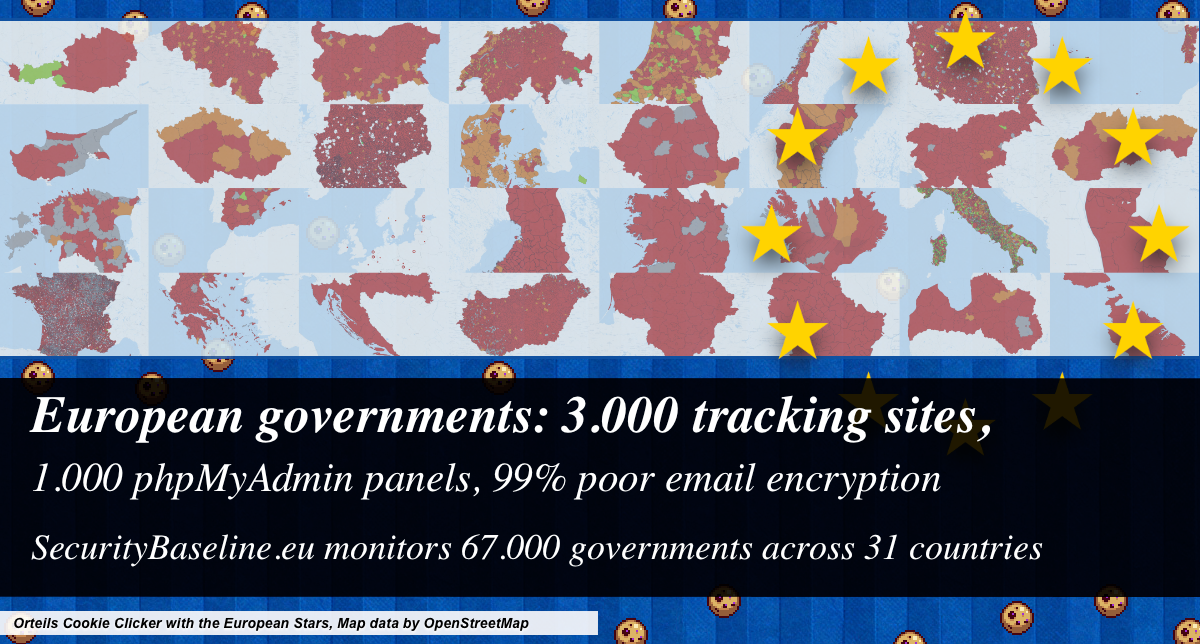
On May 13, 2026, the website SecurityBaseline.eu was launched. It is a spin-off from the Dutch “Basisbeveiliging”, which has monitored baseline security for over a decade and is part of governmental policy. Three months ago we sent tens of thousands of e-mails to European governments indicating the new site would launch, giving them time to […]
When companies like Aetna or UnitedHealthcare want to rein in costs, they turn to EviCore, whose business model depends on turning down payments for care recommended by doctors for their patients.