

2. Light without electricity? Glowing algae could make it possible (www.colorado.edu)
CU Boulder researchers have developed 3D-printable materials embedded with living bioluminescent algae that can produce sustained light.

3. PipeDream on the Acorn Archimedes (stonetools.ghost.io)
A productivity suite that willfully rejects common notions on how such software should behave, on an operating system most haven't heard of, running on a processor 30 years ahead of its time.

5. Bun ported to Rust in 6 days (xunroll.com)
Read, unroll and convert Twitter/X.com threads to PDF online without an account. Free thread reader tool.
6. The Soul of Maintaining a New Machine (books.worksinprogress.co)
Books in Progress is what we call a “public drafting tool”: Drafts will be made available for comment from the public, allowing for direct collaboration between author and reader.
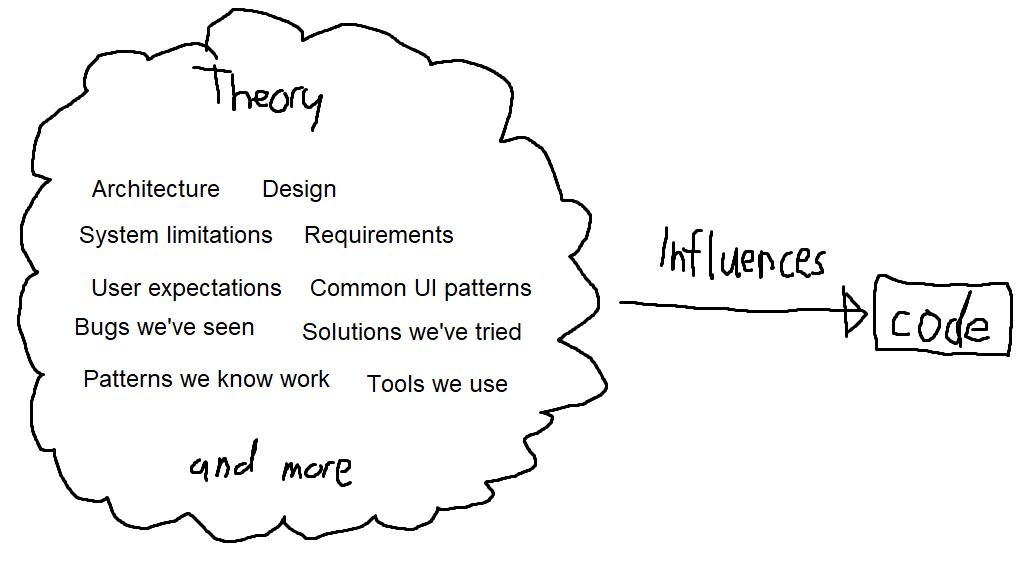
7. Read Programming as Theory Building (codeutopia.net)
8. Making Julia as Fast as C++ (flow.byu.edu)

9. Reviving the IBM Selectric Composer Fonts (2023) (www.kutilek.de)
Technical and mathematical considerations of the IBM Selectric Composer typography by Jens Kutílek.

10. Removing fsync from our local storage engine (fractalbits.com)
How we used pre-allocation, O_DIRECT, and an SSD-aware journal to keep our local storage engine
11. When is your birthday? The math behind hash collisions (0xkrt26.github.io)
The mathematics behind why encryption works — and why it sometimes doesn’t.

12. The FCC Wants Your ID Before You Get a Phone Number (reclaimthenet.org)
The FCC just proposed fixing your robocall problem by building the kind of phone-user registry that privacy advocates have spent decades trying to prevent.

13. Tesla Model Y Passes NHTSA's New 'Advanced Driver Assistance System' Tests (www.nhtsa.gov)
The U.S. Department of Transportation’s National Highway Traffic Safety Administration (NHTSA) today announced that the later release 2026 Tesla Model
14. Show HN: Mochi.js: bun-native high-fidelity browser automation library (mochijs.com)
Bun-native, raw-CDP browser automation. Relational fingerprint locking, JIT-installed spoofing, JA4-coherent fetch. Leaves no crumbs.
16. Show HN: CADara - I made an open-source in-browser CAD (cadara.app)
17. Judge rules DOGE cancellation of humanities grants was unconstitutional (apnews.com)
A federal judge in New York has ruled that the Trump administration's cancellation of over $100 million in humanities grants was unconstitutional.

18. "Dirty Frag" (CVE-2026-43284): The Second Linux Root Exploit in Eight Days (www.copahost.com)
Eight days after Copy Fail shook the Linux server world, another critical vulnerability has arrived — and this one also hands root access to anyone who can run code on your server. It is called “Dirty Frag”. It was publicly disclosed on May 7, 2026. A working exploit already exists. And if your server has […]
19. The ROKR wooden typewriter: a closer look (writingball.blogspot.com)

20. The context window has been shattered: Subquadratic debuts a 12M token window (thenewstack.io)
Subquadratic has launched a new AI architecture featuring a 12-million-token context window that outperforms GPT-5.5 on retrieval benchmarks.

21. PortalVR Motion – use any VR content in 2D with 3D tracked Joy-Cons (portalvr.io)
PortalVR Motion turns VR into Wii-style gaming — natural motion controls for thousands of SteamVR titles, using your Joy-Cons and an iPhone.

22. Show HN: Create flashcards with Space CLI (getspace.app)
A command-line tool that lets Claude Code, ChatGPT or any LLM create, analyze and optimize your Space flashcards. Works offline on macOS, Linux, and Windows.
23. Aids Creeps Back in Parts of Zambia, a Year After U.S. Cuts to HIV Assistance (www.nytimes.com)
24. I Will Never Use AI to Code (antman-does-software.com)

25. Show HN: Free tool to mark points and polygon regions (tack.pics)
Mark points and polygon areas on any image. Export to JSON or YAML. Free, in your browser, no upload.
27. First, the FBI Searched Her Home. Then, She Won a Pulitzer. (www.nytimes.com)
28. Human typing habits and token counts (pankajpipada.com)
Normal human habits like swapped letters, fillers, shorthand, pasted IDs, boundary whitespace, and nearby word forms can change token count without changing intent much.