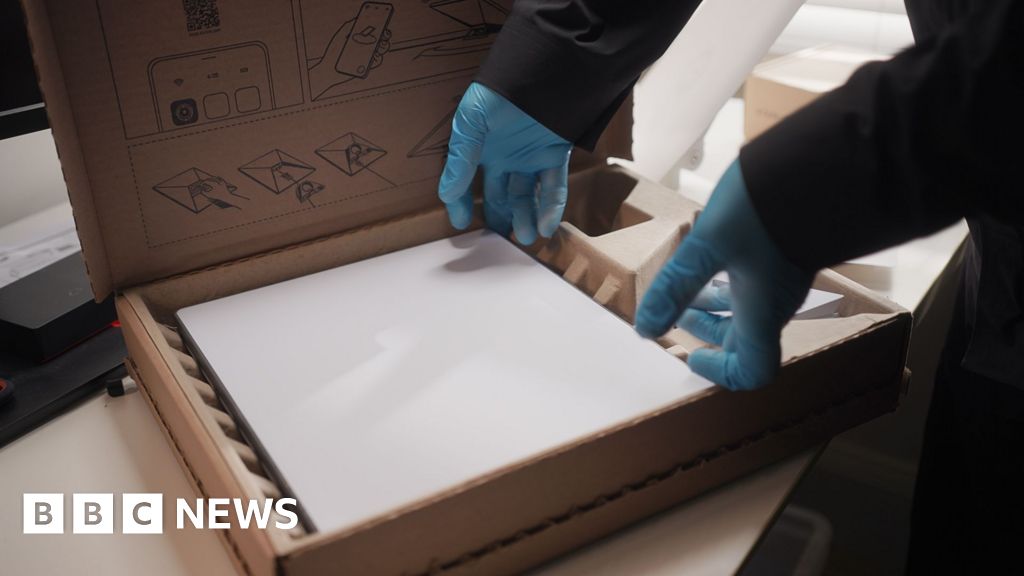
The artwork was installed under the cloak of night this week, less than two months after a journalism investigation into Banksy’s true identity was published
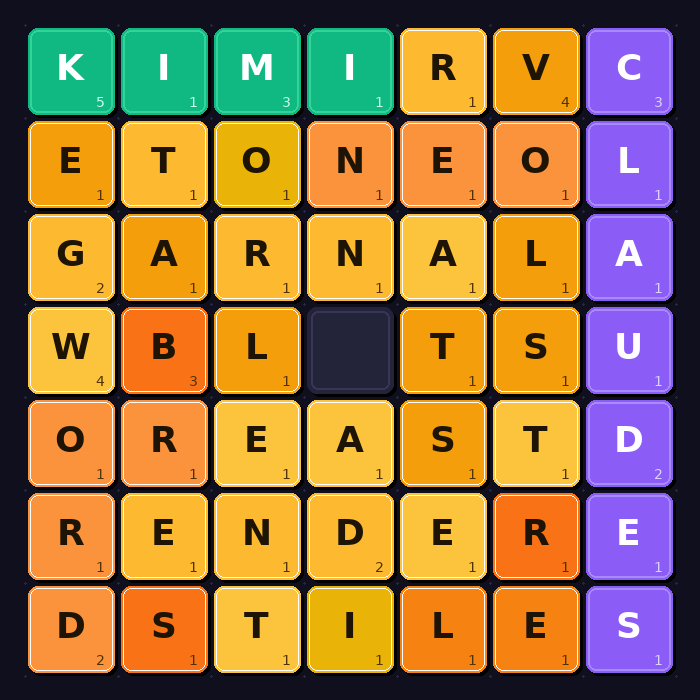
By Rohana Rezel I’m running the ongoing AI Coding Contest where I pit major language models against each other in real-time programming tasks with objective scoring. Day 12 was the Word Gem Puzzle. Ten models entered. The results were not what most people would have predicted. Kimi K2.6, an open-weights model from Chinese startup Moonshot
Table of Contents: Intro, Morning- Flight Attendant Training, Pilot Training., Lunch- Southwest Store, Social Media Serendipity., Afternoon- Network Operations Center, TechOps Hangar, Herb and Coll...
Our investigation uncovers two sophisticated telecom surveillance campaigns and, for the first time, links real-world attack traffic to mobile operator signalling infrastructure. The findings expose how suspected commercial surveillance vendors (CSVs) exploit the global telecom interconnect ecosystem, leverage private operator networks, and conduct covert location tracking operations that can persist undetected for years.
Open source software has existed long before the invention of the (D)VCS. The author likely hosted a barebones HTML webpage or a txt file describing the project. There definitely was an FTP server somewhere with tarballs. The author may have been reachable by email. If you were really lucky …
As Rust gains traction for developing safer systems software, a reality check for the microcontroller hardware segment becomes necessary. How ready is the Rust ecosystem for this segment? Can Rust compete with C in practice? This paper reports on an IoT industrial case study that contributes to answering these questions. Two teams concurrently developing the same functionality (one in C, one in Rust) are analyzed over a period of several months. A comparative analysis of their approaches, results, and iterative efforts is provided. The analysis and measurements on hardware indicate no strong reason to prefer C over Rust for microcontroller firmware on the basis of memory footprint or execution speed. Furthermore, Ariel OS is shown to provide an efficient and portable system runtime in Rust whose footprint is smaller than that of the state-of-the-art bare-metal C stack traditionally used in this context. It is concluded that Rust is a sound choice today for firmware development in this domain.
This is a project that I’ve been working on for the past eight months now, and I’m finally just about done! It’s a fully-functional Apple Lisa computer insid...
Intel announced this week that it’s working with SoftBank subsidiary SAIMEMORY to commercialize Z-Angle Memory (ZAM), an advanced type of DRAM that stacks memory modules vertically. While ZAM chips aren’t expected to become available for at least three years, they could eventually replace the high-bandwidth memory (HBM) that is in such high demand today thanks […]